2026 Pier Foundation Repair Cost Guide by Region
Discover the 2026 pier foundation repair cost by US region. Compare push pier, helical, and concrete pricing based on local soil types and frost lines.
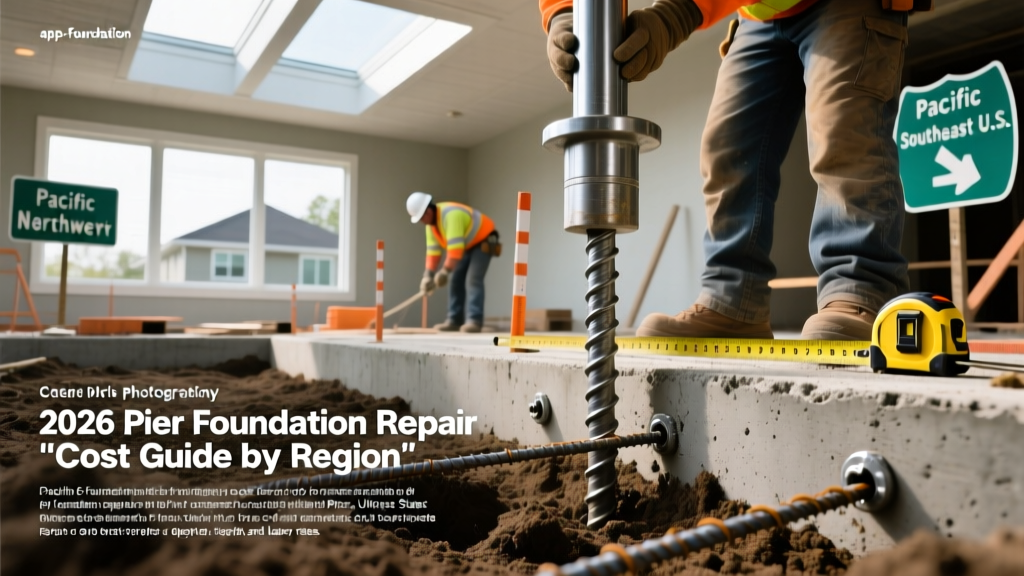
The True Cost of Pier Foundation Repair in 2026
Calculating an accurate pier foundation repair cost requires moving beyond national averages. A homeowner in the expansive clay belts of Texas faces entirely different structural failure modes—and subsequent repair bills—than a property owner dealing with frost heave in Minnesota or seismic lateral loads in California. In 2026, the national baseline for underpinning a settling foundation ranges from $1,000 to $3,200 per pier installed, with total project costs typically landing between $12,000 and $45,000.
However, regional soil mechanics dictate the depth, material, and engineering required to achieve load-bearing refusal. This guide breaks down the exact pricing, soil variables, and engineered solutions by US region, providing the technical depth needed to evaluate contractor proposals accurately.
Quick National Pricing Snapshot (2026)
- Steel Push Piers: $1,500 – $2,500 per pier (Best for reaching deep bedrock)
- Helical Piers: $1,800 – $3,000 per pier (Best for high water tables and no bedrock)
- Drilled Concrete Bell Piers: $1,000 – $2,200 per pier (Best for new construction or shallow stable soils)
- Crawl Space Wood Pier Replacement: $400 – $900 per masonry/treated-wood pier
Regional Cost Breakdown & Soil Factors
The primary driver of foundation repair pricing is the depth to stable soil or bedrock. The deeper the hydraulic rams must drive the steel piers, the higher the material and labor costs. Below is a regional matrix detailing how local geology impacts your bottom line.
| US Region | Primary Soil Threat | Avg Cost Per Pier | Dominant Repair Method |
|---|---|---|---|
| South / Southwest | Expansive Clay (High PI) | $1,800 - $3,200 | Deep Helical / Push Piers |
| Northeast / Midwest | Frost Heave / Freeze-Thaw | $1,200 - $2,400 | Concrete Bell / Push Piers |
| West Coast | Seismic / Liquefaction | $2,500 - $4,500+ | Micropiles / Reinforced Piers |
| Southeast Coast | Sandy / High Water Table | $1,500 - $2,800 | Multi-Helix Helical Piers |
The South & Southwest: Expansive Clay Challenges
In states like Texas, Oklahoma, and Louisiana, the dominant soil profile features highly plastic clays with a Plasticity Index (PI) often exceeding 25. According to geotechnical engineering standards outlined by the ASCE, these soils undergo massive volumetric changes based on moisture content. The 'active zone'—the depth of soil that swells and shrinks with seasonal weather—can extend 15 to 25 feet below the surface in North Texas.
To permanently stabilize a foundation here, contractors must use steel push piers or deep helical piles driven entirely through this active zone into load-bearing strata or bedrock. Because the drive depth is substantial (often 30+ feet), the pier foundation repair cost in these regions skews toward the higher end, averaging $2,400 per pier. Attempting to use shallow concrete piers in expansive clay is a guaranteed path to differential settlement and structural failure.
The Northeast & Midwest: Frost Heave & Freeze-Thaw
Foundation failures in colder climates are rarely caused by shrinking soil; they are caused by frost heave. When the ground freezes, water in the soil expands by 9%, lifting shallow foundations unevenly. Building codes in these regions require footings to be placed below the frost line, which ranges from 42 inches in the mid-Atlantic to over 60 inches in parts of Minnesota and Maine.
If an existing pier and beam foundation was built above the frost line, repair involves excavating down to stable, unfrozen earth and pouring new concrete bell piers or driving steel push piers to bedrock. Costs here are moderate ($1,200 to $2,400 per pier) because bedrock is often shallower than in the deep South, but excavation in frozen or rocky terrain can introduce heavy machinery surcharges.
The West Coast: Seismic Retrofitting & Liquefaction
California and the Pacific Northwest introduce lateral seismic loads and soil liquefaction risks. Standard push piers are designed for vertical compression, not horizontal shear. Therefore, foundation repairs in high seismic zones often require micropiles or heavily reinforced concrete piers tied together with grade beams. Furthermore, the FEMA Building Science division emphasizes the necessity of positive connections between the foundation and the superstructure to prevent the home from sliding off its piers during an earthquake. Expect to pay a premium ($2,500 to $4,500+ per pier) for the engineering stamps, seismic brackets (like Simpson Strong-Tie retrofits), and dense rebar cages required in these zones.
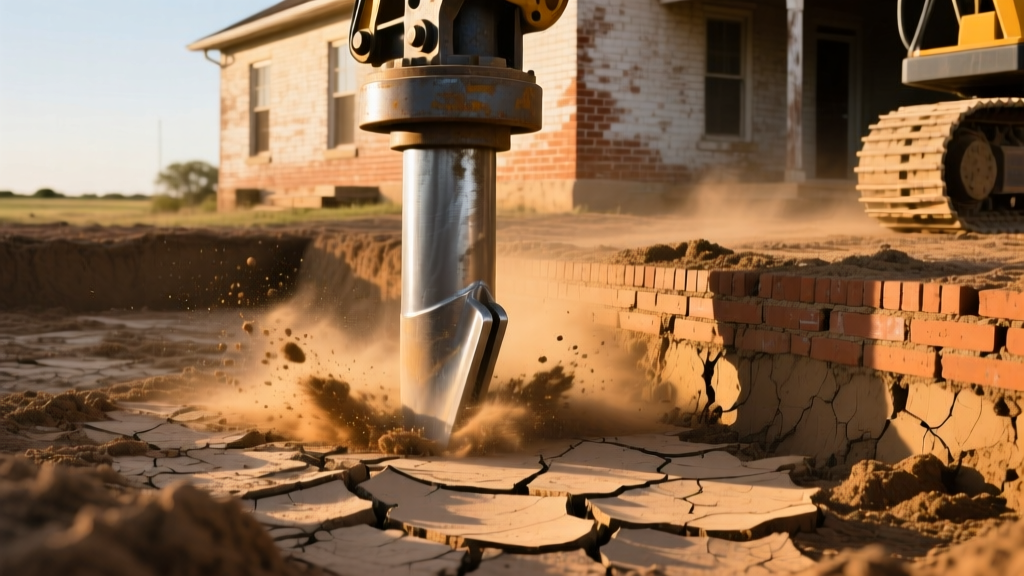
Repair Method Pricing: Push vs. Helical vs. Concrete
When reviewing a contractor's proposal, you must verify the specific underpinning method. The material science behind each system dictates its longevity and price point.
- Steel Push Piers (e.g., ECP, Grip-Tite): These utilize the actual weight of the structure to hydraulically drive interlocking steel pipe sections into the ground. They are the gold standard for heavy masonry homes and reaching deep bedrock. Cost: $1,500 – $2,500 per pier.
- Helical Piers (e.g., Chance, Hubbell Power Systems): These feature steel shafts with helical bearing plates that are mechanically torqued into the soil, much like a screw. They do not require bedrock; instead, engineers use a 'torque-to-capacity' correlation to verify load-bearing ability. Ideal for lighter structures, crawl spaces, and areas with high water tables where soil friction is low. Cost: $1,800 – $3,000 per pier.
- Drilled Concrete Bell Piers: A hole is augered into the ground, belled at the bottom, and filled with reinforced concrete. While cheaper per unit ($1,000 – $2,200), they are incredibly messy for retrofit repairs, require extensive curing time, and are highly susceptible to skin-friction drag in expansive soils. They are best reserved for new construction or accessible exterior additions.
Hidden Costs & Crawl Space Complications
For homes with pier and beam foundations (where the piers support wooden floor joists above a crawl space), the repair scope often extends beyond the piers themselves. According to the International Association of Certified Home Inspectors (InterNACHI), moisture intrusion in crawl spaces is a leading cause of wooden beam decay and shim failure.
Warning: The 'Shim-and-Go' Scam
If a contractor proposes simply driving wooden or steel shims between the top of a failing concrete block pier and the main carrying beam to 'level' the house, reject the quote. Shimming addresses the symptom (uneven floors) but ignores the cause (a sinking pier base). Within 12 to 18 months, the underlying soil will continue to consolidate, and the floors will slope again.
Budget for these adjacent crawl space repairs when calculating your total project cost:
- Crawl Space Encapsulation: Installing a 20-mil polyethylene vapor barrier and sealing vents costs $1.50 to $2.50 per square foot. This is mandatory to prevent future wood rot and soil moisture fluctuations.
- Joist Sistering / Beam Replacement: Replacing a rotted main carrying beam or sistering compromised floor joists adds $15 to $35 per linear foot.
- Access Excavation: If the crawl space clearance is under 18 inches, contractors must hand-dig access trenches to move equipment, adding $800 to $1,500 in manual labor fees.
How to Evaluate a Foundation Repair Quote
Do not accept a quote that simply lists '15 piers - $25,000'. A legitimate, engineered proposal must include the following technical specifications:
- ICC-ES Evaluation Reports: Demand that the proposed helical or push pier system has an active ICC-ES Evaluation Report (e.g., ESR-2288 for specific helical pile systems). This proves the product has been independently tested for structural integrity.
- Depth to Refusal / Torque Logs: The contract should stipulate that piers will be driven to 'load-bearing refusal' or a specified hydraulic torque, not just a predetermined depth. You pay for the result (stability), not just the number of feet of steel.
- Professional Engineer (PE) Stamp: For homes exceeding two stories, or those in seismic and high-wind zones, the repair plan must be stamped by a licensed structural or geotechnical engineer native to your state.
Frequently Asked Questions
Does homeowners insurance cover pier foundation repair?
In 95% of cases, no. Standard policies exclude earth movement, settlement, and expansive soil damage. The rare exception is if the settlement was directly caused by a sudden, covered event, such as a subterranean plumbing leak that washed out the supporting soil. You will need a plumber's leak detection report and a structural engineer's causation report to prove this to your adjuster.
How long does a typical pier underpinning project take?
A standard 10-to-15 pier installation on a single-story residential home takes 3 to 5 working days. This includes excavation, driving the piers to refusal, performing the hydraulic lift to maximum practical recovery, and backfilling the site. Concrete bell piers will add 7 to 14 days due to required curing times before the structural lift can occur.
Will lifting the house cause drywall cracks?
Yes. The goal of foundation repair is structural stabilization, not cosmetic perfection. Lifting a settled foundation back toward its original elevation will often cause minor drywall tape separation or brick mortar cracking. Reputable contractors will lift slowly over several days to allow the framing to acclimate, but you should budget for a drywall contractor to perform cosmetic patching after the foundation is locked into place.
Written by
Priya KapoorPriya Kapoor is a real estate market analyst and construction economics researcher with expertise in housing affordability, development feasibility, and infrastructure investment. She holds a Master of Regional Planning from Cornell University and previously worked as a senior analyst at CBRE's Investment Properties group, where she modeled returns for $4B in mixed-use development pipelines. Priya now runs an independent research practice advising developers, municipalities, and REITs on construction cost forecasting and market timing. She publishes the quarterly "BuildMat Market Pulse" report tracking material price indices across 12 commodity categories. Based in Austin, TX, Priya serves on the board of Habitat for Humanity Austin and is a marathon runner.
More from Priya Kapoor
View all
Construction Cost
Cost to Build a 1600 Sq Ft Home in 2026: Full Breakdown
Accurate 2026 cost to build a 1600 sq ft home—material, labor, and regional pricing breakdowns included. Plan your budget with real-time estimates.
Aug 11, 2026

Wood & Lumber
Name the Types of Wood for Pressure Treatment and Preservation
Learn how to name the types of wood best suited for pressure treatment. Compare species treatability, chemical retention levels, and 2026 preservation costs.
Aug 4, 2026

Stone & Masonry
Stone Veneer Suppliers Lindenhurst: 2026 Cost Analysis
Analyze 2026 stone veneer costs in Lindenhurst, NY. Compare local supplier pricing, delivery fees, and Suffolk County installation labor rates.
Aug 4, 2026