Leaking Foundation Repair Cost: 2026 Regional Guide
Discover the 2026 leaking foundation repair cost by region. Compare pricing for basement waterproofing, slab leaks, and crawl space fixes across the US.
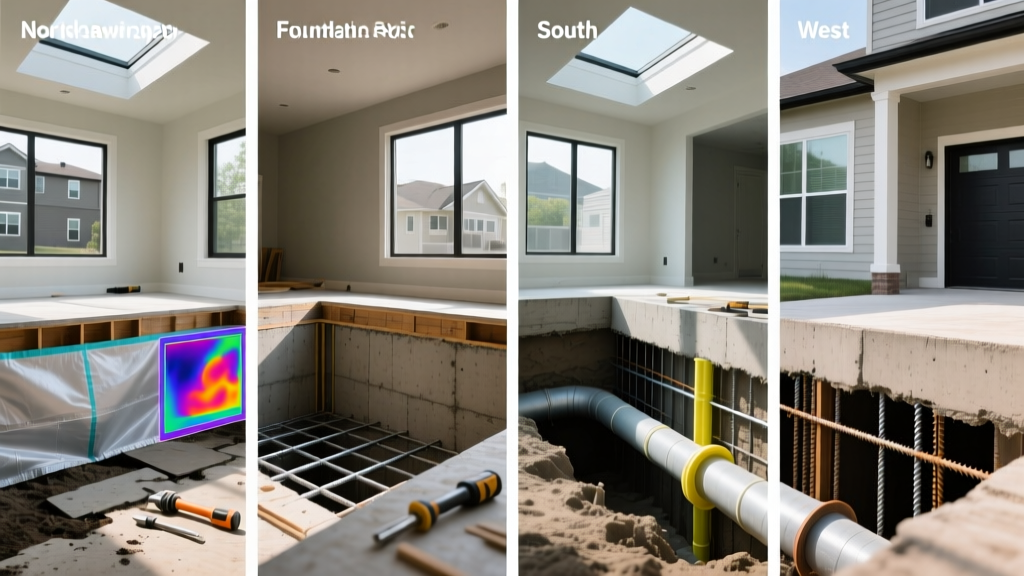
The Core Variables: Why Geography Dictates Repair Costs
Foundation leaks are not a monolith. A weeping basement in Ohio demands a fundamentally different repair strategy—and budget—than a cracked slab-on-grade in Dallas. The 2026 leaking foundation repair cost hinges on regional soil mechanics, local labor indices, and the dominant foundation architecture of your zip code. Understanding these geographic variables is the first step toward accurate budgeting and effective remediation.
According to the FEMA Building Science Division, hydrostatic pressure and soil expansion account for over 70% of all residential foundation failures. However, the manifestation of these forces varies drastically by region. A contractor in Minnesota must account for frost heave and deep frost lines, while a specialist in Florida battles high water tables and sandy, shifting soils. This regional guide breaks down the exact costs, failure modes, and repair methodologies dominating the U.S. market in 2026.
2026 Regional Cost Matrix: Leaking Foundation Repair
| Region | Dominant Foundation | Primary Leak Catalyst | Average Repair Range (2026) |
|---|---|---|---|
| Northeast & Midwest | Poured Concrete / Block Basement | Hydrostatic pressure, frost heave | $4,500 – $12,000 |
| South & Texas | Slab-on-Grade | Expansive clay shifting, plumbing leaks | $2,500 – $8,500 |
| Coastal & Southeast | Crawl Space / Pier and Beam | High water table, capillary action | $3,000 – $9,000 |
| West & Pacific NW | Basement / Hillside Retaining | Seismic shifts, poor hillside drainage | $5,000 – $15,000+ |
Northeast & Midwest: Basement Leaks and Frost Heave
In regions with deep frost lines (often 48 inches or more), basements are the standard. The primary enemy here is hydrostatic pressure—the buildup of water in the soil surrounding the foundation walls. When the ground freezes and thaws, lateral pressure intensifies, forcing water through cold joints, tie-holes, and structural cracks.
Standard Repair Methodologies
- Interior French Drains: The most common permanent fix involves jackhammering a 12-inch trench along the interior perimeter, installing a perforated pipe surrounded by washed gravel, and tying it to a sump pit. Expect to pay $75 to $125 per linear foot. For a 1,000 sq. ft. basement, this totals roughly $10,000 to $14,000.
- Sump Pump Upgrades: Replacing a failing pump with a Zoeller M53 1/3 HP cast-iron sump pump, complete with a sealed lid and battery backup, costs $600 to $1,100 installed.
- Exterior Excavation & Membrane: Digging down to the footer to apply a rubberized asphalt membrane and exterior dimple board. This is highly disruptive and costs $100 to $150 per linear foot, often requiring landscaping restoration.
The Department of Energy Basement Insulation Guide notes that interior drainage systems must be paired with proper rigid foam insulation to prevent condensation from mimicking a leak once the liquid water is controlled.
The South & Texas: Expansive Clay and Slab-on-Grade Leaks
In Texas, Oklahoma, and parts of the Deep South, the soil is rich in smectite clay. This soil expands significantly when wet and shrinks during droughts. This constant cycle causes slab foundations to crack, which in turn severs under-slab PVC or cast-iron plumbing lines, creating hidden leaks that wash away the supporting subgrade.
Standard Repair Methodologies
When a slab foundation leaks, the first step is isolating whether the water is from surface runoff entering through perimeter cracks or a pressurized plumbing leak beneath the slab.
- High-Density Polyurethane Lifting: If soil washout has caused the slab to sink and crack, contractors inject structural polyurethane resin (4-6 lb/ft³ density) through 5/8-inch drilled holes. This fills voids, lifts the slab, and seals water pathways. Cost: $25 to $40 per square foot.
- Plumbing Tunneling: If a sewer or supply line is leaking under the slab, trenching through the floor is often avoided. Instead, crews dig an access tunnel from the exterior grade down to the pipe level. Tunneling costs $150 to $250 per linear foot, plus the plumber’s repair fee.
- Epoxy Crack Routing: For non-structural surface cracks allowing minor moisture ingress, routing and sealing with a flexible polyurethane caulk costs $15 to $25 per linear foot.
Coastal & Southeast: High Water Tables and Crawl Spaces
From the Carolinas down through Florida, the water table frequently sits just a few feet below the surface. Crawl spaces and pier-and-beam foundations in these areas rarely experience the violent structural cracking of the Midwest; instead, they suffer from chronic moisture intrusion, capillary rise, and efflorescence.
The EPA Indoor Air Quality Guidelines emphasize that unmitigated crawl space moisture leads to wood rot, mold proliferation, and severe indoor air quality degradation. A "leak" in a crawl space is often a high-humidity and groundwater seepage issue rather than a localized pipe burst.
Standard Repair Methodologies
- Full Encapsulation: Sealing the dirt floor and foundation walls with a 20-mil polyethylene vapor barrier. Seams are taped, and the liner is mechanically fastened to the piers. Cost: $3.50 to $7.00 per square foot.
- Crawl Space Sump Pumps & Dehumidifiers: Installing a localized sump basin at the lowest grade point, paired with a commercial-grade dehumidifier (like the AprilAire E100), adds $1,800 to $3,200 to the project.
- Exterior Grading & French Drains: Regrading the perimeter to ensure a 5% slope away from the foundation for the first 10 feet is critical. If grading isn't enough, shallow exterior French drains cost $40 to $70 per linear foot.
The West & Pacific Northwest: Seismic Shifts and Hillside Drainage
In California, Oregon, and Washington, foundation leaks are frequently tied to topography and tectonic activity. Homes built on hillsides rely on retaining walls and stepped foundations. When weeping tiles behind these retaining walls clog with silt or root systems, water pools against the concrete, eventually finding its way into the living space below.
Standard Repair Methodologies
- Structural Epoxy Injection: For cracks caused by minor seismic settling or hillside lateral pressure, low-viscosity structural epoxy is injected under high pressure to weld the concrete back together. This restores structural integrity and stops water. Cost: $400 to $800 per crack.
- Retaining Wall Weeping Tile Replacement: Excavating behind a hillside retaining wall to replace crushed drain rock and install new 4-inch corrugated perforated pipe wrapped in geotextile fabric. This is labor-intensive, costing $120 to $180 per linear foot.
- Carbon Fiber Strapping: If hydrostatic pressure has caused basement walls to bow inward (common in older Pacific Northwest homes with poor exterior drainage), carbon fiber straps are epoxied to the interior wall to halt movement. Cost: $800 to $1,200 per strap.
Hidden Cost Triggers: What Escalates Your Final Bill
When budgeting for a leaking foundation repair, the base rate per linear foot rarely tells the whole story. Homeowners must account for secondary restoration costs that contractors typically exclude from their initial waterproofing estimates.
Pro Tip: Always request an itemized breakdown that separates "waterproofing and structural repair" from "site restoration and finish carpentry." This prevents scope creep disputes during the project.
- Finished Basement Demolition: Removing and replacing drywall, baseboards, and flooring to access the interior perimeter drain trench adds $2,500 to $6,000.
- Landscaping & Hardscape Destruction: Exterior excavation requires tearing up patios, decks, and mature shrubs. Budget $1,500 to $4,000 for post-repair hardscape restoration.
- Municipal Permits & Engineering: Structural repairs involving underpinning or major retaining wall drainage often require a stamped letter from a licensed geotechnical engineer ($800 to $1,500) and local building permits ($200 to $600).

How to Vet a Regional Foundation Specialist
The barrier to entry in the waterproofing industry is notoriously low. To avoid fly-by-night contractors who rely on high-pressure sales tactics, restrict your bids to specialists who adhere to industry-standard engineering practices.
Look for contractors affiliated with the Foundation Performance Association (FPA) or those who employ in-house structural engineers. A reputable specialist will always measure floor elevations using a laser level or manometer to quantify differential settlement before recommending a repair. If a contractor quotes a $15,000 interior drain system without first conducting a soil analysis or checking for exterior grading failures, seek a second opinion. True foundation repair solves the root cause of the water intrusion, rather than simply managing the symptom on the interior.
Written by
Elena RodriguezElena Rodriguez is a civil engineer and technical writer specializing in concrete technology, masonry systems, and ASTM/ACI compliance. She earned her B.S. in Civil Engineering from Texas A&M University and spent a decade at a materials testing laboratory, performing over 2,000 concrete compressive strength tests and masonry prism evaluations. Elena is an ACI-certified Field Testing Technician (Grade I) and a member of ASTM Committee C12 on Natural Building Stone. She currently consults on forensic engineering cases involving concrete failures and moisture intrusion. Based in San Antonio, TX, Elena is a proud member of the Society of Women Engineers (SWE) and coaches her daughter's FIRST Robotics team.
More from Elena Rodriguez
View all
Walls & Panels
Cost Analysis: Light Gauge Steel Framing Advantages and Disadvantages
Evaluate light gauge steel framing advantages and disadvantages through a strict cost analysis lens, comparing material, labor, and lifecycle expenses.
Aug 4, 2026

Walls & Panels
Gypsum Board Types: Exact Specifications, Thickness & Dimensions
Compare standard, Type X, and moisture-resistant gypsum board types. Get exact specifications, thicknesses, dimensions, and ASTM standards for your project.
Aug 4, 2026

Fire Resistance
Best Fire-Resistant Outdoor Decking Materials: 2026 Buyer Guide
Discover the best fire-resistant outdoor decking materials for 2026. Compare Class A PVC, aluminum, and hardwood options for WUI compliance and safety.
Aug 4, 2026