2026 Repair Foundation Cost Guide: Price Breakdown & Methods
Discover the average repair foundation cost in 2026. Get detailed price breakdowns by method, foundation type, and severity to budget accurately.
The True Economics of Foundation Stabilization
The national average for foundation repair sits between $4,500 and $12,000 in 2026, but this metric is largely meaningless without context. According to Angi's foundation repair cost data, severe structural underpinning can easily exceed $30,000, while localized epoxy crack injections may cost under $800. Understanding the exact repair foundation cost for your property requires dissecting the failure mechanism, soil mechanics, and access constraints.
- Minor Crack Repair: $400 – $1,200
- Slab Lifting (Mudjacking/Poly): $1,800 – $4,500
- Structural Underpinning (Piers): $10,000 – $35,000+
- Bowing Wall Stabilization: $4,000 – $12,000
Repair Method Cost Matrix
The repair foundation cost is primarily dictated by the engineered solution required to counteract the specific soil failure. Below is the 2026 pricing matrix for industry-standard stabilization methods.
| Repair Method | Best Application | 2026 Unit Cost | Typical Project Total |
|---|---|---|---|
| Helical Piers | New construction, light loads, unstable topsoil | $1,800 – $2,800 per pier | $14,000 – $28,000 |
| Push Piers | Heavy structures, deep bedrock, severe settlement | $1,500 – $2,400 per pier | $12,000 – $25,000 |
| Polyurethane Foam Jacking | Slab void filling, precision lifting, water resistance | $15 – $25 per sq. ft. | $2,500 – $6,000 |
| Mudjacking (Slabjacking) | Exterior flatwork, driveways, non-structural slabs | $5 – $9 per sq. ft. | $900 – $2,500 |
| Carbon Fiber Straps | Minor bowing walls (< 2 inches deflection) | $900 – $1,400 per strap | $4,500 – $8,500 |
| Wall Plate Anchors | Severe bowing walls, expansive clay soils | $1,200 – $1,800 per anchor | $8,000 – $15,000 |
Deep Foundation Underpinning: Piers Explained
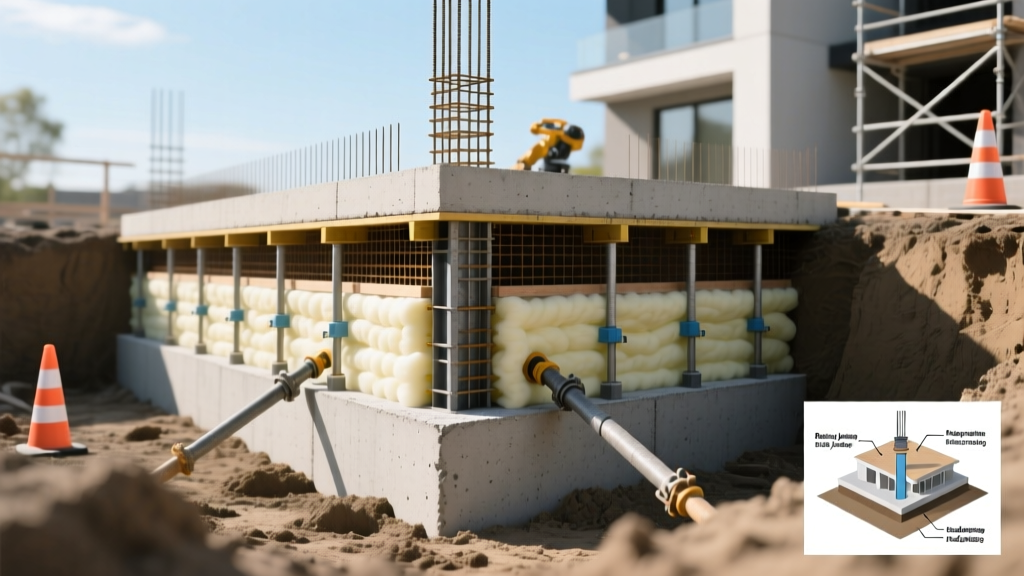
When a foundation settles due to expansive clay or poorly compacted fill dirt, surface repairs are temporary. Underpinning bypasses the active soil zone (typically 15 to 30 feet deep) and transfers the structural load to stable strata or bedrock. Push piers (such as those engineered by Foundation Supportworks) use the weight of the structure to hydraulically drive steel tubes into the ground. Helical piers (like Hubbell/Chance systems) are mechanically screwed into the soil, making them ideal for lighter structures or situations where the bedrock is too deep to reach economically. A standard 1,500 sq. ft. home requiring stabilization along one 40-foot load-bearing wall will typically need 8 to 10 piers, pushing the repair foundation cost into the $15,000 to $22,000 range.
Slab Lifting: Polyurethane vs. Cementitious Grout
For slab-on-grade foundations experiencing differential settlement or voids beneath the concrete, lifting is required. Traditional mudjacking uses a cementitious slurry pumped through 2-inch holes. While cheaper, the slurry weighs roughly 100 lbs per cubic foot, which can exacerbate soil subsidence over time. High-density structural polyurethane foam (curing at 4.0 to 6.0 lbs/cu ft) is injected through 5/8-inch holes. It expands to fill micro-voids, cures in 15 minutes, and is impervious to water erosion. While polyurethane increases the upfront repair foundation cost by roughly 40%, it prevents the secondary sinking commonly seen with mudjacking.
How Foundation Type Dictates Your Bill
The architecture of your foundation drastically alters labor intensity and material requirements.
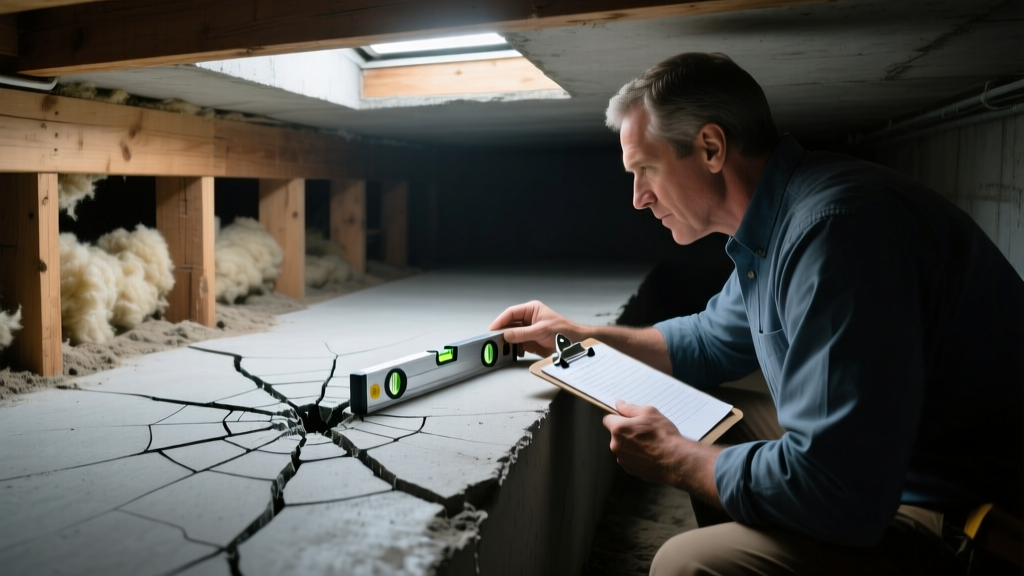
- Slab-on-Grade: Repairs often involve tunneling under grade beams to access interior piers, or cutting through the concrete to address plumbing leaks before stabilization. Tunneling adds $150 to $250 per linear foot to the project.
- Crawl Space: Generally the most affordable to repair due to direct access to pier and beam systems. Shimming, replacing rotted wooden posts, or installing supplemental adjustable jacks (e.g., SmartJacks) typically costs $1,500 to $4,000.
- Full Basement: The most expensive scenario. Repairing a settling basement wall requires exterior excavation, waterproofing membrane replacement, and interior stabilization. Excavation alone can add $3,000 to $8,000 to the repair foundation cost due to heavy machinery and soil removal.
Diagnostic Decision Framework
Use this matrix to map your specific symptoms to the likely engineered solution and associated cost tier.
Scenario A: Diagonal drywall cracks radiating from door frames + sticking doors.
Cause: Differential settlement of load-bearing footings.
Solution: Push or Helical Piers.
Estimated Cost Tier: High ($12,000 - $30,000).
Scenario B: Sloping floors in the center of the house + spongy feel.
Cause: Crawl space support post failure or undersized center beam.
Solution: Supplemental adjustable steel jacks and sistering joists.
Estimated Cost Tier: Low ($2,000 - $5,000).
Scenario C: Horizontal cracking in basement block walls + inward bowing.
Cause: Hydrostatic pressure from saturated exterior soil.
Solution: Carbon fiber straps or wall anchors + exterior French drain.
Estimated Cost Tier: Medium-High ($8,000 - $18,000).
Hidden Cost Triggers and Edge Cases
Contractor quotes rarely include the ancillary work required to make the repair legal and permanent. Budget for these hidden variables:
In many jurisdictions, you cannot legally underpin a slab foundation without a passing hydrostatic plumbing test. A leak under the slab will wash away the soil supporting the new piers. Expect to pay $350 to $600 for a camera inspection and pressure test. Additionally, a licensed geotechnical engineer may need to perform an ASTM D1557 soil compaction test, adding $1,500 to $3,000 to the soft costs.
Landscaping and Hardscape Restoration: Installing exterior piers requires excavating 3x3 foot holes every 7 feet along the foundation perimeter. This destroys adjacent concrete walkways, landscaping, and irrigation lines. Restoration typically adds 15% to 25% to the total repair foundation cost.
Permitting and Engineering Letters: Most municipalities require a stamped structural engineering letter detailing the pier spacing and load capacities. If your contractor does not have an in-house engineer, hiring a third-party structural engineer will cost $800 to $1,500.
Frequently Asked Questions
Does insurance cover foundation repair?
Standard homeowners insurance almost never covers foundation repair caused by soil expansion, normal settling, or tree root intrusion. Coverage is typically only triggered by a sudden, covered peril, such as a burst plumbing line beneath the slab that washes away the supporting soil, or damage from a fallen tree.
Is it worth fixing the foundation before selling?
Yes. According to HomeGuide's national pricing averages, unrepaired foundation issues can reduce a home's appraised value by 10% to 15%. Furthermore, FHA and VA appraisers will flag structural deficiencies per InterNACHI's foundation inspection standards, effectively killing the sale until the repair is completed and certified by a structural engineer.
How long does a foundation repair last?
Steel underpinning piers driven to bedrock or verified load-bearing strata carry lifetime transferable warranties and will outlast the structure itself. Polyurethane foam and carbon fiber straps also carry lifetime warranties against degradation, provided the exterior drainage is maintained to prevent new hydrostatic loads.
Written by
Elena RodriguezElena Rodriguez is a civil engineer and technical writer specializing in concrete technology, masonry systems, and ASTM/ACI compliance. She earned her B.S. in Civil Engineering from Texas A&M University and spent a decade at a materials testing laboratory, performing over 2,000 concrete compressive strength tests and masonry prism evaluations. Elena is an ACI-certified Field Testing Technician (Grade I) and a member of ASTM Committee C12 on Natural Building Stone. She currently consults on forensic engineering cases involving concrete failures and moisture intrusion. Based in San Antonio, TX, Elena is a proud member of the Society of Women Engineers (SWE) and coaches her daughter's FIRST Robotics team.
More from Elena Rodriguez
View all
Walls & Panels
Cost Analysis: Light Gauge Steel Framing Advantages and Disadvantages
Evaluate light gauge steel framing advantages and disadvantages through a strict cost analysis lens, comparing material, labor, and lifecycle expenses.
Aug 4, 2026

Walls & Panels
Gypsum Board Types: Exact Specifications, Thickness & Dimensions
Compare standard, Type X, and moisture-resistant gypsum board types. Get exact specifications, thicknesses, dimensions, and ASTM standards for your project.
Aug 4, 2026

Fire Resistance
Best Fire-Resistant Outdoor Decking Materials: 2026 Buyer Guide
Discover the best fire-resistant outdoor decking materials for 2026. Compare Class A PVC, aluminum, and hardwood options for WUI compliance and safety.
Aug 4, 2026