Sacramento Foundation Building Materials: 2026 Cost Analysis & Pricing
Analyze 2026 costs for foundation building materials in Sacramento. Compare ready-mix, rebar, and post-tension pricing for Central Valley soil conditions.
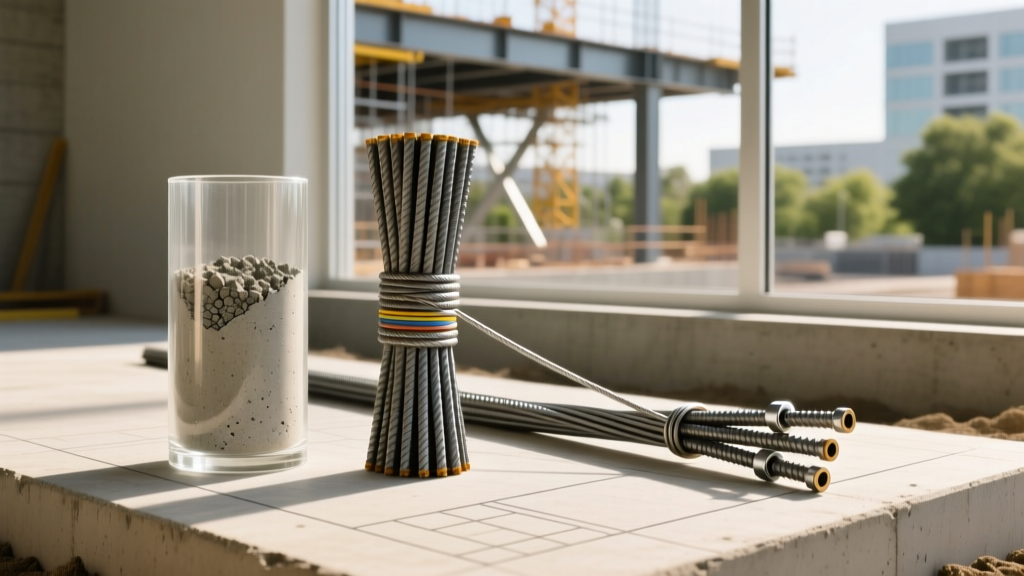
The Sacramento Soil Factor: How Expansive Clay Dictates Material Costs
When sourcing foundation building materials, Sacramento contractors and owner-builders must navigate a unique subsurface environment. The Sacramento Valley is notorious for its high-plasticity expansive clays, particularly in rapidly developing areas like Natomas, Elk Grove, and parts of Roseville. These soils swell significantly when wet and shrink during the dry Central Valley summers, exerting thousands of pounds of uplift pressure on concrete slabs.
Furthermore, sulfate-rich soils are prevalent in older agricultural tracts being converted to residential use in the southern parts of Sacramento County. According to the California Building Standards Commission, foundations in high-sulfate zones require specialized cementitious materials to prevent chemical degradation of the concrete matrix over time.
2026 Material Cost Breakdown: Concrete, Steel, and Formwork
Material pricing in the Sacramento metro area has stabilized compared to the volatile supply chain years, but local batch plant logistics and Title 24 energy mandates keep baseline costs distinct from national averages. Below is the current 2026 pricing matrix for primary foundation materials sourced from local suppliers like Granite Construction, Vulcan Materials, and regional independents.
| Material | Specification / Grade | 2026 Sacramento Unit Cost |
|---|---|---|
| Ready-Mix Concrete | 3000 PSI, 3/4" aggregate, standard slump | $145 - $158 per cubic yard |
| Sulfate-Resistant Mix | ASTM C150 Type II/V cement | $160 - $175 per cubic yard |
| Rebar (Standard) | #4 (1/2") Grade 60, 20ft sticks | $0.85 - $1.05 per linear foot |
| Post-Tension Cable | 1/2" 270kpsi low-relaxation strand | $0.45 - $0.65 per linear foot (installed) |
| Vapor Retarder | 15-mil Class A (e.g., Stego Wrap) | $0.18 - $0.24 per square foot |
| Slab Edge Insulation | 2" XPS, R-10 (Title 24 compliant) | $1.15 - $1.40 per board foot |
Ready-Mix vs. Volumetric: Navigating Sacramento's Infill Lots
For large subdivisions in master-planned communities, standard drum-truck ready-mix is the most economical choice. However, Sacramento's booming infill development in neighborhoods like Midtown, East Sacramento, and Oak Park presents severe access constraints. Narrow alleys, low-hanging heritage oak canopies, and strict street-parking ordinances make standard concrete trucks impractical.
- Volumetric Mixers: These mobile batch plants mix concrete on-site. They are ideal for infill foundation pours where exact yardage is hard to predict or access is tight. Expect to pay a premium of 15% to 22% over standard ready-mix (roughly $180-$195 per yard equivalent), but you eliminate short-load fees and reduce the risk of concrete setting in the drum during I-5 or Highway 99 traffic delays.
- Short Load Fees: If ordering from a traditional batch plant, loads under 4 cubic yards will incur short-load surcharges ranging from $85 to $135 per missing yard. For small ADU (Accessory Dwelling Unit) foundation footings, volumetric mixers or bagged high-strength concrete are vastly more cost-effective.
Post-Tensioning vs. Traditional Rebar in the Central Valley
The choice between a traditional rebar grid and a post-tensioned (PT) slab is the single largest material cost variable for Sacramento foundations. According to structural guidelines referenced by the National Ready Mixed Concrete Association, PT slabs use high-strength steel cables tensioned after the concrete cures, compressing the slab and making it highly resistant to the tensile stresses caused by expansive clay soils.
Post-Tensioned Slabs
- Material Cost: Lower steel tonnage. Cables cost ~$0.55/ft vs rebar at $0.95/ft.
- Concrete Volume: Often allows for thinner slabs (4" vs 5") and fewer deep grade beams.
- Labor/Specialty: Requires certified PT stressing contractors (adds $1,500-$2,500 per pour for labor/equipment).
- Best For: Large production tracts in Natomas/Elk Grove with high PI (Plasticity Index) soils.
Traditional Rebar Grids
- Material Cost: Higher steel tonnage. Heavy #4 or #5 rebar grids drive up material costs.
- Concrete Volume: Requires thicker slabs and deeper, wider perimeter footings to achieve rigidity.
- Labor/Specialty: Standard ironworker tying. No specialized stressing equipment needed.
- Best For: Custom homes, hillside builds in Folsom/El Dorado Hills, and tight infill lots where PT stressing jacks lack clearance.
Hidden Logistics: Pump Trucks and Local Batch Plant Fees
Material costs only tell half the story; getting those materials into the forms is where Sacramento contractors frequently see budget overruns. Because many local batch plants are located in industrial corridors like West Sacramento, North Highlands, or Florin, transit times to job sites can be unpredictable.
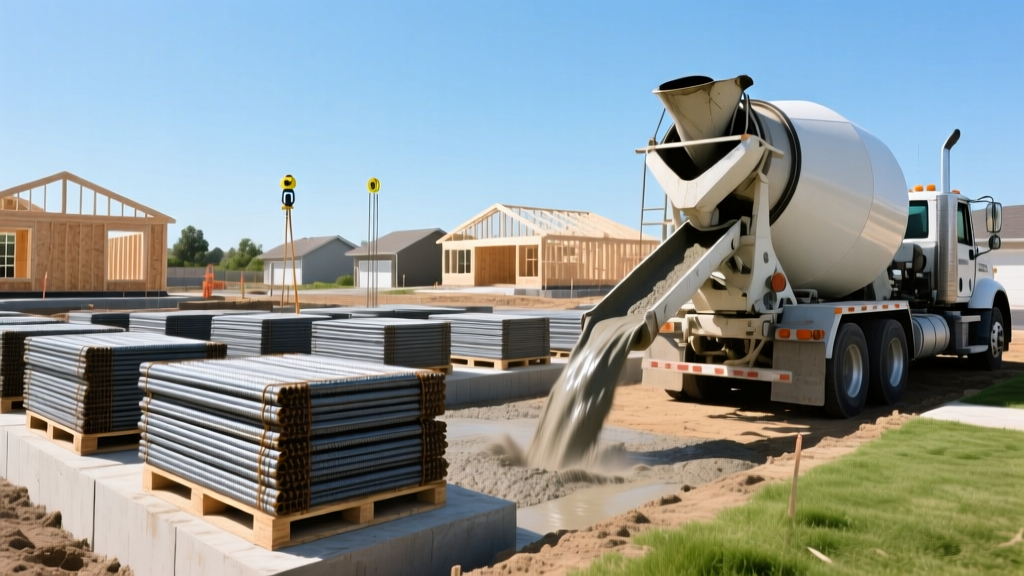
Direct chute pours from the truck are rarely feasible for modern slab-on-grade foundations due to the need for precise placement and the width of modern forms. This necessitates concrete pump trucks. Industry data tracked by For Construction Pros highlights that pump rates are heavily dependent on equipment type and local demand.
- Boom Pumps (32m to 40m): Cost between $185 and $230 per hour, with a typical 4-hour minimum. Ideal for open suburban lots. Ensure the outrigger spread fits within the property lines; many Sacramento lots are only 50 feet wide, making large boom pumps a liability if they block neighboring driveways.
- Line Pumps (Trailer-Mounted): Cost between $130 and $160 per hour. Essential for Midtown alleyways or backyard ADU pours. Hoses must be manually dragged and cleaned, which adds 1 to 2 hours of labor to the pump time.
- Wait Time Fees: If your crew is not ready when the truck arrives, batch plants charge demurrage (wait time) fees of $75 to $100 per hour per truck after the first 15 minutes of grace time.
Title 24 Compliance: Insulation and Vapor Barriers
California's Title 24 Building Energy Efficiency Standards strictly regulate thermal bridging in foundation systems. In Sacramento's Climate Zone 12, slab-on-grade foundations require continuous slab-edge insulation to prevent heat loss through the concrete perimeter.
The standard specification is 2-inch thick Extruded Polystyrene (XPS) providing an R-10 value, extending 12 to 24 inches down the vertical edge of the foundation. Material costs for high-compression XPS (minimum 25 PSI compressive strength to withstand backfill and concrete pour pressures) range from $1.15 to $1.40 per board foot. Cheaper Expanded Polystyrene (EPS) is sometimes used, but it is more susceptible to moisture absorption and physical damage during the backfilling phase, leading to failed energy inspections.
Beneath the slab, a Class A vapor retarder (minimum 10-mil, though 15-mil like Stego Wrap is the regional standard) is mandatory to prevent soil moisture from migrating through the concrete and destroying interior floor finishes. At $0.18 to $0.24 per square foot, skipping this material to save $300 on a 2,000 sq ft home is a false economy that guarantees future moisture-related flooring failures.
Sourcing Strategy: Managing Lead Times in 2026
To secure the best pricing on foundation building materials in Sacramento, avoid purchasing concrete and steel from big-box retail outlets for anything beyond minor patching or small footing pours. Establish trade accounts with regional suppliers. Companies like Pacific Coast Building Products (for aggregates and specialty cements) and local steel service centers offer 10% to 15% discounts over retail for verified contractors.
For custom or large-scale pours, order ready-mix at least 7 to 10 days in advance. During the peak spring and fall building seasons, Sacramento batch plants frequently cap daily deliveries, and securing a 6:00 AM first-pour slot requires early booking to ensure the concrete is placed before the afternoon Central Valley heat accelerates the curing process and risks cold joints.
Written by
Priya KapoorPriya Kapoor is a real estate market analyst and construction economics researcher with expertise in housing affordability, development feasibility, and infrastructure investment. She holds a Master of Regional Planning from Cornell University and previously worked as a senior analyst at CBRE's Investment Properties group, where she modeled returns for $4B in mixed-use development pipelines. Priya now runs an independent research practice advising developers, municipalities, and REITs on construction cost forecasting and market timing. She publishes the quarterly "BuildMat Market Pulse" report tracking material price indices across 12 commodity categories. Based in Austin, TX, Priya serves on the board of Habitat for Humanity Austin and is a marathon runner.
More from Priya Kapoor
View all
Construction Cost
Cost to Build a 1600 Sq Ft Home in 2026: Full Breakdown
Accurate 2026 cost to build a 1600 sq ft home—material, labor, and regional pricing breakdowns included. Plan your budget with real-time estimates.
Aug 11, 2026

Wood & Lumber
Name the Types of Wood for Pressure Treatment and Preservation
Learn how to name the types of wood best suited for pressure treatment. Compare species treatability, chemical retention levels, and 2026 preservation costs.
Aug 4, 2026

Stone & Masonry
Stone Veneer Suppliers Lindenhurst: 2026 Cost Analysis
Analyze 2026 stone veneer costs in Lindenhurst, NY. Compare local supplier pricing, delivery fees, and Suffolk County installation labor rates.
Aug 4, 2026