Cost Breakdown: Sourcing the Material for Original Roof Tiles (2026)
Detailed 2026 cost breakdown for sourcing the right material for original roof tiles, including salvage, custom manufacturing, and hidden freight fees.
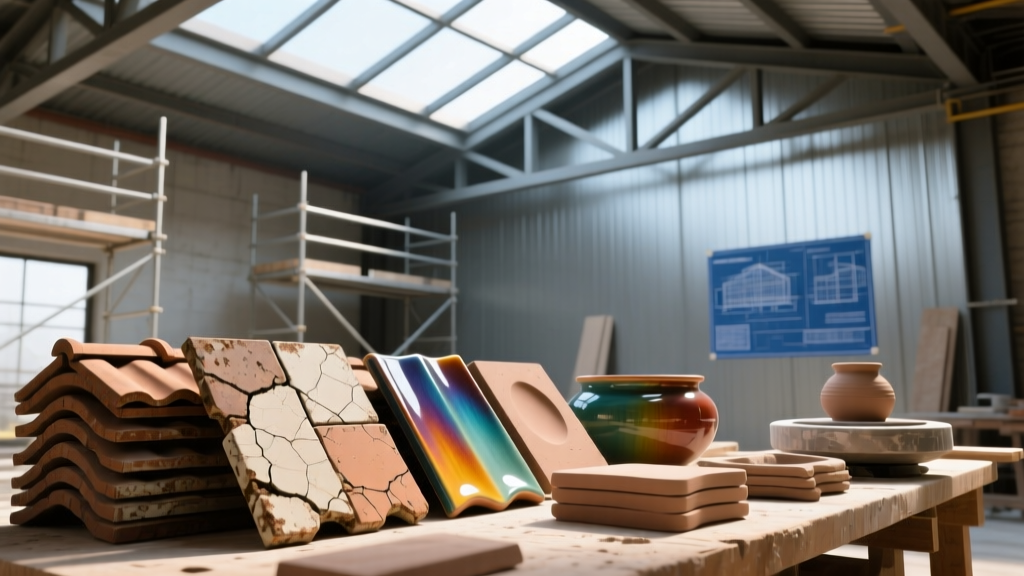
The Financial Reality of Historic Tile Matching
Restoring a historic property requires strict adherence to architectural integrity, particularly when sourcing the correct material for original roof tiles. Standard modern roofing supplies will not satisfy local Historic District Commissions (HDCs) or preserve the structural load dynamics of older buildings. In 2026, the cost to acquire authentic or historically accurate replica tiles extends far beyond the per-square-foot price of the clay or slate itself. Homeowners and contractors must budget for specialized salvage logistics, custom kiln setup fees, heavy freight, and artisan-level installation labor.
According to guidelines published by the National Park Service Preservation Briefs, replacing historic roofing materials requires matching the original in size, shape, texture, and color. Failing to do so can result in denied permits, failed inspections, and a significant loss in heritage property valuation.
Material Cost Matrix by Tile Profile
The table below outlines current 2026 market rates for the most common historic tile profiles. Costs are divided into architectural salvage (reclaimed from demolished period buildings) and custom-manufactured replicas (newly fired to match historical specifications).
| Tile Profile & Material | Salvaged Cost (per sq. ft.) | Custom New Cost (per sq. ft.) | Avg. Weight (lbs per square) | Lead Time |
|---|---|---|---|---|
| Mission S-Profile (Clay) | $18 - $28 | $45 - $65 | 900 - 1,050 | 2 - 6 months |
| Flat Interlocking (Terracotta) | $22 - $35 | $55 - $85 | 1,100 - 1,250 | 3 - 8 months |
| Roman Pan (Concrete/Clay) | $15 - $25 | $35 - $55 | 950 - 1,100 | 2 - 5 months |
| Graduated Slate (Natural) | $40 - $60 (Rare) | $85 - $140 | 800 - 1,200 | 1 - 3 months |
Salvaged vs. Custom-Manufactured: A Financial Deep Dive
When determining the best material for original roof tiles, the choice between salvage and custom fabrication dictates your entire budget structure. Salvaged tiles offer genuine historical provenance but introduce severe hidden costs in processing. Custom-manufactured tiles, produced by heritage specialists like Ludowici or Gladding, McBean, offer structural warranties but require high minimum order quantities (MOQs).
The Economics of Architectural Salvage
Purchasing reclaimed tiles from architectural salvage yards typically costs 40% to 60% less per unit than custom firing. However, the National Trust for Historic Preservation frequently notes that salvaged materials require extensive rehabilitation before installation. You must budget for:
- Acoustic Tap Testing: Every salvaged clay tile must be struck with a rubber mallet to detect micro-fractures. A clear ring indicates structural integrity; a dull thud means the tile is compromised. Labor for sorting and testing averages $3.50 to $6.00 per tile.
- Pressure Washing and De-liming: Removing decades of moss, lichen, and calcium efflorescence without damaging the fired glaze requires specialized low-PSI hot water washing, adding $1.50 to $3.00 per square foot.
- Yield Loss: Expect a 15% to 25% breakage rate during transport, cleaning, and sorting. If your roof requires 1,000 square feet of coverage, you must purchase and process at least 1,250 square feet of salvaged material.
The Economics of Custom Kiln Fabrication
If salvage networks fail to yield the required volume or profile, custom manufacturing is mandatory. Heritage manufacturers use historical extrusion dies or carve new wooden molds to replicate discontinued profiles.
- Mold Setup Fees: Creating a custom extrusion die or hand-carved plaster mold costs between $2,500 and $6,500 as a one-time setup fee.
- Minimum Order Quantities: Kilns are fired in massive batches. Most heritage manufacturers enforce an MOQ of 3,000 to 5,000 tiles. If your restoration only requires 1,500 tiles, you are still paying for the minimum kiln run.
- Glaze Matching: Matching the specific mineral oxidation of a 1920s terracotta glaze requires custom chemical blending, adding a 15% to 20% premium to the base material cost.
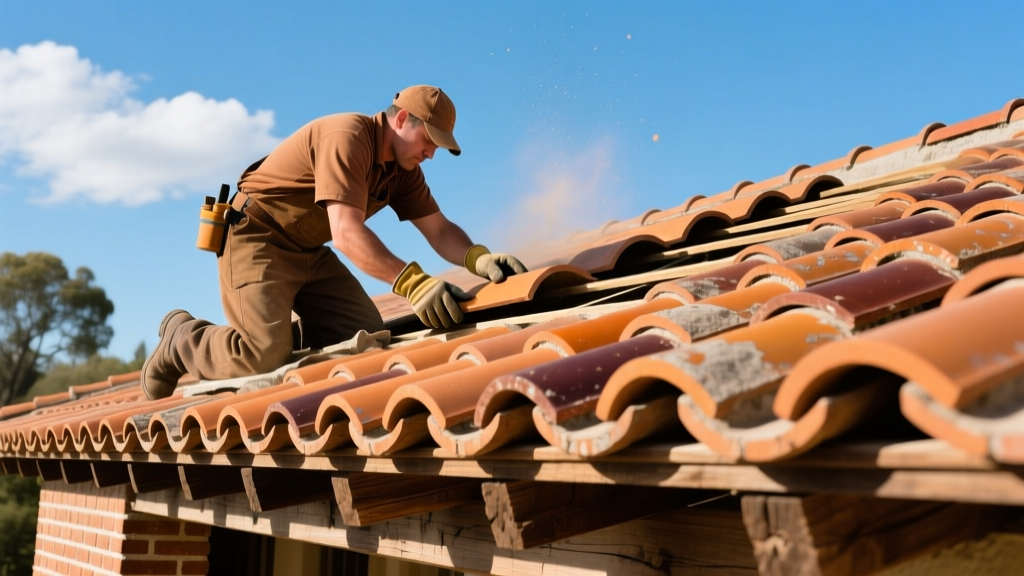
Hidden Costs: Freight, Decking, and Underlayment
The Tile Roofing Institute (TRI) emphasizes that the weight of historic tile systems fundamentally alters the logistics and structural requirements of a restoration project. These secondary costs frequently derail poorly planned budgets.
Heavy Freight and LTL Shipping
Clay and slate tiles average 900 to 1,200 pounds per square (100 square feet). A standard 2,500-square-foot roof requires over 25,000 pounds of material. This necessitates Less Than Truckload (LTL) freight with liftgate delivery. In 2026, cross-country LTL freight for palletized masonry adds $1,800 to $4,500 to the project, depending on proximity to the manufacturer or salvage yard. Residential delivery surcharges and forklift staging fees can add another $600 to $1,200.
Structural Decking Reinforcement
Original 19th and early 20th-century roof decking was often constructed from 1x4 wood battens or widely spaced skip sheathing. Modern building codes and the heavy dead load of authentic tile materials require a continuous solid deck. Upgrading the roof deck to 5/8-inch CDX plywood or OSB, combined with reinforcing the underlying truss or rafter system to support a 1,200 lb/sq dead load, adds $4.50 to $8.00 per square foot in structural carpentry costs before the first tile is even laid.
Labor Rates for Specialized Historic Roofing
Standard residential roofing crews are not equipped to install historic tile systems. Improper nailing techniques or incorrect mortar bedding (for pan tiles) will shatter historic clay and void any structural warranties. You must hire specialized historic masonry and roofing artisans.
Furthermore, installing graduated slate or custom-fitted interlocking terracotta requires meticulous layout planning. Artisans must sort tiles by thickness and shade on the ground before hoisting them to the roof, ensuring a seamless visual gradient and watertight interlocking channels. This sorting and staging labor alone accounts for 15% to 20% of the total installation time.
Decision Framework: When to Salvage and When to Fabricate
Use this practical decision tree to determine the most cost-effective path for sourcing your material for original roof tiles:
- Step 1: Profile Identification. Remove three intact tiles and measure the exact length, width, camber (curve depth), and interlocking channel dimensions. Cross-reference with historical catalogs from Ludowici, Gladding, McBean, or local regional kilns.
- Step 2: The 70% Salvage Rule. Contact regional architectural salvage networks. If you can source at least 70% of your required material from a single salvage batch (ensuring color and weathering consistency), proceed with salvage. The cost of cleaning and testing will still be lower than custom kiln setup fees.
- Step 3: The Patching Pivot. If salvage yields less than 40% of the required material, abandon the salvage route. Mixing small batches of salvaged tiles with custom new tiles results in severe aesthetic mismatches and differential weathering. Pivot entirely to custom manufacturing.
- Step 4: HDC Pre-Approval. Before signing a custom manufacturing contract, submit the manufacturer's physical sample board and technical data sheet to your local Historic District Commission to ensure the modern replica meets municipal preservation standards.
Accurately budgeting for historic roof restoration requires looking past the base material cost. By accounting for heavy freight, structural reinforcement, acoustic sorting, and specialized artisan labor, property owners can secure the exact material for original roof tiles while avoiding the financial surprises that frequently halt heritage restoration projects mid-build.
Written by
Marcus ChenMarcus Chen is a licensed structural engineer (PE) and building materials analyst with over 12 years of experience across residential, commercial, and industrial construction. He holds a Master of Science in Civil Engineering from UC Berkeley and spent six years at Thornton Tomasetti before transitioning to independent consulting and technical writing. Marcus specializes in material selection for seismic-prone regions, concrete reinforcement strategies, and lifecycle cost analysis. His work has been cited by the American Concrete Institute (ACI) and the Structural Engineers Association of California (SEAOC). When he is not on a job site or at his desk, you will find him hiking the Sierra Nevada or restoring a 1920s craftsman bungalow in Oakland, CA.
More from Marcus Chen
View all
Construction Cost
How Much Did the Eiffel Tower Cost to Build?
How much did the Eiffel Tower cost to build in 1889? We adjust for inflation and compare its budget to modern skyscraper construction.
Aug 4, 2026

Fire Resistance
What Is a Fire Resistant Material? Testing & Certification Guide
Discover what is a fire resistant material through ASTM and UL testing. Learn how fire ratings, certifications, and assemblies work in construction.
Aug 4, 2026

Construction Cost
How Much Did the Burj Khalifa Cost to Build?
How much did the Burj Khalifa cost to build? We break down the $1.5B project and extract 5 money-saving strategies for your next build.
Jul 30, 2026