Comparing Materials for Metal Roofing: Steel, Aluminum, and Zinc
Compare top materials for metal roofing including steel, aluminum, and zinc. Discover costs, lifespans, and technical specs for your next project.
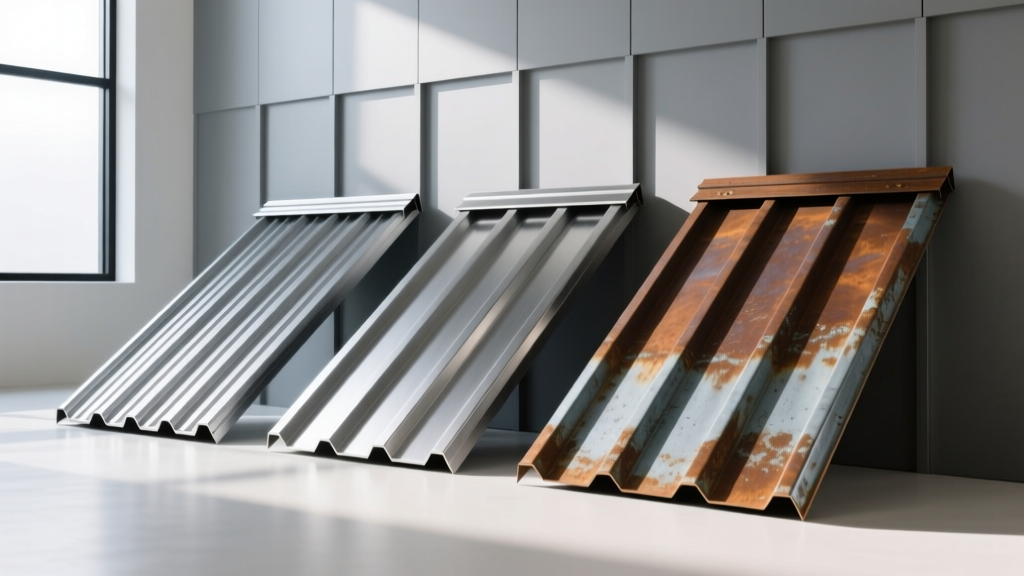
The Core Contenders: Steel, Aluminum, Zinc, and Copper
Selecting the right materials for metal roofing requires moving beyond basic aesthetics to evaluate metallurgical properties, thermal expansion coefficients, and environmental compatibility. While all metal roofs outperform asphalt shingles, a Galvalume steel panel installed in a coastal salt-spray zone will fail prematurely, just as an unventilated zinc roof will suffer rapid underside corrosion. This guide breaks down the exact specifications, failure modes, and 2026 pricing for the four primary architectural metals used in residential and commercial roofing.
Quick Decision Framework
- Inland & Budget-Conscious: 24-gauge Galvalume Steel with PVDF coating.
- Coastal & High-Salt: 0.032-inch Aluminum (3105 alloy) with floating clips.
- Historical & Premium Architectural: Pre-weathered Titanium Zinc or 16oz Cold-Rolled Copper.
Galvalume Steel: The Inland Workhorse
Steel remains the most widely used material for metal roofing due to its high tensile strength and cost-efficiency. However, raw steel rusts rapidly. The industry standard is Galvalume, governed by ASTM A792, which coats the steel substrate in an aluminum-zinc alloy (55% aluminum, 43.4% zinc, 1.6% silicone).
Gauge, Coatings, and the Kynar 500 Standard
For residential standing seam applications, 24-gauge (0.0239 inches thick) is the minimum recommended thickness to resist wind uplift and hail deformation, though 26-gauge (0.0179 inches) is frequently used for exposed-fastener agricultural panels. The coating class matters: specify an AZ-50 minimum for roofing (0.50 oz/sq ft of coating), as AZ-55 is typically reserved for harsh industrial environments.
The paint system dictates the roof's aesthetic lifespan. Silicone Modified Polyester (SMP) coatings will chalk and fade within 10 to 15 years under UV exposure. For long-term color retention, specify a PVDF resin system (commonly known by the trade names Kynar 500 or Hylar 5000). PVDF systems retain 90% of their original color and chalk resistance after 30 years, making them the mandatory choice for premium architectural projects.
Failure Modes: Edge Creep and Wet Stacking
Galvalume's primary vulnerability is edge creep. When panels are sheared at the factory or job site, the exposed steel core is left unprotected. Over time, moisture causes micro-rusting at the cut edges. To mitigate this, specify roll-formed panels cut via mechanical shears rather than abrasive saws, and apply a zinc-rich touch-up paint to all field cuts. Additionally, 'wet stacking'—storing bare Galvalume coils or panels in damp, unventilated conditions before installation—causes white oxide formation that permanently stains the coating.
Aluminum: The Coastal and High-Expansion Solution
When evaluating materials for metal roofing in environments within 1,500 feet of saltwater, aluminum is the only viable choice. Unlike steel, aluminum does not rust; it oxidizes to form a microscopic, self-healing layer of aluminum oxide that halts further degradation. According to the Metal Roofing Alliance, aluminum roofs routinely exceed 50 years in coastal zones where steel would perforate in a decade.
Alloy Series and Sliding Clip Mechanics
Roofing aluminum is typically formed from the 3000 series (specifically 3105-H25 or 3004-H25 alloys), which balances formability with tensile strength. Standard thicknesses are 0.032 inches and 0.040 inches. Because aluminum lacks the structural rigidity of steel, 0.032-inch panels should be limited to narrower widths (12 to 16 inches) to prevent oil canning (visible rippling).
The critical engineering difference is thermal expansion. Aluminum expands and contracts at a rate of 13.1 x 10^-6 in/in/°F, roughly twice that of steel (6.5 x 10^-6 in/in/°F). On roof runs exceeding 20 feet, fixed-pin clips will cause the aluminum to buckle or tear at the fastener holes. Installers must use two-piece sliding clips that allow the panel to glide up to 1 inch along the roof slope as temperatures fluctuate.
Zinc and Copper: Architectural Patina Metals
For high-end architectural projects, zinc and copper offer living finishes that evolve over time. These materials are soft, highly malleable, and rely on complex detailing rather than structural rigidity.
Zinc: Substrate Ventilation and Run-Off
Modern zinc roofing is actually titanium zinc (99.995% pure zinc alloyed with trace titanium and copper for tensile strength). Brands like Rheinzink and VMZINC offer pre-weathered options that bypass the initial shiny phase. Zinc requires a continuous, ventilated separation layer (such as Enkamat or a structured underlayment like Delta-Trela) between the metal and the deck. If condensation is trapped against the underside of the zinc, it will corrode from the back side out, leading to catastrophic failure.
Furthermore, zinc run-off is highly acidic and will stain lighter masonry, limestone, and unprotected aluminum. Proper gutter detailing and drip edges are non-negotiable.
Copper: The Century-Lasting Standard
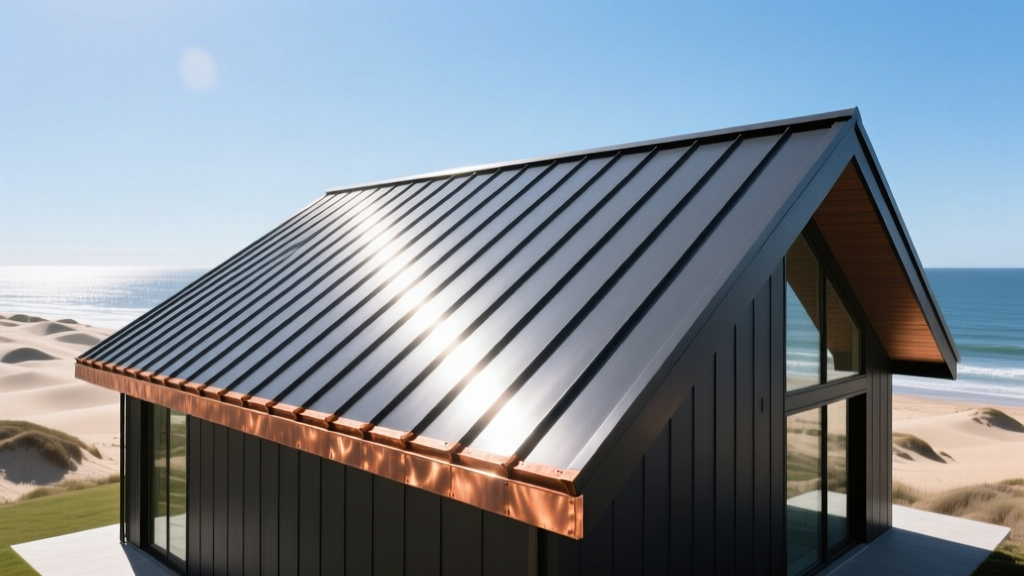
The Copper Development Association notes that properly installed cold-rolled copper roofs frequently outlast the buildings they protect. For roofing, 16-ounce (0.0216 inches) or 20-ounce (0.027 inches) copper is standard. Copper transitions from bright metallic to brown, to dark brown, and finally to a green verdigris patina (copper carbonate) over 15 to 30 years depending on atmospheric moisture. Like zinc, copper run-off will aggressively stain surrounding materials and accelerate the galvanic corrosion of any dissimilar metals below it.
The Galvanic Corrosion Matrix
Mixing dissimilar metals in the presence of an electrolyte (rainwater) creates a galvanic cell where the less noble metal corrodes rapidly. Use this matrix to specify fasteners and flashings:
| Panel Material | Approved Fasteners | Compatible Flashings | Strictly Avoid |
|---|---|---|---|
| Galvalume Steel | Zinc-plated steel with EPDM, 304 SS | Galvalume, Aluminum | Copper, Untreated Steel |
| Aluminum | 304 or 316 Stainless Steel | Aluminum, Stainless | Copper, Galvanized Steel |
| Zinc | Stainless Steel, Zinc-coated | Zinc, Stainless Steel | Copper, Aluminum, Bare Steel |
| Copper | Copper, 316 Stainless Steel | Copper, Lead-coated copper | Steel, Aluminum, Zinc |
2026 Installed Cost and Lifecycle ROI Analysis
Pricing for materials for metal roofing has stabilized following the supply chain volatility of the early 2020s. The table below reflects average 2026 installed costs for a standard 2,000 sq. ft. residential roof (3:12 pitch), including tear-off of one layer of existing asphalt shingles.
| Material Type | Material Cost (per sq ft) | Total Installed (per sq ft) | Expected Lifespan |
|---|---|---|---|
| 24-Gauge Galvalume (PVDF) | $4.50 - $6.50 | $11.00 - $15.50 | 40 - 60 Years |
| 0.032" Aluminum Standing Seam | $6.00 - $8.50 | $14.00 - $19.00 | 50+ Years |
| Titanium Zinc (Pre-weathered) | $14.00 - $18.00 | $28.00 - $38.00 | 80 - 100 Years |
| 16oz Cold-Rolled Copper | $18.00 - $24.00 | $35.00 - $48.00 | 100+ Years |
Underlayment and Thermal Reflectivity
The metal panel is only half the system. For steel and aluminum, a high-temp synthetic underlayment (rated to at least 240°F) is required, as metal roofs can reach 160°F+ in direct summer sun, melting standard asphalt-saturated felts and causing them to bond to the metal underside. For zinc and copper, a breathable, structured separation mat is mandatory to allow air circulation and prevent condensation buildup.
Finally, consider solar reflectance. According to the Cool Roof Rating Council, specifying a PVDF-coated steel or aluminum panel in a 'cool roof' color (Solar Reflectance Index of 50 or higher) can reduce peak cooling loads by up to 15%. This is achieved not just by the color white, but by integrating specialized infrared-reflective pigments into the paint matrix that bounce solar radiation away even in darker hues like charcoal or bronze.
Expert Warning on Oil Canning: Oil canning (the visible waviness in the flat areas of metal panels) is an aesthetic issue, not a structural one, but it is the number one cause of contractor callbacks. To minimize it, specify panels with striations or pencil ribs rolled into the flat pan, ensure the roof deck is perfectly planar (using shims if necessary), and never over-drive the fasteners on the sliding clips.
Written by
Sarah WhitfieldSarah Whitfield is a chartered quantity surveyor (MRICS) and construction cost analyst with 15 years of experience in material pricing, procurement strategy, and project budgeting. She earned her degree in Construction Management from the University of Reading (UK) and has worked on projects ranging from $2M custom homes to $180M mixed-use developments across North America and Europe. Sarah currently leads cost estimating for BuildMat Insight, maintaining a proprietary database of 4,000+ material price points updated quarterly. She is a frequent contributor to RSMeans cost data panels and has presented at the International Cost Engineering Council (ICEC) congress. Based in Denver, CO, Sarah is an avid trail runner and volunteer mentor for Women in Construction.
More from Sarah Whitfield
View all
Wood & Lumber
What Are the Different Types of Wood? A Builder's Guide
Compare structural softwoods, finish hardwoods, and engineered lumber. Analyze Janka ratings, MOE values, and 2026 pricing for construction.
Aug 4, 2026

Walls & Panels
Steel Framing vs Wood Framing: Corrosion and Moisture Defense
Compare steel framing vs wood framing for moisture resistance. Learn about galvanized coatings, condensation risks, and corrosion protection strategies.
Jul 21, 2026

Stone & Masonry
How to Cut Stone Veneer: Wet Saw vs Grinder Comparison
Compare the best tools for cutting stone veneer. We review wet saws, angle grinders, and chop saws to help you achieve clean, chip-free cuts.
Jul 21, 2026