Choosing the Right Roof Covering Material: Asphalt vs Metal vs Tile
Compare top roof covering material options. We analyze asphalt shingles, standing seam metal, and clay tile costs, lifespan, and structural needs.
The Core Triad of Residential Roofing
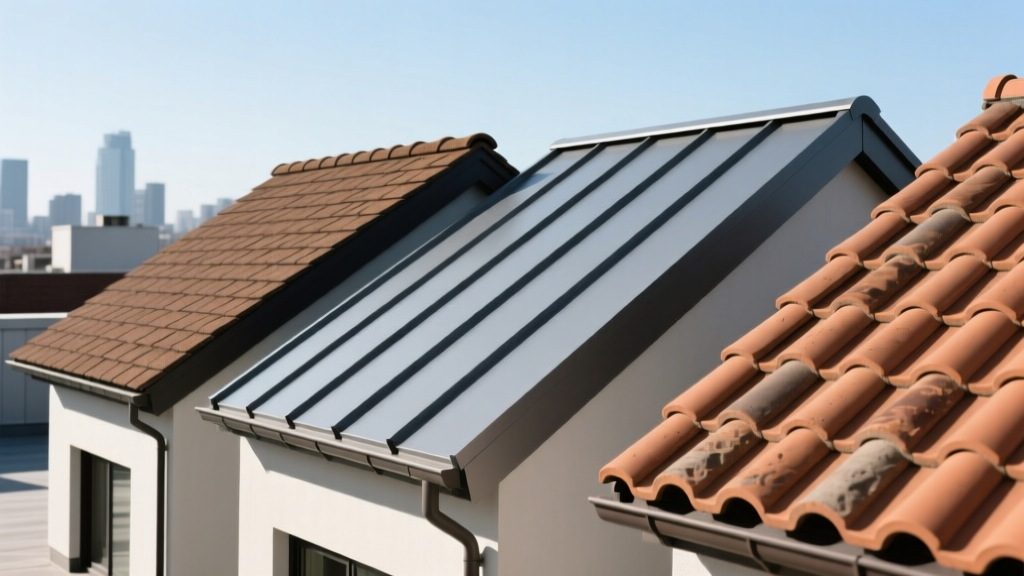
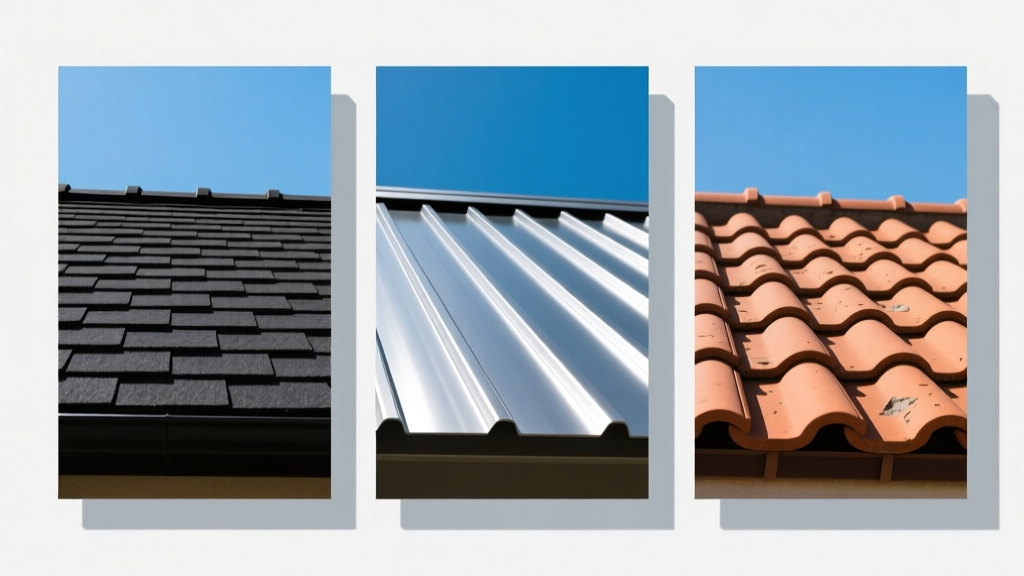
Selecting the ideal roof covering material requires balancing upfront capital expenditure against lifecycle durability, structural limitations, and regional climate demands. In 2026, the residential and light-commercial market remains dominated by three primary systems: architectural asphalt shingles, standing seam metal panels, and concrete or clay tile. Each system operates on fundamentally different mechanical principles and requires specific deck preparation, underlayment, and fastening protocols.
Rather than relying on generalized marketing claims, this comparison evaluates these materials based on exact dead-load requirements, verified wind uplift ratings, and current installed pricing metrics.
Comparative Performance Matrix
| Roof Covering Material | Avg Installed Cost (per sq ft) | Expected Lifespan | Dead Load (lbs/sq ft) | Max Wind Uplift Rating |
|---|---|---|---|---|
| Architectural Asphalt | $4.50 – $8.00 | 30 – 50 Years | 2.5 – 3.5 | ASTM D3161 Class F (110 mph) |
| Standing Seam Metal | $12.00 – $18.50 | 50 – 70 Years | 1.0 – 1.5 | UL 580 Class 90 / FM 4471 |
| Concrete/Clay Tile | $16.00 – $28.00 | 50 – 100+ Years | 6.0 – 10.0 | ASTM C1167 / HVHZ Approved |
Architectural Asphalt Shingles: The Budget-Conscious Standard
Architectural (or dimensional) asphalt shingles account for roughly 70% of the North American residential market. Unlike legacy 3-tab shingles, architectural variants utilize a multi-layered fiberglass mat coated with ceramic-granule-embedded asphalt, creating a dimensional profile that mimics wood shakes or slate.
Specific Product Performance and Fastening
Premium lines like the GAF Timberline HDZ or Owens Corning Duration feature proprietary nailing zones. The GAF StrikeZone, for example, is a 1.5-inch wide nailing area that significantly reduces installation errors and improves wind resistance. For high-wind regions, upgrading from the standard 4-nail pattern to a 6-nail pattern per shingle is mandatory to achieve the ASTM D3161 Class F rating (withstand 110 mph winds).
In humid climates, specify shingles with copper-infused granules (such as StreakFighter or StreakGuard). These granules leach trace amounts of copper ions over time, preventing the colonization of Gloeocapsa magma, the cyanobacteria responsible for black roof streaks. Standard zinc strips are largely ineffective on modern steep-slope roofs due to insufficient water runoff distribution.
Standing Seam Metal: The Longevity Champion
Standing seam metal roofing represents the highest performance-to-weight ratio available. The system utilizes concealed fasteners and vertical legs that interlock, allowing the panels to expand and contract independently of the roof deck. This thermal movement accommodation is critical; a 20-foot steel panel can expand up to 1/8 inch across a 100-degree temperature swing.
Gauge, Coatings, and Clip Selection
When specifying a metal roof covering material, avoid 29-gauge steel for primary residences; it is prone to oil-canning and puncture damage from hail. Mandate 24-gauge Galvalume steel (minimum AZ50 coating) for optimal structural integrity. The paint finish must be a 70% PVDF resin system, commonly known as Kynar 500 or Hylar 5000, which resists UV degradation and chalking far better than standard polyester or SMP coatings.
According to the Department of Energy's Cool Roof guidelines, selecting a metal panel with a high Solar Reflectance Index (SRI) of 50 or greater can reduce peak cooling loads by up to 15% in southern climates. Furthermore, panel attachment must utilize floating clips rather than fixed clips to prevent fastener back-out and panel tearing over decades of thermal cycling.
Concrete and Clay Tile: The Heavyweight Contenders
Tile roofing offers unmatched longevity and fire resistance, frequently exceeding a century of service life when maintained. Clay tiles are extruded and kiln-fired, while concrete tiles are molded from a Portland cement and sand mixture. Both provide exceptional thermal mass, creating a sub-tile air channel that ventilates heat away from the deck.
Tile systems weigh between 600 and 1,000 pounds per square (100 sq ft). Transitioning from asphalt to tile requires a licensed structural engineer to evaluate the existing truss system. Standard residential trusses are often engineered for a 15-20 psf dead load; tile requires a 40+ psf dead load capacity. Truss reinforcement or complete reframing can add $10,000 to $25,000 to the project baseline.
Underlayment and Fastening Protocols
The tiles themselves are merely the primary water-shedding surface; the true waterproofing relies on the underlayment. The National Roofing Contractors Association (NRCA) recommends a minimum of two layers of Type II felt or a single layer of high-temp peel-and-stick modified bitumen membrane beneath tile systems. Fastening must adhere to local building codes, which in High-Velocity Hurricane Zones (HVHZ) require every single tile to be mechanically fastened with corrosion-resistant screws and secured with polyurethane tile adhesive at the nose.
Decision Framework: Matching Material to Climate and Budget
Use the following diagnostic framework to select the appropriate roof covering material for your specific project parameters:
- Coastal / HVHZ Regions: Specify mechanically attached clay tile or heavy-gauge standing seam metal. Asphalt shingles, even when rated for 130 mph, suffer from rapid granule loss and sealant strip failure in salt-spray and sustained hurricane-force winds. Refer to the IBHS FORTIFIED Home program for specific coastal wind mitigation fastening schedules.
- Heavy Snow Load / Alpine Regions: Standing seam metal is mandatory. The slick surface and interlocking seams facilitate snow shedding and prevent ice dam water intrusion. Ensure the structural deck utilizes a minimum 5/8-inch tongue-and-groove plywood or solid sheathing to handle the sheer weight of sliding snow.
- Budget-Constrained / Standard Suburban: Architectural asphalt shingles offer the most predictable ROI. Pair a premium laminated shingle with a synthetic underlayment and ice-and-water shield in the eaves and valleys to maximize the system's lifespan without the structural upgrade costs of tile.
Hidden Costs and Lifecycle ROI
When calculating the true cost of a roof covering material, factor in the removal and disposal of the existing system, as well as deck repair rates. Asphalt tear-offs are labor-intensive and generate massive landfill waste, typically adding $1.50 to $2.50 per square foot to the project. Metal and tile can sometimes be installed over a single existing layer of asphalt (where local codes permit), utilizing battens or purlins to create a vented sub-assembly, thereby eliminating tear-off costs.
While standing seam metal costs 2.5 times more than architectural asphalt upfront, its 60-year lifespan and near-zero maintenance requirements result in a lower cost-per-year of service. However, asphalt remains the only material where localized damage can be seamlessly repaired by replacing individual shingles for under $300, whereas metal and tile repairs often require specialized fabricators and minimum service call fees exceeding $800.
Ultimately, the correct roof covering material is dictated not by aesthetic preference alone, but by the structural capacity of the framing, the specific micro-climate wind and snow loads, and the owner's capital amortization timeline. Specify exact gauges, coating types, and fastening schedules in your contract documents to ensure the installed system matches the engineered performance data.
Written by
Priya KapoorPriya Kapoor is a real estate market analyst and construction economics researcher with expertise in housing affordability, development feasibility, and infrastructure investment. She holds a Master of Regional Planning from Cornell University and previously worked as a senior analyst at CBRE's Investment Properties group, where she modeled returns for $4B in mixed-use development pipelines. Priya now runs an independent research practice advising developers, municipalities, and REITs on construction cost forecasting and market timing. She publishes the quarterly "BuildMat Market Pulse" report tracking material price indices across 12 commodity categories. Based in Austin, TX, Priya serves on the board of Habitat for Humanity Austin and is a marathon runner.
More from Priya Kapoor
View all
Construction Cost
Cost to Build a 1600 Sq Ft Home in 2026: Full Breakdown
Accurate 2026 cost to build a 1600 sq ft home—material, labor, and regional pricing breakdowns included. Plan your budget with real-time estimates.
Aug 11, 2026

Wood & Lumber
Name the Types of Wood for Pressure Treatment and Preservation
Learn how to name the types of wood best suited for pressure treatment. Compare species treatability, chemical retention levels, and 2026 preservation costs.
Aug 4, 2026

Stone & Masonry
Stone Veneer Suppliers Lindenhurst: 2026 Cost Analysis
Analyze 2026 stone veneer costs in Lindenhurst, NY. Compare local supplier pricing, delivery fees, and Suffolk County installation labor rates.
Aug 4, 2026