Roofing Materials Lifespan vs. Cost: The True ROI Breakdown
Compare roofing materials lifespan and initial costs to find the true ROI. Detailed breakdown of asphalt, metal, tile, and slate longevity vs price.
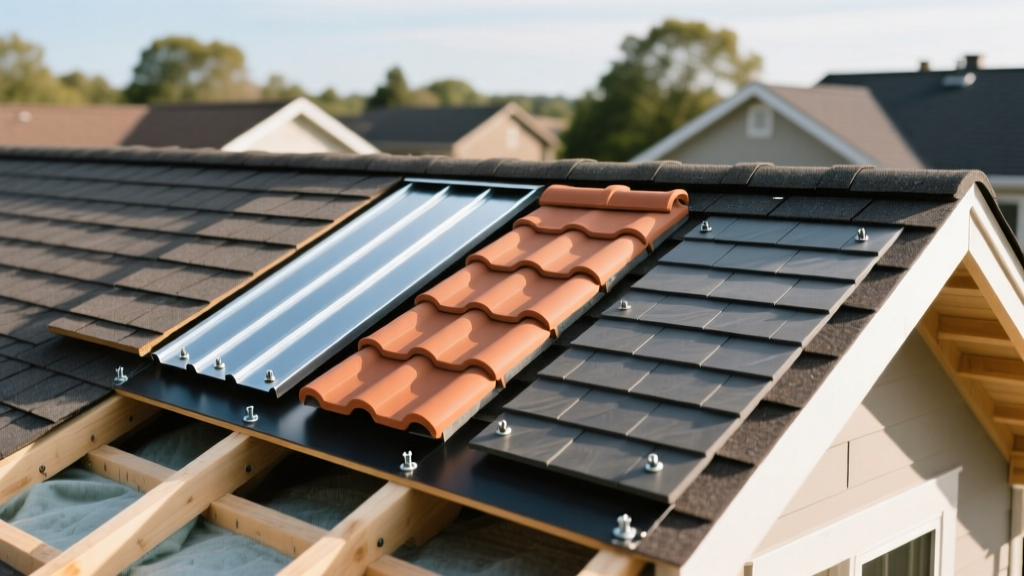
The Flaw in Upfront Roofing Estimates
Evaluating a roof replacement based solely on the initial installation invoice is a fundamental financial error. A $12,000 asphalt shingle roof and a $35,000 standing seam metal roof represent vastly different capital outlays, but analyzing them through the lens of initial cost ignores the most critical variable in building envelope economics: time. When calculating the true return on investment (ROI) for building materials, the roofing materials lifespan must be mathematically integrated with the initial price, maintenance requirements, and eventual disposal costs.
According to the International Association of Certified Home Inspectors (InterNACHI), the baseline life expectancy of roofing systems varies from 15 years for basic 3-tab asphalt to over 100 years for natural slate. However, these baseline figures assume optimal conditions. To determine the actual cost-per-year of service, we must apply an annualized cost framework that accounts for material degradation, climate-specific wear, and the compounding costs of tear-offs.
The Annualized Cost Framework
The annualized cost metric strips away the sticker shock of premium materials by dividing the total lifecycle cost by the expected years of service. The formula is straightforward:
When applying this framework, premium materials with high upfront costs frequently yield a lower annualized cost than budget alternatives. Furthermore, a longer roofing materials lifespan inherently reduces the frequency of tear-offs. Disposing of an old roof costs between $1.50 and $4.00 per square foot in 2026, depending on local landfill tipping fees and the weight of the debris. A material that lasts 60 years avoids at least one full tear-off and disposal cycle compared to a material that lasts 30 years.
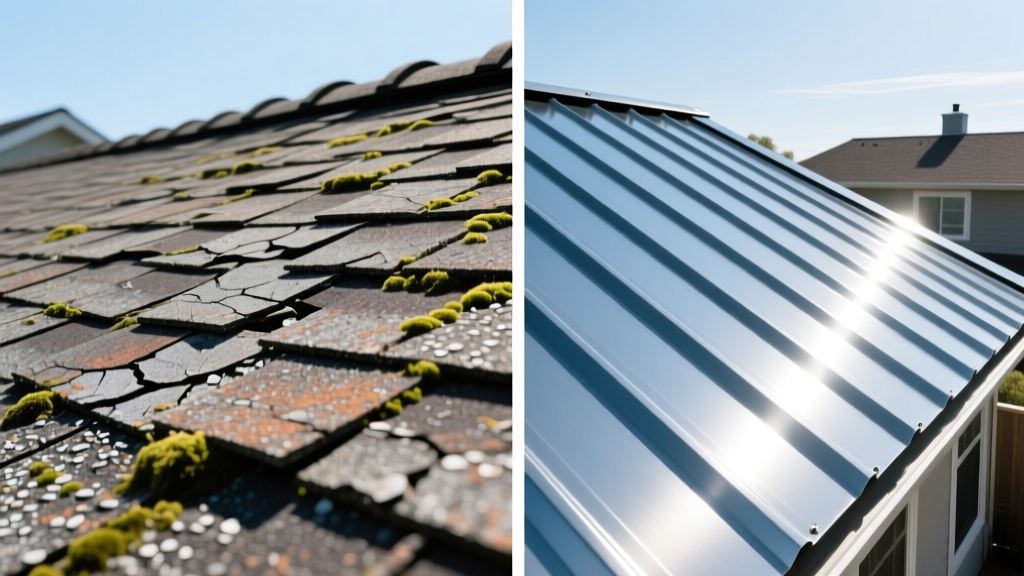
Material Lifespan and Cost Matrix
The following matrix breaks down the true cost of the five most common residential and commercial roofing systems. Costs are expressed per "square" (100 square feet of roof area), which is the industry standard unit of measurement.
| Material Type | Initial Cost (per sq) | Expected Lifespan | Annualized Cost (per sq/yr) | Tear-offs per 100 Yrs |
|---|---|---|---|---|
| 3-Tab Asphalt | $350 - $450 | 15 - 20 Years | $22.50 | 5 to 6 |
| Architectural Asphalt | $450 - $650 | 25 - 30 Years | $21.60 | 3 to 4 |
| Standing Seam Metal | $1,200 - $1,800 | 50 - 70 Years | $25.70 | 1 to 2 |
| Concrete Tile | $800 - $1,200 | 50 Years | $20.00 | 2 |
| Natural Slate | $1,500 - $3,000 | 75 - 100+ Years | $24.00 | 1 |
While architectural asphalt and concrete tile show the lowest raw annualized costs, this matrix does not yet factor in the structural reinforcement required for tile and slate, nor the energy savings provided by reflective metal systems.
Degradation Curves and Hidden Maintenance Costs
Not all years in a roof's lifespan are created equal. Understanding the degradation curve of specific materials is vital for forecasting maintenance budgets.
Asphalt Shingles: Linear Degradation
Asphalt shingles degrade linearly from the day they are installed. UV radiation bakes out the volatile oils in the asphalt, while thermal cycling causes the fiberglass mat to expand and contract. By year 15, a standard architectural shingle (such as GAF Timberline HDZ) will have lost a significant portion of its protective ceramic granules. Maintenance costs in the final third of the lifespan spike due to localized leak repairs and wind-blown tab replacements.
Standing Seam Metal: The Flatline Curve
Properly installed standing seam metal roofs (using 24-gauge Galvalume steel with a Kynar 500 paint finish) exhibit a "flatline" degradation curve. For the first 40 years, maintenance is virtually zero, limited to clearing debris from valleys and inspecting penetrations. According to the U.S. Department of Energy, highly reflective metal roofs also reduce cooling loads by 10% to 15%, effectively lowering the annualized cost when energy savings are factored into the ROI equation. The primary failure point occurs at the panel clips and fasteners after 50 years, requiring a localized retrofit rather than a full replacement.
Concrete and Clay Tile: The Underlayment Trap
The Tile Roofing Institute Alliance notes that while the tiles themselves easily last 50 to 100 years, the underlying waterproofing membrane does not. A common financial trap is assuming a tile roof requires zero maintenance for half a century. In reality, the synthetic or felt underlayment beneath the tiles degrades in 25 to 30 years. A "lift and relay" procedure—where tiles are carefully removed, the underlayment is replaced, and the tiles are reinstalled—costs between $400 and $600 per square. This mid-lifecycle expense must be added to the tile's annualized cost.
Climate-Specific Lifespan Adjustments
Manufacturer warranties and baseline lifespan estimates assume a moderate climate. Extreme environmental factors aggressively compress the roofing materials lifespan, altering the ROI calculation.
- High UV / Desert Climates (e.g., Arizona, Nevada): Asphalt shingles degrade up to 30% faster due to intense UV exposure and extreme thermal shock. A 30-year architectural shingle may only yield 18-20 years of service. Metal and clay tile are the only financially viable options here, as their reflectivity and thermal mass resist UV degradation.
- Freeze-Thaw Cycles (e.g., Midwest, Northeast): Porous materials like unsealed concrete tile and low-grade slate absorb moisture, which expands upon freezing, causing spalling and micro-fractures. In these regions, non-porous standing seam metal or impact-resistant polymer slate (like DaVinci Roofscapes) offers a superior lifespan.
- Coastal / Salt Spray Environments (e.g., Florida, Coastal Carolinas): Salt aerosols rapidly corrode standard galvanized steel and aluminum flashings. For metal roofing in these zones, you must specify a minimum of 0.032-inch aluminum panels or heavily coated Galvalume with marine-grade fasteners to prevent premature panel failure at the clip lines.
The Tear-Off and Disposal Multiplier
When calculating the long-term cost of roofing, the end-of-life phase is frequently ignored. Asphalt shingles are petroleum-based and contribute roughly 20 billion pounds of waste to U.S. landfills annually. Because asphalt roofs must be replaced 3 to 5 times within a single century, the homeowner or building owner pays for 3 to 5 separate tear-offs.
For a standard 2,500 sq. ft. home (25 squares), a single asphalt tear-off and disposal costs between $2,500 and $4,500. Over a 100-year period, replacing an asphalt roof every 25 years incurs approximately $12,000 to $18,000 in pure demolition and landfill fees. A metal or slate roof installed once incurs this fee only once, effectively subsidizing its higher initial purchase price.
Furthermore, many jurisdictions are implementing stringent construction and demolition (C&D) waste taxes. As landfill space diminishes, the per-ton tipping fee for asphalt shingles is projected to rise, making the tear-off multiplier an increasingly heavy penalty against short-lifespan materials.
Decision Flowchart: Matching Material to Ownership Horizon
To finalize your material selection, align the roofing materials lifespan with your projected ownership timeline and capital structure.
- Short-Term Ownership (Under 10 Years): Choose Architectural Asphalt. The ROI on premium materials cannot be fully realized in a decade. High-quality architectural shingles provide sufficient curb appeal for resale without overcapitalizing the property.
- Medium-Term Ownership (15 to 25 Years): Choose Concrete Tile or Premium Metal. If you plan to stay through the lifecycle of one asphalt roof, upgrading to metal or tile prevents the massive disruption, interior damage risk, and inflation-adjusted cost of a mid-life roof replacement.
- Generational / Institutional Ownership (30+ Years): Choose Natural Slate or Heavy-Gauge Standing Seam Metal. For legacy properties, historical buildings, or commercial holds, the annualized cost of slate or metal drops below asphalt when factoring in avoided tear-offs, zero maintenance, and potential energy rebates. Ensure the roof decking is engineered to support the dead load (slate requires a minimum 3/4-inch solid decking, often reinforced with steel trusses).
Ultimately, the cheapest roof you can buy is often the most expensive roof you will own. By shifting the evaluation metric from initial invoice price to annualized lifecycle cost, you can select a roofing system that aligns with both your structural requirements and your long-term financial strategy.
Written by
Elena RodriguezElena Rodriguez is a civil engineer and technical writer specializing in concrete technology, masonry systems, and ASTM/ACI compliance. She earned her B.S. in Civil Engineering from Texas A&M University and spent a decade at a materials testing laboratory, performing over 2,000 concrete compressive strength tests and masonry prism evaluations. Elena is an ACI-certified Field Testing Technician (Grade I) and a member of ASTM Committee C12 on Natural Building Stone. She currently consults on forensic engineering cases involving concrete failures and moisture intrusion. Based in San Antonio, TX, Elena is a proud member of the Society of Women Engineers (SWE) and coaches her daughter's FIRST Robotics team.
More from Elena Rodriguez
View all
Walls & Panels
Cost Analysis: Light Gauge Steel Framing Advantages and Disadvantages
Evaluate light gauge steel framing advantages and disadvantages through a strict cost analysis lens, comparing material, labor, and lifecycle expenses.
Aug 4, 2026

Walls & Panels
Gypsum Board Types: Exact Specifications, Thickness & Dimensions
Compare standard, Type X, and moisture-resistant gypsum board types. Get exact specifications, thicknesses, dimensions, and ASTM standards for your project.
Aug 4, 2026

Fire Resistance
Best Fire-Resistant Outdoor Decking Materials: 2026 Buyer Guide
Discover the best fire-resistant outdoor decking materials for 2026. Compare Class A PVC, aluminum, and hardwood options for WUI compliance and safety.
Aug 4, 2026