Fire Retardant Treatments: Material Taxonomy & Selection
Compare fire retardant coatings, intumescent paints, and treated wood. Expert taxonomy, costs, and substrate selection for code compliance.
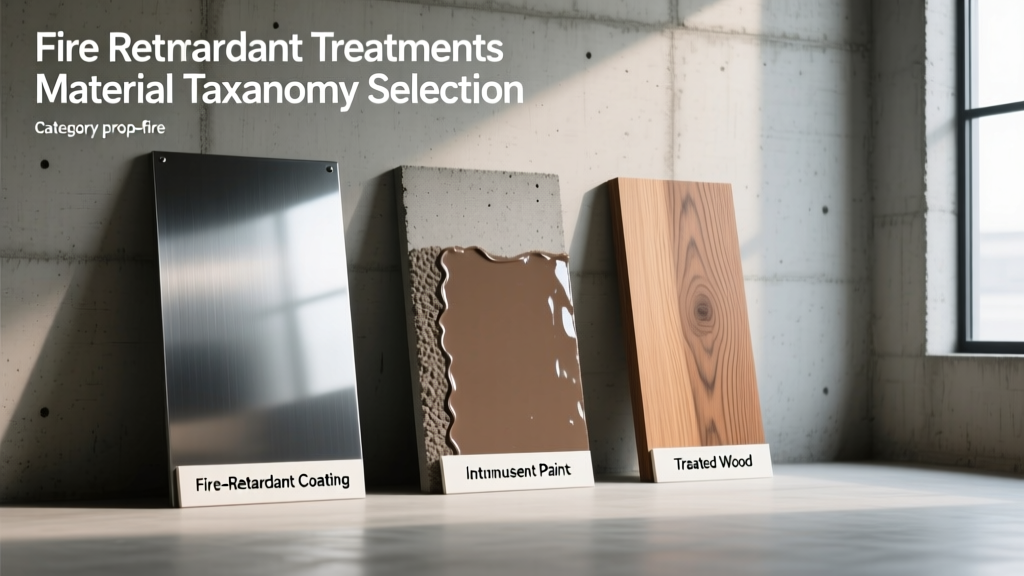
The Core Distinction: Inherent Resistance vs. Applied Retardancy
In building material taxonomy, 'fire-resistant' and 'fire-retardant' are frequently conflated, leading to critical specification errors. Fire-resistant materials, such as concrete, masonry, and Type X gypsum board, possess inherent non-combustible properties due to their chemical composition. Fire retardant materials, conversely, are inherently combustible substrates (like wood, steel, or textiles) that have been chemically treated or coated to delay ignition, reduce flame spread, and lower heat release rates.
Selecting the correct fire retardant intervention requires matching the chemical mechanism to the substrate's failure mode under thermal stress. According to the NIST Fire Research Division, the efficacy of any retardant is strictly bound to its application thickness, environmental exposure, and the specific heat flux of the design fire.
Taxonomy of Fire Retardant Chemistries and Coatings
Fire retardants operate through three primary mechanisms: endothermic degradation (absorbing heat), thermal shielding (forming an insulating char), and gas-phase radical quenching (interrupting the combustion chain reaction). Below is the technical taxonomy of applied retardants used in modern construction.
1. Intumescent Coatings (Thin-Film and Thick-Film)
Intumescent paints remain inert at ambient temperatures but swell up to 50 times their original thickness when exposed to temperatures exceeding 392°F (200°C). This expansion creates a carbonaceous char that insulates the substrate. Thin-film intumescents (typically 5 to 40 dry mils) are used for aesthetic architectural steel and wood, while thick-film epoxies (up to 1 inch) are specified for hydrocarbon pool fires in industrial facilities. Products like Nullifire SC902 require precise wet-to-dry mil calculations based on the steel's section factor (W/D ratio).
2. Cementitious and Fibrous Sprays
Sprayed fire-resistive materials (SFRM) like Cafco 300 or Monokote rely on Portland cement, gypsum, or magnesium oxychloride binders mixed with vermiculite or perlite. These are purely thermal shields. They do not undergo chemical expansion but provide high-density, low-thermal-conductivity barriers. They are highly cost-effective for concealed structural steel and concrete decking but are friable and easily damaged during tenant fit-outs.
3. Chemical Impregnation (Pressure-Treated Substrates)
For porous materials like lumber and plywood, surface coatings are insufficient. Fire-retardant-treated (FRT) wood is impregnated under high pressure with water-soluble salts (e.g., diammonium phosphate, ammonium sulfate, or borates). Brands like Hoover Treated Wood (Fireline) use these chemicals to catalyze dehydration in the wood cellulose, forcing the wood to char rather than combust. However, these salts are highly hygroscopic and can leach out if exposed to weather.
Substrate-Specific Selection Matrix
| Substrate | Recommended Retardant Type | Max Achievable Rating | Installed Cost (per Sq Ft) | Primary Failure Mode |
|---|---|---|---|---|
| Structural Steel (W-Shapes) | Thin-Film Intumescent | 2 Hours (ASTM E119) | $4.50 - $8.00 | Spalling due to improper primer adhesion |
| Structural Steel (Concealed) | Cementitious SFRM | 3 Hours (UL 263) | $1.50 - $3.50 | Mechanical abrasion and moisture degradation |
| Architectural Millwork (Interior) | Clear Intumescent Varnish | Class A (ASTM E84) | $3.00 - $6.00 | UV yellowing and loss of char integrity |
| Framing Lumber (Interior) | Pressure-Impregnated Salts | Class A (NFPA 703) | +15% to +25% material premium | Corrosion of adjacent fasteners; humidity warping |
| Acoustical Fabrics / Textiles | Topical Halogenated Sprays | NFPA 701 Compliant | $1.00 - $2.50 | Washing/dry-cleaning removes the treatment |
Substrate-Specific Selection Framework
Structural Steel Protection: The W/D Ratio Imperative
When specifying intumescent fire retardant paint for steel, the required dry film thickness (DFT) is not a flat number; it is dictated by the beam's Weight-to-Depth (W/D) ratio or Section Factor (Hp/A). A massive W14x311 beam retains its structural integrity longer under fire conditions than a slender W10x12 beam. Therefore, the slender beam requires a significantly thicker application of intumescent coating to achieve the same 2-hour fire rating. Specifiers must consult the manufacturer's UL design directory to map the exact mil thickness to the specific beam geometry. Applying a flat 20 mils across all beams will result in catastrophic failure of the slender members during a fire event.
Architectural Woodwork: Balancing Aesthetics and Class A Ratings
For exposed timber ceilings or custom millwork where the natural grain must remain visible, clear intumescent varnishes are required. These systems typically require a three-part application: a reactive base coat, a clear intumescent mid-coat, and a UV-stable polyurethane topcoat. The topcoat is critical; without it, ambient humidity will degrade the intumescent layer. Always verify that the topcoat is explicitly approved by the retardant manufacturer, as unauthorized topcoats can alter the surface burning characteristics and void the NFPA compliance listing.
Real-World Cost and Application Data
- Cementitious SFRM (Concealed Steel): 2,500 sq ft @ $2.10/sq ft = $5,250
- Thin-Film Intumescent (Exposed Steel): 1,200 sq ft @ $6.50/sq ft = $7,800
- Clear Intumescent Varnish (Wood Features): 800 sq ft @ $5.50/sq ft = $4,400
- Third-Party Firestop Inspection: $1,800 flat fee
- Total Fire Retardant Budget: $19,250 (Approx. $3.85 per gross sq ft of lobby area)
Code Compliance and Testing Standards
Fire retardant materials must be tested and listed under specific standards depending on their application. Surface burning characteristics for interior finishes and treated wood are evaluated under ASTM E84
For structural assemblies, the retardant must be tested under ASTM E119UL 263 (Standard Test Methods for Fire Tests of Building Construction and Materials), which subjects the coated assembly to a standard time-temperature curve (reaching 2,000°F at 2 hours). The Association of the Wall and Ceiling Industry provides extensive technical bulletins on the proper integration of SFRMs with adjacent firestop and partition systems to ensure continuous code compliance.
Maintenance, Degradation, and Reapplication
A common misconception is that fire retardant treatments are permanent. While pressure-impregnated interior FRT wood maintains its rating for the life of the structure (provided it remains dry), applied coatings degrade. Cementitious sprays are prone to mechanical damage from vibrating ductwork or adjacent trades. Intumescent paints can blister if the underlying steel corrodes, and they must be inspected annually for adhesion loss. Topical textile retardants must be reapplied after every commercial washing cycle. Facility managers must retain the original manufacturer's data sheets and third-party inspection reports to prove ongoing compliance during fire marshal audits.