Polyester Material Waterproof Systems: 2026 Product Review
Evaluating top polyester material waterproof systems for 2026. Compare PVC-coated architectural fabrics and liquid-applied fleece reinforcements.
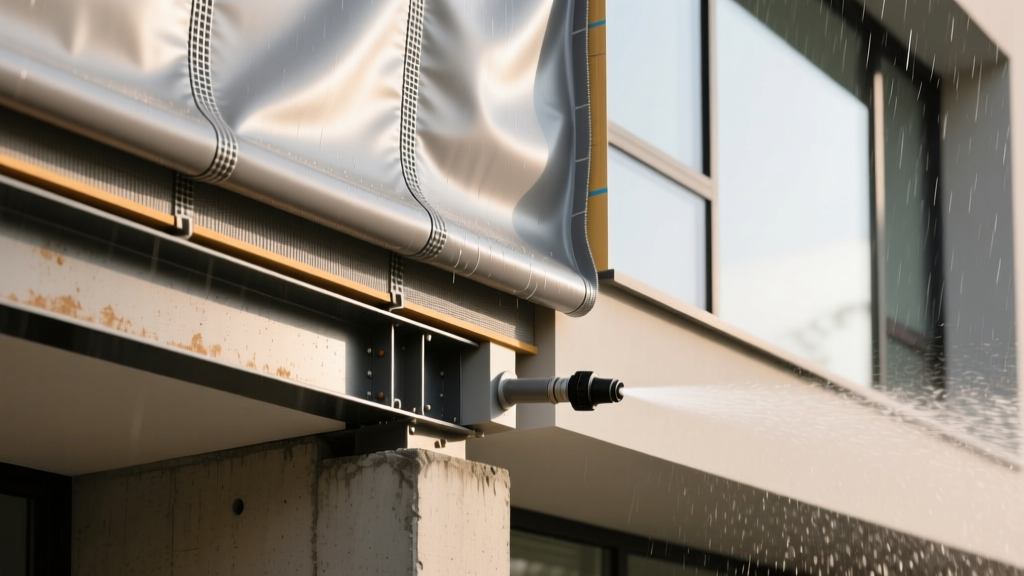
The Reality of Polyester in Structural Waterproofing
Raw polyethylene terephthalate (PET) yarn is inherently hydrophobic, meaning it resists water absorption. However, a woven polyester fabric alone is not a waterproof barrier; water will pass through the microscopic gaps in the weave. To achieve true waterproofing, polyester must serve as a high-tensile reinforcement scrim embedded within a continuous waterproof matrix—typically polyvinyl chloride (PVC), thermoplastic polyurethane (TPU), or polymethyl methacrylate (PMMA) resins. Selecting the right polyester material waterproof system requires understanding how these composite materials perform under structural load, UV exposure, and thermal cycling.
This 2026 product review evaluates three distinct, industry-leading polyester-based waterproofing systems: a reinforced PVC roofing membrane, an architectural PVC-coated polyester fabric, and a liquid-applied polyester fleece reinforcement system. We analyze exact specifications, current market pricing, and specific failure modes to help contractors and architects make data-driven specifications.
Product Review 1: Sika Sarnafil G 410 (Polyester-Reinforced PVC)
Sarnafil G 410 is a 60-mil (1.5mm) thick, multi-layer PVC roofing membrane reinforced with a heavy-duty polyester scrim. It is engineered specifically for adhered and mechanically fastened commercial flat roof applications. The polyester reinforcement provides exceptional dimensional stability, preventing the membrane from stretching or contracting wildly during the extreme temperature swings common in North American climates.
- Thickness: 60 mil (1.5 mm) nominal
- Reinforcement: High-tenacity polyester scrim
- Tensile Strength: 390 lbf/in (ASTM D638)
- Hot Air Welding Temp: 900°F - 1050°F (480°C - 560°C)
- Material Cost (2026): $2.85 - $3.40 per sq. ft.
Pros: The fleece-backing option allows for direct adhesion to polyiso insulation without separate cover boards, saving on labor and material costs. The polyester scrim ensures the membrane will not snap under high wind uplift loads, easily achieving FM 1-90 ratings.
Cons: PVC membranes are susceptible to plasticizer migration when in direct, continuous contact with expanded polystyrene (EPS) or bituminous substrates. A separation layer is mandatory in those scenarios.
Product Review 2: Serge Ferrari Precontraint 1202 S2 (Architectural Membrane)
For tensile structures, canopies, and complex architectural envelopes, liquid-applied or standard roofing membranes fail. Serge Ferrari's Precontraint 1202 S2 is a heavy-duty PVC-coated polyester fabric manufactured using a proprietary bi-axial pre-stressing technique. The polyester yarns are stretched in both directions during the coating process, eliminating the 'hammock effect' and ensuring the material remains taut and sheds water perfectly without pooling.
- Weight: 1,200 g/m² (35.4 oz/yd²)
- Surface Treatment: PVDF (S2) for extreme UV and dirt resistance
- Tensile Strength: 5,300 / 5,000 N/5cm (Warp/Weft)
- Tear Strength: 550 / 500 N
- Material Cost (2026): $4.75 - $6.10 per sq. ft.
Pros: The PVDF surface treatment makes the membrane highly resistant to biological growth and atmospheric pollution, meaning it remains self-cleaning during rain events. According to data from the Advanced Textiles Association, PVDF-coated polyester membranes offer a service life exceeding 25 years in high-UV environments.
Cons: Requires specialized high-frequency (HF) welding equipment for seam splicing. Standard hot-air welders often fail to penetrate the 1200 g/m² thickness evenly, leading to seam delamination under tension.
Product Review 3: Kemper System Kemperol V210 (Liquid-Applied Fleece)
Kemperol V210 is a solvent-free, two-component PMMA (polymethyl methacrylate) liquid resin system that saturates a specialized 165 g/m² polyester fleece. Unlike pre-formed sheets, this system creates a fully bonded, seamless, and monolithic waterproofing layer that conforms to any substrate, making it ideal for complex balcony decks, planters, and zero-slope areas with excessive penetrations.
Pros: The polyester fleece acts as a micro-reinforcement matrix, bridging substrate cracks up to 2mm wide. The PMMA resin cures via chemical cross-linking in just 45 minutes, even at temperatures as low as 23°F (-5°C), allowing for same-day return-to-service.
Cons: The pot life is extremely short (approx. 20 minutes at 68°F). Installers must mix only what they can apply immediately, leading to higher material waste if crew pacing is poorly managed.
Comparison Matrix: Polyester Waterproofing Systems
| Feature | Sarnafil G 410 | Precontraint 1202 S2 | Kemperol V210 |
|---|---|---|---|
| Primary Application | Commercial Flat Roofing | Tensile Architecture / Canopies | Balconies, Podiums, Details |
| Polyester Role | Internal Reinforcement Scrim | Primary Structural Base Fabric | Crack-Bridging Saturation Fleece |
| Seam Technology | Hot Air Welding (Homogenous) | High-Frequency / Solvent Weld | Seamless (Chemical Bond) |
| Installed Cost (2026) | $8.50 - $12.00 / sq. ft. | $18.00 - $26.00 / sq. ft. | $16.00 - $22.00 / sq. ft. |
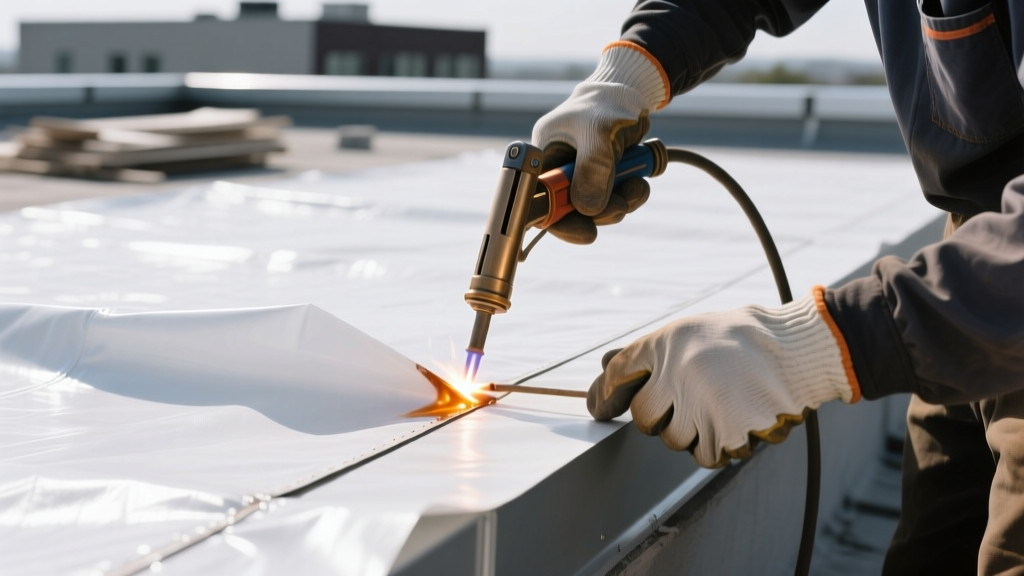
Critical Failure Modes and Installation Edge Cases
Even the highest-grade polyester material waterproof systems will fail if installed outside their strict environmental and mechanical parameters. Based on field forensics and National Roofing Contractors Association (NRCA) technical bulletins, here are the most common edge cases to engineer out of your project.
1. Moisture Entrapment During Hot-Air Welding
When welding PVC-coated polyester membranes (like Sarnafil or standard architectural fabrics), ambient humidity and morning dew are critical variables. If moisture is trapped between the overlapping membrane layers during hot-air welding, the water flash-boils at 212°F. This creates micro-blisters inside the weld seam. Over time, freeze-thaw cycles expand these blisters, causing the polyester scrim to separate from the PVC coating. Mandate: Wipe all seam areas with a clean, dry cloth and use a pre-heat pass to drive off ambient moisture before executing the final weld.
2. Plasticizer Migration and Biological Attack
PVC relies on liquid plasticizers to remain flexible. Certain bacteria and fungi feed on these plasticizers, leading to localized stiffening and eventual cracking of the membrane. Furthermore, if a PVC polyester membrane is laid directly over un-separated EPS foam or bitumen, the plasticizers migrate into the substrate, leaving the membrane brittle. Always specify a manufacturer-approved separation fleece or glass-faced gypsum cover board when interfacing with incompatible substrates.
'When specifying liquid-applied polyester fleece systems like PMMA, substrate moisture content must be below 4% by weight. If the concrete slab is outgassing moisture, the chemical cross-linking of the resin will be interrupted, resulting in a tacky, uncured surface that will never achieve its 400 psi adhesion strength.'
2026 Sourcing and Supply Chain Realities
The global supply chain for high-tenacity polyester yarns and specialized PMMA resins has stabilized in 2026, but regional lead times vary significantly. Architects and procurement managers must factor in the following logistical realities when drafting project timelines:
| Material Category | Current Lead Time | Price Volatility Factor |
|---|---|---|
| PVC-Polyester Roofing Rolls | 2 - 4 Weeks | Low (Stable petrochemical pricing) |
| Architectural Tensile Fabrics | 8 - 14 Weeks | Medium (Custom HF welding queues) |
| PMMA Resin & Fleece Kits | 3 - 5 Weeks | High (Specialty chemical transport) |
Decision Framework: Which System Fits Your Envelope?
Do not default to a single polyester-based system out of habit. Match the material to the specific mechanical and environmental demands of the structure.
- Choose Sarnafil G 410 (Reinforced PVC) if you are enclosing a large-scale commercial, industrial, or retail flat roof where wind uplift resistance, long-term warranties (up to 25 years), and cost-efficiency per square foot are the primary drivers.
- Choose Precontraint 1202 S2 (Coated Polyester) if the project involves suspended tensile canopies, stadium roofs, or architectural facades where the waterproofing material must also act as the primary structural tension element while resisting severe UV degradation.
- Choose Kemperol V210 (Liquid Fleece) if you are waterproofing highly detailed areas with dozens of pipe penetrations, complex drains, zero-slope balconies, or planters where sheet membrane seams would present an unacceptable leak risk. Refer to ASTM International standards for liquid-applied membrane testing to ensure compliance with local building codes.
Understanding the exact composite makeup of your chosen polyester material waterproof system—whether it relies on a PVC matrix, a PVDF coating, or a PMMA resin—is the difference between a high-performance building envelope and a premature, costly failure.
Written by
Sarah WhitfieldSarah Whitfield is a chartered quantity surveyor (MRICS) and construction cost analyst with 15 years of experience in material pricing, procurement strategy, and project budgeting. She earned her degree in Construction Management from the University of Reading (UK) and has worked on projects ranging from $2M custom homes to $180M mixed-use developments across North America and Europe. Sarah currently leads cost estimating for BuildMat Insight, maintaining a proprietary database of 4,000+ material price points updated quarterly. She is a frequent contributor to RSMeans cost data panels and has presented at the International Cost Engineering Council (ICEC) congress. Based in Denver, CO, Sarah is an avid trail runner and volunteer mentor for Women in Construction.
More from Sarah Whitfield
View all
Wood & Lumber
What Are the Different Types of Wood? A Builder's Guide
Compare structural softwoods, finish hardwoods, and engineered lumber. Analyze Janka ratings, MOE values, and 2026 pricing for construction.
Aug 4, 2026

Walls & Panels
Steel Framing vs Wood Framing: Corrosion and Moisture Defense
Compare steel framing vs wood framing for moisture resistance. Learn about galvanized coatings, condensation risks, and corrosion protection strategies.
Jul 21, 2026

Stone & Masonry
How to Cut Stone Veneer: Wet Saw vs Grinder Comparison
Compare the best tools for cutting stone veneer. We review wet saws, angle grinders, and chop saws to help you achieve clean, chip-free cuts.
Jul 21, 2026