Waterproof Bathroom Flooring: Durability and Lifespan Analysis
Analyze the true lifespan of waterproof bathroom flooring. Compare SPC, porcelain, and sheet vinyl durability, failure modes, and subfloor systems.
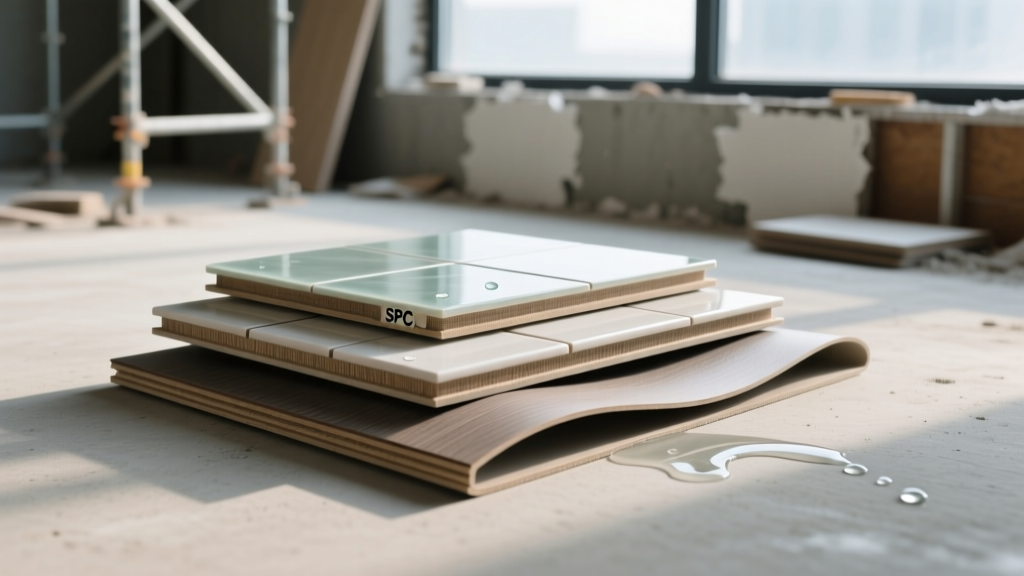
The 'Waterproof' Misconception: Material vs. System
When evaluating waterproof bathroom flooring, a critical distinction must be made between a waterproof material and a waterproof system. Marketing materials frequently highlight that Stone Plastic Composite (SPC) vinyl or porcelain tile will not swell when submerged. While true, this only addresses the wear layer and core. In a real-world bathroom environment, water bypasses the flooring surface through micro-gaps, expansion joints, and fixture penetrations, pooling on the subfloor. If the underlying assembly lacks a continuous moisture barrier, the subfloor will rot, mold will proliferate, and the flooring will ultimately fail from below, regardless of its surface impermeability.
Waterproof Bathroom Flooring: Lifespan and Durability Matrix
The expected lifespan of bathroom flooring is dictated by its resistance to abrasion, chemical degradation from cleaning agents, and structural deflection. Below is a comparative analysis of the primary waterproof flooring categories based on 2026 material science standards and residential wear patterns.
| Material Type | Core Composition | Expected Lifespan | Wear Layer / Thickness | Avg. Material Cost (2026) | Primary Vulnerability |
|---|---|---|---|---|---|
| Porcelain Tile | Fired clay & silica (Water absorption < 0.5%) | 50+ Years | Through-body or glazed (3/8" - 1/2") | $4.50 - $12.00 / sq ft | Grout degradation and thinset bond failure |
| SPC Luxury Vinyl | Limestone powder & PVC stabilizers | 15 - 25 Years | 12-mil to 22-mil urethane topcoat | $3.50 - $8.00 / sq ft | Seam infiltration and UV discoloration |
| Fiberglass Sheet Vinyl | PVC with fiberglass mesh reinforcement | 10 - 20 Years | 10-mil to 15-mil aluminum oxide finish | $2.00 - $5.50 / sq ft | Surface scratching and perimeter curling |
| Engineered Stone Tile | Crushed quartz/resin composite | 30 - 40 Years | Solid 5/16" profile | $7.00 - $14.00 / sq ft | Thermal expansion cracking near heat sources |
Primary Failure Modes in Wet Environments
Understanding how waterproof flooring actually fails requires looking past the surface material and examining the chemical and mechanical interactions at the subfloor interface.
1. Hydrostatic Pressure and Alkaline Efflorescence
When installing waterproof bathroom flooring over a concrete slab, moisture vapor emission rates (MVER) and alkalinity are the primary enemies of adhesive bonds. According to guidelines from the Resilient Floor Covering Institute (RFCI), concrete subfloors must not exceed 5 lbs of MVER per 1,000 square feet per 24 hours (ASTM F1869) or 75% relative humidity (ASTM F2170). More critically, if the concrete's pH exceeds 10, the alkaline salts will emulsify standard pressure-sensitive adhesives used for sheet vinyl and glue-down LVP. This chemical breakdown causes the flooring to detach, creating pockets where standing water breeds mold. To mitigate this, a high-alkaline-resistant primer or an epoxy moisture vapor barrier must be applied to the slab prior to adhesive application.
2. Micro-Scratches and Wear Layer Degradation
While SPC and WPC (Wood Plastic Composite) cores are entirely impervious to water, their urethane wear layers are susceptible to micro-abrasions from silica sand and grit tracked into the bathroom. Once the wear layer is compromised, the printed decorative film beneath is exposed. While the plank will not swell, the aesthetic degradation is permanent. Furthermore, aggressive alkaline cleaners (pH > 9) or steam mops will break down the polyurethane topcoat and force vapor into the click-lock seams. The heat from steam mops can also soften the SPC core's locking mechanisms, leading to joint separation and subsequent water infiltration.
Engineering a 30-Year Waterproof Subfloor System
To achieve maximum longevity for waterproof bathroom flooring, the installation must integrate a continuous waterproofing membrane that ties into the wall assemblies. The Tile Council of North America (TCNA) Handbook outlines strict protocols for wet-area subfloor preparation that apply equally to tile and resilient flooring.
- Subfloor Deflection Check: Ensure wood subfloors meet the L/360 deflection standard. For tile, a double-layer plywood system or a decoupling membrane is required to prevent cracking from joist movement.
- Liquid Membrane Application: For sheet vinyl or LVP, apply two coats of a liquid-applied waterproofing membrane (e.g., Custom Building Products RedGard or Mapei AquaDefense) over the prepared subfloor. Use a wet-film thickness gauge to ensure the membrane achieves the required 30-40 mils wet thickness, which cures to approximately 15-20 mils dry.
- Uncoupling Integration (For Tile): If installing porcelain, utilize a bonded waterproofing and uncoupling membrane like Schluter-DITRA. This prevents lateral transfer of subfloor cracks into the tile assembly while providing a continuous waterproof pan when seams are sealed with Kerdi-Band.
- Perimeter Sealing: Leave a 1/4-inch expansion gap at all walls and tub edges. Fill this gap with a 100% silicone sealant (never acrylic latex caulk, which shrinks and mildews). This creates a watertight dam that prevents surface water from migrating behind the baseboards and into the wall cavities.
Longevity Maintenance: Protecting the Wear Layer
The lifespan of waterproof bathroom flooring is heavily dependent on maintenance protocols. To preserve the integrity of the wear layer and the mechanical seams, adhere to the following operational guidelines:
- pH-Neutral Cleaning: Restrict cleaning solutions to a pH between 6.5 and 7.5. High-alkaline bathroom cleaners designed for soap scum removal will strip the urethane finish from LVP and degrade epoxy grout sealers over time.
- Eliminate Steam Cleaning: Never use steam mops on click-lock LVP or engineered tile. The pressurized vapor forces moisture past the mechanical locks, and the thermal shock can warp the perimeter edges of the planks.
- Grout Maintenance (For Tile Systems): If utilizing cementitious grout, apply a penetrating silane-siloxane sealer every 18 to 24 months. Alternatively, specify high-performance cement grouts (e.g., Mapei Ultracolor Plus FA) or single-component urethane grouts at the time of installation to eliminate the need for periodic sealing entirely.
- Moisture Matting: Place microfiber absorbent mats outside the shower enclosure and vanity areas to capture standing water immediately, reducing the hydrostatic dwell time on the flooring seams.
By treating the flooring as a component of a broader waterproofing assembly rather than a standalone product, builders and homeowners can ensure the bathroom floor survives decades of rigorous moisture exposure without structural or aesthetic compromise.