Waterproof Gloves: Performance Ratings & EN511 Specs Guide
Decode waterproof glove specs for construction. Compare EN511 water penetration, EN388 mechanical ratings, and membrane MVTR data for site safety.
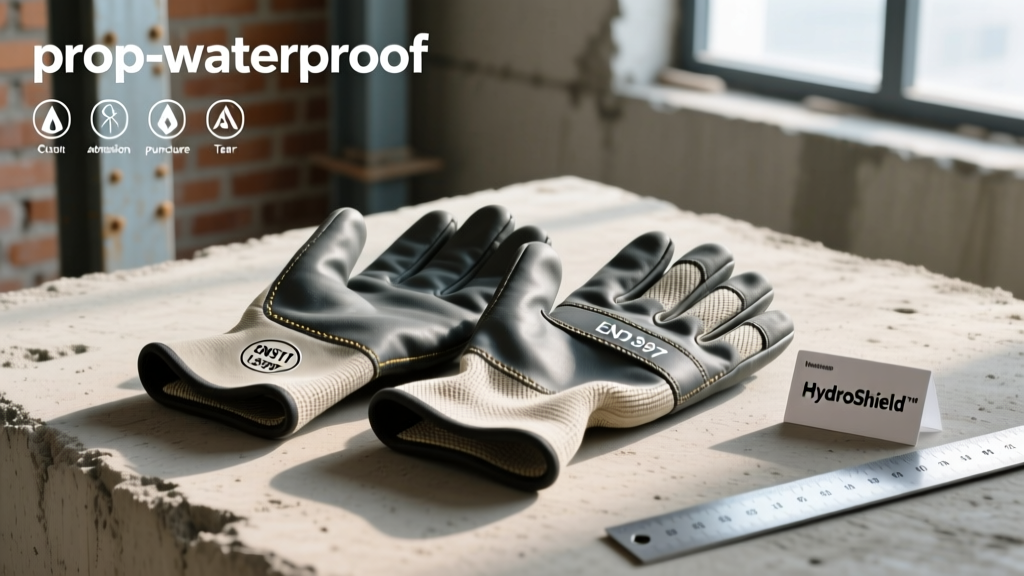
The Reality of Moisture Protection on the Job Site
In commercial construction and heavy masonry, the term "waterproof" is frequently misused by manufacturers and misunderstood by procurement teams. A glove that repels a light drizzle will catastrophically fail when submerged in wet Portland cement or exposed to prolonged hydrostatic pressure. Selecting the correct waterproof gloves requires moving beyond marketing claims and strictly evaluating standardized performance ratings, membrane breathability metrics, and chemical resistance thresholds. Moisture ingress in construction environments does not merely cause discomfort; it leads to severe grip failure, cold stress, and alkaline chemical burns from wet concrete.
Decoding the Core Standards: EN 511 and EN 388
European standards remain the global benchmark for quantifying glove performance, even on North American job sites. When evaluating waterproof gloves, safety managers must cross-reference two distinct standards: EN 511 (Cold and Water) and EN 388 (Mechanical Risks).
EN 511: Water Penetration Resistance
The EN 511 standard evaluates a glove's ability to protect against cold and water. The third digit of the EN 511 rating specifically addresses water penetration. The test involves submerging the glove in water at 20°C for 30 minutes. If water breaches the interior, it fails.
| EN 511 Water Rating | Test Parameter | Construction Application |
|---|---|---|
| 0 | Fails water penetration test before 30 minutes. | Unacceptable for wet site work; suitable only for dry, cold environments. |
| 1 | No water penetration after 30 minutes of continuous submersion. | Mandatory for roofing, wet masonry, and prolonged rain exposure. |
EN 388: The Mechanical Shield
Waterproofing membranes (like PTFE or Polyurethane) provide zero mechanical protection. The outer shell dictates the EN 388 rating (Abrasion, Cut, Tear, Puncture, TDM Cut, Impact). For wet environments, a high cut rating (Level E or F under the TDM test) is vital because wet steel edges and glass become significantly more slippery, increasing the likelihood of high-force lacerations.
Membrane Liners vs. Fully Dipped Coatings
The most critical decision in specifying waterproof gloves is choosing between a breathable membrane liner and a fully dipped exterior coating. This choice dictates the glove's Moisture Vapor Transmission Rate (MVTR), which measures how much sweat can escape the glove in grams per square meter over 24 hours (g/m²/24h).
1. Microporous Membranes (Gore-Tex, PTFE)
- MVTR: >15,000 g/m²/24h (Highly breathable).
- Waterproof Mechanism: Pores are smaller than a water droplet but larger than a water vapor molecule.
- Best For: Framing, exterior electrical work, and roofing where the worker is sweating but needs protection from rain.
- Cost Range (2026): $45 - $85 per pair.
2. Hydrophilic Solid Membranes (Hipora, PU)
- MVTR: 3,000 - 7,000 g/m²/24h (Moderately breathable).
- Waterproof Mechanism: Solid molecular chain that wicks moisture via chemical gradient rather than physical pores.
- Best For: General site labor, light rain, and short-duration wet tasks.
- Cost Range (2026): $20 - $35 per pair.
3. Fully Dipped Coatings (Nitrile, PVC)
- MVTR: 0 g/m²/24h (Zero breathability).
- Waterproof Mechanism: Continuous physical barrier encapsulating the entire glove or palm.
- Best For: Wet concrete pouring, rebar tying in mud, and trenching.
- Cost Range (2026): $12 - $25 per pair.
The Wet Concrete Hazard: Alkaline Degradation
According to NIOSH guidelines on occupational skin diseases, wet Portland cement has a pH between 12.5 and 13.5, making it highly caustic. Standard waterproof membranes and natural latex coatings will rapidly degrade, crack, and allow alkaline water to pool against the skin, causing severe contact dermatitis and chemical burns.
"When specifying waterproof gloves for masonry and flatwork, procurement must explicitly require alkali-resistant Nitrile or PVC fully-dipped models. Latex and standard PU membranes will undergo saponification and fail within hours of contact with wet concrete."
ANSI/ISEA 105-2016: US Cut and Puncture Metrics
While EN standards dominate global manufacturing, North American safety audits frequently reference the ANSI/ISEA 105 standard for hand protection. When waterproofing layers are added to a glove, they inherently alter the cut and puncture ratings.
Common Failure Modes on the Job Site
Even gloves with perfect EN 511 ratings fail in the field due to design flaws and environmental edge cases. Safety managers must audit for the following failure modes:
- The Cuff Wicking Effect: Water runs down the worker's rain jacket sleeve and bypasses the glove's waterproof membrane entirely. Solution: Specify gloves with an extended 3-inch elastic gauntlet cuff or integrated storm flaps for roofing and trenching.
- Membrane Delamination: In cheaper PU-lined gloves, the adhesive bonding the membrane to the outer shell breaks down after repeated exposure to UV light, machine washing, or flexing in freezing temperatures. Water pools in the resulting air pockets. Solution: Require drop-liner construction where the membrane is stitched, not just glued, to the cuff.
- Thermal Conductivity in Wet Cold: Water conducts heat 25 times faster than air. If a breathable membrane allows internal sweat to accumulate during high-exertion winter work, the trapped moisture will cause rapid cold stress once the worker stops moving. Solution: Pair high-MVTR membranes with removable acrylic thermal liners for winter earthmoving.
Task-Specific Selection Matrix for 2026 Site Safety
Use the following matrix to align glove specifications with specific construction tasks, ensuring compliance with OSHA Hand Protection Guidelines which mandate that PPE must be matched to the specific hazards of the work environment.
| Construction Task | Required Waterproof Tech | Mechanical Spec Minimum | Edge Case / Hazard |
|---|---|---|---|
| Wet Concrete / Masonry | Fully Dipped Nitrile (Alkali Resistant) | EN 388: 4X42X / ANSI Cut A3 | Latex saponification; chemical burns. |
| Roofing / Exterior Framing | PTFE Membrane Liner (High MVTR) | EN 388: 4X43E / ANSI Cut A5 | Cuff wicking; nail puncture risks. |
| Winter Trenching / Earthmoving | Insulated PVC Dipped + Long Gauntlet | EN 511: 111 / EN 388: 3121X | Mud ingress; extreme thermal loss. |
| Plumbing / Wet MEP Rough-in | Thin PU Coated Palm (Tactile Sensitivity) | EN 388: 3131X / ANSI Cut A2 | Loss of dexterity for threading pipes. |
Final Procurement Directive
Do not accept "waterproof" as a standalone specification on purchase orders. Mandate the exact EN 511 water penetration digit, the required MVTR range for the specific labor intensity, and the chemical resistance profile (particularly pH tolerance for masonry crews). By enforcing data-driven specifications, site managers eliminate the hidden costs of premature glove failure, grip-related accidents, and moisture-induced dermatitis claims.