Material Taxonomy for Waterproofing Basement Walls From Outside
Compare exterior membranes, liquid coatings, and drainage boards. Master the material taxonomy for waterproofing basement walls from outside effectively.
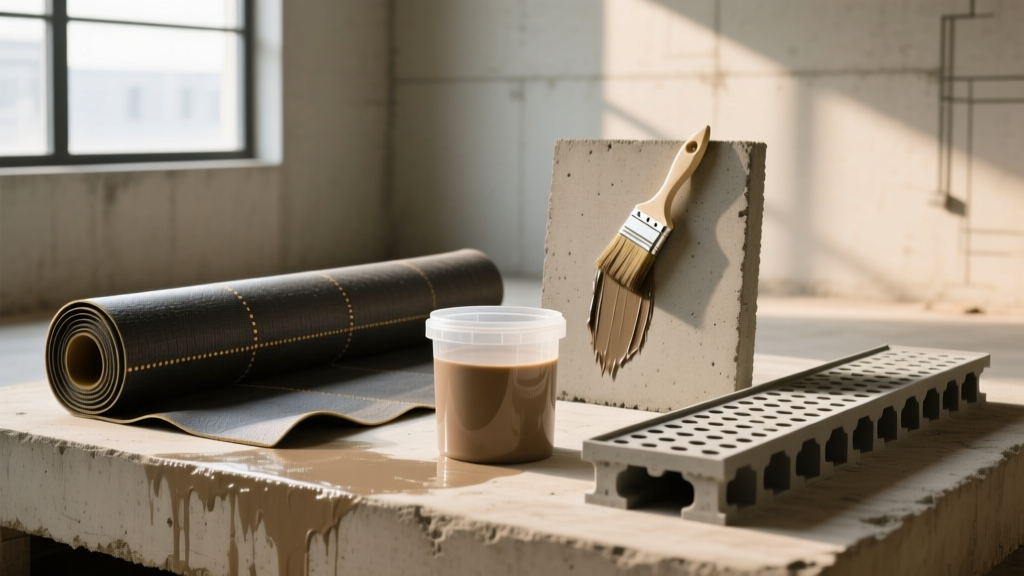
Exterior waterproofing is the only method that stops water before it breaches the structural envelope, neutralizing hydrostatic pressure rather than merely managing it post-intrusion. When waterproofing basement walls from outside, the selection of materials dictates the longevity of the foundation. A failed exterior system requires complete re-excavation to repair, making the initial material taxonomy and assembly stack the most critical decisions in below-grade construction. This guide breaks down the primary material classes, their performance metrics, and the specific soil conditions that dictate their use.
The Core Taxonomy of Exterior Waterproofing Materials
The market for below-grade exterior waterproofing is divided into three distinct material classes. Understanding the chemical and physical properties of each is essential for matching the material to the site's specific hydrostatic profile.
1. Self-Adhered Modified Bitumen Membranes
These are the industry standard for residential and light commercial foundations. Products like Tremco Blueskin WP200 or W. R. Meadows Blue Skin consist of a thick layer of rubberized asphalt laminated to a cross-laminated high-density polyethylene (HDPE) film. The rubberized asphalt provides self-sealing properties around fastener penetrations and minor concrete cracks, while the HDPE film offers high tensile strength and puncture resistance during backfilling. They are typically applied in 60-mil to 90-mil thicknesses and require a primed concrete surface for optimal adhesion.
2. Liquid-Applied Polyurethane and Elastomeric Coatings
Liquid membranes, such as BASF Sonolastic or Tremco Trelark, are roller- or spray-applied monolithic coatings. Their primary advantage is the complete absence of seams, which eliminates the most common failure points found in sheet goods. High-quality polyurethane formulations offer elongation rates exceeding 1,000%, allowing them to bridge dynamic structural cracks up to 1/16th of an inch. However, they require strict mil-thickness verification during application; applying them too thin compromises hydrostatic resistance, while applying them too thick can lead to improper curing and blistering.
3. Bentonite Clay Panels and Composite Systems
Sodium bentonite clay systems, like VOLCLAY panels, rely on active rather than passive waterproofing. When exposed to moisture, the encapsulated bentonite swells 10 to 15 times its dry volume, forming a dense, impermeable gel that self-seals punctures and small gaps. These are particularly advantageous in 'blind-side' waterproofing scenarios where the membrane is applied before the concrete is poured, or in highly expansive clay soils where structural movement might tear passive elastomeric membranes.
Comparative Matrix: Performance, Cost, and Application
| Material Class | Specific Product Example | Hydrostatic Head Resistance | Crack Bridging / Elongation | 2026 Material Cost (per sq. ft.) | Best Application Scenario |
|---|---|---|---|---|---|
| Modified Bitumen (Sheet) | Tremco Blueskin WP200 | High (Up to 230 ft head) | Moderate (Self-seals around nails) | $3.50 - $5.00 | Standard residential foundations with predictable settlement |
| Liquid Polyurethane | BASF Sonolastic | Medium-High (Depends on mil thickness) | Excellent (>1,000% elongation) | $4.00 - $6.50 | Complex geometries, numerous pipe penetrations, irregular surfaces |
| Bentonite Composite | W. R. Meadows VOLCLAY | Very High (Active swelling pressure) | N/A (Active gel migration) | $2.50 - $4.00 | Blind-side applications, high water tables, expansive clay soils |
| Cementitious Coating | Xypex Concentrate | Low-Medium (Crystalline capillary block) | Poor (Rigid, no elongation) | $1.50 - $2.50 | Dampproofing only; not recommended for active hydrostatic pressure |
Deep Dive: Selecting by Soil and Hydrostatic Conditions
According to building science principles outlined by the Building Science Corporation, the soil matrix surrounding the foundation dictates the drainage requirements and the physical stress placed on the waterproofing membrane.
High Clay / Poor Drainage Soils
Expansive clay soils retain water and exert immense lateral and hydrostatic pressure against the foundation wall. In these conditions, liquid-applied membranes are highly vulnerable to puncture from soil expansion and sharp backfill aggregate. The correct taxonomy here demands a heavy-duty modified bitumen sheet membrane, immediately covered by a thick, high-compression-strength HDPE dimpled drainage board (such as Delta-MS) to relieve hydrostatic pressure and protect the primary barrier from backfill shear forces.
Sandy / Well-Draining Soils with High Water Tables
Sandy soils drain rapidly but can transmit large volumes of water during heavy precipitation events. A liquid-applied polyurethane membrane is highly effective here due to its seamless nature, preventing water migration at the overlaps. Because the soil is less cohesive, a filter fabric integrated into a drainage mat is mandatory to prevent fine silt from migrating into the perimeter French drain system and clogging the aggregate.
Real-World Failure Modes and Edge Cases
Critical Warning: The Footing Cold Joint
The most common point of catastrophic failure when waterproofing basement walls from outside is the cold joint where the poured wall meets the concrete footing. Neither liquid coatings nor standard sheet membranes can bridge this joint reliably without reinforcement. Required Protocol: You must install a hydrophilic waterstop (such as Volclay Waterstop RX) or a specialized butyl-rubber mastic strip directly over the cold joint before applying the primary field membrane. Furthermore, the membrane must extend a minimum of 6 inches down onto the footing and be terminated with a stainless steel termination bar and polyurethane sealant.
Another frequent failure mode is UV degradation and backfill damage. Most modified bitumen and polyurethane membranes are not UV-stable. If left exposed to direct sunlight for more than 30 to 60 days before backfilling, the chemical bonds begin to break down, leading to micro-fissures. Additionally, backfilling with sharp, crushed limestone aggregate directly against the membrane will puncture it. Always use a protection course (dimple board) and backfill with clean, rounded river gravel or washed drain rock.
The Definitive Material Stack for Standard Residential Foundations
To meet the rigorous standards recommended by the Whole Building Design Guide (WBDG) for below-grade moisture control, the exterior assembly must be treated as a layered system, not a single product. The following is the exact material stack, ordered from the concrete substrate outward to the soil:
- Surface Preparation: Concrete must be cured for a minimum of 7 days, structurally sound, and free of form release agents. Apply a manufacturer-approved primer (e.g., Tremco WP Primer) to ensure a chemical bond.
- Cold Joint Treatment: Install a hydrophilic waterstop or heavy-duty butyl mastic strip at the wall-to-footing intersection.
- Primary Membrane: Apply the self-adhered modified bitumen sheet or liquid polyurethane coating to the specified mil thickness, ensuring a minimum 3-inch overlap at all seams.
- Termination: Secure the top edge of the membrane 6 to 8 inches above the final grade line using a metal termination bar and a bead of polyurethane caulking to prevent water from migrating behind the system.
- Protection and Drainage Course: Install an HDPE dimpled drainage board (minimum 8mm dimple height) with an integrated geotextile filter fabric. Fasten it using mechanical washers that seal around the fastener, or adhere it using compatible membrane-compatible adhesives.
- Perimeter Drainage: Route the bottom of the drainage board directly into a 4-inch perforated PVC or corrugated pipe wrapped in filter fabric, bedded in washed gravel at the footing level.
By adhering to this material taxonomy and assembly sequence, builders ensure that the exterior envelope actively sheds water and relieves hydrostatic pressure, securing the structural integrity of the basement for the lifespan of the building.