Which Waterproofing Membrane Fits Your Project? A Scenario Guide
Discover which waterproofing membrane fits your specific project. Compare below-grade, plaza deck, and roof scenarios with expert material matching advice.
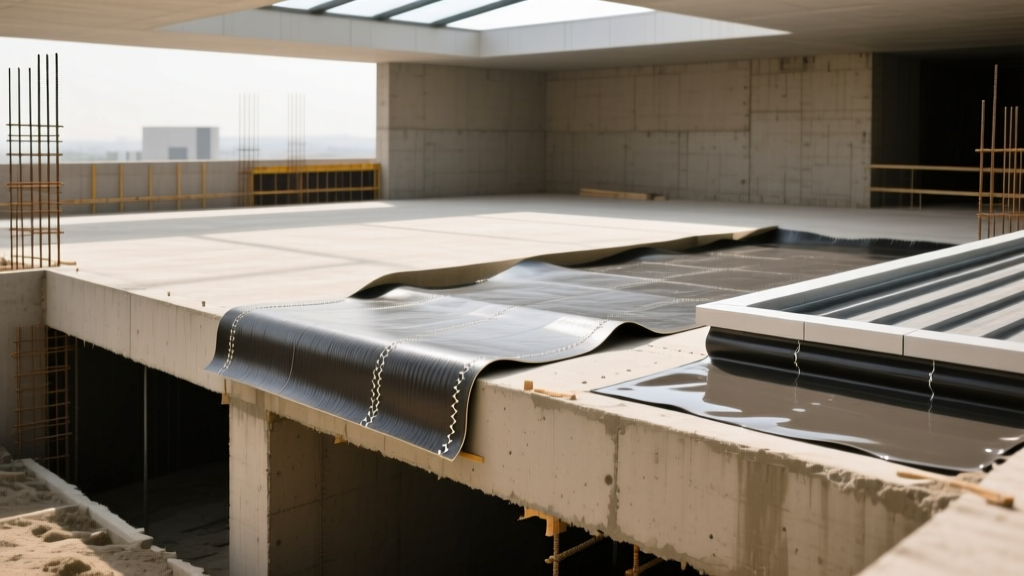
The Scenario-Matching Decision Matrix
Selecting a waterproofing membrane is not about finding a universally superior material; it is about matching the chemical, structural, and environmental demands of a specific building scenario. A membrane that performs flawlessly on an exposed commercial roof will fail catastrophically if buried under a high-water-table foundation. To eliminate guesswork, we evaluate membrane selection through three primary vectors: hydrostatic pressure, UV/thermal exposure, and traffic/puncture loads.
Scenario 1: Below-Grade Foundations & Blind-Side Walls
Below-grade structures face constant hydrostatic pressure and soil chemicals. Standard liquid-applied coatings are insufficient here. The industry standard for high-risk below-grade scenarios is pre-applied, blind-side HDPE (High-Density Polyethylene) or sodium bentonite clay mats.
Material Match: Pre-Applied HDPE
Products like GCP Applied Technologies Preprufe or Carlisle CCW 705 feature a pressure-sensitive adhesive layer that bonds directly to poured concrete. This mechanical bond prevents lateral water migration between the membrane and the structural wall—a critical failure point in traditional post-applied systems.
- Best For: Deep foundations, blind-side property line walls, and areas with high hydrostatic pressure.
- Thickness: Typically 48 to 80 mils total thickness.
- 2026 Installed Cost: $3.50 to $5.50 per square foot.
Material Match: Sodium Bentonite Mats
Bentonite swells up to 15 times its dry volume when exposed to water, creating an impermeable gel. It is self-healing for minor punctures but requires continuous confining pressure (at least 2 feet of soil) to function.
Scenario 2: Plaza Decks, Podiums & Vegetated Roofs
Plaza decks and podiums represent the highest-liability waterproofing scenarios. They are unventilated, often feature zero-slope drainage, and are subjected to root penetration and heavy point loads from planters or vehicular traffic. According to guidelines from the American Concrete Institute, these assemblies require fully adhered, monolithic, or hot-applied systems capable of bridging dynamic cracks.
Material Match: Hot-Applied Rubberized Asphalt
Systems like Tremco Tremproof 250GC or Siplast are applied at 375°F to 400°F, creating a seamless, 90-mil to 215-mil thick monolithic barrier. The heat welds the membrane directly into the concrete pores, eliminating the need for primers on damp substrates.
- Best For: Heavy-duty plaza decks, fountains, and areas requiring extreme puncture resistance.
- Root Resistance: Inherently root-resistant; passes ASTM F1671 testing without chemical root barriers.
- 2026 Installed Cost: $9.00 to $14.00 per square foot (including protection course and drainage mat).
Material Match: PMMA (Polymethyl Methacrylate) Liquids
For complex geometries with numerous penetrations (pipes, drains, railings), PMMA liquid membranes offer a rapid-cure (45 minutes) alternative to hot asphalt. They are highly chemical resistant and can be applied in temperatures as low as 25°F.
Scenario 3: Exposed Commercial Roofs & Balconies
Exposed environments demand membranes that can withstand severe thermal shock, UV degradation, and ponding water. The National Roofing Contractors Association emphasizes that thermal movement is the primary driver of membrane fatigue in exposed applications.
Material Match: 60-Mil to 80-Mil TPO or PVC
Thermoplastic single-plies (TPO and PVC) are heat-welded at the seams, creating a bond stronger than the membrane itself. PVC is preferred for roofs with animal fats, grease exhausts, or jet fuel exposure, while TPO offers superior weathering and reflects up to 85% of solar radiation.
Material Match: EPDM (Ethylene Propylene Diene Monomer)
EPDM remains the most flexible membrane in extreme cold (down to -40°F). However, it relies on adhesives or tape for seams, which are the most common failure points. For exposed applications, specify 60-mil minimum thickness and fully adhered installation methods to prevent wind billowing.
Comprehensive Cost & Performance Matrix
| Scenario | Recommended Membrane Type | Min. Thickness | Est. Lifespan | 2026 Avg. Installed Cost (per sq. ft.) |
|---|---|---|---|---|
| Below-Grade (High Water Table) | Pre-Applied Blind-Side HDPE | 60 mils | 50+ years | $3.50 - $5.50 |
| Plaza Deck / Podium | Hot-Applied Rubberized Asphalt | 90 mils | 40+ years | $9.00 - $14.00 |
| Complex Podium Penetrations | PMMA Liquid Applied | 80 mils | 25-30 years | $11.00 - $16.00 |
| Exposed Commercial Roof | Mechanically Attached TPO | 60 mils | 20-25 years | $5.50 - $8.50 |
| Exposed Balcony (Pedestrian) | Polyurethane Liquid with Aggregate | 60 mils | 15-20 years | $7.00 - $10.00 |
Critical Failure Modes & Substrate Preparation
Even the most expensive membrane will fail if the substrate is improperly prepared. The three most common failure modes in professional installations include:
- Substrate Outgassing: Applying cold-applied polyurethanes or epoxies over concrete that has not fully cured (minimum 28 days) traps moisture vapor. As temperatures rise, the vapor expands, creating blisters that eventually rupture the membrane. Fix: Always perform a calcium chloride test (ASTM F1869) or use a breathable, moisture-tolerant primer.
- Incompatible Joint Sealants: Using silicone-based sealants at membrane terminations or pipe penetrations can chemically degrade bituminous and polyurethane membranes. Fix: Specify compatible polyurethane or MS-polymer sealants (e.g., Tremco Dymonic FC) and allow them to skin over before applying the membrane.
- Fishmouths at Laps: In sheet-applied systems, a wrinkle or 'fishmouth' at the overlap creates a direct capillary path for water. Fix: Mandate that all fishmouths are cut open, flattened, and patched with a 6-inch minimum overlap of the same membrane material, fully sealed with mastic.