How to Identify and Manage Asbestos Building Materials Safely
Learn how to identify hidden asbestos building materials, understand health risks, navigate testing protocols, and choose safe modern alternatives.
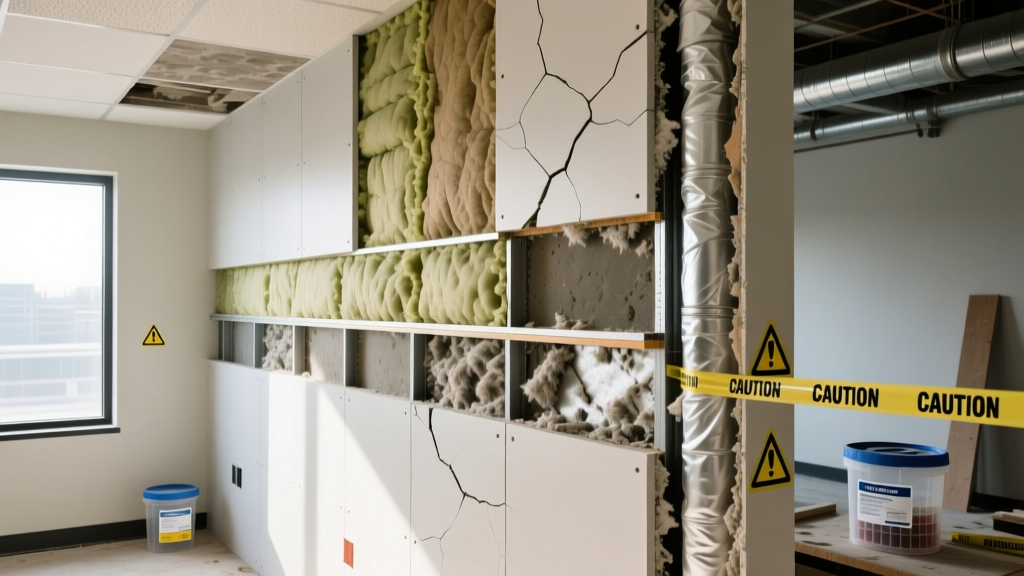
The Legacy and Danger of Asbestos in Construction
Between 1920 and 1980, asbestos was integrated into over 3,000 distinct building products due to its exceptional tensile strength, thermal resistance, and acoustic dampening properties. Today, millions of residential and commercial structures still harbor these materials. The danger of asbestos building materials does not stem from their mere presence, but from the inhalation of microscopic, needle-like silicate fibers that can cause mesothelioma, asbestosis, and lung carcinoma decades after exposure.
For property owners, facility managers, and contractors, managing these materials requires a precise understanding of material composition, friability physics, and strict regulatory compliance. This guide provides a technical framework for identifying, testing, and remediating asbestos-containing materials (ACM).
High-Risk Asbestos Building Materials: Identification Matrix
Visual identification of asbestos is impossible without laboratory analysis. However, knowing the era of installation and the material type drastically narrows the probability of ACM presence. The matrix below categorizes the most common asbestos building materials found in pre-1985 structures.
| Material Type | Era of Peak Use | Friability Status | Common Locations & Applications |
|---|---|---|---|
| Sprayed Acoustic Ceilings (Artex) | 1950s–1970s | Highly Friable | Living rooms, commercial lobbies, multi-family hallways |
| Transite Siding & Shingles | 1940s–1980s | Non-Friable (Cat I) | Exterior walls, roofing, utility building facades |
| Vinyl Asbestos Tile (VAT) | 1950s–1980s | Non-Friable (Cat II) | Kitchens, basements, commercial corridors (often 9x9 inch tiles) |
| Corrugated Pipe Lagging | 1920s–1970s | Highly Friable | Boiler rooms, steam pipes, utility chases, HVAC ducts |
| Mastic and Joint Compound | 1930s–1977 | Non-Friable (Cat II) | Drywall seams, window glazing, subfloor adhesives |
Friable vs. Non-Friable: The Physics of Fiber Release
The Environmental Protection Agency (EPA) and the Occupational Safety and Health Administration (OSHA) categorize ACM based on its mechanical resistance to fiber release. Understanding this distinction dictates your legal and safety obligations.
Friable ACM
Material that can be crumbled, pulverized, or reduced to powder by hand pressure when dry. Friable materials (like pipe lagging and sprayed ceiling textures) represent an immediate, active hazard because ambient air currents or minor vibrations can release millions of fibers into the breathing zone. These require immediate containment or professional abatement.
Non-Friable ACM (Category I and II)
Category I: Asbestos-containing resilient floor coverings, asphalt roofing products, and cementitious siding (Transite). These materials bind asbestos fibers tightly within a Portland cement or asphalt matrix. They only become hazardous if subjected to aggressive mechanical force, such as sanding, high-pressure washing, or demolition.
Category II: Materials that are currently non-friable but have the potential to become friable under reasonably foreseeable conditions. Examples include vinyl asbestos tiles where the mastic adhesive is deteriorating, or acoustic ceiling tiles that have suffered water damage and structural sagging.
Never use a standard shop-vac, broom, or compressed air on suspected ACM. Standard vacuums exhaust unfiltered air, atomizing asbestos fibers and distributing them throughout the HVAC system. If a material is actively degrading, isolate the area using 6-mil polyethylene sheeting and duct tape until professionals arrive.
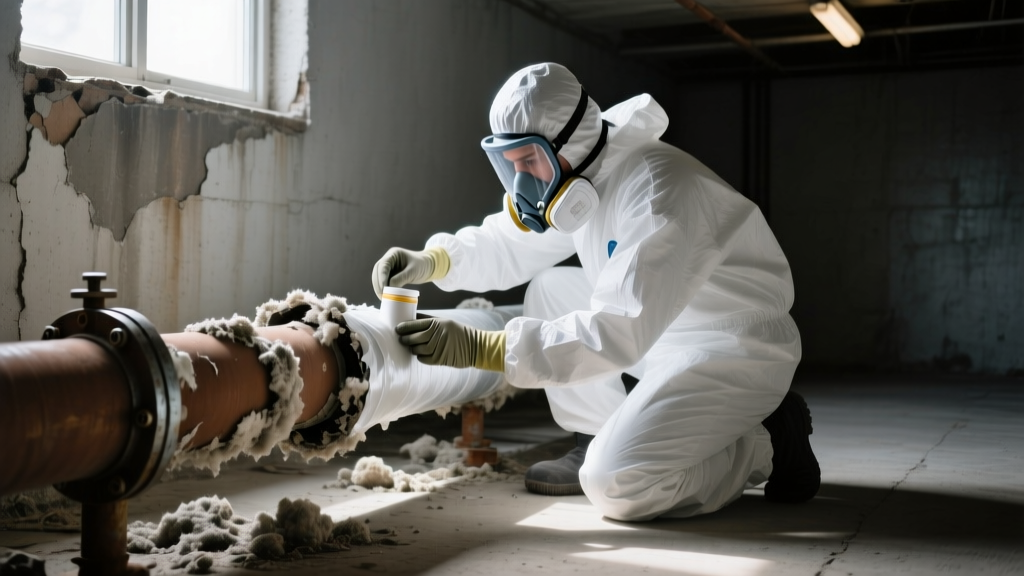
Testing Protocols: PLM vs. TEM Analysis
If you suspect the presence of asbestos building materials, you must engage a certified industrial hygienist or an accredited laboratory. The EPA mandates a threshold of 1% asbestos content by weight for a material to be legally classified as ACM. Two primary microscopic methods are utilized:
- Polarized Light Microscopy (PLM): The industry standard for bulk material testing. PLM uses polarized light to identify the unique optical properties of asbestos fibers (such as chrysotile or amosite). It is highly accurate for concentrations above 1% and typically costs between $50 and $90 per sample.
- Transmission Electron Microscopy (TEM): Required for air monitoring and testing highly complex, low-concentration materials. TEM uses electron beams to visualize fibers at the nanometer scale, distinguishing asbestos from harmless look-alikes like fiberglass or mineral wool. TEM analysis is significantly more expensive, averaging $150 to $250 per sample.
Always verify that your chosen laboratory holds current accreditation under the National Voluntary Laboratory Accreditation Program (NVLAP) for asbestos analysis.
Abatement vs. Encapsulation: A Decision Framework
When ACM is confirmed, removal is not always the legally required or safest immediate action. Disturbing intact, non-friable asbestos often creates a greater hazard than leaving it in place. Use this framework to determine the optimal remediation strategy:
When to Choose Encapsulation or Enclosure
- The material is non-friable (Category I) and in excellent structural condition.
- The area is not scheduled for renovation or demolition within the next 5 years.
- Budget constraints prohibit full NESHAP-compliant abatement.
- Method: Apply a penetrating encapsulant (which binds the fibers within the matrix) or a bridging encapsulant (which forms a protective membrane over the surface). Alternatively, build an airtight drywall enclosure around friable pipe lagging.
When to Choose Full Abatement (Removal)
- The material is friable and actively deteriorating or damaged by water intrusion.
- A planned renovation will require cutting, sanding, or demolishing the ACM.
- The property is being prepared for sale, and disclosure of ACM negatively impacts valuation.
- Method: Licensed contractors must establish negative air pressure enclosures, utilize HEPA-filtered ventilation, and dispose of waste in specialized, leak-tight containers at approved landfills.
2026 Cost Breakdown for Professional Remediation
Costs for managing asbestos building materials vary wildly based on friability, accessibility, and local disposal fees. The following estimates reflect national averages for licensed, insured abatement firms operating under strict OSHA and EPA guidelines.
| Remediation Type | Material Example | Estimated Cost (Per Sq. Ft.) | Timeline Impact |
|---|---|---|---|
| Bridging Encapsulation | Intact VAT or Transite Siding | $2.50 – $5.00 | Minimal (1-2 days) |
| Non-Friable Removal | Vinyl Floor Tile & Mastic | $4.00 – $8.00 | Moderate (3-5 days) |
| Friable Removal (Standard) | Acoustic Ceiling Texture | $8.00 – $14.00 | High (1-2 weeks) |
| Friable Removal (Complex) | Pipe Lagging / Boiler Insulation | $15.00 – $25.00+ | Severe (Multi-week) |
Note: Always budget an additional 15% to 20% for third-party air monitoring and final clearance testing, which is legally required in most jurisdictions before reoccupying a remediated space.
Modern, Code-Compliant Alternatives
When removing asbestos building materials, you must replace them with modern equivalents that meet current International Building Code (IBC) fire and structural standards without the toxicological risks.
- Replacing Transite Siding: Use fiber cement siding (such as James Hardie or CertainTeed products). These utilize Portland cement, sand, and cellulose fibers to achieve identical fire resistance and impact durability without silicate hazards.
- Replacing Pipe Lagging: Utilize closed-cell elastomeric foam insulation (e.g., ArmaFlex or Rubatex). These materials provide superior thermal conductivity ratings (k-values) and vapor retardation compared to old corrugated asbestos paper.
- Replacing Asbestos Gaskets and Friction Materials: Specify PTFE (Teflon) or aramid fiber (Kevlar) composite gaskets for high-temperature industrial applications, which exceed the thermal limits of legacy asbestos gaskets while remaining chemically inert.
Regulatory Compliance and Final Thoughts
Managing asbestos building materials is heavily regulated. The EPA's National Emission Standards for Hazardous Air Pollutants (NESHAP) strictly governs the demolition and renovation of facilities containing ACM. Furthermore, the Asbestos Hazard Emergency Response Act (AHERA) mandates rigorous inspection and management plans for all K-12 educational facilities.
Ignoring these regulations does not just risk severe respiratory diseases; it exposes property owners to crippling federal fines and civil liability. Always consult the EPA's comprehensive asbestos guidelines and review OSHA's occupational exposure standards before initiating any structural work on pre-1985 buildings. For residential guidance, the Consumer Product Safety Commission provides critical safety protocols for homeowners. By prioritizing professional testing and adherence to abatement frameworks, you ensure both structural integrity and long-term occupant health.
Written by
Marcus ChenMarcus Chen is a licensed structural engineer (PE) and building materials analyst with over 12 years of experience across residential, commercial, and industrial construction. He holds a Master of Science in Civil Engineering from UC Berkeley and spent six years at Thornton Tomasetti before transitioning to independent consulting and technical writing. Marcus specializes in material selection for seismic-prone regions, concrete reinforcement strategies, and lifecycle cost analysis. His work has been cited by the American Concrete Institute (ACI) and the Structural Engineers Association of California (SEAOC). When he is not on a job site or at his desk, you will find him hiking the Sierra Nevada or restoring a 1920s craftsman bungalow in Oakland, CA.
More from Marcus Chen
View all
Construction Cost
How Much Did the Eiffel Tower Cost to Build?
How much did the Eiffel Tower cost to build in 1889? We adjust for inflation and compare its budget to modern skyscraper construction.
Aug 4, 2026

Fire Resistance
What Is a Fire Resistant Material? Testing & Certification Guide
Discover what is a fire resistant material through ASTM and UL testing. Learn how fire ratings, certifications, and assemblies work in construction.
Aug 4, 2026

Construction Cost
How Much Did the Burj Khalifa Cost to Build?
How much did the Burj Khalifa cost to build? We break down the $1.5B project and extract 5 money-saving strategies for your next build.
Jul 30, 2026