Batt Insulation Lifespan: Durability Analysis and Failure Modes
Discover the true lifespan of fiberglass and mineral wool batt insulation. Learn about common failure modes, moisture risks, and how to maximize durability.
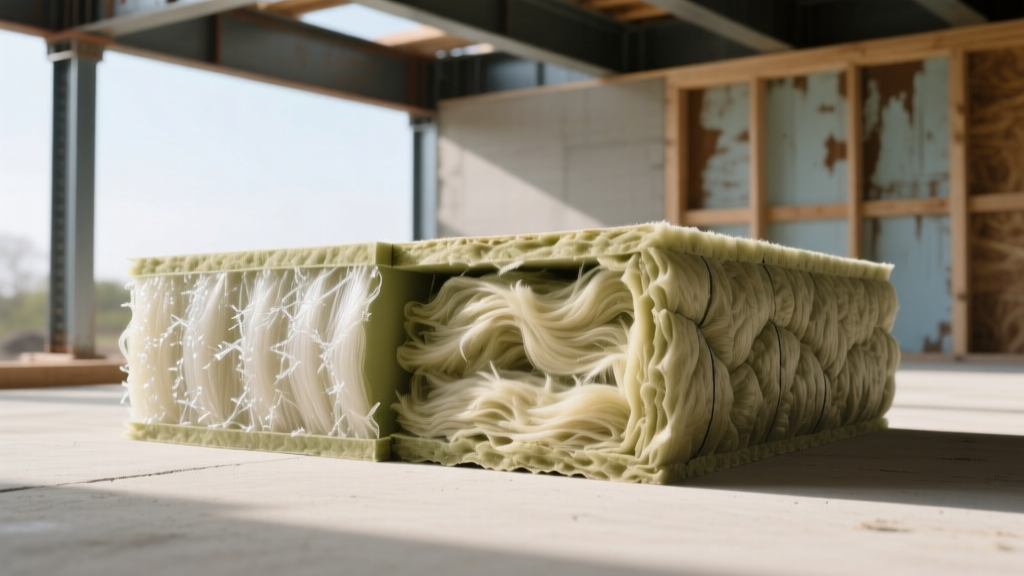
Material Degradation vs. System Failure
When evaluating the durability of batt insulation, it is critical to separate the physical lifespan of the raw material from the effective thermal lifespan of the installed system. According to the U.S. Department of Energy, mineral fiber insulation materials can physically last 80 to 100 years without biodegrading. The glass filaments in fiberglass and the spun basalt in mineral wool are essentially inert stone and sand.
However, the effective lifespan—the period during which the batt maintains its rated R-value and structural integrity within a wall cavity—is frequently compromised by installation errors, environmental factors, and binder degradation. Modern batts manufactured in 2026, such as Owens Corning EcoTouch or Knauf EcoBatt, utilize acrylic or bio-based binders rather than the phenol-formaldehyde resins of the past. While these modern binders are safer for indoor air quality, they can lose cohesion if subjected to prolonged alkaline exposure (such as direct contact with uncured masonry) or chronic moisture saturation. Therefore, assessing batt insulation durability requires analyzing the entire cavity system, not just the fibers.
Expected Lifespan by Batt Material
Not all batts age equally. The composition of the fiber, the density of the mat, and the type of facing dictate how the material withstands environmental stressors over decades. Below is a comparative analysis of the primary batt insulation types available on the market today.
| Material Type | Physical Lifespan | Effective Thermal Lifespan | Primary Failure Vector | 2026 Avg Installed Cost |
|---|---|---|---|---|
| Fiberglass (Standard Density) | 80–100 Years | 20–40 Years | Compression & Convective Looping | $1.50 – $2.20 / sq ft |
| Mineral Wool (Rockwool) | 100+ Years | 50–80 Years | Moisture Saturation & Sagging | $2.10 – $3.00 / sq ft |
| High-Density Fiberglass | 80–100 Years | 40–60 Years | Airflow (Wind Washing) | $1.90 – $2.60 / sq ft |
| Denim/Cotton (Recycled) | 30–50 Years | 15–25 Years | Pest Infestation & Mold | $2.50 – $3.50 / sq ft |
Mineral wool products, such as Rockwool Comfortbatt, consistently demonstrate the longest effective lifespans due to their higher density, hydrophobic nature, and resistance to compression. Conversely, organic options like denim batts are highly susceptible to biological degradation if the building envelope experiences even minor moisture intrusions.
The Four Critical Failure Modes
Batt insulation rarely fails because the fibers themselves dissolve. Instead, the system fails due to physical displacement, airflow, or moisture. Understanding these four failure modes is essential for accurate lifespan analysis and remediation planning.
1. Compression and the R-Value Penalty
Fiberglass batts rely on trapped pockets of still air to resist heat flow. When a batt is compressed, those air pockets are eliminated, drastically reducing thermal resistance. This is the most common cause of premature thermal failure. For example, stuffing an R-38 batt (designed for a 9.5-inch depth) into a standard 5.5-inch 2x6 wall cavity does not yield R-38. The compression forces the material to drop to approximately R-21. Over time, the binder memory fatigues, and the batt fails to rebound, permanently locking in the reduced R-value. Always match the batt thickness to the cavity depth as specified by ASTM C665 standards.
2. Convective Looping (Wind Washing)
Standard fiberglass batts are thermal insulators, not air barriers. If the exterior sheathing lacks a continuous air barrier, or if the interior drywall is not properly sealed, wind can push through the wall cavity. This phenomenon, known as wind washing, strips the heat directly from the fiberglass fibers. The ENERGY STAR Seal and Insulate Program emphasizes that without comprehensive air sealing, the effective lifespan of the batt's thermal performance is severely compromised, as convective heat loss bypasses the conductive resistance of the material entirely.
3. Moisture and Kraft Paper Facings
Many batts come with a kraft paper facing designed to act as a Class II vapor retarder. While effective in specific climate zones, kraft paper is an organic cellulose product. If the dew point shifts within the wall cavity due to extreme temperature differentials or interior humidity spikes, condensation forms on the paper. This moisture not only collapses the fiberglass mat but also provides a food source for mold spores. Once mold colonizes the kraft facing, the insulation must be removed, cutting its lifespan short regardless of the fiber's physical durability.
4. Pest Tunneling and Nesting
Rodents do not consume fiberglass or mineral wool, but they frequently use it for nesting material and tunneling pathways. Mice can compress large sections of attic batts, creating uninsulated voids and compromising the thermal envelope. Mineral wool is significantly more resistant to pest tunneling due to its rigid, dense structure and abrasive fibers, making it the superior choice for areas with high rodent activity.
Never install a second layer of faced batt insulation over an existing faced layer. The first layer's kraft paper acts as a vapor retarder; adding a second faced layer traps moisture between the two, guaranteeing condensation, mold growth, and rapid degradation of both layers. Always use unfaced batts for overlay applications.
Diagnostic Protocol for Aging Batt Insulation
Determining whether existing batt insulation has reached the end of its effective lifespan requires a systematic diagnostic approach. Visual inspection alone is insufficient. Follow this three-step protocol to assess in-situ durability:
- Thermal Imaging Analysis: Conduct an infrared scan during periods of high thermal load. A minimum Delta T (temperature difference) of 18°F (10°C) between the interior and exterior is required for accurate readings. Look for dark blue or black streaks indicating convective looping, or bright patches indicating compressed or missing batts.
- Moisture Meter Testing: Use a pin-type moisture meter (such as a Protimeter M4) to test the drywall or sheathing immediately adjacent to the batt cavity. Wood moisture equivalent (WME) readings consistently above 15% indicate chronic moisture exposure, meaning the batt binder is likely compromised and mold risk is imminent.
- The Binder Rub Test: In an exposed area (like an attic hatch or open wall), gently rub the surface of the batt with a gloved hand. If the fibers immediately separate, shed excessively, or the mat lacks structural cohesion, the acrylic or bio-binder has degraded. The batt will no longer hold its friction-fit position in vertical wall cavities and will eventually sag, leaving the top of the wall uninsulated.
Remediation Decision Matrix
When batt insulation fails to perform, complete replacement is not always necessary. Use the following framework to determine the most cost-effective remediation strategy based on the specific failure mode identified during diagnostics.
Scenario A: Attic Compression & Settling
Diagnosis: Horizontal batts have compressed over time, dropping from R-38 to R-25. No moisture or pest damage present.
Action: Top-up with blown-in cellulose or unfaced fiberglass. Do not remove existing material. Rake the existing batts lightly to restore loft before blowing new material over the top.
Scenario B: Wall Cavity Moisture Intrusion
Diagnosis: Kraft paper facing shows water staining, and moisture meter reads >18% WME on adjacent studs.
Action: Complete tear-out is mandatory. The organic facing is a mold vector. Remove drywall, extract wet batts, treat framing with a borate-based fungicide, and reinstall with unfaced mineral wool or closed-cell spray foam.
According to the DOE Types of Insulation Guide, proper installation and air sealing are just as critical as the material selection itself. A high-density mineral wool batt installed in a meticulously air-sealed cavity will easily outlast the structural framing of the building. Conversely, a premium fiberglass batt installed with gaps, compression, and unsealed penetrations will fail to deliver its rated R-value from day one. Maximizing the lifespan of batt insulation is ultimately an exercise in precision installation and rigorous moisture management, rather than simply relying on the inherent durability of the glass or stone fibers.
Key Takeaways for 2026 Building Standards
- Material vs. System: Fibers last a century; the installed system lasts only as long as the air and moisture barriers remain intact.
- Density Matters: Upgrade to high-density fiberglass or mineral wool for exterior walls to resist compression and convective looping.
- Air Sealing is Mandatory: Batt insulation cannot stop air movement. Pair all batt installations with continuous exterior membranes or interior airtight drywall approaches.
- Monitor Moisture: Avoid kraft-faced batts in high-humidity zones or mixed climates where dew point fluctuations are unpredictable.