Top Thermal Insulation Material Suppliers for R-Value in 2026
Compare top thermal insulation material suppliers in 2026 based on R-value performance, thermal drift, and product reliability for commercial builds.
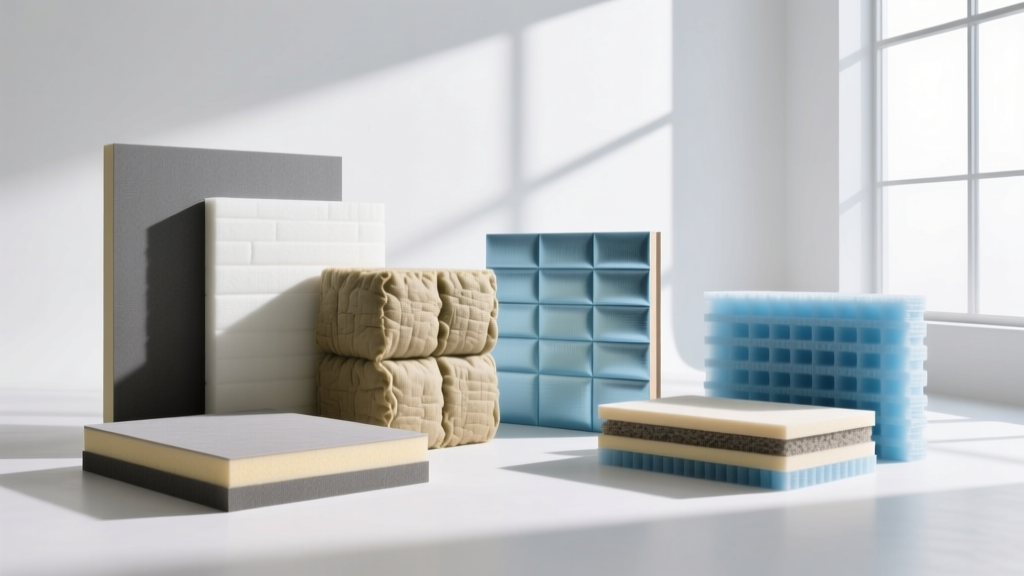
The R-Value Reality Check: Why Supplier Choice Dictates Performance
Specifying insulation based solely on the printed R-value on a product wrapper is a critical procurement error in modern commercial construction. While the Federal Trade Commission's R-Value Rule mandates standardized testing and labeling, the printed number only tells half the story. In 2026, the divergence between initial R-value and Long-Term Thermal Resistance (LTTR) has become the primary differentiator among top-tier thermal insulation material suppliers. Building envelopes are subjected to extreme temperature fluctuations, moisture ingress, and decades of material aging. Consequently, procurement teams must evaluate suppliers not just on day-one thermal resistance, but on the chemical stability of their blowing agents, the moisture permeability of their facers, and their adherence to ASTM C1303 standards for aged testing.
Supplier Performance Matrix: R-Value per Inch & Thermal Drift
The transition away from high-GWP (Global Warming Potential) hydrofluorocarbons (HFCs) to hydrofluoroolefins (HFOs) and natural blowing agents has fundamentally reshaped the rigid foam market. Suppliers who successfully navigated this transition now offer products with vastly superior cold-weather performance and stabilized LTTR. Below is a comparative matrix of the leading commercial suppliers and their flagship high-performance product lines.
| Supplier | Flagship Product Line | Material Type | Initial R-Value/inch | LTTR (Aged) R-Value | Cold Weather Drift (25°F) |
|---|---|---|---|---|---|
| Owens Corning | FOAMULAR® NGX™ | Extruded Polystyrene (XPS) | R-5.0 | R-5.0 | Negligible (Stable) |
| Johns Manville | ENRGY 3® | Polyisocyanurate (Polyiso) | R-6.0 | R-5.6 | Drops to ~R-4.8 |
| ROCKWOOL | Comfortboard® 80 | Stone Mineral Wool | R-4.2 | R-4.2 | Zero Drift |
| Huntsman Building Solutions | Demilec CC | Closed-Cell Spray Foam | R-6.5 | R-6.2 | Minimal Drift |

Decoding Supplier Data Sheets: Hidden Performance Metrics
When evaluating thermal insulation material suppliers, the technical data sheet (TDS) contains critical nuances that separate marketing claims from building physics reality. The most misunderstood metric in commercial procurement is thermal drift, particularly concerning polyisocyanurate (polyiso) insulation.
Polyiso insulation relies on specific blowing agents trapped within its closed cells to achieve its high initial R-value (typically R-6.0 to R-6.5 per inch). However, as temperatures drop below 50°F (10°C), these blowing agents begin to condense into a liquid state, losing their insulating gas properties. According to building science research, a polyiso board rated at R-6.0 at 75°F can drop to an effective R-4.5 or lower at 25°F (-4°C). If your project is in ASHRAE Climate Zones 5 through 8, relying solely on polyiso for continuous exterior insulation will result in severe winter heat loss and potential interstitial condensation.
Conversely, suppliers like Owens Corning have reformulated their XPS products using HFO blowing agents. The FOAMULAR NGX line utilizes HFO-1234ze(E), which not only reduces the Global Warming Potential to less than 1 (complying with the latest EPA SNAP program regulations) but also maintains a rock-solid R-5.0 per inch regardless of whether the exterior temperature is 100°F or -10°F. For below-grade applications, plaza decks, and inverted roof membranes where moisture exposure is guaranteed, XPS remains the undisputed leader because its closed-cell structure resists water absorption, which would otherwise destroy the R-value of permeable materials.
The Mineral Wool Alternative: ROCKWOOL's Value Proposition
While ROCKWOOL’s Comfortboard 80 yields a lower baseline R-4.2 per inch compared to rigid foams, its performance profile offers distinct advantages that justify the thicker assembly. Mineral wool is entirely inorganic, meaning it experiences zero thermal drift, zero off-gassing, and zero degradation over a 60-year lifespan. Furthermore, it is non-combustible (passing ASTM E136) and acts as a continuous acoustic dampener. For high-rise commercial facades where fire-stopping and acoustic isolation are mandated by code, ROCKWOOL provides a multi-functional solution that eliminates the need for separate fire and sound barriers.
Sourcing Strategy: Matching Supplier Strengths to Project Climates
Selecting the right supplier requires aligning their material science strengths with your specific project's hygrothermal profile. Use the following decision framework to guide your procurement strategy:
- Hot-Humid Climates (Zones 1-3): Prioritize closed-cell spray foam (Huntsman) or foil-faced polyiso (Johns Manville, Carlisle). The primary goal is maximizing R-value per inch to reduce wall thickness while utilizing the material's inherent vapor-impermeable properties to block exterior moisture drive.
- Cold Climates (Zones 5-8): Prioritize XPS (Owens Corning) or Mineral Wool (ROCKWOOL). You must avoid the cold-weather thermal drift of polyiso. If using polyiso, it must be hybridized with a layer of XPS or mineral wool on the exterior to keep the polyiso above the dew point and within its optimal temperature range.
- Marine & Below-Grade Applications: Strictly specify XPS or high-density mineral wool (ROCKWOOL DrainBoard). Never use polyiso or fiberglass below grade; the Department of Energy explicitly warns against moisture-retaining materials in below-grade assemblies, as a 10% moisture content by volume can reduce fiberglass R-value by up to 40%.
Procurement & Quality Assurance Checklist
Securing a contract with a top-tier supplier is only the first step. To ensure the delivered materials match the specified R-value performance, implement this QA checklist upon delivery and during installation:
- Verify Third-Party Certification: Demand UL or Intertek certification labels on every pallet. These labels confirm the product has undergone independent ASTM C518 steady-state thermal testing.
- Check the Date Codes: Polyiso and XPS require a curing period to reach their LTTR. Ensure the manufacturer's date code indicates the material has aged for at least 180 days if your structural calculations rely on LTTR rather than initial R-value.
- Inspect Facers and Edges: Damaged foil facers on polyiso boards compromise the material's radiant barrier properties and allow blowing agents to escape faster, accelerating thermal drift. Reject pallets with crushed corners or torn facers.
- Monitor Storage Conditions: Rigid foam boards stored in direct UV sunlight for more than 30 days will experience surface degradation, leading to delamination and compromised thermal continuity once installed behind the cladding.
Frequently Asked Questions
Does a higher initial R-value always mean better long-term performance?
No. Initial R-value measures thermal resistance on the day of manufacture. Long-Term Thermal Resistance (LTTR) measures the aged R-value after the blowing agents have diffused and equilibrium with air is reached. Always design your building envelope energy models using the LTTR value, not the initial value, to avoid underperforming HVAC loads in year five and beyond.
How do I verify a supplier's HFO blowing agent claims?
Request the specific Environmental Product Declaration (EPD) for the product batch. The EPD will explicitly list the blowing agent used and its 100-year Global Warming Potential (GWP). Genuine HFO-blown XPS will show a GWP of less than 10, whereas older HFC-blown stocks may still linger in distributor warehouses with a GWP over 1,400.
Can I mix different suppliers' products in the same wall assembly?
Yes, but only if their vapor permeability profiles are compatible. For example, placing a highly vapor-permeable mineral wool (ROCKWOOL) on the exterior of a vapor-impermeable closed-cell spray foam (Huntsman) interior is a sound hygrothermal strategy. However, sandwiching a permeable material between two impermeable layers will trap moisture and destroy the assembly's thermal performance.
Written by
Priya KapoorPriya Kapoor is a real estate market analyst and construction economics researcher with expertise in housing affordability, development feasibility, and infrastructure investment. She holds a Master of Regional Planning from Cornell University and previously worked as a senior analyst at CBRE's Investment Properties group, where she modeled returns for $4B in mixed-use development pipelines. Priya now runs an independent research practice advising developers, municipalities, and REITs on construction cost forecasting and market timing. She publishes the quarterly "BuildMat Market Pulse" report tracking material price indices across 12 commodity categories. Based in Austin, TX, Priya serves on the board of Habitat for Humanity Austin and is a marathon runner.
More from Priya Kapoor
View all
Construction Cost
Cost to Build a 1600 Sq Ft Home in 2026: Full Breakdown
Accurate 2026 cost to build a 1600 sq ft home—material, labor, and regional pricing breakdowns included. Plan your budget with real-time estimates.
Aug 11, 2026

Wood & Lumber
Name the Types of Wood for Pressure Treatment and Preservation
Learn how to name the types of wood best suited for pressure treatment. Compare species treatability, chemical retention levels, and 2026 preservation costs.
Aug 4, 2026

Stone & Masonry
Stone Veneer Suppliers Lindenhurst: 2026 Cost Analysis
Analyze 2026 stone veneer costs in Lindenhurst, NY. Compare local supplier pricing, delivery fees, and Suffolk County installation labor rates.
Aug 4, 2026