Brick Clips Fastener Deep-Dive: Load Ratings and Mortar Limits
Explore Brick Clips fastener systems, comparing load ratings, mortar joint requirements, and failure modes for secure masonry mounting without drilling.
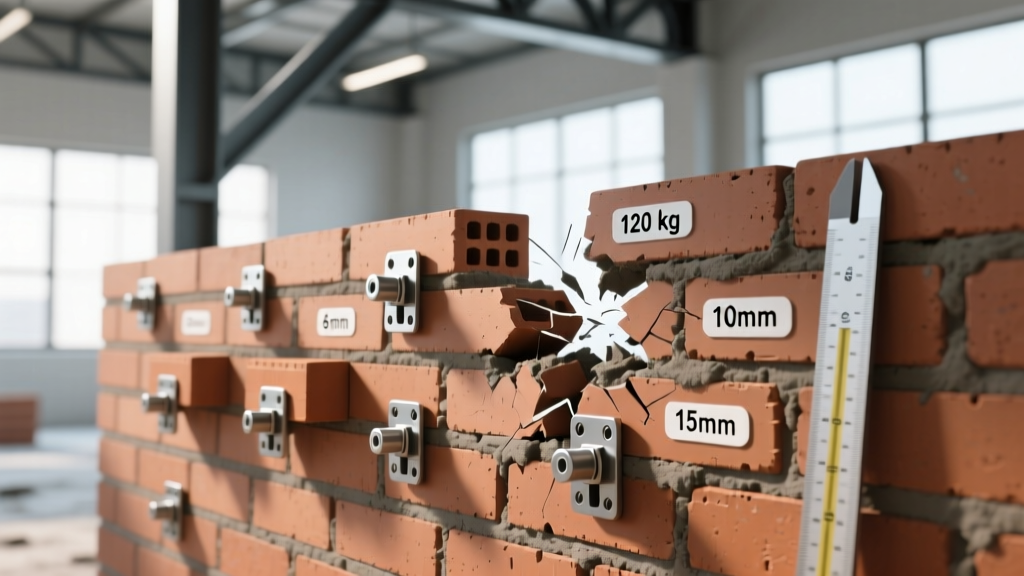
The Engineering Behind Brick Clips Fasteners
Drilling into masonry compromises the structural face shell of veneer brick and requires specialized carbide bits, anchors, and sealants. Brick clips offer a non-destructive mounting alternative by utilizing mechanical tension rather than friction anchors. The core engineering principle relies on a leaf-spring mechanism: the bottom lip hooks into the horizontal mortar bed joint, while the curved upper spine compresses against the brick face, creating a continuous clamping force. This system transfers the shear load of the hanging object directly into the mortar bed and the brick's compressive mass, bypassing the need for tensile anchors.
Metallurgy and Tension Mechanics
Authentic brand-name brick clips are manufactured from 1050 or 1060 high-carbon spring steel. This specific alloy provides the necessary yield strength to allow the clip to flex outward during installation and snap back into place without suffering permanent plastic deformation. Generic, low-cost alternatives often use low-carbon steel or stamped aluminum, which are prone to 'creep'—a gradual loss of tension over time under constant load. When creep occurs, the clamping force diminishes, eventually causing the fastener to slip down the wall. For reliable long-term mounting, verifying the high-carbon steel composition and a Rockwell C-scale hardness between 42 and 46 HRC is critical.
Product Line Breakdown: Load Ratings and Specifications
Not all brick clips are engineered for the same payload. Manufacturers segment their product lines based on static load capacities and environmental coatings. When procuring fasteners, it is essential to match the clip specification to both the weight of the object and the environmental exposure.
| Model Variant | Material & Coating | Max Static Load (Per Clip) | Required Mortar Recess | Primary Application |
|---|---|---|---|---|
| Standard Indoor Clip | Zinc-Plated High-Carbon Steel | 15 lbs | 1/8" to 1/4" | Indoor artwork, lightweight shelving, acoustic panels |
| Heavy-Duty Outdoor Clip | Powder-Coated / Galvanized Spring Steel | 25 lbs | 1/4" to 3/8" | Outdoor planters, heavy mirrors, exterior signage |
| Brick Hanger (Lip Grip) | Stainless Steel 304 | 30 lbs | N/A (Grips brick edge) | Protruding brick courses, window sills, corbels |
Dynamic Load Warning: The ratings above represent static, straight-down dead loads. If the mounted object is subject to dynamic forces—such as wind loading on an outdoor planter, vibration from a nearby door, or frequent physical adjustment—you must apply a 4:1 safety factor. A 20 lb outdoor planter subject to wind shear requires fasteners rated for at least 80 lbs of combined static capacity (e.g., four Heavy-Duty clips).
Mortar Joint Compatibility: The Critical Failure Point
The most common cause of brick clip failure is attempting to install them on incompatible mortar joints. The bottom lip of the clip requires a physical recess to seat against. If the mortar is flush with the brick face, the lip has no mechanical stop and will slide downward under load.
Matching Clips to BIA Mortar Joint Profiles
According to the Brick Industry Association (BIA) Technical Notes on Brick Masonry Joints, mortar joints are tooled into specific profiles for weather resistance and aesthetics. Here is how standard brick clips interact with the most common profiles:
- Concave and V-Joints: Excellent compatibility. The mortar is compressed and recessed at the brick edge, providing a deep, clean shoulder for the clip's bottom lip to engage.
- Weathered Joints: Good compatibility. The top of the joint is recessed while the bottom is flush. The clip must be oriented so the lip catches the top shoulder of the lower brick course.
- Raked Joints: High compatibility but aesthetic compromise. Raked joints offer deep recesses (up to 1/2"), but the clip's bottom lip may remain visibly exposed in the deep shadow line.
- Flush Joints: Zero compatibility. The mortar is struck off level with the brick face, leaving no ledge for the tension lip.
Step-by-Step Installation Protocol
Proper installation ensures maximum surface contact and prevents localized stress concentrations that could chip the brick arris (edge).
- Joint Preparation: Use a stiff nylon brush to clear loose dust, efflorescence, and debris from the horizontal mortar bed. Do not use a wire brush, which can scar the brick face.
- Bottom Lip Seating: Hook the bottom lip of the clip into the mortar recess. Push upward to ensure the lip is fully seated against the underside of the upper brick.
- Spine Compression: Press the curved top spine against the face of the brick. Apply firm, even pressure with your thumb until the spine snaps flat against the masonry surface.
- Lateral Shear Test: Before hanging the object, attempt to slide the clip laterally and vertically by hand. If it shifts more than 1/16th of an inch, the mortar recess is insufficient. Remove the clip and relocate it to a different joint.
- Load Distribution: Always use a minimum of two clips per object, spaced symmetrically. For wide objects, place clips no more than 16 inches apart to prevent the mounting wire or bracket from bowing.
Real-World Failure Modes and Troubleshooting
Environmental Degradation and Spalling
While the clips themselves may be rated for outdoor use, the interaction between the steel fastener and the masonry can cause secondary failures. In freeze-thaw climates, water can become trapped between the flat spine of the clip and the brick face. If the brick is under-fired or has high porosity, this trapped moisture freezes, expands, and causes the brick face to spall (flake off) directly behind the clip. To mitigate this, apply a bead of clear, breathable silane-siloxane masonry sealer behind the clip spine during installation in northern climates.
Galvanic Corrosion on Acidic Masonry
Newly laid masonry is highly alkaline, but aging brick and certain clay types can develop acidic surface deposits over time. If zinc-plated indoor clips are mistakenly used in a damp exterior environment, the zinc coating will rapidly degrade via galvanic corrosion, leading to rust streaks running down the brick face. For any exterior application, or for use in high-humidity interiors (like greenhouse walls), strictly specify 304 Stainless Steel or heavily powder-coated variants. Refer to BIA Technical Notes on Mortars to understand the chemical interactions between masonry substrates and metal fasteners.
Final Procurement Specifications
When sourcing brick clips for commercial or high-value residential projects, bypass generic hardware store multi-packs. Specify fasteners that explicitly state compliance with ASTM B117 salt-spray testing (minimum 500 hours to red rust) for exterior applications. Verify the packaging indicates a minimum 1050 carbon steel composition, and always cross-reference the required mortar recess depth on the manufacturer's spec sheet with the actual field conditions of the masonry wall before finalizing the order.