Drilling Brick or Mortar: Tool, Labor, and Repair Costs
Comprehensive cost breakdown for drilling brick or mortar. Compare tool expenses, professional labor rates, and masonry repair costs for anchors.
The Structural Debate: Drilling Brick vs. Mortar
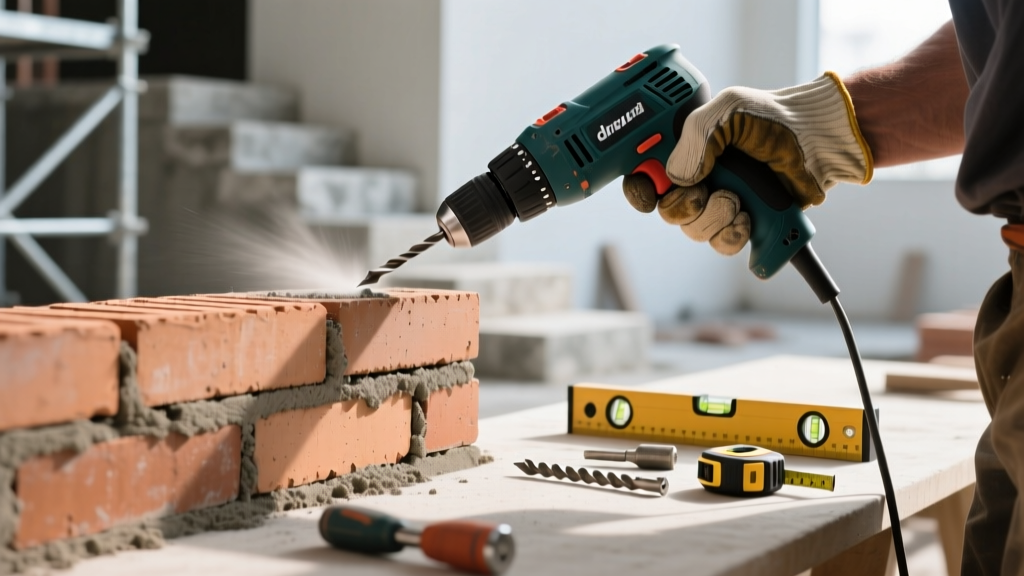
When anchoring fixtures, running conduit, or mounting structural loads to a masonry wall, the decision of drilling brick or mortar dictates both the immediate holding strength and the long-term cost of remediation. Mortar joints are sacrificial; they are designed to be softer than the brick units to absorb thermal expansion and settling. Drilling into the mortar joint is generally preferred for light-to-medium loads because repointing a hole is significantly cheaper and less visually disruptive than patching a fired clay unit.
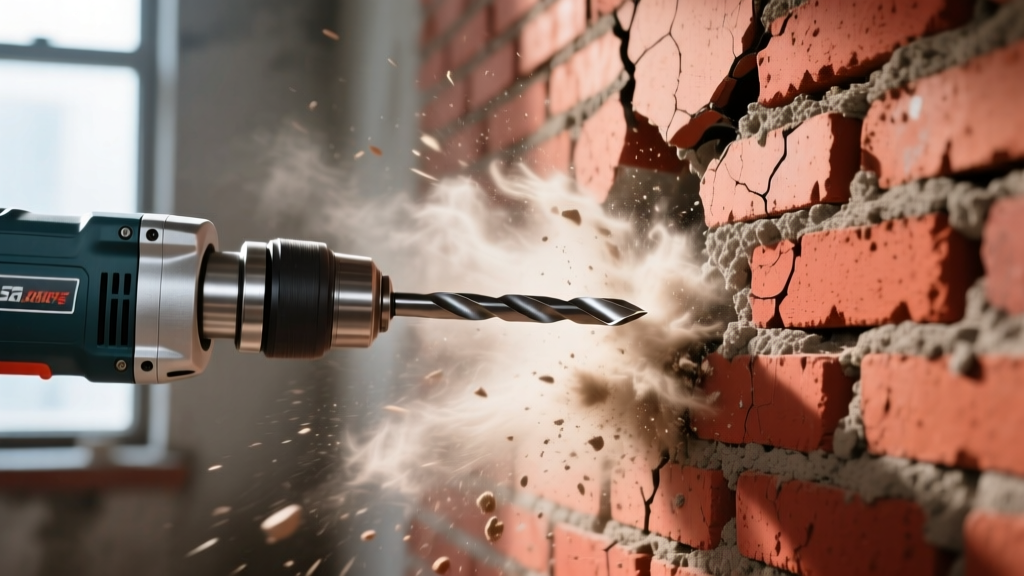
However, mortar has lower shear and tensile strength. For heavy structural anchors (e.g., lag shields, wedge anchors supporting ledger boards or heavy HVAC equipment), drilling directly into the brick unit is mandatory. The trade-off is a higher risk of spalling (chipping the brick face) and a much higher cost if the brick cracks and requires replacement.
- Drill Mortar: For fasteners under 50 lbs, temporary fixtures, or when using masonry screws (like Tapcons) in joints at least 3/8" wide.
- Drill Brick: For heavy structural loads, toggle bolts, expansion anchors, or when mortar joints are too narrow (less than 1/4") or heavily degraded.
Equipment and Consumable Cost Breakdown
Whether you are a DIYer renting equipment or a contractor investing in a fleet, the tooling required for clean, precise masonry drilling represents a significant upfront cost. Standard twist drills will burn out instantly; you need rotary hammer technology and specialized metallurgy.
| Equipment / Consumable | Specification / Model Example | Estimated Cost (Purchase) | Rental Rate (Daily) |
|---|---|---|---|
| SDS-Plus Rotary Hammer | Bosch Bulldog Xtreme (1-1/8" capacity) | $160 - $220 | $45 - $65 |
| SDS-Max Rotary Hammer | Makita HR4013C (1-9/16" capacity) | $450 - $550 | $85 - $120 |
| 4-Cutter Carbide SDS Bit (1/4" to 1/2") | Bosch HCFC2000 Series (Full carbide head) | $12 - $28 each | N/A (Consumable) |
| Diamond Core Bit (2" to 4") | Husqvarna DM 100 Series (Wet/Dry) | $85 - $160 each | $35 - $50 |
| HEPA Dust Extractor | Bosch VAC090A (Required for OSHA compliance) | $300 - $400 | $60 - $85 |
Note on Bit Selection: Always use 4-cutter (cross-head) carbide bits rather than standard 2-cutter bits when drilling brick. Brick often contains hidden clinker or rebar in reinforced masonry; a 2-cutter bit will bind and snap upon hitting metal, while a 4-cutter head will grind through it, preventing catastrophic bit failure and wall damage.
Professional Labor Rates: What to Expect
If you are hiring a masonry contractor or a specialized core-drilling service, labor pricing is rarely based purely on time. It is structured around the complexity of the penetration, the required dust mitigation, and the structural risk.
- Standard Hourly Masonry Rate: $85 to $125 per hour. This applies to general drilling for light anchors or running small-diameter conduit where dust control is managed via standard shop vacuums.
- Per-Hole Anchor Pricing: $15 to $35 per hole for standard 1/2" wedge anchors or epoxy-set threaded rods. This includes the drilling, hole blowing (cleaning), and anchor setting.
- Core Drilling (HVAC/Plumbing): $175 to $350 per penetration for 3" to 6" diameter holes. Core drilling requires water management (if wet cutting) or massive HEPA extraction (if dry cutting), plus the labor of catching and disposing of the heavy masonry core.
- Scaffolding and Access Premium: Add 20% to 35% to the base labor cost for work above 12 feet requiring scaffolding or boom lifts.
The Hidden Costs: Repair, Remediation, and Silica Compliance
The actual cost of drilling brick or mortar extends beyond the hole itself. Mistakes, structural degradation, and regulatory compliance introduce secondary costs that must be factored into your project budget.
Mortar Repointing vs. Brick Replacement
When a drill bit wanders, spalls the arris (edge) of a brick, or when an anchor blows out the back of a mortar joint, remediation is required. According to the National Park Service guidelines on repointing mortar joints, using the wrong mortar type can cause severe damage to historic masonry. You must match the existing mortar's compressive strength and permeability.
| Remediation Type | Material Specification | Average Cost |
|---|---|---|
| Patching a Mortar Joint | Type N or Type O pre-mixed mortar | $8 - $15 per linear foot |
| Epoxy Anchor Hole Repair | High-strength masonry epoxy resin | $12 - $20 per hole |
| Single Brick Replacement | Matching clay unit + Type S mortar | $65 - $110 per brick |
| Spall Repair (Brick Face) | Lithomex or custom color-matched patch | $35 - $60 per patch |
Silica Dust Compliance
Drilling masonry generates respirable crystalline silica. For professionals, ignoring this is not an option. The OSHA Respirable Crystalline Silica Standard for Construction mandates strict dust control methods. Using a rotary hammer without a shroud and HEPA vacuum requires the operator to wear a tight-fitting respirator and subjects the site to air monitoring. Most contractors bake the cost of HEPA dust extractors (like the Bosch VAC090A or Festool CT MIDI) and daily filter maintenance into their hourly rates, which is why professional masonry drilling commands a premium over standard carpentry or drywall labor.
Warning: Never use water to suppress dust when drilling into interior brick or mortar walls unless you have fully sealed the floor and baseboards. Water mixed with brick dust creates a highly alkaline slurry that will permanently stain hardwood floors and degrade drywall paper facing.
Decision Framework: Choosing Your Anchor and Location
To minimize total project cost and prevent structural failure, follow this sequential framework before the drill bit touches the wall:
- Assess the Joint Width: Measure the mortar joint. If it is less than 3/8" wide, do not drill the mortar. The drill bit flutes will catch the adjacent brick, causing micro-fractures that lead to winter freeze-thaw spalling. Drill the brick instead.
- Identify the Mortar Type: If the building was constructed before 1920, it likely uses lime-putty mortar (very soft). Standard plastic anchors will pull right out. You must use specialized helical masonry anchors or drill into the harder brick units.
- Select the Fastener:
- Light loads (under 30 lbs): Use 3/16" or 1/4" masonry screws (e.g., Tapcon). Drill the mortar joint.
- Medium loads (30 - 150 lbs): Use sleeve anchors or lag shields. Drill the brick or a wide, deep mortar joint.
- Heavy/Structural loads (150+ lbs): Use epoxy-set threaded rod (e.g., Simpson SET-XP). Drill the brick, clean the hole with compressed air and a wire brush, and inject epoxy.
- Check for Wall Ties: In brick veneer construction, corrugated metal wall ties connect the brick to the wood stud framing. Drilling directly into a tie will ruin your bit and compromise the wall's lateral stability. Use a stud finder with metal-detection capabilities or a borescope to verify the cavity behind the brick.
By accurately calculating the tooling, labor, and potential remediation costs upfront, you can determine whether drilling brick or mortar is the most economically viable path for your specific masonry application.
Written by
Sarah WhitfieldSarah Whitfield is a chartered quantity surveyor (MRICS) and construction cost analyst with 15 years of experience in material pricing, procurement strategy, and project budgeting. She earned her degree in Construction Management from the University of Reading (UK) and has worked on projects ranging from $2M custom homes to $180M mixed-use developments across North America and Europe. Sarah currently leads cost estimating for BuildMat Insight, maintaining a proprietary database of 4,000+ material price points updated quarterly. She is a frequent contributor to RSMeans cost data panels and has presented at the International Cost Engineering Council (ICEC) congress. Based in Denver, CO, Sarah is an avid trail runner and volunteer mentor for Women in Construction.
More from Sarah Whitfield
View all
Wood & Lumber
What Are the Different Types of Wood? A Builder's Guide
Compare structural softwoods, finish hardwoods, and engineered lumber. Analyze Janka ratings, MOE values, and 2026 pricing for construction.
Aug 4, 2026

Walls & Panels
Steel Framing vs Wood Framing: Corrosion and Moisture Defense
Compare steel framing vs wood framing for moisture resistance. Learn about galvanized coatings, condensation risks, and corrosion protection strategies.
Jul 21, 2026

Stone & Masonry
How to Cut Stone Veneer: Wet Saw vs Grinder Comparison
Compare the best tools for cutting stone veneer. We review wet saws, angle grinders, and chop saws to help you achieve clean, chip-free cuts.
Jul 21, 2026