Evaluating the Cost of Stone Veneer Maintenance and Long-Term Care
Discover the true long-term cost of stone veneer maintenance. Expert breakdowns on cleaning, sealing, repointing, and preventing expensive masonry failures.
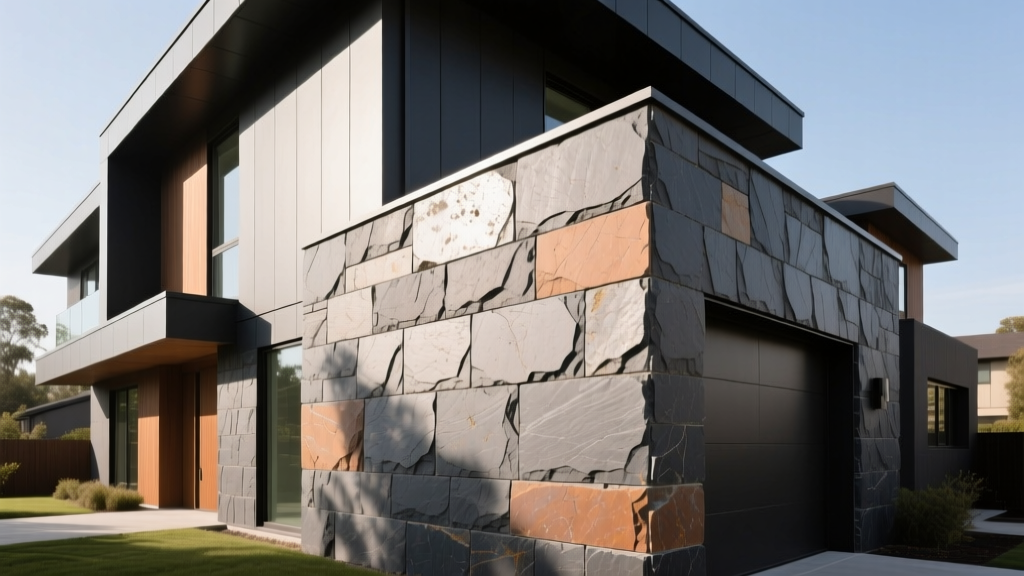
The Lifecycle Equation: Initial Installation vs. Upkeep
When evaluating the total cost of stone veneer for a residential or commercial project, contractors and homeowners frequently fixate on the initial installation price. While manufactured stone veneer (MSV) typically costs between $9.00 and $14.00 per square foot installed, and natural stone veneer (NSV) ranges from $16.00 to $32.00 per square foot, these figures ignore the long-term financial reality of masonry upkeep. The true cost of stone veneer ownership is determined by its lifecycle maintenance requirements, which vary drastically based on material porosity, mortar joint integrity, and environmental exposure.
Unlike vinyl or fiber cement siding, stone veneer is a breathable, porous assembly. Neglecting routine maintenance does not merely result in aesthetic degradation; it leads to catastrophic failure modes such as freeze-thaw spalling, efflorescence buildup, and structural mortar detachment. Understanding the specific maintenance costs and chemical requirements for your stone type is essential for accurate long-term budgeting.
Never use raw muriatic (hydrochloric) acid to clean stone veneer or remove efflorescence. While common in concrete work, acid will immediately etch calcareous stones (limestone, marble, travertine) and strip the iron-oxide colorants from manufactured stone veneer, causing irreversible fading and pitting. Always opt for pH-neutral or specially formulated alkaline masonry cleaners.
Routine Cleaning: Techniques and Material Costs
Routine cleaning is the first line of defense against biological growth (algae, lichen) and atmospheric soiling that can trap moisture against the stone face. The cost of stone veneer cleaning depends heavily on the method employed and the stone's density.
Pressure Washing Parameters
High-pressure washing is the leading cause of DIY stone veneer damage. The forceful stream can erode the soft mortar joints and blast away the textured face of manufactured stone. When power washing is necessary, strict parameters must be followed:
- Maximum Pressure: 1,200 PSI (never exceed 1,500 PSI).
- Nozzle Type: 15-degree or 25-degree fan tip (never use a 0-degree rotary or pinpoint nozzle).
- Distance: Maintain a minimum 12-inch standoff distance from the masonry surface.
As of 2026, professional masonry cleaning services charge between $1.75 and $2.80 per square foot, which includes the application of specialized biocides and low-pressure rinsing. For DIY maintenance, renting an appropriate low-PSI machine and purchasing a dedicated masonry wash costs approximately $0.20 to $0.35 per square foot.
Chemical Cleaning and Pre-Wetting
For heavy soiling, chemical cleaners are required. According to guidelines published by the National Park Service Technical Preservation Services, porous stones like sandstone and limestone must be thoroughly pre-wetted with clean water before any chemical cleaner is applied. If applied dry, the porous stone will rapidly absorb the cleaning solution deep into its core, leaving permanent, dark chemical stain rings that cannot be removed. Products like PROSOCO EnviroKlean Restoration Cleaner (approximately $65 per gallon) are industry standards for safe, biodegradable masonry cleaning, covering roughly 200 to 300 square feet per gallon when diluted.
Sealing Stone Veneer: Penetrating vs. Film-Forming
Applying a water repellent is the most significant variable in the long-term cost of stone veneer maintenance. The objective is to reduce water absorption while maintaining the masonry's ability to 'breathe' (allow internal water vapor to escape). Choosing the wrong sealer chemistry will guarantee premature failure.
| Sealer Chemistry | Breathability | Avg. Cost (Material) | Lifespan | Risk Factor |
|---|---|---|---|---|
| Silane/Siloxane (Penetrating) | Excellent (100% vapor permeable) | $45 - $75 / gallon | 5 - 8 years | Very Low |
| Acrylic / Polyurethane (Film) | Poor (Traps vapor) | $30 - $50 / gallon | 1 - 3 years | High (Causes spalling) |
| Unsealed (Natural State) | Maximum | $0 | N/A | Moderate (Staining/Efflorescence) |
Penetrating siloxane sealers, such as PROSOCO Siloxane WB, are the undisputed standard for stone veneer. These chemicals react chemically with the silica and alumina in the stone and mortar to form a hydrophobic resin matrix below the surface. Because they do not form a surface film, they allow trapped moisture to evaporate. Conversely, cheap film-forming acrylic sealers create a plastic-like skin on the surface. When water inevitably enters the wall assembly through micro-cracks or roof overhangs, the acrylic traps it inside. During freeze-thaw cycles, this trapped water expands, blowing the face off the stone (spalling) and costing thousands of dollars in replacement masonry.
Mortar Repointing and Structural Maintenance
The mortar joints in a stone veneer wall are designed to be the sacrificial element of the assembly. Mortar is intentionally formulated to be slightly softer and more permeable than the stone itself. Over a 20 to 30-year lifecycle, mortar will naturally erode, crack, and recede. When joints recede beyond 1/4 inch, repointing (tuckpointing) is mandatory to prevent water infiltration behind the veneer, which can rot the underlying wood framing and rust the metal lath.
The Cost and Compliance of Repointing
Professional repointing is highly labor-intensive and represents a significant spike in the cost of stone veneer maintenance. Contractors typically charge between $12.00 and $18.00 per linear foot of joint, or $400 to $650 per 100 square feet of wall area, depending on joint width and scaffolding requirements.
The process involves 'raking out' the deteriorated mortar to a depth of 3/4 inch using an angle grinder. This step generates massive amounts of respirable crystalline silica dust. Under OSHA's Respirable Crystalline Silica Standard (29 CFR 1926.1153), contractors must use grinders equipped with integrated water delivery systems or HEPA-filtered vacuum shrouds to capture dust at the source. Hiring an uncertified contractor who dry-grinds mortar joints without dust containment not only violates federal law but poses severe health risks and liability to the property owner.
For replacement mortar, Type N mortar (comprising 1 part Portland cement, 1 part hydrated lime, and 6 parts sand) is generally specified for stone veneer. It offers the ideal balance of compressive strength (750 PSI) and flexibility, allowing the wall to accommodate minor thermal expansion and structural settling without cracking the stone.
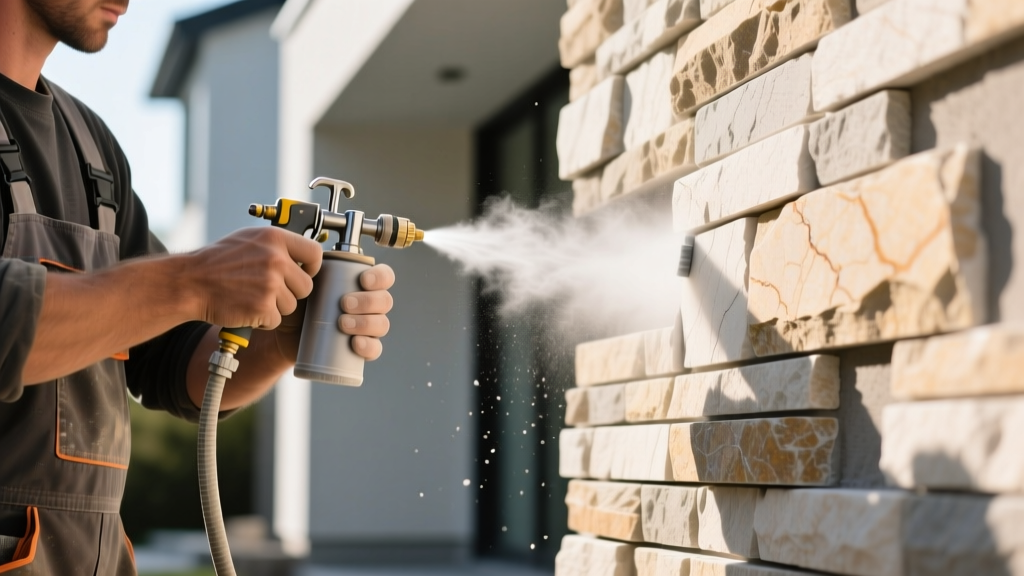
Troubleshooting Common Stone Veneer Failures
Proactive identification of masonry distress signals can prevent minor maintenance tasks from escalating into full-wall rebuilds. Monitor your stone veneer for the following specific failure modes:
1. Efflorescence (White Powdery Deposits)
The Cause: Water-soluble salts within the mortar or stone are dissolved by infiltrating moisture and deposited on the surface as the water evaporates. The Fix: Do not immediately wash the wall. Allow the efflorescence to dry completely, then remove it using a stiff, non-metallic bristle brush. If chemical removal is necessary, use a specialized, mild efflorescence cleaner diluted to a 1:10 ratio with water. Never use high-pressure water, as it drives the salts back into the masonry pores, guaranteeing a rapid recurrence.
2. Spalling and Delamination
The Cause: The stone face is flaking, peeling, or popping off entirely. This is almost always caused by freeze-thaw cycles acting on trapped moisture, often exacerbated by a non-breathable acrylic sealer or a missing weep screed at the base of the wall. The Fix: Individual spalled stones must be carefully chiseled out and replaced. If the spalling is widespread, the underlying drainage plane and weep screed must be inspected. If a film-forming sealer was previously applied, it must be chemically stripped using a heavy-duty alkaline stripper before a penetrating siloxane can be applied.
3. Biological Staining (Algae and Lichen)
The Cause: Persistent shade and moisture retention, particularly on the north-facing elevations of a building or near landscaping sprinklers. The Fix: Adjust irrigation systems to ensure sprinkler heads do not directly spray the masonry. Apply a quaternary ammonium-based masonry biocide. Avoid bleach (sodium hypochlorite), which can leave behind salt residues that contribute to efflorescence and can discolor the iron oxides in manufactured stone.
- Inspect all mortar joints for cracking, crumbling, or recession greater than 1/4 inch.
- Verify that weep screeds at the base of the wall are clear of soil, mulch, and debris (maintain a 4-inch clearance to grade).
- Check roof gutters and downspouts to ensure water is not cascading directly onto the stone veneer.
- Test the hydrophobicity of the sealer by splashing water on the wall; if it absorbs and darkens the stone rather than beading up, it is time to reapply a penetrating siloxane sealer.
Written by
Priya KapoorPriya Kapoor is a real estate market analyst and construction economics researcher with expertise in housing affordability, development feasibility, and infrastructure investment. She holds a Master of Regional Planning from Cornell University and previously worked as a senior analyst at CBRE's Investment Properties group, where she modeled returns for $4B in mixed-use development pipelines. Priya now runs an independent research practice advising developers, municipalities, and REITs on construction cost forecasting and market timing. She publishes the quarterly "BuildMat Market Pulse" report tracking material price indices across 12 commodity categories. Based in Austin, TX, Priya serves on the board of Habitat for Humanity Austin and is a marathon runner.
More from Priya Kapoor
View all
Construction Cost
Cost to Build a 1600 Sq Ft Home in 2026: Full Breakdown
Accurate 2026 cost to build a 1600 sq ft home—material, labor, and regional pricing breakdowns included. Plan your budget with real-time estimates.
Aug 11, 2026

Wood & Lumber
Name the Types of Wood for Pressure Treatment and Preservation
Learn how to name the types of wood best suited for pressure treatment. Compare species treatability, chemical retention levels, and 2026 preservation costs.
Aug 4, 2026

Stone & Masonry
Stone Veneer Suppliers Lindenhurst: 2026 Cost Analysis
Analyze 2026 stone veneer costs in Lindenhurst, NY. Compare local supplier pricing, delivery fees, and Suffolk County installation labor rates.
Aug 4, 2026