Cost to Build Stone Wall: 2026 Pricing & Buyer Guide
Discover the true cost to build stone wall projects in 2026. Compare natural vs. veneer pricing, labor rates, and hidden footing expenses.
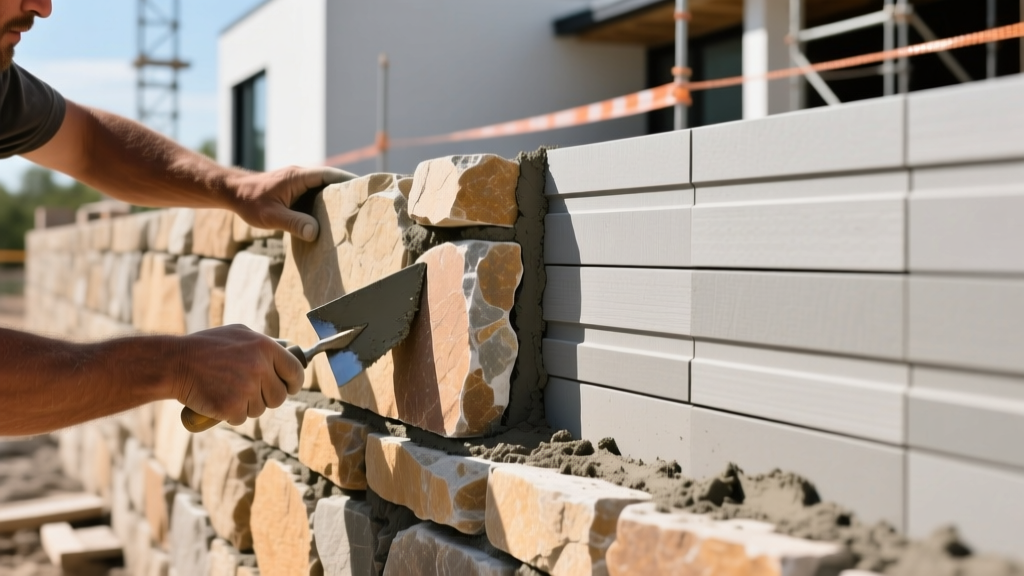
The Real Cost to Build Stone Wall: 2026 Baselines
When evaluating the cost to build stone wall installations, buyers must look past superficial square-foot estimates. A freestanding garden boundary and a structural retaining wall share the same primary material but demand vastly different engineering, site preparation, and labor investments. In 2026, material supply chain stabilizations have normalized freight surcharges for quarried stone, but skilled masonry labor remains at a premium due to widespread trade shortages.
The total investment is dictated by three variables: structural intent (retaining vs. freestanding vs. veneer), material origin (natural quarried vs. manufactured concrete), and site accessibility. Below is the current baseline pricing matrix for residential and light-commercial projects.
| Wall Type | Material Cost (per sq. ft.) | Labor Cost (per sq. ft.) | Total Installed Cost |
|---|---|---|---|
| Manufactured Veneer (Non-Structural) | $6 - $12 | $10 - $18 | $16 - $30 |
| Dry Stack Natural (Freestanding) | $10 - $20 | $15 - $25 | $25 - $45 |
| Mortared Natural (Freestanding) | $15 - $30 | $25 - $40 | $40 - $70 |
| Natural Stone Retaining (Engineered) | $25 - $50+ | $35 - $60 | $60 - $110+ |
Material Selection: Natural vs. Manufactured Veneer
The Natural Stone Institute notes that while manufactured stone veneer (MSV) has improved in aesthetic realism, natural stone remains the standard for longevity, structural integrity, and exterior weathering. Your choice here fundamentally alters the cost to build stone wall structures.
Natural Stone Pricing by Type (2026 Market Rates)
- Fieldstone / Rubble: $120 - $180 per ton. Highly irregular, requires significant labor to fit. Best for rustic, dry-stack retaining walls or rural property boundaries.
- Limestone (Ashlar Cut): $250 - $400 per ton. Uniform rectangular blocks that stack efficiently, reducing masonry labor time. Ideal for formal freestanding walls and modern veneers.
- Granite (Quarried Blocks): $400 - $800 per ton. Extremely dense and frost-resistant. Requires diamond-blade wet saws for on-site modification, increasing tooling and labor costs.
- Sandstone: $200 - $320 per ton. Offers beautiful stratification and warm earth tones but is more porous. Requires chemical sealing if used in high-moisture retaining applications.
Manufactured Stone Veneer (MSV)
MSV costs between $6 and $12 per square foot for materials. It is a non-structural cladding applied over a framed wall with a weather-resistive barrier (WRB) and metal lath. While the material is cheaper and lighter (reducing freight and structural footing requirements), the labor to prep the substrate, apply the scratch coat, and meticulously place the veneer keeps the total installed cost competitive with lower-end natural dry-stack walls.
The Hidden Costs: Footings, Drainage, and Excavation
Amateur budgets often fail because they only calculate the visible stone. The structural foundation and subsurface drainage account for 20% to 35% of the total cost to build stone wall projects.
Subsurface Cost Breakdown
- Concrete Footings: Mortared natural stone walls require a continuous poured concrete footing resting below the local frost line (typically 36 to 48 inches in northern climates). Expect to pay $12 to $22 per linear foot for excavation, forming, and pouring a 24-inch wide by 12-inch deep footing.
- Drainage Aggregate: You must use 3/4-inch angular crushed stone for backfill. Angular stone interlocks to maintain void space for water flow; round pea gravel compacts and blocks drainage. Budget $60 to $85 per ton delivered.
- Geogrid Reinforcement: For retaining walls exceeding 4 feet in height, engineered geogrid layers are mandatory. Geogrid ties the wall face into the compacted soil mass behind it. Material costs range from $1.50 to $3.00 per square foot of wall face, plus additional labor for trenching and soil compaction.
Labor Rates and Installation Timelines
In 2026, journeyman masons charge between $85 and $135 per hour, while general hardscape laborers range from $45 to $65 per hour. The speed of installation depends heavily on the stone's profile.
A two-person crew can typically install 40 to 60 square feet of ashlar-cut limestone per day. Conversely, fitting irregular fieldstone in a dry-stack retaining wall may yield only 15 to 25 square feet per day. When calculating the cost to build stone wall features, always request a timeline estimate in 'crew days' rather than just a flat bid, as weather delays and rock-hard soil conditions can quickly erode a contractor's margin and lead to change orders.
Buyer's Decision Matrix: Which Wall Fits Your Project?
Use this framework to align your project requirements with the most cost-effective and structurally sound wall type.
| Use Case | Recommended Wall Type | Engineering & Cost Rationale |
|---|---|---|
| Interior Fireplace or Accent Wall | Manufactured Stone Veneer | No structural footing required; lightweight; lower material cost; high aesthetic variety. |
| Freestanding Garden Boundary (Under 3 ft) | Dry Stack Natural (Limestone) | Allows for natural water permeability; no mortar mixing required; easier DIY potential. |
| Property Line Privacy Wall (4 to 6 ft) | Mortared Natural (Ashlar Cut) | Requires deep frost-protected footing; provides wind resistance and high security; premium aesthetic. |
| Terraced Slope / Driveway Retention | Engineered Natural Retaining | Mandatory geogrid and drainage; highest cost to build stone wall, but prevents catastrophic soil erosion. |
Common Installation Failures to Avoid
Protect your investment by ensuring your contractor adheres to these critical masonry standards. Cutting corners here will result in expensive teardowns within 3 to 5 years.
- Using the Wrong Mortar Type: For above-grade veneer and freestanding walls, masons must use Type N mortar (approx. 750 PSI). It is flexible enough to accommodate slight thermal expansion. For below-grade retaining walls, Type S mortar (approx. 1800 PSI) is required to resist lateral earth pressure and moisture degradation.
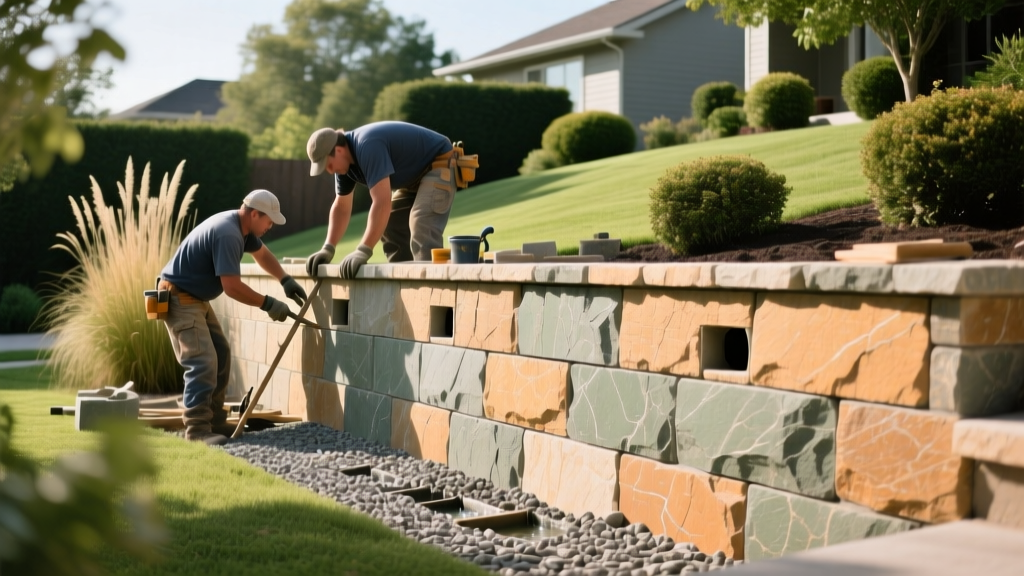
- Omitting Weep Holes: Mortared retaining walls must feature 4-inch PVC weep holes installed every 4 linear feet at the base course. Without these, trapped water will freeze, expand, and spall the stone face or push the wall outward.
- Inadequate Base Compaction: Dry stack walls rely on gravity and friction. The base course must be set on a minimum 6-inch layer of mechanically compacted 3/4-inch crushed gravel. Hand-tamping is insufficient and will lead to differential settling and wall rotation.
- Ignoring Frost Heave Protocols: As noted by Penn State Extension, any rigid (mortared) wall built on expansive clay soils without a footing below the frost line will crack and heave unevenly during winter freeze-thaw cycles.
Final Buyer Considerations
When soliciting bids, require contractors to itemize excavation, footing, drainage, and masonry labor separately. This transparency allows you to verify that the structural prerequisites are fully funded within the proposal. By understanding the granular cost to build stone wall components, you can confidently select materials and engineering methods that ensure your hardscape endures for decades.
Written by
Sarah WhitfieldSarah Whitfield is a chartered quantity surveyor (MRICS) and construction cost analyst with 15 years of experience in material pricing, procurement strategy, and project budgeting. She earned her degree in Construction Management from the University of Reading (UK) and has worked on projects ranging from $2M custom homes to $180M mixed-use developments across North America and Europe. Sarah currently leads cost estimating for BuildMat Insight, maintaining a proprietary database of 4,000+ material price points updated quarterly. She is a frequent contributor to RSMeans cost data panels and has presented at the International Cost Engineering Council (ICEC) congress. Based in Denver, CO, Sarah is an avid trail runner and volunteer mentor for Women in Construction.
More from Sarah Whitfield
View all
Wood & Lumber
What Are the Different Types of Wood? A Builder's Guide
Compare structural softwoods, finish hardwoods, and engineered lumber. Analyze Janka ratings, MOE values, and 2026 pricing for construction.
Aug 4, 2026

Walls & Panels
Steel Framing vs Wood Framing: Corrosion and Moisture Defense
Compare steel framing vs wood framing for moisture resistance. Learn about galvanized coatings, condensation risks, and corrosion protection strategies.
Jul 21, 2026

Stone & Masonry
How to Cut Stone Veneer: Wet Saw vs Grinder Comparison
Compare the best tools for cutting stone veneer. We review wet saws, angle grinders, and chop saws to help you achieve clean, chip-free cuts.
Jul 21, 2026