How to Clean and Maintain Culture Stone Veneer Exteriors
Learn how to clean, seal, and maintain culture stone veneer exteriors. Expert tips on stain removal, efflorescence treatment, and breathable sealers.
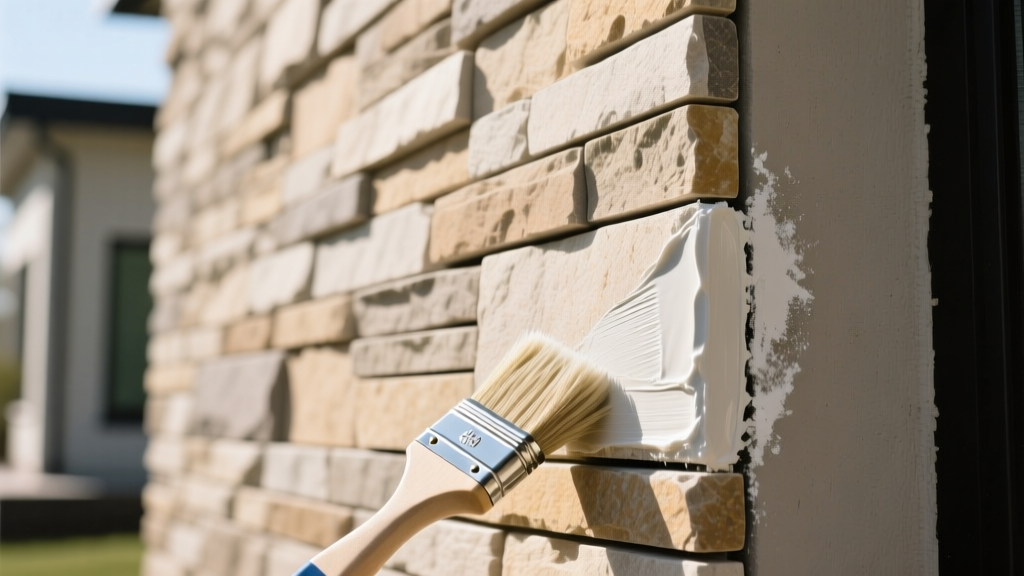
The Chemistry of Manufactured Stone: Why Standard Cleaners Fail
Culture stone veneer, technically classified as manufactured stone veneer (MSV), is not quarried from the earth. It is a cast cementitious product composed of Portland cement, lightweight aggregates (such as pumice or expanded shale), and iron oxide pigments. Understanding this chemical composition is the foundational step in proper maintenance. Because its binder is Portland cement, newly installed culture stone veneer has a highly alkaline surface pH, typically ranging between 11 and 13. Over several years of weathering, this pH drops to a more neutral 8 or 9.
The most critical mistake homeowners and inexperienced contractors make is treating this material like natural fieldstone. Applying standard masonry cleaners containing muriatic acid (hydrochloric acid) or phosphoric acid to culture stone veneer triggers a destructive chemical reaction. The acid reacts with the calcium hydroxide in the cement matrix to form calcium chloride, a highly soluble salt. This reaction causes micro-pitting on the surface, permanently dissolves the iron oxide pigments, and exposes the lightweight aggregate underneath. Once the pigment layer is etched away by acid, the only remedy is professional staining or complete replacement of the affected panels.
According to guidelines published by the Masonry Veneer Manufacturers Association (MVMA), only neutral or mildly alkaline cleaners should ever be used on manufactured stone products. Always test any cleaning solution on an inconspicuous 2x2 foot section and allow it to dry completely to check for color shifting before proceeding with the full application.
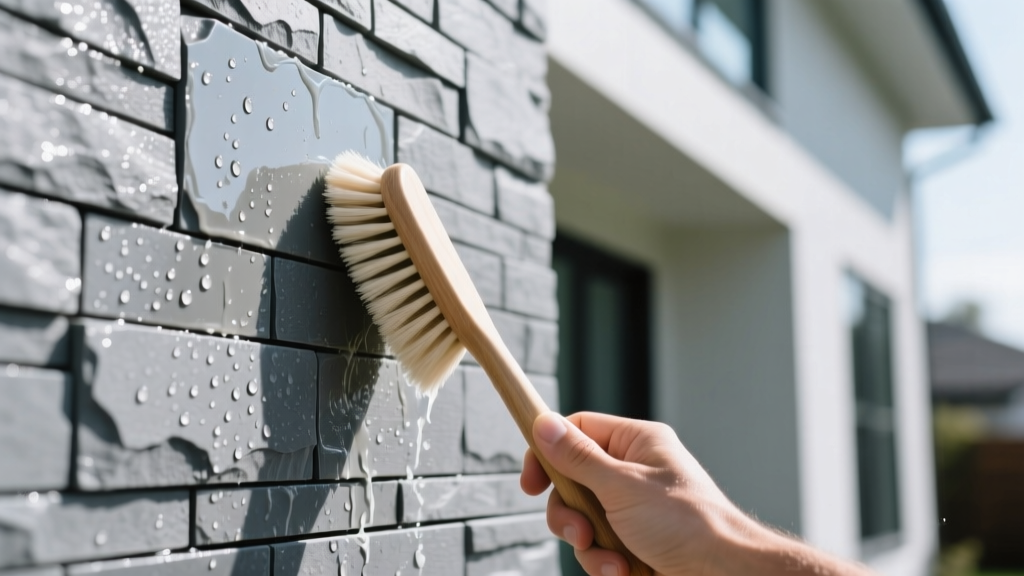
Routine Maintenance Schedule and Cost Breakdown
Unlike natural stone, which relies on dense geological formations to resist moisture, culture stone veneer relies on its surface integrity and proper drainage. Establishing a proactive maintenance schedule prevents the need for aggressive, high-cost restorative cleaning. The following matrix outlines the standard maintenance cadence for exterior applications in temperate climates.
| Frequency | Maintenance Task | Recommended Method / Product | Estimated DIY Cost (per sq ft) | Professional Service Cost |
|---|---|---|---|---|
| Annual | Low-Pressure Rinse | Garden hose with 40-degree fan nozzle | $0.02 | $0.50 - $0.85 |
| Bi-Annual | Organic Stain Treatment | Sodium percarbonate (oxygen bleach) solution | $0.12 | $1.25 - $1.75 |
| 3-5 Years | Penetrating Sealer Application | Silane/Siloxane water repellent | $0.75 - $1.10 | $2.00 - $3.50 |
| As Needed | Efflorescence Removal | Dry nylon brushing, specialized non-acidic cleaner | $0.15 | $1.50 - $2.50 |
Step-by-Step Stain Removal Decision Matrix
When routine rinsing is insufficient, specific stain types require targeted chemical and mechanical interventions. Use the following protocols to address the three most common culture stone veneer afflictions without damaging the cementitious matrix.
1. Efflorescence (White Powdery Residue)
Efflorescence occurs when water-soluble salts migrate from within the cement matrix to the surface, leaving a white, crystalline deposit upon evaporation. The Brick Industry Association (BIA) explicitly warns against washing fresh efflorescence with water, as this simply re-dissolves the salts and drives them back into the pores to re-emerge later.
- Step 1: Allow the stone to dry completely for at least 48 hours after the last rainfall.
- Step 2: Use a stiff, non-metallic nylon bristle brush to aggressively dry-brush the deposits off the surface. Never use wire brushes, as steel filaments will break off, embed in the porous stone, and create secondary rust stains.
- Step 3: If dry brushing fails, apply a specialized, non-acidic efflorescence remover (such as Prosoco Sure Klean Light Duty Concrete Cleaner diluted at a 1:10 ratio with water). Apply with a low-pressure pump sprayer, dwell for 3 to 5 minutes without letting it dry, and rinse thoroughly.
2. Organic Growth (Algae, Moss, Mildew)
Shaded, north-facing elevations are highly susceptible to biological growth. While chlorine bleach (sodium hypochlorite) will kill algae, it leaves behind chloride salts that accelerate future efflorescence and can degrade the mortar joints.
- Step 1: Mix a solution of sodium percarbonate (oxygen bleach) at a ratio of 1 cup per gallon of warm water. Oxygen bleach breaks down into harmless sodium carbonate, water, and oxygen, leaving no damaging salt residue.
- Step 2: Apply the solution liberally to the affected culture stone veneer using a garden sprayer.
- Step 3: Allow a 15-minute dwell time. The solution will foam as it oxidizes the organic matter.
- Step 4: Agitate stubborn areas with a nylon scrub brush and rinse with a standard garden hose.
3. Dirt, Grime, and Atmospheric Pollution
Pressure washing is permissible on culture stone veneer, but it must be strictly controlled to avoid blowing out the mortar joints or scouring the pigmented surface layer.
- Maximum Pressure: Do not exceed 1,500 PSI. High-pressure streams will easily erode the lightweight pumice aggregate.
- Nozzle Selection: Use a 40-degree (white) fan tip. Never use a 0-degree (red) or 15-degree (yellow) tip.
- Standoff Distance: Maintain a strict 12-inch minimum distance between the nozzle and the stone surface. Keep the wand moving continuously to prevent localized etching.
Sealing Culture Stone Veneer: The Breathability Imperative
Applying a water repellent to culture stone veneer is highly recommended in regions with severe freeze-thaw cycles, but selecting the wrong sealer chemistry will cause catastrophic failure. The veneer must remain vapor-permeable (breathable) so that incidental moisture trapped behind the stone can evaporate outward.
Never apply acrylic, polyurethane, or epoxy sealers to culture stone veneer. These film-forming products create a non-breathable plastic barrier on the surface. When moisture migrates from the interior wall cavity outward, it becomes trapped behind the acrylic film. In freezing temperatures, this trapped water expands, causing the face of the stone to spall, delaminate, and pop off the wall.
Instead, specify a penetrating silane or siloxane water repellent. Products like Prosoco Siloxane PD are engineered specifically for porous masonry. Siloxane molecules are small enough to penetrate 1/4 to 1/2 inch into the cement matrix, where they chemically react with the silica to form a hydrophobic resin network within the pores. This blocks liquid water from entering while allowing water vapor to escape.
Application Protocol: Siloxane sealers require a "wet-on-wet" application technique to achieve proper penetration depth. Apply the first flood coat using a low-pressure pump sprayer until the stone is saturated and begins to run. Immediately apply a second coat before the first coat dries (typically within 2 to 5 minutes). This ensures the pores remain open and fully loaded with the active resin. Coverage rates typically range from 100 to 150 square feet per gallon, depending on the porosity of the specific stone profile.
Troubleshooting Hidden Moisture Intrusion
If you have cleaned and sealed your culture stone veneer but continue to experience rapid efflorescence recurrence, spalling, or mortar joint degradation, the issue is not surface maintenance—it is a systemic installation failure. Modern manufactured stone veneer is a drainage system, not a waterproof barrier. If water is continually saturating the stone from behind, no surface treatment will solve the problem.
Investigate the following common installation defects:
- Weep Screed Blockage: The weep screed at the base of the wall must remain clear of soil, mulch, and debris. If the weep holes are buried or clogged, water trapped in the drainage plane has no exit route and will be forced outward through the stone veneer, carrying salts with it.
- Missing or Compromised WRB: The weather-resistant barrier (house wrap or building paper) behind the metal lath and scratch coat must be intact. If roof runoff or window leaks bypass the flashing and wet the structural sheathing, the moisture will migrate through the mortar and stone.
- Capillary Action at Grade: Culture stone veneer must terminate at least 4 inches above the final grade level (or 2 inches above paved surfaces). If the stone is buried in soil or mulch, it will act like a sponge, wicking ground moisture continuously upward through capillary action, rendering any surface sealer entirely ineffective.
By respecting the chemical limitations of cementitious products, utilizing non-destructive cleaning agents, and ensuring the wall assembly can breathe and drain, culture stone veneer will maintain its structural integrity and aesthetic appeal for decades without requiring major restorative intervention.
Written by
Priya KapoorPriya Kapoor is a real estate market analyst and construction economics researcher with expertise in housing affordability, development feasibility, and infrastructure investment. She holds a Master of Regional Planning from Cornell University and previously worked as a senior analyst at CBRE's Investment Properties group, where she modeled returns for $4B in mixed-use development pipelines. Priya now runs an independent research practice advising developers, municipalities, and REITs on construction cost forecasting and market timing. She publishes the quarterly "BuildMat Market Pulse" report tracking material price indices across 12 commodity categories. Based in Austin, TX, Priya serves on the board of Habitat for Humanity Austin and is a marathon runner.
More from Priya Kapoor
View all
Construction Cost
Cost to Build a 1600 Sq Ft Home in 2026: Full Breakdown
Accurate 2026 cost to build a 1600 sq ft home—material, labor, and regional pricing breakdowns included. Plan your budget with real-time estimates.
Aug 11, 2026

Wood & Lumber
Name the Types of Wood for Pressure Treatment and Preservation
Learn how to name the types of wood best suited for pressure treatment. Compare species treatability, chemical retention levels, and 2026 preservation costs.
Aug 4, 2026

Stone & Masonry
Stone Veneer Suppliers Lindenhurst: 2026 Cost Analysis
Analyze 2026 stone veneer costs in Lindenhurst, NY. Compare local supplier pricing, delivery fees, and Suffolk County installation labor rates.
Aug 4, 2026