Discount Stacked Stone Veneer: 2026 Buyer's Guide
Discover how to source and evaluate discount stacked stone veneer. Compare manufactured, natural, and polyurethane options with 2026 pricing and specs.
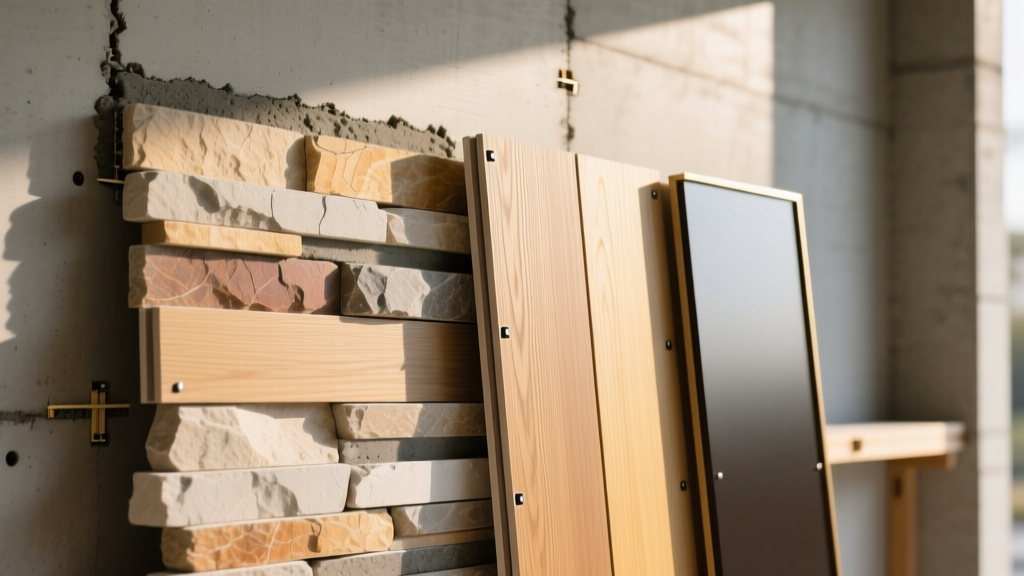
The Anatomy of Discount Stacked Stone Veneer
The market for discount stacked stone veneer is fractured, often blurring the line between genuine surplus deals and substandard manufacturing rejects. When sourcing budget-friendly stone for interior accent walls or exterior cladding, buyers typically encounter three distinct material categories: manufactured concrete veneer (CMU-based), natural stone 'seconds', and high-density polyurethane panels. Understanding the structural and aesthetic differences between these materials is the first step in preventing costly installation failures.
Manufactured stacked stone veneer is cast in molds from real stone and colored with iron-oxide pigments. Discount versions in this category are usually 'B-grade' or 'seconds'—pallets that exhibit minor color inconsistencies, slight edge chipping, or over-curing issues. Natural stone seconds are quarried offcuts or split-face rejects that lack uniform thickness, requiring a thicker mortar bed to level the wall. Polyurethane panels, while not true stone, offer a lightweight, mortarless alternative often sold at a discount when older color profiles are discontinued.
Many ultra-cheap manufactured stones (priced below $3.50 per square foot) use surface-applied acrylic stains rather than integral iron-oxide pigments. When exposed to UV radiation and freeze-thaw cycles, surface stains will delaminate and fade within 24 to 36 months, leaving you with a grey, concrete-colored wall. Always demand a cut-sample to verify the color extends through the entire cross-section of the stone.
Material Comparison Matrix
Evaluating discount stone requires looking beyond the base price per square foot. The following matrix breaks down the critical specifications for the three primary discount materials available in 2026.
| Material Type | Avg. Discount Price | Weight (lbs/sq ft) | Governing Standard | Best Application |
|---|---|---|---|---|
| Manufactured Seconds | $4.50 - $6.50 | 8 - 12 lbs | ASTM C1670 | Exterior cladding, heavy-use interiors |
| Natural Stone Offcuts | $5.00 - $8.00 | 13 - 18 lbs | ASTM C616 / C568 | Feature walls, wainscoting, fireplaces |
| Polyurethane Panels | $7.00 - $9.50 | 1 - 2 lbs | ICC-ES AC336 | DIY interiors, non-load-bearing facades |
Sourcing Channels: Where to Find Genuine Deals
Finding legitimate discount stacked stone veneer requires bypassing standard retail markups and tapping into commercial supply chain anomalies. Here is where professional masons and savvy homeowners source their materials.
Manufacturer Closeouts and Discontinued Profiles
Major brands like Boral, Cultured Stone, and ProVia periodically retire specific color blends or mold profiles to make room for new 2026 collections. When a profile is discontinued, remaining warehouse inventory is liquidated at 40% to 60% off MSRP. The primary risk here is future repair; if a stone cracks during installation or years later, finding an exact match from a retired palette is nearly impossible. Always purchase an additional 15% overage when buying discontinued profiles to account for breakage and future repairs.
Masonry Yard 'B-Grade' Pallets
Regional masonry supply yards frequently sell 'B-grade' pallets. These are manufactured stones that failed the manufacturer's strict first-run quality control due to minor aesthetic defects—such as a slightly off-tint batch or air bubbles on the back of the stone that do not affect structural integrity. According to guidelines from The Masonry Society, as long as the material passes standard compressive strength and freeze-thaw testing, B-grade stones are structurally identical to first-run products.
Big Box Clearance vs. Specialty Liquidators
While large home improvement stores offer clearance endcaps, these are often damaged returns or partial boxes missing corner pieces. Specialty building material liquidators, conversely, sell full, intact pallets of overstock. Always verify that corner pieces are included in the lot; manufactured stone corners are complex molds that can cost up to $12 per linear foot, and a discount flat-stone pallet is useless for exterior corners without them.
Hidden Costs That Erase Your Discount
A base price of $4.50 per square foot for stacked stone veneer is highly attractive until you factor in the mandatory installation accessories. Discount stone is rarely sold as a complete system. To calculate your true project cost, you must include the following components:
- Weather-Resistive Barrier (WRB) & Flashing: Two layers of Grade D asphalt-impregnated paper or a high-quality house wrap, plus galvanized weep screed at the base ($1.20 - $1.80 per sq ft).
- Metal Lath: 2.5 lb self-furring galvanized woven wire lath is mandatory for manufactured and natural stone over framed walls ($0.85 - $1.10 per sq ft).
- Scratch Coat & Mortar: Type S masonry mortar for the 1/2-inch scratch coat and the subsequent setting bed. Budget approximately 15 lbs of mortar mix per square foot of veneer ($0.90 - $1.30 per sq ft).
- Sealer: A breathable, silane-siloxane penetrating sealer is required for exterior natural stone seconds to prevent water ingress and efflorescence ($0.40 - $0.60 per sq ft).
Standard veneer installations require a 10% waste factor for cuts and breakage. When purchasing discount 'seconds' or irregular natural stone offcuts, increase your waste factor to 18% - 22%. The irregular shapes and higher defect rate in budget pallets mean you will discard significantly more material to achieve a cohesive stacked pattern.
Pallet Inspection Checklist: Verifying Quality on Delivery
When a discount pallet arrives, do not sign the bill of lading until you have performed a physical inspection. Discount suppliers often have strict 'no return' policies on liquidated goods. Execute this four-step field test:
- The Drop Test: Select a random stone from the middle of the pallet and drop it flat onto a concrete surface from waist height (approx. 3 feet). First-run manufactured stone should bounce or chip slightly. If it shatters into dust or breaks cleanly in half, the concrete mix was improperly proportioned or under-cured, indicating severe structural weakness.
- Water Absorption Check: Pour two ounces of water onto the back (uncolored) side of a stone. If the water is absorbed instantly and darkens the entire stone within 30 seconds, the material has high porosity and will be highly susceptible to freeze-thaw spalling in exterior applications.
- Dimensional Tolerance: Measure the thickness of five random stones. For standard stacked veneer, the thickness should not vary by more than 1/4 inch across the sample. High variance will require a mason to apply excessively thick mortar beds, increasing the risk of sagging and bond failure.
- Pigment Verification: Take a masonry hammer and snap a stone in half. Inspect the cross-section. The color should be relatively consistent from the face to the core. A stark white or grey core with only a millimeter of color on the face indicates a cheap surface-staining process.
Frequently Asked Questions
Can I use interior-grade discount stacked stone on an exterior wall?
No. Interior-grade manufactured stone often lacks the air-entrainment admixtures required to withstand freeze-thaw cycles. If interior stone is used outdoors, trapped moisture will expand when frozen, causing the face of the stone to pop off (spalling) within one to two winter seasons. Always verify the product data sheet explicitly states compliance with ASTM C1670 freeze-thaw testing for exterior use.
Do I need to seal discount manufactured stone veneer?
Most high-quality manufactured stones do not require sealing and can actually be damaged by film-forming sealers that trap moisture inside the wall cavity. However, if you purchase highly porous natural stone seconds (like discount sandstone or limestone), applying a breathable silane-siloxane water repellent is critical to prevent efflorescence—the white, powdery salt deposits that migrate to the surface when water moves through the masonry.
Are mortarless interlocking discount panels a viable alternative?
Mortarless high-density polyurethane panels are excellent for DIY interior projects or covering unattractive concrete block foundations. However, they are not a true masonry product. They expand and contract at different rates than wood or steel framing. If installing them outdoors, you must follow the manufacturer's exact gapping and furring-strip guidelines to allow for thermal expansion; otherwise, the panels will buckle and warp during peak summer temperatures.
Written by
David NakamuraDavid Nakamura is a licensed architect (AIA) and construction technology writer focused on sustainable building methods, mass timber engineering, and high-performance building envelopes. He holds a Master of Architecture from the University of Washington and is a certified Passive House Consultant (CPHC). David spent eight years at the Seattle firm Mithun, where he led the design of three LEED Platinum projects, before founding his own practice specializing in net-zero residential design. He serves on the editorial advisory board of GreenBuilder Magazine and has authored peer-reviewed papers on cross-laminated timber (CLT) connections for the Journal of Structural Engineering. In his spare time, David teaches woodworking at Pratt Fine Arts Center and kayaks the Puget Sound.
More from David Nakamura
View all
Construction Cost
Labor Cost to Build a Deck Per Sq Ft: 2026 Installation Guide
Discover the exact labor cost to build a deck per sq ft in 2026. This installation guide breaks down contractor rates, complexity factors, and hidden fees.
Aug 4, 2026

Construction Cost
How Much Does It Cost to Build a 3 Bedroom House? Financing Guide
Learn exactly how much it costs to build a 3 bedroom house and explore 2026 financing options, construction loan types, and budget frameworks for your build.
Aug 4, 2026

Construction Cost
Cost to Build a Tennis Court: 2026 Guide
How much does it cost to build a tennis court in 2026? Breakdowns for asphalt, concrete, and synthetic surfaces plus fencing and lighting.
Jul 30, 2026