Exterior Stone Veneer Cost Breakdown: 2026 Buyer Selection Guide
Discover the true exterior stone veneer cost for 2026. Compare manufactured vs. natural stone pricing, installation labor, and hidden material expenses.
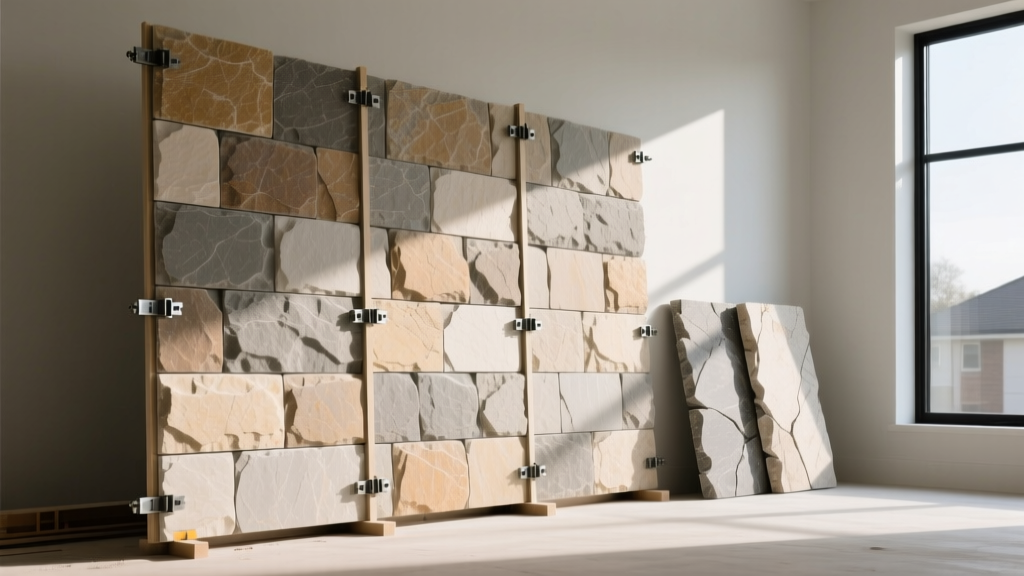
The 2026 Exterior Stone Veneer Cost Matrix
Calculating the accurate exterior stone veneer cost requires looking beyond the per-square-foot material price tag displayed in showrooms. In 2026, while supply chain stabilization has leveled out the cost of raw manufactured and natural stone products, a persistent shortage of skilled masons has driven installation labor premiums up by 12% to 18% compared to previous years. Buyers must evaluate the total wall assembly cost, which includes weather-resistive barriers, metal lath, scratch coats, and specialized mortars.
| Material Type | Material Cost (per sq ft) | Prep & Labor (per sq ft) | Waste Factor | Estimated Total (per sq ft) |
|---|---|---|---|---|
| Manufactured Stone Veneer (MSV) | $7.50 - $13.00 | $14.00 - $22.00 | 5% - 8% | $22.50 - $37.00 |
| Natural Thin Veneer (NTV) | $14.00 - $24.00 | $16.00 - $26.00 | 8% - 12% | $32.00 - $55.00 |
| Full-Bed Natural Stone | $18.00 - $35.00+ | $25.00 - $45.00 | 10% - 15% | $48.00 - $90.00+ |
Manufactured vs. Natural Thin Veneer: A Buyer’s Decision Framework
When budgeting for your project, the choice between Manufactured Stone Veneer (MSV) and Natural Thin Veneer (NTV) dictates not only your material spend but also your long-term maintenance and structural requirements. Both options typically weigh between 10 to 15 pounds per square foot, meaning they can be applied to standard wood-framed exterior walls without requiring additional structural reinforcement or a masonry foundation ledge.
Manufactured Stone Veneer (MSV)
Best For: Budget-conscious buyers seeking specific, uniform color palettes and consistent profiles.
Composition: Portland cement, lightweight aggregates, and iron oxide pigments cast in molds from real stone.
2026 Market Leaders: Eldorado Stone, Boral Cultured Stone, Dutch Quality Stone.
Trade-off: The cementitious base is susceptible to chipping, revealing the aggregate core underneath. Cutting MSV requires careful blade selection to avoid exposing uncolored interior material on exposed edges.
Natural Thin Veneer (NTV)
Best For: High-end custom builds, historical restorations, and harsh freeze-thaw climates.
Composition: Real quarried stone (limestone, slate, granite, fieldstone) sliced to a 0.75-inch to 1.25-inch thickness.
Trade-off: Higher upfront material cost and heavier weight. Color variation is inherent to the quarry, meaning batch matching for future additions or repairs is virtually impossible.
Structural Load and Foundation Requirements
If you opt for Full-Bed Natural Stone (often 3 to 5 inches thick and weighing 40+ lbs per sq ft), the exterior stone veneer cost will surge due to structural necessities. Full-bed veneer cannot be supported by standard wood framing or standard concrete footings. It requires a continuous masonry foundation ledge (brick shelf) or engineered steel angle iron supports bolted to the foundation at every floor level. If your existing foundation lacks a brick shelf, the cost to retrofit structural support will easily add $3,000 to $8,000 to your project.
Hidden Costs That Derail Veneer Budgets
Contractor estimates frequently omit secondary materials and site logistics. When reviewing bids, ensure the following line items are explicitly accounted for to avoid mid-project change orders:
- Corner Pieces: Flat stone is priced per square foot, but exterior corners are priced per linear foot. Corner pieces typically cost 1.5x to 2.5x the price of flat veneer. A home with multiple architectural jogs and corners will see material costs increase by 15% to 20%.
- Scaffolding and Lifts: For two-story applications or steep rooflines, scaffolding rental and setup will add $800 to $2,500 to the labor bid.
- Weep Screeds and Flashing: Code-compliant corrosion-resistant weep screeds (ASTM C932) and specialized through-wall flashing are mandatory. Budget an additional $1.50 to $3.00 per linear foot for these critical moisture-management components.
- Mortar and Admixtures: High-quality Type S mortar, often mixed with acrylic fortifiers or bonding agents for exterior applications, adds $0.75 to $1.25 per square foot in consumable materials.
Critical Installation Specifications & Failure Prevention
The longevity of exterior stone veneer relies entirely on the hidden layers behind the stone. Moisture intrusion is the primary cause of veneer failure, leading to wood rot, mold, and stone detachment. According to the Masonry Veneer Manufacturers Association (MVMA), strict adherence to drainage plane protocols is non-negotiable. Furthermore, the Brick Industry Association (BIA) Technical Notes emphasize that proper anchoring and mortar selection are critical for masonry veneers subjected to wind loads and seismic activity.
- Weather-Resistive Barrier (WRB): Apply a minimum of two layers of Grade D building paper, or one layer of housewrap covered by a layer of Grade D paper, over the structural sheathing. This creates a capillary break and drainage plane.
- Weep Screed Installation: Install a minimum 18-gauge galvanized weep screed at the base of the wall. It must be placed at least 4 inches above final earth grade, or 2 inches above paved concrete surfaces, to prevent ground moisture from wicking into the stone assembly.
- Metal Lath Attachment: Staple or nail 2.5 lb/sq yd galvanized expanded metal lath directly through the WRB into the wall studs (not just the OSB/plywood sheathing). Fasteners must penetrate studs by a minimum of 1 inch, spaced no more than 6 inches apart vertically and 16 inches horizontally.
- The Scratch Coat: Apply a 3/8-inch to 1/2-inch layer of Type S mortar over the lath. Type S is required for exterior use due to its high compressive strength and superior bond. Scarify the scratch coat horizontally to provide a mechanical key for the setting bed, and cure it for 24 to 48 hours before applying stone.
- Setting and Jointing: Butter the back of each stone with a 1/2-inch layer of mortar. Press firmly until mortar squeezes out. Tool the joints with a jointing tool once the mortar becomes thumbprint-hard to compress the surface and seal out water.
Never use an acid wash to clean newly installed exterior stone veneer. Acid reacts with the Portland cement in the mortar and the manufactured stone itself, drawing soluble salts to the surface and causing severe, permanent efflorescence (white, powdery staining). Always use a soft brush and a pH-neutral masonry cleaner.
Regional Labor Variations Impacting Total Costs
The exterior stone veneer cost is heavily influenced by regional masonry labor markets. In high-cost-of-living areas and regions with strict seismic building codes (such as Coastal California and the Pacific Northwest), expect labor rates to range from $28 to $45 per square foot. These regions require specialized structural ties, engineered mortar mixes, and rigorous municipal inspections. Conversely, in the Southeast and Midwest, where masonry traditions remain deeply embedded in the local contractor pool and building codes are less restrictive regarding lateral bracing, labor costs typically hover between $14 and $22 per square foot.
Troubleshooting Common Veneer Failures
| Symptom | Root Cause | Professional Remediation |
|---|---|---|
| Stone Detachment / Bulging | Lath was nailed only to the sheathing, not the studs; or improper scratch coat curing caused bond failure. | Remove affected stones, verify lath attachment to studs with structural screws, re-apply scratch coat, and reset stones with polymer-modified Type S mortar. |
| Severe Efflorescence | Missing weep screed, lack of a drainage plane, or use of unwashed masonry sand containing high salt content. | Identify and eliminate the water intrusion source. Dry brush the surface. Apply a breathable, siloxane-based penetrating masonry sealer to prevent future water ingress. |
| Spalling / Flaking | Freeze-thaw cycles penetrating porous manufactured stone; often caused by using a non-breathable acrylic surface sealer. | Strip the non-breathable sealer using a chemical stripper. Replace severely spalled stones. Ensure the wall assembly can dry to the exterior. |
By understanding the granular breakdown of material, labor, and hidden assembly costs, buyers can accurately forecast their exterior stone veneer cost and ensure their investment is protected by code-compliant, moisture-managed installation techniques.
Written by
Elena RodriguezElena Rodriguez is a civil engineer and technical writer specializing in concrete technology, masonry systems, and ASTM/ACI compliance. She earned her B.S. in Civil Engineering from Texas A&M University and spent a decade at a materials testing laboratory, performing over 2,000 concrete compressive strength tests and masonry prism evaluations. Elena is an ACI-certified Field Testing Technician (Grade I) and a member of ASTM Committee C12 on Natural Building Stone. She currently consults on forensic engineering cases involving concrete failures and moisture intrusion. Based in San Antonio, TX, Elena is a proud member of the Society of Women Engineers (SWE) and coaches her daughter's FIRST Robotics team.
More from Elena Rodriguez
View all
Walls & Panels
Cost Analysis: Light Gauge Steel Framing Advantages and Disadvantages
Evaluate light gauge steel framing advantages and disadvantages through a strict cost analysis lens, comparing material, labor, and lifecycle expenses.
Aug 4, 2026

Walls & Panels
Gypsum Board Types: Exact Specifications, Thickness & Dimensions
Compare standard, Type X, and moisture-resistant gypsum board types. Get exact specifications, thicknesses, dimensions, and ASTM standards for your project.
Aug 4, 2026

Fire Resistance
Best Fire-Resistant Outdoor Decking Materials: 2026 Buyer Guide
Discover the best fire-resistant outdoor decking materials for 2026. Compare Class A PVC, aluminum, and hardwood options for WUI compliance and safety.
Aug 4, 2026