Exterior Stone Veneer Near Me: Technical Specs & Sourcing Guide
Master the technical specifications for exterior stone veneer near me. Learn ASTM standards, weight limits, climate adaptations, and local sourcing tips.
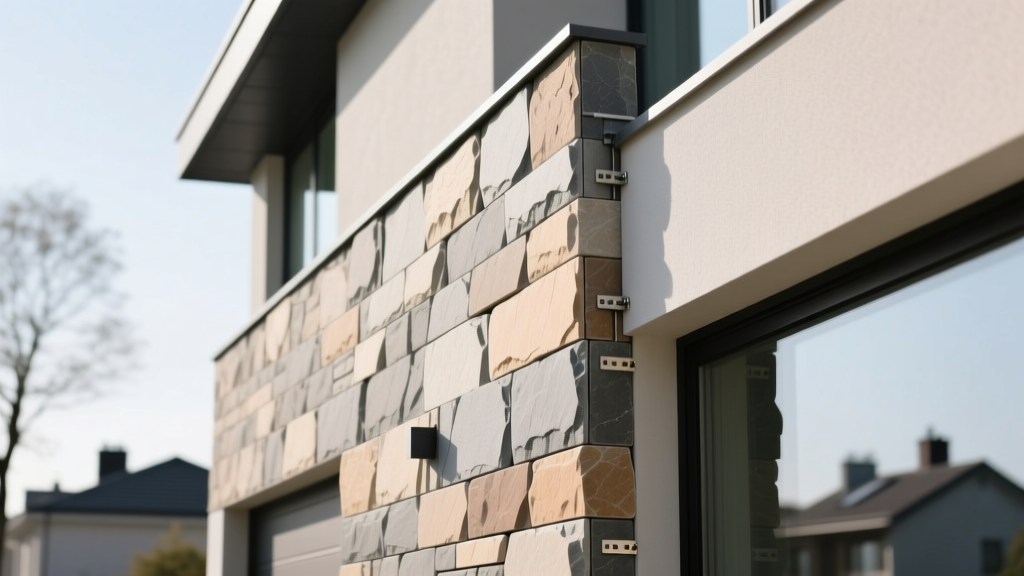
The Hidden Complexity in Local Stone Sourcing
Searching for 'exterior stone veneer near me' often yields a list of local masonry suppliers and landscape yards, but proximity does not guarantee structural compatibility. Sourcing adhered masonry veneer locally requires strict adherence to engineering tolerances, regional climate adaptations, and precise moisture management protocols. A stone quarried in your immediate region may possess vastly different absorption rates and compressive strengths than manufactured alternatives shipped from out of state. Understanding the technical specifications of exterior veneer systems is critical to preventing catastrophic failures like delamination, efflorescence, and substrate rot.
Core ASTM Frameworks: Natural vs. Manufactured
Before purchasing inventory from a local distributor, verify that the product meets the correct American Society for Testing and Materials (ASTM) standards. The testing protocols differ significantly between natural and manufactured stone.
- Manufactured Adhered Stone: Must comply with ASTM C1670. This specification mandates strict limits on water absorption, freeze-thaw durability, and dimensional tolerances. High-quality manufactured veneer will exhibit a water absorption rate of less than 8% by weight.
- Natural Stone Veneer: Specifications depend on the geological classification. Sandstone must meet ASTM C616, Limestone must meet ASTM C568, and Slate must meet ASTM C629. The Natural Stone Institute provides extensive technical data sheets detailing the modulus of rupture and abrasion resistance for specific regional quarries.
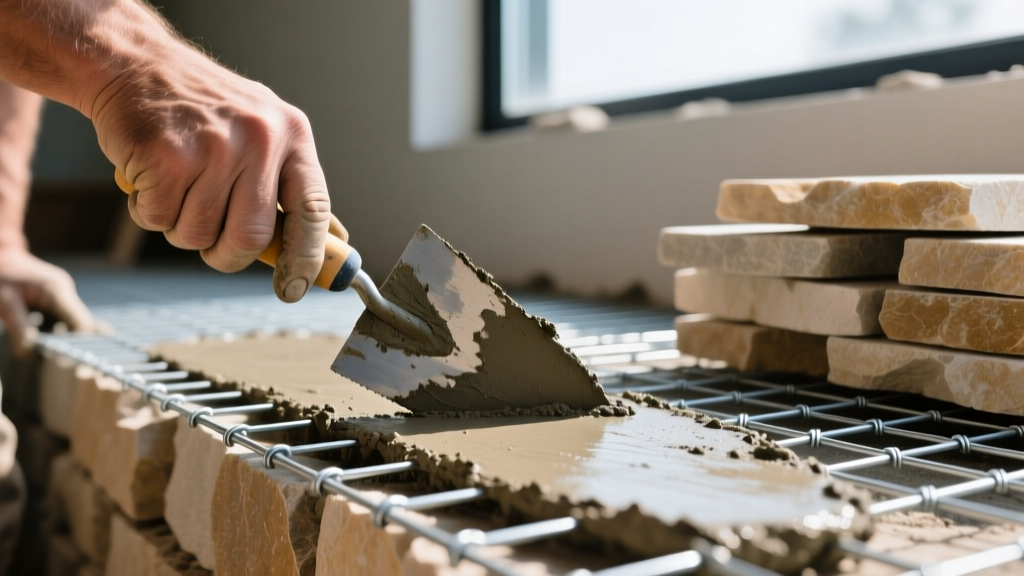
Weight Limits and Structural Substrate Requirements
Adhered veneer systems transfer their dead load directly to the structural backing through the mortar bond. The International Building Code (IBC) and local residential codes dictate maximum weight limits and required substrate rigidity.
| Veneer Type | Average Weight (lbs/sq ft) | Minimum Substrate | Fastener Schedule (Lath) |
|---|---|---|---|
| Manufactured Cast Stone | 8.0 - 12.0 | 1/2-inch OSB or Plywood | 6 inches o.c. at studs |
| Natural Limestone/Sandstone | 12.0 - 15.0 | 5/8-inch Plywood or CMU | 4 inches o.c. at studs |
| Dense Natural Fieldstone | 15.0 - 25.0+ | Solid CMU or Poured Concrete | Mechanical anchors required |
When sourcing heavy natural fieldstone from a local quarry, standard wood-frame sheathing is often insufficient to prevent deflection. Deflection breaks the mortar bond, leading to systemic delamination. For loads exceeding 15 lbs/sq ft on wood framing, engineers typically require the installation of a continuous metal angle iron shelf at every floor line to transfer the load directly to the structural studs or foundation.
Moisture Management: The Drainage Plane Assembly
The most common cause of exterior stone veneer failure is trapped moisture. A technically sound installation requires a multi-layered drainage plane that allows incidental water to exit the system without contacting the structural sheathing.
Step-by-Step Drainage Plane Specification
- Weather-Resistive Barrier (WRB): Apply two layers of Grade D asphalt-impregnated felt paper (ASTM D226) or a high-performance fluid-applied membrane. The dual-layer approach creates a microscopic drainage gap between the layers.
- Corrosion-Resistant Lath: Install minimum 2.5 lb/sq yd galvanized welded wire lath (ASTM C847). Overlap horizontal joints by 1 inch and vertical joints by 2 inches. Secure with corrosion-resistant nails or staples penetrating the framing studs by a minimum of 1 inch.
- Weep Screed Installation: At the base of all walls, install a minimum 0.019-inch thick galvanized steel weep screed. The screed must feature a vertical flange of at least 3/8 inch and weep holes spaced no more than 33 inches apart.
According to the International Code Council (ICC), the weep screed must be placed a minimum of 4 inches above the earth grade, or 2 inches above paved surfaces, to prevent soil moisture from wicking into the masonry system via capillary action.
Climate-Specific Engineering Adaptations
Local sourcing means the stone will be subjected to your specific microclimate. Technical specifications must be adjusted based on regional environmental stressors.
Freeze-Thaw Cycling Zones (Northern Climates)
In regions with severe winter cycles, the mortar mix is just as critical as the stone. Use a Type S mortar mix (1 part Portland cement, 1/2 part hydrated lime, 4.5 parts masonry sand by volume). Type S offers higher flexural bond strength (minimum 180 psi) than Type N, which is necessary to resist the sheer forces generated by ice expansion. Furthermore, specify a air-entraining admixture in the mortar to create microscopic voids that give freezing water room to expand without spalling the stone face.
High-Wind and Seismic Zones (Coastal and Western Regions)
In seismic design categories D, E, and F, adhered veneer requires additional mechanical confinement. Install horizontal joint reinforcement wire every 16 inches on center. Additionally, the maximum allowable height for adhered veneer without engineered mechanical anchoring is typically restricted to 30 feet above grade. If you are building a multi-story coastal home, you must transition to an anchored (tied) veneer system utilizing stainless steel corrugated wall ties fastened directly to the structural backing.
High-Humidity and Driving Rain Zones (Southern and Coastal)
In areas with heavy wind-driven rain, standard weep screeds may not clear water fast enough. Upgrade to a 3/16-inch weep screed flange and apply a silane/siloxane penetrating sealer to the stone face post-installation. Do not use film-forming acrylic sealers, which trap vapor inside the masonry matrix and cause sub-surface spalling when exposed to high UV and humidity.
Vetting Local Suppliers: A Technical Checklist
When you search for exterior stone veneer near me, use this technical checklist to evaluate the competence and inventory quality of local masonry distributors and landscape supply yards.
- Request Batch Testing Data: Ask for the manufacturer's third-party testing report verifying compliance with ASTM C1670 (manufactured) or the relevant natural stone ASTM. Reputable local dealers will have these on file.
- Verify Lath and Fastener Inventory: A true masonry supplier will stock 2.5 lb and 3.4 lb galvanized lath, specific masonry nails, and code-compliant weep screeds. If they only sell the stone and lack the specialized drainage components, source your ancillary materials from a dedicated commercial masonry supplier.
- Inspect Pallet Storage: Visit the local yard. Manufactured stone and bagged mortar must be stored under tarps or indoors. Pallets of stone left exposed to the elements for months can absorb ground moisture, leading to premature efflorescence the moment they are installed on your wall.
- Ask About Color Batching: Natural stone varies by quarry depth. If you are doing a large exterior facade, ensure the local supplier can pull all required pallets from a single quarry run or manufacturing batch to prevent drastic color banding across the elevation.
By prioritizing these technical specifications over mere aesthetic preference, you ensure that the exterior stone veneer sourced locally will perform structurally and visually for decades, regardless of the environmental challenges specific to your region.
Written by
Elena RodriguezElena Rodriguez is a civil engineer and technical writer specializing in concrete technology, masonry systems, and ASTM/ACI compliance. She earned her B.S. in Civil Engineering from Texas A&M University and spent a decade at a materials testing laboratory, performing over 2,000 concrete compressive strength tests and masonry prism evaluations. Elena is an ACI-certified Field Testing Technician (Grade I) and a member of ASTM Committee C12 on Natural Building Stone. She currently consults on forensic engineering cases involving concrete failures and moisture intrusion. Based in San Antonio, TX, Elena is a proud member of the Society of Women Engineers (SWE) and coaches her daughter's FIRST Robotics team.
More from Elena Rodriguez
View all
Walls & Panels
Cost Analysis: Light Gauge Steel Framing Advantages and Disadvantages
Evaluate light gauge steel framing advantages and disadvantages through a strict cost analysis lens, comparing material, labor, and lifecycle expenses.
Aug 4, 2026

Walls & Panels
Gypsum Board Types: Exact Specifications, Thickness & Dimensions
Compare standard, Type X, and moisture-resistant gypsum board types. Get exact specifications, thicknesses, dimensions, and ASTM standards for your project.
Aug 4, 2026

Fire Resistance
Best Fire-Resistant Outdoor Decking Materials: 2026 Buyer Guide
Discover the best fire-resistant outdoor decking materials for 2026. Compare Class A PVC, aluminum, and hardwood options for WUI compliance and safety.
Aug 4, 2026