Field Stone Veneer Selection Guide: Natural vs Manufactured Costs
Compare natural and manufactured field stone veneer costs, weight, and installation specs. Make the right choice for your interior or exterior project.
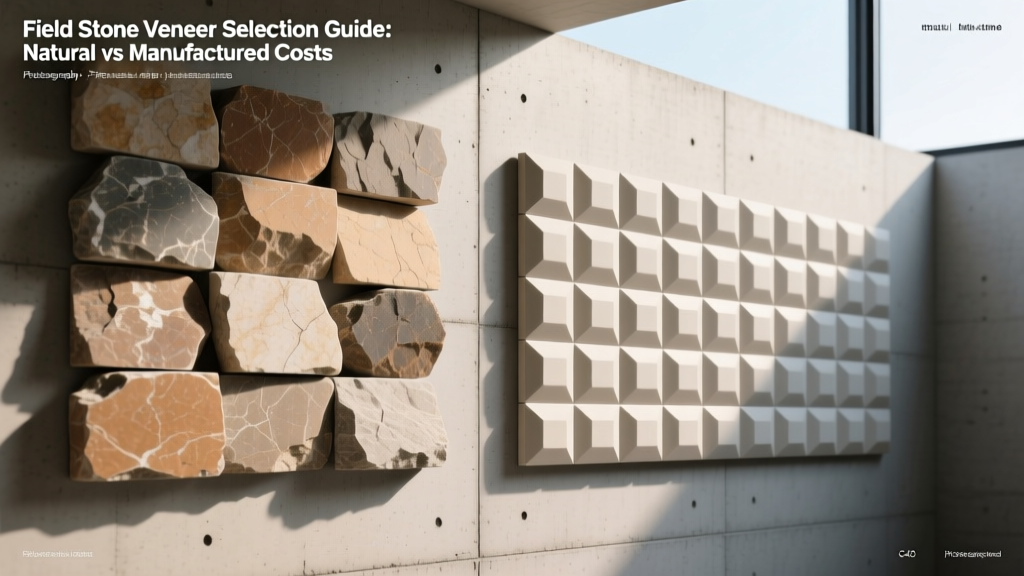
Defining the Field Stone Aesthetic: Natural vs. Manufactured
Field stone veneer replicates the rugged, uncut, and irregular shapes of stones historically gathered from open fields and riverbeds. Unlike smooth river rock or precision-cut ashlar, field stone features jagged edges, varied thicknesses, and a chaotic, organic layout. When sourcing this material for a 2026 construction or renovation project, buyers face a primary decision: quarried natural stone or cast manufactured (faux) stone. Both deliver the same visual impact, but their structural requirements, installation methodologies, and cost profiles differ drastically.
- Choose Natural if you require authentic geological variations, are building on a concrete/masonry substrate, and have the budget for structural reinforcement.
- Choose Manufactured if you are cladding standard wood-framed walls, need to minimize structural load, or are working with a tighter material budget.
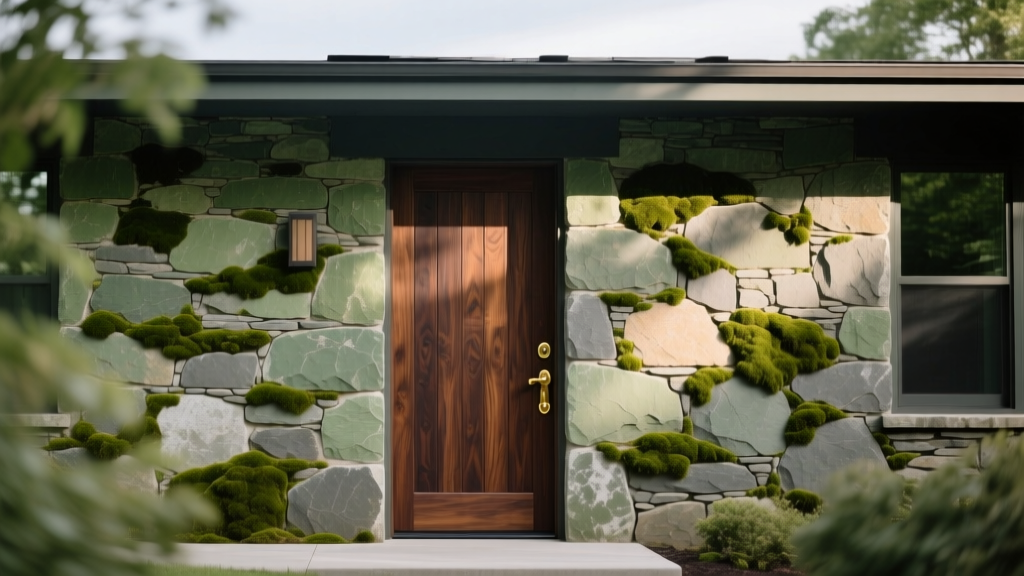
Material Composition and Weight Specifications
The most critical differentiator between natural and manufactured field stone veneer is weight, which directly dictates your structural preparation and substrate requirements.
Natural Field Stone Veneer
Natural field stone is sliced from quarried limestone, granite, or sandstone using diamond-tipped wet saws to create a flat back while preserving the rugged front face. Because it is solid rock, it is exceptionally heavy. Natural field stone veneer typically weighs between 25 to 40 pounds per square foot (psf). According to structural guidelines referenced by The Masonry Society, adhered masonry veneers exceeding 40 psf require specific structural anchoring. Most natural field stone sits right at the threshold, meaning standard wood stud walls often require additional blocking, thicker sheathing (minimum 5/8-inch OSB or plywood), and heavy-duty metal lath to support the shear load.
Manufactured Field Stone Veneer
Manufactured stone veneer (MSV) is cast in molds taken directly from real field stones using a blend of Portland cement, lightweight aggregates (like pumice or expanded shale), and iron oxide pigments. Governed by ASTM C1670 standards, high-quality MSV is engineered to weigh between 8 to 12 psf. This 70% weight reduction allows it to be installed on standard 2x4 or 2x6 wood-framed walls without requiring additional structural footings or reinforced shear walls, provided the wall is properly sheathed and weatherized.
2026 Cost Breakdown: Material, Labor, and Prep
Pricing for field stone veneer has stabilized following the supply chain fluctuations of the early 2020s, but labor remains the dominant cost driver. The irregular shape of field stone makes it the most time-consuming veneer style to install, as masons must custom-fit each piece like a jigsaw puzzle.
| Cost Category | Natural Field Stone | Manufactured Field Stone |
|---|---|---|
| Material (Flats) | $12.00 - $22.00 / sq ft | $6.50 - $11.00 / sq ft |
| Material (Corners) | $18.00 - $30.00 / lin ft | $10.00 - $16.00 / lin ft |
| Substrate Prep (Lath/Scratch) | $3.50 - $5.00 / sq ft | $2.50 - $4.00 / sq ft |
| Masonry Labor | $25.00 - $40.00 / sq ft | $18.00 - $28.00 / sq ft |
| Total Installed Cost | $40.50 - $67.00 / sq ft | $27.00 - $43.00 / sq ft |
Field stone installations require outside corner pieces to wrap around edges cleanly. Corners are sold by the linear foot (LF), not the square foot (SF). A common estimating error is failing to account for corners, which cost up to 40% more per linear foot than flats do per square foot. Always measure your linear exterior corners separately before ordering.
Installation Realities: Mortar, Lath, and Clearances
Field stone veneer is an adhered system, meaning it relies on the chemical and mechanical bond between the mortar, the metal lath, and the substrate. The Eldorado Stone installation guidelines and general masonry best practices dictate strict protocols for this process.
Selecting the Correct Mortar
Do not use standard brick mortar for veneer applications. The mortar must accommodate slight thermal expansion and structural deflection without cracking.
- For Natural Stone: Use a Type S masonry cement mortar. Type S offers a minimum compressive strength of 1,800 psi, which is necessary to support the heavier dead load of natural stone and resist wind-driven rain penetration.
- For Manufactured Stone: Use a Type N mortar or a proprietary polymer-modified veneer mortar (such as SAKRETE VeneerStone or ProLite). Polymer-modified mortars contain acrylic additives that increase flexural strength and bond adhesion, which is ideal for the lighter, more porous manufactured units.
Lath and Weatherization
For exterior wood-framed walls, you must install a weather-resistive barrier (WRB) consisting of two layers of Grade D building paper or a high-performance house wrap. Over the WRB, attach 2.5 lb self-furring galvanized metal lath using corrosion-resistant nails or staples driven directly into the wall studs (not just the sheathing). The 'self-furring' dimples hold the lath 1/4-inch away from the wall, allowing the scratch coat of mortar to fully encapsulate the wire mesh, creating a mechanical lock.
Grade Clearances and Weep Holes
Moisture management is the primary failure point in stone veneer installations. Adhered stone veneer must terminate at least 4 inches above finished earth grade and 2 inches above paved surfaces or decks. Never allow field stone veneer to rest directly on soil or concrete flatwork, as capillary action will draw moisture up into the wall assembly, leading to efflorescence, freeze-thaw spalling, and interior rot.
Ordering Logistics: Calculating Waste and Pallet Sizes
Because field stone is inherently irregular, the waste factor during installation is significantly higher than with uniform brick or ledgestone profiles.
- Natural Field Stone Overage: Order 10% to 15% extra material. The mason will need to discard pieces that do not fit the specific gap geometry or trim stones with a masonry saw to maintain the tight, dry-stack look.
- Manufactured Field Stone Overage: Order 5% to 10% extra. Manufactured stones are cast with specific left, right, and center geometries, allowing for tighter nesting and slightly less waste.
When reviewing quotes, verify how the material is palletized. Natural stone is typically sold by the ton (with one ton covering roughly 40-50 square feet of flats), while manufactured stone is sold strictly by the square foot in boxed pallets. Ensure your supplier includes the cost of pallet deposits and freight delivery in the final quote, as LTL (Less-Than-Truckload) freight for multi-ton stone orders can add $400 to $800 to your project total.
Common Buyer Mistakes and Failure Modes
- Skipping the Scratch Coat: Applying stone directly to the lath without a 1/2-inch scratch coat that has cured for 24-48 hours will result in bond failure. The scratch coat provides the structural base that holds the heavy stones while the setting mortar cures.
- Using Muriatic Acid for Cleaning: Never clean field stone veneer (especially manufactured stone) with muriatic acid. The acid will strip the iron oxide pigments from faux stone and etch the calcium carbonate in natural limestone, leaving permanent white hazing.
- Ignoring Expansion Joints: If your field stone veneer run exceeds 30 feet in length or changes building planes, you must incorporate a soft expansion joint filled with polyurethane sealant to prevent diagonal stepping cracks in the mortar joints.
Final Verdict: Decision Framework
Select the material that aligns with your structural capacity and long-term maintenance expectations. If you are cladding a new-build exterior with standard 2x6 framing and want to keep labor and material costs under $45 per square foot, manufactured field stone veneer is the superior, code-compliant choice. However, if you are renovating a historic property, cladding a solid masonry or concrete foundation wall, and demand the irreplaceable geological authenticity and century-long lifespan of real rock, invest in natural field stone and ensure your mason is specifically experienced in heavy-stone adhered applications.
Written by
Priya KapoorPriya Kapoor is a real estate market analyst and construction economics researcher with expertise in housing affordability, development feasibility, and infrastructure investment. She holds a Master of Regional Planning from Cornell University and previously worked as a senior analyst at CBRE's Investment Properties group, where she modeled returns for $4B in mixed-use development pipelines. Priya now runs an independent research practice advising developers, municipalities, and REITs on construction cost forecasting and market timing. She publishes the quarterly "BuildMat Market Pulse" report tracking material price indices across 12 commodity categories. Based in Austin, TX, Priya serves on the board of Habitat for Humanity Austin and is a marathon runner.
More from Priya Kapoor
View all
Construction Cost
Cost to Build a 1600 Sq Ft Home in 2026: Full Breakdown
Accurate 2026 cost to build a 1600 sq ft home—material, labor, and regional pricing breakdowns included. Plan your budget with real-time estimates.
Aug 11, 2026

Wood & Lumber
Name the Types of Wood for Pressure Treatment and Preservation
Learn how to name the types of wood best suited for pressure treatment. Compare species treatability, chemical retention levels, and 2026 preservation costs.
Aug 4, 2026

Stone & Masonry
Stone Veneer Suppliers Lindenhurst: 2026 Cost Analysis
Analyze 2026 stone veneer costs in Lindenhurst, NY. Compare local supplier pricing, delivery fees, and Suffolk County installation labor rates.
Aug 4, 2026