Fireplace Veneer Stone Review: Natural vs Manufactured Costs & Styles
Compare natural and manufactured fireplace veneer stone. Explore 2026 costs, heat resistance, installation weights, and top brands for your hearth.
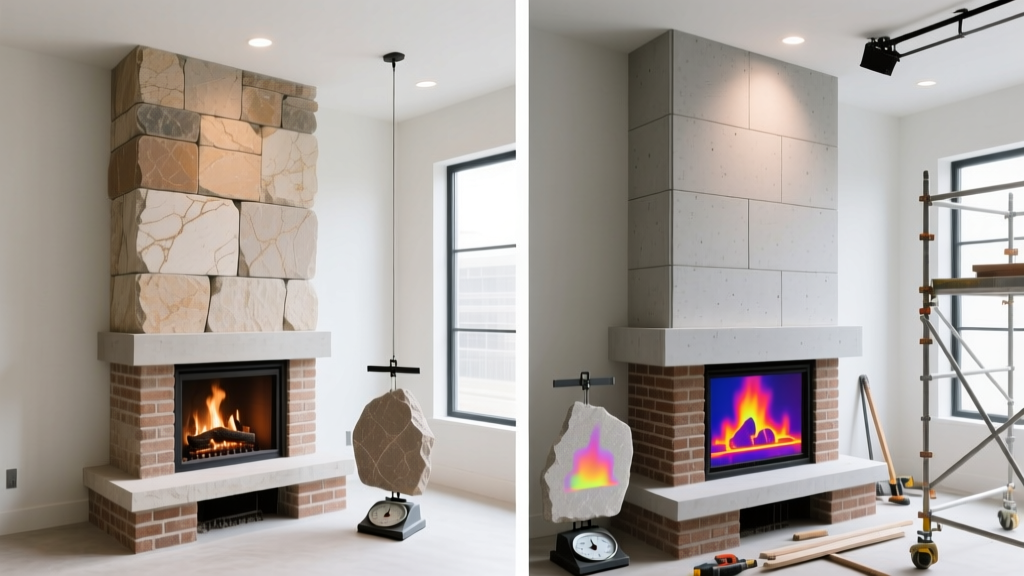
The Core Dilemma: Natural vs. Manufactured Fireplace Veneer Stone
Selecting the right fireplace veneer stone dictates the thermal performance, structural requirements, and visual authenticity of your hearth. The market is strictly divided into two categories: Natural Thin Veneer (NTV) and Manufactured Stone Veneer (MSV). While both meet non-combustibility standards, their composition, weight, and installation nuances differ significantly. This comparison reviews the technical specifications, 2026 pricing realities, and structural demands of both materials to help you make an evidence-based decision for your fireplace surround.
• Choose Natural Thin Veneer (NTV) if: You demand authentic geological variation, are cladding an exterior chimney chase, or require maximum UV and freeze-thaw durability.
• Choose Manufactured Stone Veneer (MSV) if: You are working with strict weight limits on interior framing, want consistent corner piece availability, or need to stretch a budget without sacrificing a high-end aesthetic.
Weight and Structural Framing Requirements
The most critical engineering factor when installing fireplace veneer stone is the dead load imposed on the wall framing. Standard interior 2x4 wood framing is rated for specific gravity loads, and exceeding these limits leads to drywall cracking, substrate bowing, or catastrophic veneer failure.
| Material Type | Average Weight (lbs/sq ft) | Required Substrate | Framing Recommendation |
|---|---|---|---|
| Manufactured Stone Veneer (MSV) | 8.0 - 12.0 lbs | Metal lath + scratch coat | Standard 2x4 @ 16" OC |
| Natural Thin Veneer (NTV) | 10.0 - 15.0 lbs | Metal lath + scratch coat | 2x4 @ 16" OC (Verify load) |
| Full-Bed Natural Stone | 35.0 - 45.0 lbs | Masonry block or brick ledge | Requires structural footing |
For interior fireplace makeovers, both NTV and MSV can typically be applied directly over properly prepared drywall or cement board, provided the underlying studs are sound. However, if your fireplace chase extends two stories high, the cumulative weight of NTV may require reinforcing the studs with 2x6 framing or adding mid-span blocking to prevent deflection.
Heat Resistance and NFPA Clearances
A common misconception is that because stone is non-combustible, it can be placed directly against a firebox or combustible mantel. According to NFPA 211 (Standard for Chimneys, Fireplaces, Vents, and Solid Fuel-Burning Appliances), the veneer itself is classified as non-combustible per ASTM E136. However, the *assembly* behind it is not.
Critical Clearance Rules
- Combustible Mantels and Trim: Must maintain a minimum clearance of 12 inches from the top of the firebox opening, plus an additional 1 inch for every 1/8 inch the trim projects outward.
- Combustible Walls: Unprotected combustible walls adjacent to the fireplace opening must maintain an 18-inch clearance. If you are cladding the entire wall in fireplace veneer stone, the non-combustible veneer acts as a shield, but you must still follow the specific zero-clearance insert or masonry fireplace manufacturer's exact specifications.
- Direct Heat Exposure: Manufactured stone is cast from Portland cement and lightweight aggregates. Prolonged, direct exposure to extreme heat (such as inside the firebox or immediately above an unvented gas log set) can cause MSV to spall or discolor over time. NTV handles direct thermal shock significantly better due to its geological formation.
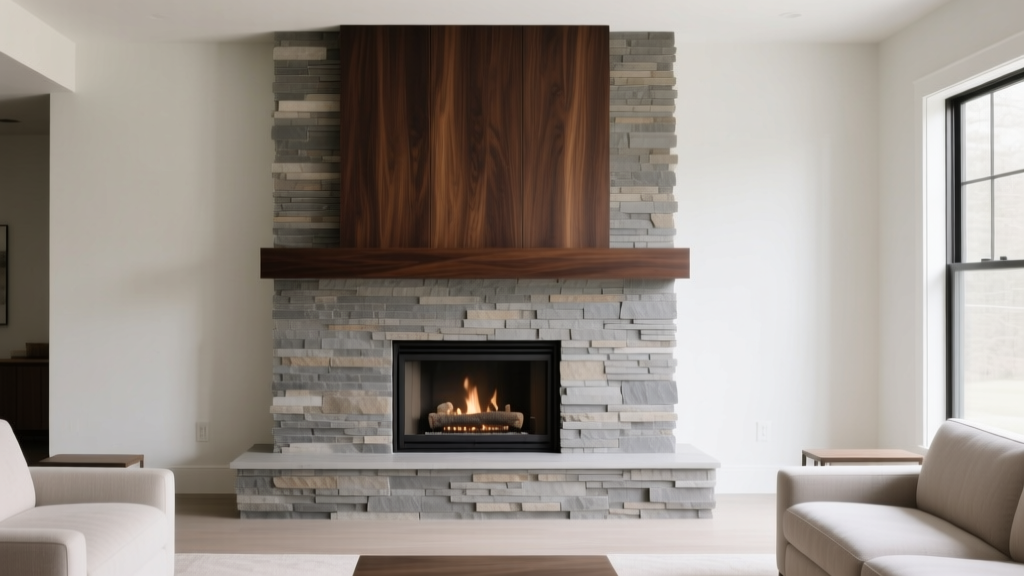
2026 Cost Breakdown: Material vs. Installed Pricing
Pricing for fireplace veneer stone has stabilized following the supply chain fluctuations of the early 2020s. The table below reflects national averages for a standard 50-square-foot fireplace surround project (including the hearth extension and facing).
| Cost Category | Manufactured (MSV) | Natural Thin Veneer (NTV) |
|---|---|---|
| Material Cost (per sq ft) | $8.50 - $14.00 | $13.00 - $24.00 |
| Corner Pieces (per linear ft) | $12.00 - $18.00 | $18.00 - $35.00 |
| Prep Materials (Lath, Mortar) | $3.50 - $5.00 | $4.00 - $6.50 |
| Professional Labor (per sq ft) | $16.00 - $22.00 | $20.00 - $28.00 |
| Total Installed (50 sq ft) | $1,600 - $2,450 | $2,350 - $3,800 |
Mortar and Adhesive Selection
Do not use standard tile mastic or thin-set for fireplace veneer stone. The installation must comply with industry standards for adhered masonry veneer, which mandate specific Portland cement-based mortars.
- Type S Mortar: The industry standard for both NTV and MSV. It offers high tensile bond strength and excellent flexibility, which is crucial for a fireplace surround that experiences repeated thermal expansion and contraction cycles.
- Polymer-Modified Mortars: For interior applications over cement board, high-performance polymer-modified mortars (like LATICRETE MVIS) can be used. These reduce the need for a traditional metal lath and scratch coat, saving up to 15% on labor time, but they are strictly limited to interior, climate-controlled environments.
Top Brand Comparison: Profiles and Authenticity
Eldorado Stone (Manufactured)
Eldorado remains the benchmark for MSV. Their Cliffstone and Panelized profiles offer exceptional depth. Because they use actual stone molds and iron-oxide pigments baked into the concrete mix, the color penetrates the entire unit. If a piece chips during installation, the interior color matches the exterior.
Boral Cultured Stone (Manufactured)
Cultured Stone's Country Rubble and Dressed Fieldstone lines are highly competitive. They excel in transitional and rustic fireplace designs. Their proprietary lightweight aggregate mix keeps the weight near the 9 lbs/sq ft mark, making it highly forgiving for DIYers working on older fireplace facades.
Real Stone Veneer / Natural Stone Thin Veneer
Brands like Real Stone Veneer (RSV) and regional quarries provide actual sliced natural stone (limestone, slate, fieldstone). The Autumn Ridge limestone profile provides unmatched geological authenticity. The trade-off is that natural stone requires a wet saw with a diamond continuous-rim blade for cutting, whereas MSV can be scored and snapped or cut with a standard abrasive masonry blade.
Installation Pitfalls: Efflorescence and Mortar Staining
The most frequent failure in fireplace veneer stone installation is aesthetic rather than structural. Understanding these two issues will save you thousands in remediation.
MSV is highly porous. If a mason smears Type S mortar across the face of a manufactured stone and attempts to wipe it off with a wet sponge, the pigment will permanently stain the stone. Always use the 'dry thumb' method: allow the mortar to dry to a crumbly consistency, then brush it off with a soft bristle brush. Never use muriatic acid on manufactured stone; it will dissolve the cementitious matrix and ruin the pigment.
Preventing Efflorescence
Efflorescence is the white, powdery salt deposit that migrates to the surface of the stone. On interior fireplaces, this is usually caused by using too much water in the mortar mix or applying stone over a damp substrate. To prevent this, ensure your scratch coat cures for a minimum of 24 hours before setting the veneer, and strictly adhere to the water-to-mortar ratios specified by the manufacturer. For exterior chimney chases, installing a proper weep screed at the base and applying a breathable, siloxane-based penetrating sealer (like Prosoco Siloxane PD) is mandatory to allow moisture vapor to escape while blocking liquid water intrusion.
Final Verdict: Which Fireplace Veneer Stone Should You Choose?
If your project involves a high-heat environment (such as a wood-burning masonry firebox without a steel insert) or an exterior chimney chase exposed to harsh freeze-thaw cycles, Natural Thin Veneer (NTV) is the superior, albeit more expensive, choice. Its geological density withstands thermal shock and weathering indefinitely.
For interior gas fireplaces, electric inserts, or budget-conscious renovations where structural weight limits are a concern, Manufactured Stone Veneer (MSV) provides 95% of the visual authenticity at roughly 60% of the total installed cost. Stick to premium brands like Eldorado or Cultured Stone, utilize Type S mortar, and respect NFPA clearance requirements to ensure a hearth that is both beautiful and structurally enduring.
Written by
Priya KapoorPriya Kapoor is a real estate market analyst and construction economics researcher with expertise in housing affordability, development feasibility, and infrastructure investment. She holds a Master of Regional Planning from Cornell University and previously worked as a senior analyst at CBRE's Investment Properties group, where she modeled returns for $4B in mixed-use development pipelines. Priya now runs an independent research practice advising developers, municipalities, and REITs on construction cost forecasting and market timing. She publishes the quarterly "BuildMat Market Pulse" report tracking material price indices across 12 commodity categories. Based in Austin, TX, Priya serves on the board of Habitat for Humanity Austin and is a marathon runner.
More from Priya Kapoor
View all
Construction Cost
Cost to Build a 1600 Sq Ft Home in 2026: Full Breakdown
Accurate 2026 cost to build a 1600 sq ft home—material, labor, and regional pricing breakdowns included. Plan your budget with real-time estimates.
Aug 11, 2026

Wood & Lumber
Name the Types of Wood for Pressure Treatment and Preservation
Learn how to name the types of wood best suited for pressure treatment. Compare species treatability, chemical retention levels, and 2026 preservation costs.
Aug 4, 2026

Stone & Masonry
Stone Veneer Suppliers Lindenhurst: 2026 Cost Analysis
Analyze 2026 stone veneer costs in Lindenhurst, NY. Compare local supplier pricing, delivery fees, and Suffolk County installation labor rates.
Aug 4, 2026