Indoor Stacked Stone Veneer Cost Analysis & 2026 Pricing
Discover the true cost of indoor stacked stone veneer in 2026. Get detailed pricing for materials, labor, and hidden installation expenses.
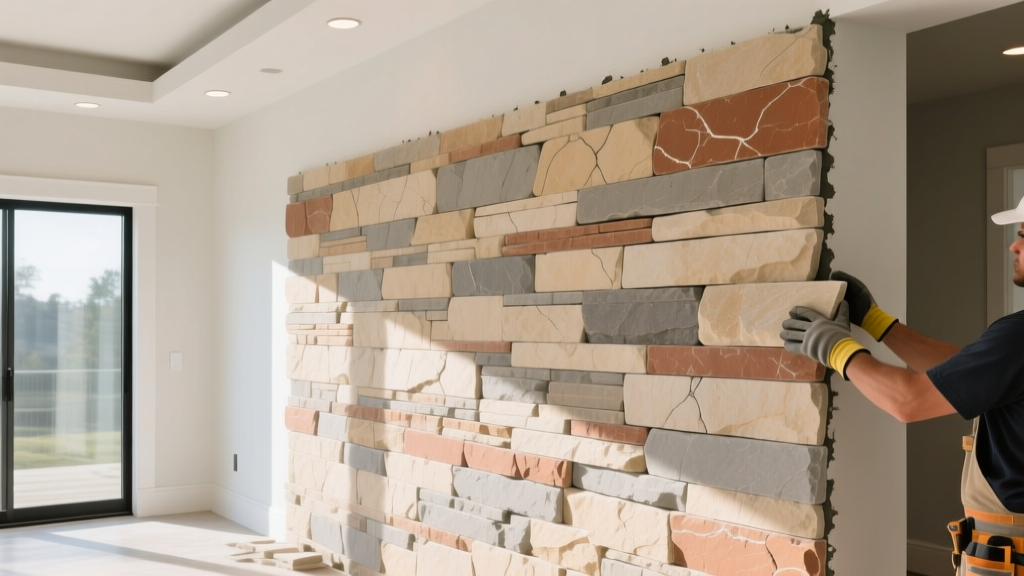
The True Cost of Indoor Stacked Stone Veneer in 2026
Indoor stacked stone veneer remains one of the highest-ROI interior upgrades for feature walls, kitchen islands, and fireplace surrounds. Unlike full-thickness masonry, veneer systems are engineered to be lightweight, adhering directly to interior substrates without requiring structural footings. However, budgeting for this material requires looking beyond the per-square-foot sticker price of the stone itself. In 2026, the total installed cost for indoor stacked stone veneer ranges from $18 to $42 per square foot, heavily dependent on whether you choose natural stone, manufactured concrete veneer, or interlocking panel systems, as well as the complexity of your substrate preparation.
Material Costs: Natural vs. Manufactured vs. Panel Systems
The material you select dictates not only the aesthetic but the structural requirements and labor intensity of the project. Manufactured stone veneer (MSV) dominates the interior market due to its consistent sizing and lower weight, while natural stone offers unmatched authenticity at a premium.
| Material Type | Cost per Sq. Ft. (2026) | Weight per Sq. Ft. | Best Interior Application |
|---|---|---|---|
| Natural Ledgestone | $14.00 - $22.00 | 15 - 25 lbs | High-end fireplace surrounds, luxury accent walls |
| Manufactured Stacked Stone (MSV) | $9.00 - $15.00 | 10 - 15 lbs | Kitchen islands, full-height feature walls |
| Interlocking Stone Panels | $11.00 - $18.00 | 8 - 12 lbs | DIY projects, quick renovations, media walls |
| Corner Pieces (Linear Foot) | $12.00 - $25.00 / LF | Varies | Outside corners, return edges, window casings |
The Hidden Costs: Substrate Preparation and Consumables
The most common budgeting error in interior stone veneer projects is ignoring substrate preparation. You cannot adhere stacked stone directly to drywall or painted surfaces. The wall must be stripped to the studs and rebuilt to handle the shear weight and moisture from the mortar.
- Cement Backer Board: 1/2-inch Durock or HardieBacker is mandatory. Cost: $1.50 - $2.20 per sq. ft.
- Moisture Barrier: 15-lb asphalt felt or Grade D paper behind the backer board in wet zones (e.g., indoor water features). Cost: $0.30 per sq. ft.
- Metal Lath & Fasteners: Required for mortar-based systems to provide mechanical keying. Cost: $1.80 - $2.50 per sq. ft.
- Polymer-Modified Veneer Mortar: Do not use standard Type N or Type S masonry mortar. You must use a polymer-modified mortar meeting ASTM C1670 specifications (such as ProSpec Veneer Stone Mortar) to prevent efflorescence and ensure adhesion to non-porous backer boards. Cost: $25 - $35 per 50-lb bag (covers ~40 sq. ft.).
Labor Rates: Mason vs. Carpenter Installation
Labor accounts for 40% to 60% of the total project cost. The type of system you choose determines which tradesperson you need to hire, significantly impacting your hourly rate and overall timeline.
Mortar-Based Systems (Traditional)
Installing individual stacked stones with mortar requires a skilled mason. In 2026, masonry labor rates range from $65 to $95 per hour. A professional mason will typically install 15 to 25 square feet per day, factoring in the time required to apply the scratch coat to the metal lath, let it cure for 24 hours, and then carefully set and grout the individual stones. Expect labor costs of $14 to $22 per square foot for traditional mortar application.
Mortarless Interlocking Panels (Modern)
Brands like Eldorado Stone and various panelized systems offer interlocking, mortarless designs that screw or adhere directly to the substrate using construction adhesive (like PL Premium). Because this does not require masonry skills, a finish carpenter or experienced handyman can install it at rates of $45 to $75 per hour. Installation speed jumps to 40 to 60 square feet per day, dropping labor costs to $8 to $14 per square foot.
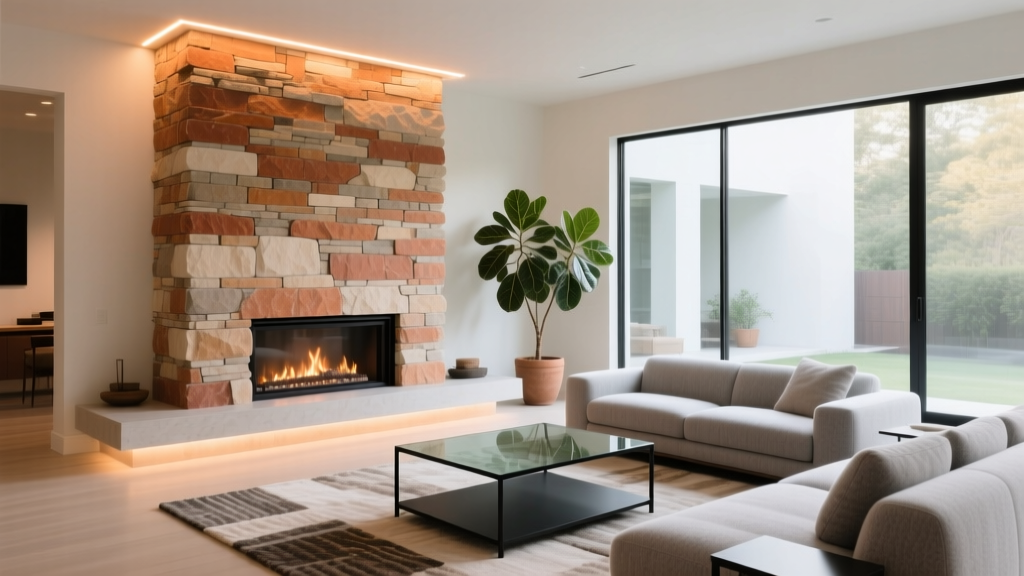
Project Size & Cost Estimator Matrix
To provide actionable budgeting data, below is a 2026 cost estimator for three common indoor stacked stone veneer projects, assuming the use of mid-range manufactured stone and professional mortar-based installation.
| Project Type | Dimensions | Material Cost | Prep & Consumables | Labor Cost | Total Estimated Cost |
|---|---|---|---|---|---|
| Standard Fireplace Surround | 40 sq. ft. + 8 LF corners | $480 - $700 | $180 - $250 | $600 - $900 | $1,260 - $1,850 |
| Kitchen Island Facade | 65 sq. ft. + 16 LF corners | $780 - $1,100 | $280 - $350 | $950 - $1,400 | $2,010 - $2,850 |
| Full Accent Wall (8x10) | 80 sq. ft. + 10 LF corners | $960 - $1,350 | $350 - $450 | $1,200 - $1,750 | $2,510 - $3,550 |
Critical Failure Modes and How to Avoid Them
Interior stone veneer failures are rarely due to the stone itself; they are almost always the result of improper substrate prep or incorrect mortar chemistry. According to industry guidelines tracked by the Masonry Magazine and adhered veneer standards, avoid these three critical errors:
- Efflorescence Blooming: White, powdery salt deposits on the stone surface. This happens when standard masonry mortar (which has high free-lime content) is used, or when moisture from the scratch coat migrates through the stone. The Fix: Use only ASTM C1670 compliant polymer-modified veneer mortar and ensure the scratch coat is fully cured before setting stones.
- Delamination (Stones Popping Off): Caused by applying mortar directly to painted drywall, or failing to use a mechanical lath on smooth substrates. The Fix: Strip to the studs, install cement backer board, apply self-furring metal lath with corrosion-resistant fasteners every 6 inches, and apply a 1/2-inch scratch coat.
- Shadowing on Light-Colored Stone: When installing white or light-gray manufactured stacked stone, the dark gray color of standard mortar or metal lath can bleed through and create permanent dark shadows. The Fix: Specify white or buff-colored polymer-modified mortar for light stone profiles, and use a white fiberglass mesh lath instead of galvanized metal if permitted by the manufacturer.
Sourcing and Brand Recommendations
When sourcing materials for 2026 projects, prioritize manufacturers that provide rigorous testing data and batch-consistent coloring. Cultured Stone (by Boral) and Eldorado Stone remain the industry benchmarks for manufactured stacked stone, offering proprietary color blends that resist UV fading (crucial for sun-drenched interior rooms) and strict weight controls. For budget-conscious renovations, big-box store brands like Airstone offer interlocking, mortarless panels that eliminate the need for metal lath and scratch coats, though the repeating modular patterns can be visually obvious on walls larger than 50 square feet. Always request a physical sample box before committing to a bulk order, as digital renderings frequently misrepresent the depth and shadow lines of stacked profiles.
"The difference between a $15,000 custom stone wall and a $5,000 DIY disaster is almost entirely in the substrate preparation and the mortar chemistry. Never compromise on the backer board or the ASTM-rated veneer mortar."
— Interior Masonry Best Practices, HomeGuide Cost & Installation Analysis
Written by
David NakamuraDavid Nakamura is a licensed architect (AIA) and construction technology writer focused on sustainable building methods, mass timber engineering, and high-performance building envelopes. He holds a Master of Architecture from the University of Washington and is a certified Passive House Consultant (CPHC). David spent eight years at the Seattle firm Mithun, where he led the design of three LEED Platinum projects, before founding his own practice specializing in net-zero residential design. He serves on the editorial advisory board of GreenBuilder Magazine and has authored peer-reviewed papers on cross-laminated timber (CLT) connections for the Journal of Structural Engineering. In his spare time, David teaches woodworking at Pratt Fine Arts Center and kayaks the Puget Sound.
More from David Nakamura
View all
Construction Cost
Labor Cost to Build a Deck Per Sq Ft: 2026 Installation Guide
Discover the exact labor cost to build a deck per sq ft in 2026. This installation guide breaks down contractor rates, complexity factors, and hidden fees.
Aug 4, 2026

Construction Cost
How Much Does It Cost to Build a 3 Bedroom House? Financing Guide
Learn exactly how much it costs to build a 3 bedroom house and explore 2026 financing options, construction loan types, and budget frameworks for your build.
Aug 4, 2026

Construction Cost
Cost to Build a Tennis Court: 2026 Guide
How much does it cost to build a tennis court in 2026? Breakdowns for asphalt, concrete, and synthetic surfaces plus fencing and lighting.
Jul 30, 2026