The Ultimate Buyer's Guide to Simulated Stone Veneer
Compare top simulated stone veneer brands, costs, and ASTM durability standards. Expert selection guide for interior and exterior projects.
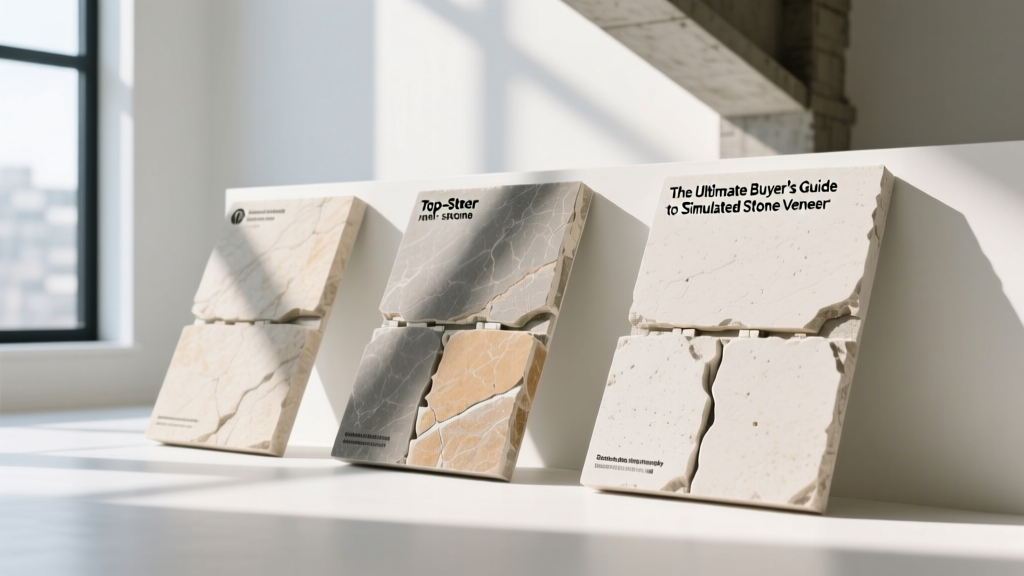
The Core Anatomy: What You Are Actually Buying
Simulated stone veneer, technically classified in the industry as Manufactured Stone Veneer (MSV) or Adhered Manufactured Stone Masonry Veneer, is an engineered architectural product designed to replicate the exact texture, color, and weight distribution of natural quarried stone. Unlike natural stone, which is sliced from geological deposits, simulated stone is cast in polyurethane molds taken directly from real stone surfaces. The mixture consists of Portland cement, lightweight aggregates (such as pumice, expanded shale, or perlite), and iron oxide pigments.
The governing standard for this material in North America is ASTM C1670. When evaluating products, buyers must verify that the manufacturer complies with this specification, which dictates strict limits on water absorption, compressive strength, and freeze-thaw durability. High-end simulated stone integrates the iron oxide pigments throughout the entire cementitious matrix (integral coloring), ensuring that if a stone chips during or after installation, the underlying material matches the surface color. Budget-tier products often rely on surface-applied stains that reveal a gray cement core when damaged.
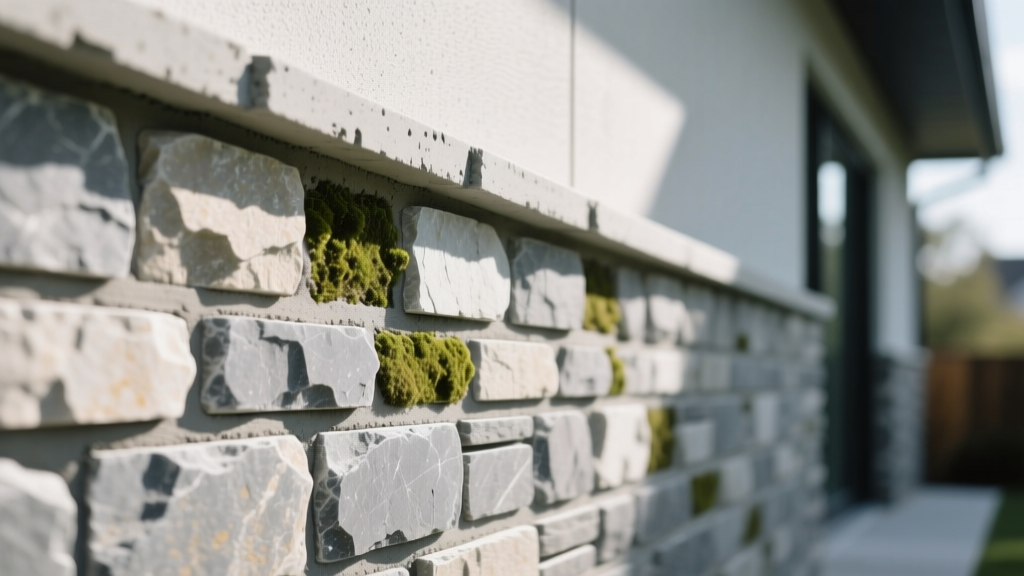
2026 Cost Matrix: Material, Labor, and Hidden Structural Savings
The primary market driver for simulated stone veneer is its cost-to-weight ratio. While the material cost per square foot is sometimes comparable to entry-level natural stone, the installation and structural savings are substantial. Because simulated stone weighs between 10 to 15 pounds per square foot (compared to 25 to 40 pounds for natural stone), it rarely requires reinforced structural footings or wall ties when applied to standard wood or steel stud framing.
| Cost Category | Simulated Stone Veneer | Natural Stone Veneer |
|---|---|---|
| Material Cost (per sq. ft.) | $5.50 - $11.00 | $12.00 - $28.00 |
| Professional Installation (per sq. ft.) | $8.00 - $14.00 | $15.00 - $25.00 |
| Structural Footing Reinforcement | Rarely Required ($0) | Often Required ($1,500 - $3,500+) |
| Total Estimated Project Cost (per sq. ft.) | $13.50 - $25.00 | $27.00 - $53.00+ |
Note: Interior applications (e.g., fireplace surrounds, accent walls) eliminate the need for weather-resistive barriers and weep screeds, typically reducing installation labor costs by 20% to 30%.
Brand Tier List: Navigating the Market Leaders
The MSV market is dominated by a few key manufacturers, each offering distinct profile libraries and warranty structures. Here is how the top tiers break down for buyer selection:
Tier 1: Premium Architectural (Cultured Stone & Eldorado Stone)
Cultured Stone (owned by Westlake Royal Building Products) is the industry pioneer. Their 'Country Rubble' and 'Dressed Fieldstone' profiles offer deep, shadow-casting relief. They utilize a proprietary high-density concrete mix that yields exceptional impact resistance. Eldorado Stone is the primary competitor, renowned for their 'Ledge Stone' and 'Stacked Stone' profiles, which feature highly realistic stratification lines. Both offer 50-year limited warranties and are specified heavily in commercial and high-end residential builds.
Tier 2: Mid-Market & Regional (Coronado Stone & Dutch Quality)
Coronado Stone offers excellent mid-range options with a focus on regional color palettes that match local geological stone, making it a favorite for exterior renovations where HOA compliance requires a 'natural' local look. Dutch Quality Stone provides highly competitive pricing with a solid 30-year warranty, making it a staple for production home builders and large-scale tract housing developments.
Tier 3: DIY & Lightweight Systems (AirStone & GenStone)
For interior DIY projects or non-masonry exterior accents, AirStone utilizes an acrylic/polymer binder rather than Portland cement, allowing it to be cut with a standard hacksaw and adhered with specialized mastic. GenStone offers high-density polyurethane panels that screw directly into studs. While these lack the thermal mass and acoustic properties of cementitious MSV, they reduce installation time by 70% and require zero masonry skills.
Substrate Prep and Moisture Management: The #1 Cause of Failure
The most critical error buyers and novice installers make is treating simulated stone veneer like interior tile. According to the Masonry Veneer Manufacturers Association (MVMA), exterior MSV is a 'drainage system,' not a waterproof barrier. Water will penetrate the stone and mortar joints; the system relies on a cavity to drain that water out.
Never apply simulated stone veneer directly to drywall, plywood, or painted surfaces. Exterior applications require a Weather-Resistive Barrier (WRB) like Tyvek, followed by a drainage mat (such as Keene DriWall), self-furring 2.5 lb galvanized metal lath, and a 1/2-inch Portland cement scratch coat. Furthermore, a corrosion-resistant weep screed must be installed at the base of the wall, maintaining a minimum 4-inch clearance from soil and 2-inch clearance from concrete walkways to prevent capillary water wicking and soil-borne salt efflorescence.
For the setting bed, avoid standard Type N mortar. The industry standard for MSV is Type S mortar, which offers higher tensile bond strength. For high-performance or seismic-prone zones, specify a polymer-modified veneer setting mortar, such as LATICRETE Masonry Veneer Mortar (MVM), which eliminates the need for a separate scratch coat and significantly reduces the risk of stone delamination.
Climate Durability: Freeze-Thaw and UV Stability
When selecting simulated stone for exterior applications in northern climates, buyers must request the manufacturer's freeze-thaw testing data. Under ASTM C1670, the stone must withstand 50 cycles of freezing and thawing without losing more than 3% of its mass. High-quality brands engineer their lightweight aggregates to create microscopic air voids within the cement matrix. These voids act as expansion chambers, allowing trapped moisture to expand when it freezes without cracking the stone face.
Regarding UV stability, premium brands use synthetic iron oxide pigments that are completely impervious to ultraviolet degradation. However, buyers should avoid unbranded or imported simulated stones that utilize organic dyes or surface-applied acid stains, which will bleach and chalk within 3 to 5 years of direct sun exposure.
Buyer's Decision Flowchart: Is Simulated Stone Right for Your Project?
- IF your project is an exterior full-facade cladding on a wood-framed structure AND you want to avoid pouring new concrete footings → CHOOSE Simulated Stone Veneer (Weight savings eliminate structural reinforcement).
- IF your project is an interior fireplace surround AND local building codes require non-combustible materials within 12 inches of the firebox → CHOOSE Cementitious Simulated Stone (AirStone/GenStone polyurethane panels are combustible and will fail fire-code inspections here).
- IF you are cladding a high-impact commercial zone (e.g., restaurant exterior, retail base) AND shopping carts or heavy equipment will strike the wall → CHOOSE Natural Stone or High-Density Cultured Stone (Standard MSV can crack under severe blunt force impact).
- IF you are a DIY homeowner updating an interior accent wall AND lack masonry trowel skills → CHOOSE Polyurethane Panel Systems (GenStone) or Acrylic Systems (AirStone).
Frequently Asked Questions
Can simulated stone veneer be installed over existing brick?
Yes, but not directly. Existing brick must be cleaned of all sealers, paints, and efflorescence. A metal lath must be mechanically fastened into the brick joints using masonry screws, followed by a scratch coat. Alternatively, a 1-inch rigid foam insulation board can be anchored to the brick, covered with a WRB and lath, providing both a nailable substrate and an R-5 thermal break.
Does simulated stone veneer require sealing?
Manufacturers generally advise against applying topical film-forming sealers (like polyurethane or acrylic clear coats) to exterior MSV. These sealers trap moisture inside the stone, leading to catastrophic spalling during freeze-thaw cycles. If a sealer is desired to enhance color or prevent graffiti, use only a breathable, penetrating silane/siloxane water repellent that allows water vapor to escape the matrix.
How do I clean efflorescence off my newly installed veneer?
Efflorescence (the white, powdery salt deposit) is common in the first 6 to 12 months as the Portland cement cures and releases soluble salts. Do not use muriatic acid, which can etch the cement and alter the iron oxide pigments. Instead, use a stiff nylon brush and a specialized efflorescence cleaner formulated for manufactured stone, such as ProSoCo Sure Klean Light Duty Concrete Cleaner, applied at a heavily diluted ratio.
Written by
Elena RodriguezElena Rodriguez is a civil engineer and technical writer specializing in concrete technology, masonry systems, and ASTM/ACI compliance. She earned her B.S. in Civil Engineering from Texas A&M University and spent a decade at a materials testing laboratory, performing over 2,000 concrete compressive strength tests and masonry prism evaluations. Elena is an ACI-certified Field Testing Technician (Grade I) and a member of ASTM Committee C12 on Natural Building Stone. She currently consults on forensic engineering cases involving concrete failures and moisture intrusion. Based in San Antonio, TX, Elena is a proud member of the Society of Women Engineers (SWE) and coaches her daughter's FIRST Robotics team.
More from Elena Rodriguez
View all
Walls & Panels
Cost Analysis: Light Gauge Steel Framing Advantages and Disadvantages
Evaluate light gauge steel framing advantages and disadvantages through a strict cost analysis lens, comparing material, labor, and lifecycle expenses.
Aug 4, 2026

Walls & Panels
Gypsum Board Types: Exact Specifications, Thickness & Dimensions
Compare standard, Type X, and moisture-resistant gypsum board types. Get exact specifications, thicknesses, dimensions, and ASTM standards for your project.
Aug 4, 2026

Fire Resistance
Best Fire-Resistant Outdoor Decking Materials: 2026 Buyer Guide
Discover the best fire-resistant outdoor decking materials for 2026. Compare Class A PVC, aluminum, and hardwood options for WUI compliance and safety.
Aug 4, 2026