Stone Veneer Around Garage Door: Natural vs Manufactured
Compare natural and manufactured stone veneer around garage doors. Explore structural loads, exhaust staining, costs, and 2026 installation requirements.
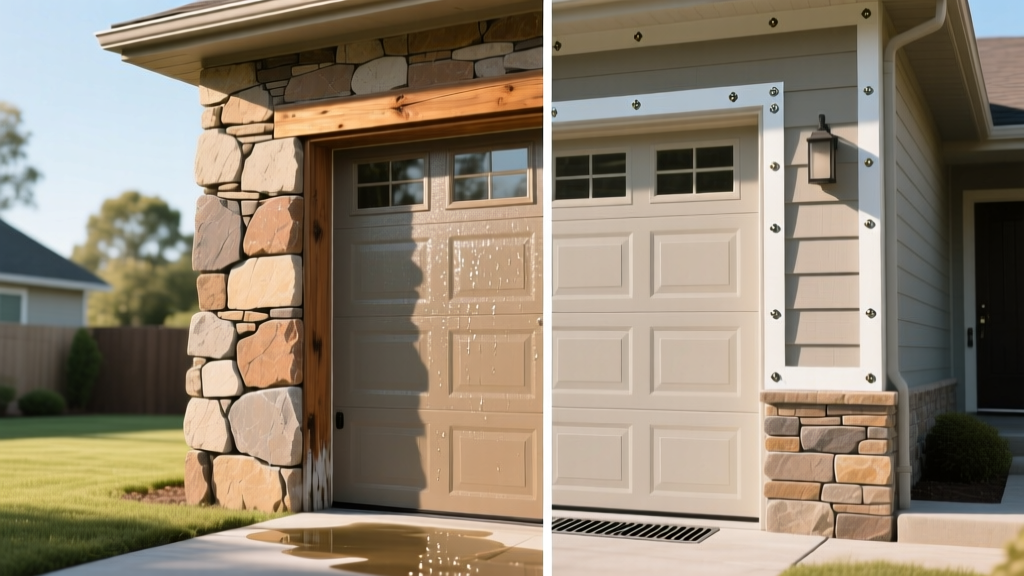
The Garage Door Facade Dilemma: Natural vs. Manufactured
Garage doors dominate the front elevation of most modern homes, often accounting for 30% to 40% of the street-facing facade. Framing these massive openings with stone veneer dramatically boosts curb appeal, creates architectural depth, and yields a high return on investment. However, the sheer scale of a two-car or three-car garage introduces unique structural and environmental challenges that do not exist when installing stone around a fireplace or a single entry door.
When selecting stone veneer around garage door openings, homeowners and contractors must choose between Manufactured Stone Veneer (MSV) and Natural Thin Stone Veneer (NSV). While both offer stunning aesthetics, their differences in weight, porosity, and structural demands become magnified across a 16-foot or 32-foot wide garage elevation. This comparison review breaks down the exact specifications, hidden costs, and garage-specific vulnerabilities of both materials to help you make an informed decision.
Head-to-Head Material Matrix
| Feature | Manufactured Stone Veneer (MSV) | Natural Thin Stone Veneer (NSV) |
|---|---|---|
| Average Weight | 9 – 12 lbs per sq. ft. | 12 – 15 lbs per sq. ft. |
| Thickness | 1.5 to 2.5 inches | 0.75 to 1.5 inches |
| Material Cost (2026) | $6.50 – $11.00 / sq. ft. | $12.00 – $22.00 / sq. ft. |
| Porosity & Staining | High (requires sealing near driveways) | Low to Medium (highly stain resistant) |
| Header Requirements | Standard wood framing (usually sufficient) | Often requires LVL or steel reinforcement |
| UV & Salt Resistance | Moderate (pigments can fade; salt spalling risk) | Excellent (geologically stable) |
Manufactured Stone Veneer (MSV): The Lightweight Contender
Manufactured stone veneer, produced by brands like Eldorado Stone and Cultured Stone, is a Portland cement-based product cast in molds taken from real stone. Iron oxide pigments are baked into the surface to replicate natural color variations. For garage door surrounds, MSV is the most popular choice due to its lower weight and ease of installation.
Garage-Specific Advantages
The primary advantage of MSV around garage doors is structural leniency. A standard 16-foot wide, 8-foot tall garage door requires a substantial header to support the roof load above. When you add the dead load of stone veneer to the facade, the structural demands multiply. Because MSV weighs roughly 9 to 12 pounds per square foot, standard engineered wood headers (like LVLs or double-ply dimensional lumber) specified for the garage opening can typically support the veneer without requiring costly structural steel upgrades. Furthermore, MSV panels are uniform in depth, making it easier for masons to maintain consistent mortar joints across large, flat garage facades.
The Exhaust and Staining Vulnerability
MSV is inherently porous. When installed around a garage door, the bottom 24 inches of the veneer are subjected to tire splashback carrying road salts, oils, and antifreeze. Additionally, vehicle exhaust contains unburned hydrocarbons that can embed into the cement matrix, causing permanent yellowing or gray staining over time. If you choose MSV for a garage facade, applying a high-quality, breathable silane/siloxane penetrating sealer (such as Prosoco Siloxane PD) immediately after installation is non-negotiable. Do not use film-forming acrylic sealers, which will trap moisture and cause spalling during freeze-thaw cycles.
Natural Thin Stone Veneer: The Premium Heavyweight
Natural thin stone veneer consists of real quarried stone—such as limestone, fieldstone, or slate—that has been sawn to a thin profile (typically under 1.5 inches thick). While it carries a premium price tag, it offers unparalleled authenticity and longevity, particularly in harsh exterior environments.
Structural Header Requirements
The most critical consideration for natural stone around garage doors is the dead load. At 12 to 15 pounds per square foot, a natural stone facade surrounding a three-car garage (which can easily require 150+ square feet of veneer when accounting for the gable and pillars) adds over 2,000 pounds of dead weight to the wall assembly. According to guidelines referenced by The Masonry Society, this concentrated load often exceeds the deflection limits of standard wood headers spanning 16 feet or more. To prevent the header from sagging—which can cause the garage door to bind and the stone mortar joints to crack—structural engineers frequently specify steel I-beams or heavy-duty LVL headers when natural stone is part of the design.
Long-Term Durability Near Driveways
Where natural stone truly outshines manufactured alternatives is in its resistance to the harsh microclimate of the driveway. Real limestone and granite are virtually impervious to the acidic compounds found in vehicle exhaust. Furthermore, dense natural stones do not suffer from the efflorescence (white, powdery salt deposits) that frequently plagues cement-based MSV when exposed to winter road salts splashed up from vehicles. For homes in coastal regions or areas with heavy winter salting, natural stone is the superior long-term investment.
2026 Cost Analysis: Material, Labor, and Structural Upgrades
Calculating the true cost of stone veneer around garage door openings requires looking beyond the price per square foot of the material. You must factor in the specialized labor required for large-scale exterior installations and potential structural reinforcement. The table below outlines the estimated costs for a standard 16-foot wide, two-car garage facade (assuming approximately 45 square feet of veneer coverage after subtracting the door opening).
| Cost Category | Manufactured Stone (MSV) | Natural Thin Stone (NSV) |
|---|---|---|
| Material Cost | $292 – $495 | $540 – $990 |
| Mortar, Lath & Accessories | $85 – $120 | $85 – $120 |
| Professional Installation Labor | $540 – $810 | $720 – $1,125 |
| Header Structural Upgrades | $0 (Usually adequate) | $400 – $1,200 (Steel/LVL) |
| Penetrating Sealer (Optional/Req) | $60 – $90 | $0 – $60 |
| Total Estimated Project Cost | $977 – $1,515 | $1,745 – $3,495 |
While MSV offers a clear upfront financial advantage, the gap narrows when considering the lifespan and maintenance requirements. Natural stone rarely requires resealing or repair, whereas MSV may require professional cleaning and resealing every 5 to 7 years to maintain its appearance in a high-traffic driveway environment.
Critical Installation Details for Garage Openings
Regardless of whether you choose natural or manufactured stone, installing veneer around large garage openings requires strict adherence to building codes and moisture management best practices. The National Veneer Masonry Association (NVMA) and the International Code Council (ICC) outline several non-negotiable installation details for exterior veneer:
- Weep Screeds and Flashing: A corrosion-resistant weep screed must be installed at the base of the veneer, a minimum of 4 inches above the driveway grade. This allows incidental moisture that penetrates the stone to drain out rather than pooling against the wood framing or drywall behind the garage door.
- Lintel Support Over Openings: The stone veneer above the garage door cannot simply rest on the door's trim. A steel angle iron lintel must be anchored to the structural header above the door to carry the weight of the stone spanning the opening, preventing catastrophic collapse or sagging onto the garage door tracks.
- Expansion Joints: Wide garage facades (especially those exceeding 20 feet in length) are subject to significant thermal expansion and contraction. Vertical expansion joints, filled with a high-grade polyurethane sealant, must be integrated into the stone layout to prevent vertical cracking along the mortar joints.
- Weather-Resistive Barriers (WRB): Two layers of Grade D building paper or a high-performance house wrap must be applied over the exterior sheathing before the metal lath is fastened. This dual-layer approach provides a drainage plane that is critical for protecting the garage interior from wind-driven rain.
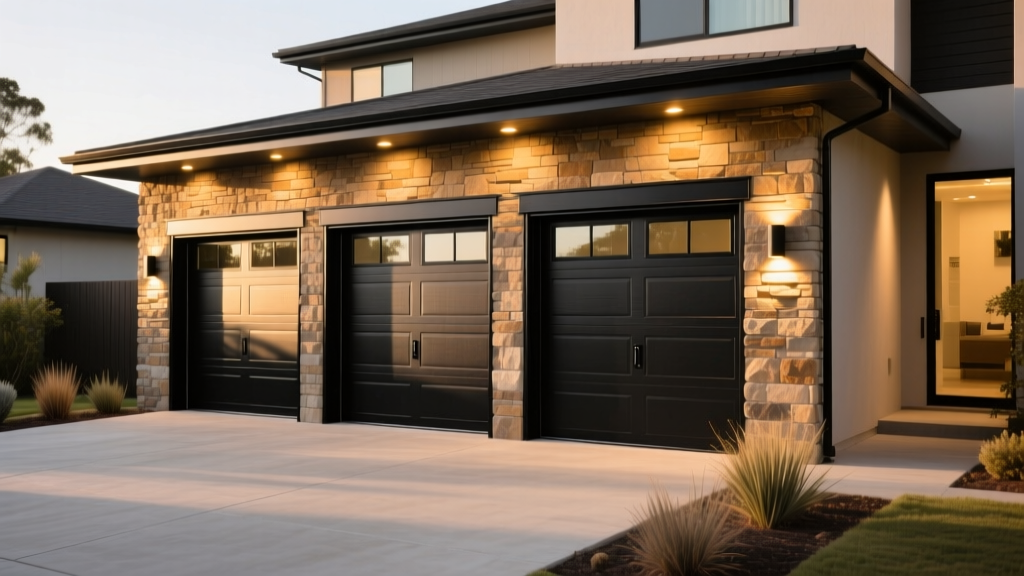
Final Verdict: Which Should You Choose?
The decision between natural and manufactured stone veneer around garage doors ultimately hinges on your budget, structural capacity, and local climate.
Choose Manufactured Stone Veneer (MSV) if: You are working with a strict budget, your existing garage headers are standard wood framing that cannot be easily upgraded, and you prefer a highly controlled color palette. Just be prepared to commit to a rigorous sealing and maintenance schedule to protect against exhaust and road salts.
Choose Natural Thin Stone Veneer (NSV) if: You are building a custom home or undertaking a high-end renovation where structural steel headers can be integrated into the plans. If your home is in a region with heavy winter salting, coastal salt spray, or if you want a zero-maintenance facade that will outlast the garage door itself, natural stone is the undisputed champion.
Written by
David NakamuraDavid Nakamura is a licensed architect (AIA) and construction technology writer focused on sustainable building methods, mass timber engineering, and high-performance building envelopes. He holds a Master of Architecture from the University of Washington and is a certified Passive House Consultant (CPHC). David spent eight years at the Seattle firm Mithun, where he led the design of three LEED Platinum projects, before founding his own practice specializing in net-zero residential design. He serves on the editorial advisory board of GreenBuilder Magazine and has authored peer-reviewed papers on cross-laminated timber (CLT) connections for the Journal of Structural Engineering. In his spare time, David teaches woodworking at Pratt Fine Arts Center and kayaks the Puget Sound.
More from David Nakamura
View all
Construction Cost
Labor Cost to Build a Deck Per Sq Ft: 2026 Installation Guide
Discover the exact labor cost to build a deck per sq ft in 2026. This installation guide breaks down contractor rates, complexity factors, and hidden fees.
Aug 4, 2026

Construction Cost
How Much Does It Cost to Build a 3 Bedroom House? Financing Guide
Learn exactly how much it costs to build a 3 bedroom house and explore 2026 financing options, construction loan types, and budget frameworks for your build.
Aug 4, 2026

Construction Cost
Cost to Build a Tennis Court: 2026 Guide
How much does it cost to build a tennis court in 2026? Breakdowns for asphalt, concrete, and synthetic surfaces plus fencing and lighting.
Jul 30, 2026