Stone Veneer Faux Interiors: 2026 Design & Styling Showcase
Explore 2026 stone veneer faux design trends. Discover top MSV profiles, lighting techniques, and material specs for modern interior styling.
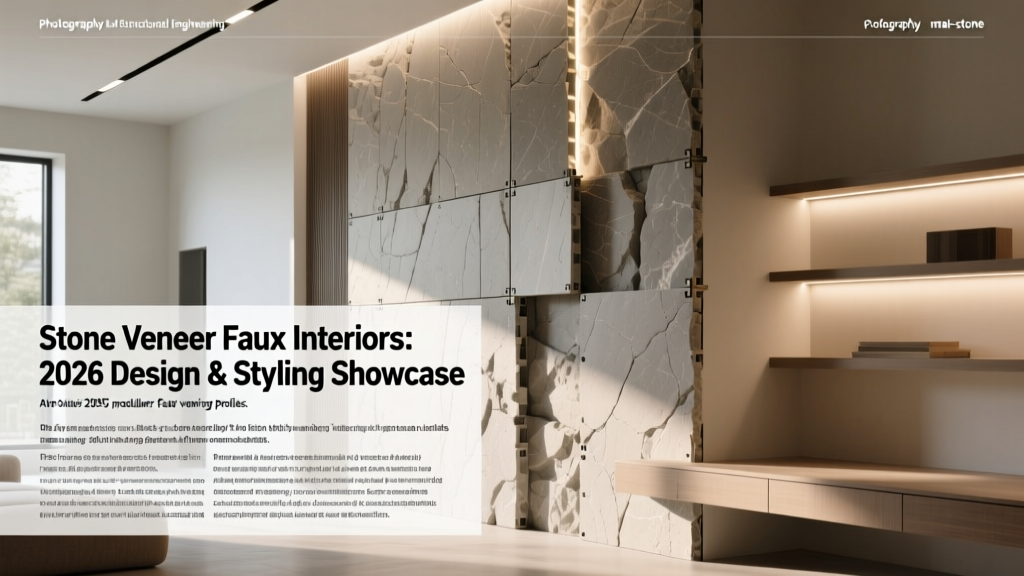
The Evolution of Manufactured Stone Veneer in Modern Design
The search for 'stone veneer faux' often stems from a desire to achieve the architectural weight of natural masonry without the structural reinforcement and exorbitant costs. In the architectural and interior design sectors, this material is formally classified as Manufactured Stone Veneer (MSV). Historically, early iterations of MSV suffered from repetitive molds and flat, unconvincing pigment applications. However, the 2026 landscape of MSV has been entirely transformed by high-definition polyurethane molding and multi-layered iron-oxide pigment integration.
Today's premium MSV products capture the micro-textures of natural lichen, mineral striations, and weathering patterns. According to the Masonry Veneer Manufacturers Association (MVMA), modern MSV weighs between 8 and 12 pounds per square foot—roughly half the weight of natural stone—allowing for direct application over standard wood or metal stud framing with cement board, eliminating the need for foundational footings.
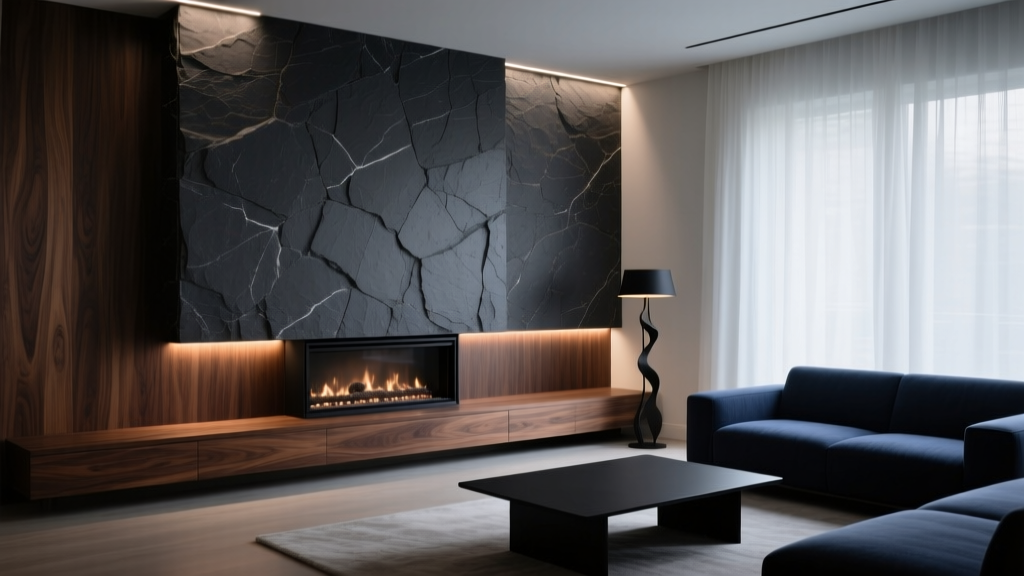
2026 Design Showcase: Top Faux Stone Veneer Styles
Interior designers are moving away from the ubiquitous, rustic 'cabin' looks of the 2010s. The current design ethos favors intentionality, utilizing specific MSV profiles to anchor contemporary, moody, and biophilic spaces.
1. Japandi & Wabi-Sabi Textures
The Japandi aesthetic demands clean lines, organic warmth, and visual quietness. To achieve this with MSV, designers specify linear ledgestone profiles with tight, dry-stack joints (no visible mortar).
- Recommended Profile: Eldorado Stone's Cliffstone or Cultured Stone's Linear Ledgestone.
- Color Palette: Muted taupes, warm greys, and desaturated earth tones (e.g., 'Alder' or 'Winter Fog').
- Execution Detail: Specify a 'dry-stack' installation method. The installer must use a polymer-modified thin-set mortar applied strictly to the back of the stone (buttering method) to prevent any squeeze-out between the 1-inch to 3-inch horizontal joints. This maintains the shadow-line precision required for minimalist interiors.
2. Moody Industrial & Dark Grout Techniques
For spaces embracing Dark Academia or moody industrial themes, the mortar joint is just as critical as the stone itself. Instead of hiding the mortar, this style celebrates it.
- Recommended Profile: Boral Stone Veneer's Ashlar or Cultured Stone's Dressed Fieldstone.
- Color Palette: High-contrast stones (charcoal, iron, slate) paired with dark, integral-colored mortar.
- Execution Detail: Use a Type N mortar mix tinted with iron-oxide black or deep charcoal pigment. The joints should be raked out to a depth of 1/2 inch using a jointing tool. This deep rake creates aggressive shadow lines that add profound three-dimensional depth when hit by directional lighting.
3. Biophilic Curves and Organic Architecture
Curved walls and arched doorways are dominating 2026 residential architecture. Natural stone is nearly impossible to bend around tight radii, but MSV offers distinct advantages.
Material Specification Matrix: Leading Profiles
Selecting the correct profile dictates both the visual scale and the installation labor cost. The matrix below breaks down the top three profile categories utilized in contemporary interior design.
| Profile Category | Visual Characteristics | Avg. Weight | Mortar Joint Type | 2026 Material Cost (sq ft) |
|---|---|---|---|---|
| Linear Ledgestone | Long horizontal lines, 1-4 inches tall, uniform thickness | 8.5 lbs | Dry-Stack (None) | $8.50 - $13.00 |
| Ashlar Fieldstone | Rectangular, squared edges, varied heights, masonry look | 10.2 lbs | Standard (1/2') or Raked | $7.00 - $11.50 |
| Cut River Rock | Smooth, rounded faces, organic and chaotic layout | 11.5 lbs | Wide Overgrout (1'') | $9.00 - $14.00 |
Design Integration: Lighting, Scale, and Clearances
The most frequent failure in MSV design is not the material selection, but the lighting and spatial integration. Faux stone veneer relies entirely on light and shadow to mimic the depth of natural quarry-cut rock.
The Physics of Grazing Light
According to principles outlined by the Illuminating Engineering Society (IES), the angle of incidence dramatically alters texture perception. To highlight the 2-to-3-inch relief of an Ashlar or Ledgestone profile, you must use grazing light, not washing light.
- Placement: Recessed ceiling fixtures or track heads must be positioned 12 to 18 inches away from the wall face.
- Angle: Aim the beam at a steep 15 to 20-degree angle down the wall.
- Color Temperature: Use 2700K (warm white) LEDs for traditional or rustic stones, and 3000K (neutral white) for modern, grey-toned ledgestone. Avoid 4000K+ in residential interiors, as it flattens the iron-oxide pigments and makes the MSV look synthetic.
Scale and Proportion Framework
Matching the stone profile to the architectural element is critical. A massive, 6-inch tall cobblestone profile will overwhelm a narrow, 30-inch wide linear gas fireplace insert.
Cost vs. Visual Impact Analysis
When budgeting for a stone veneer faux installation, material costs represent only 35% to 40% of the total project expense. The substrate preparation and skilled masonry labor dominate the budget.
Typical Interior Installation Breakdown (Per Square Foot)
- MSV Material: $7.00 - $14.00
- Substrate Prep (Metal lath, scratch coat, mortar): $3.50 - $5.50
- Masonry Labor: $14.00 - $22.00 (Highly dependent on profile complexity; dry-stack ledgestone requires more cutting and fitting time than standard ashlar).
- Total Installed Cost: $24.50 - $41.50 per square foot.
Compared to natural stone, which frequently exceeds $55.00 per square foot installed due to the need for heavier structural backing and higher material waste during cutting, MSV provides a 30% to 45% cost savings while delivering identical high-resolution visual impact in interior environments.
Technical Considerations for Wet Zones
While MSV is highly durable, installing it in interior wet zones (such as steam showers or indoor pool enclosures) requires strict adherence to moisture management protocols. The Tile Council of North America (TCNA) guidelines for wet-area masonry dictate that a continuous waterproofing membrane (such as a liquid-applied elastomeric barrier or sheet membrane) must be applied over the cement board before the metal lath and scratch coat are installed. Furthermore, a weep screed must be integrated at the base of the wall to allow any trapped moisture to evacuate, preventing efflorescence (white mineral salt deposits) from ruining the stone's pigment.
Frequently Asked Design Questions
Can faux stone veneer be painted?
Technically, yes, but it is highly discouraged. MSV is colored with integral iron-oxide pigments that penetrate the entire thickness of the cementitious body. Painting it with acrylic or latex paint traps moisture inside the porous concrete, leading to spalling and delamination. If a color change is required, use a penetrating, breathable masonry stain (like a silicate-based mineral stain) rather than a film-forming paint.
How do I handle outside corners?
Never butt two flat pieces of MSV together at a 90-degree exterior corner; this immediately reveals the material's thickness and breaks the illusion of solid masonry. Premium manufacturers produce dedicated 'corner returns' that wrap 3 to 6 inches around the edge. These corner pieces are typically priced by the linear foot and cost roughly 2.5 times more than the flat fieldstone, so they must be calculated separately during the estimating phase.
Written by
Sarah WhitfieldSarah Whitfield is a chartered quantity surveyor (MRICS) and construction cost analyst with 15 years of experience in material pricing, procurement strategy, and project budgeting. She earned her degree in Construction Management from the University of Reading (UK) and has worked on projects ranging from $2M custom homes to $180M mixed-use developments across North America and Europe. Sarah currently leads cost estimating for BuildMat Insight, maintaining a proprietary database of 4,000+ material price points updated quarterly. She is a frequent contributor to RSMeans cost data panels and has presented at the International Cost Engineering Council (ICEC) congress. Based in Denver, CO, Sarah is an avid trail runner and volunteer mentor for Women in Construction.
More from Sarah Whitfield
View all
Wood & Lumber
What Are the Different Types of Wood? A Builder's Guide
Compare structural softwoods, finish hardwoods, and engineered lumber. Analyze Janka ratings, MOE values, and 2026 pricing for construction.
Aug 4, 2026

Walls & Panels
Steel Framing vs Wood Framing: Corrosion and Moisture Defense
Compare steel framing vs wood framing for moisture resistance. Learn about galvanized coatings, condensation risks, and corrosion protection strategies.
Jul 21, 2026

Stone & Masonry
How to Cut Stone Veneer: Wet Saw vs Grinder Comparison
Compare the best tools for cutting stone veneer. We review wet saws, angle grinders, and chop saws to help you achieve clean, chip-free cuts.
Jul 21, 2026