Stone Veneer Las Vegas Installation: Beating the Extreme Heat
Master stone veneer installation in Las Vegas. Learn desert-specific mortar mixes, heat-beating curing techniques, and 2026 Clark County costs.
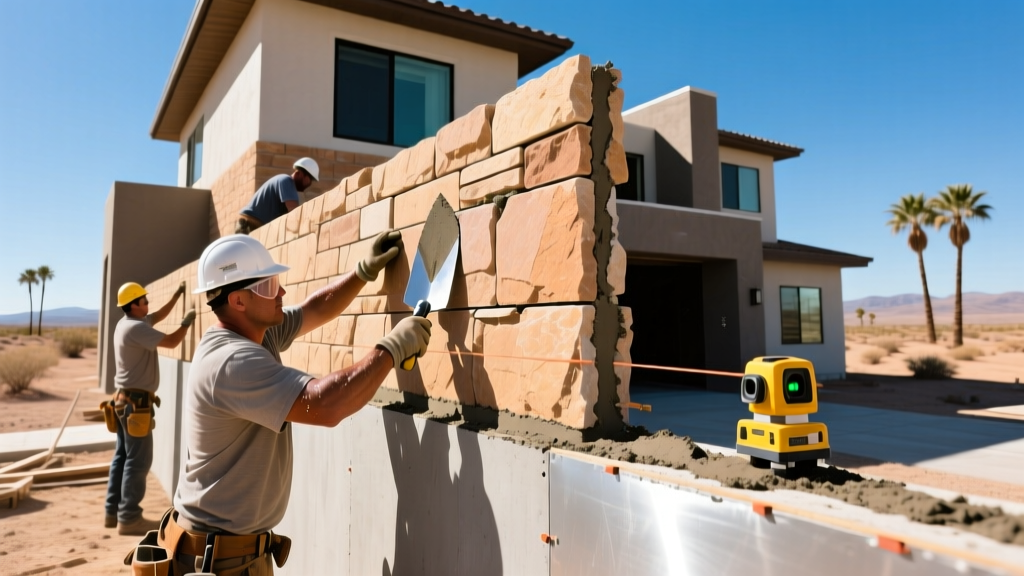
Masonry veneer withstands Las Vegas heat when installed with polymer-modified mortars, proper weep screeds, and expansion joints to accommodate extreme daily temperature swings. For Southern Nevada homeowners, general contractors, and masonry professionals, selecting UV-stable manufactured stone or dense natural limestone prevents thermal cracking and fading in the Mojave Desert climate.
Key Takeaways
- High-heat masonry requires polymer-modified mortar to prevent rapid moisture loss and weak bonds.
- Install 3/4-inch expansion joints to accommodate thermal shifting and prevent buckling.
- Expect Las Vegas stone veneer costs to range from $14.50 to $19.00 per square foot.
- Manufactured stone with integral pigments offers superior UV resistance compared to porous natural sandstones.
How Extreme Desert Heat Affects Masonry Veneer
Nevada summers routinely push ambient temperatures past 115°F. This extreme heat accelerates mortar curing and stresses the physical bonds between the veneer and the structural substrate.
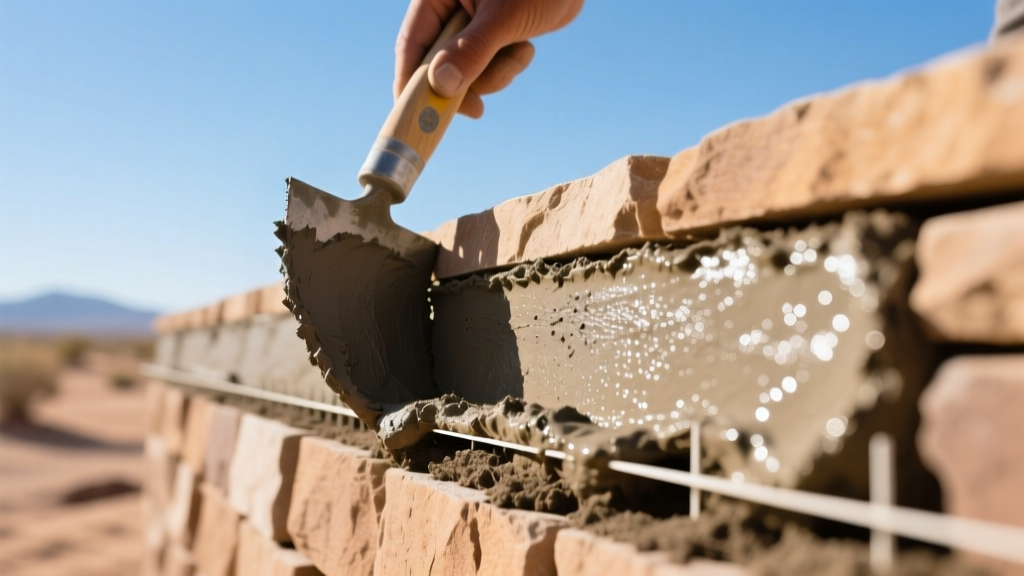
Thermal Expansion and Contraction
Solar radiation heats exterior stone faces significantly above ambient air temperatures. Surface temperatures of dark stone can reach 160°F even when ambient air is 110°F. This creates a massive temperature differential between the hot veneer face and the cooler wood or steel studs behind it. The International Masonry Institute mandates strategic relief points in high-temperature zones to absorb this kinetic energy and prevent panel buckling.
Mortar Curing in High Temperatures
Standard Portland cement mortar loses moisture too quickly in dry, hot desert air. When temperatures exceed 90°F, the mortar pot life drops to roughly 45 minutes. Rapid drying prevents proper hydration, resulting in weak, crumbly joints that fail within a single season.
According to the Portland Cement Association, hot weather masonry construction requires wetting the substrate and using chilled mixing water. If the mortar dries before hydration completes, it loses up to 50% of its compressive strength, leading to veneer delamination.
Best Masonry Veneer Materials for Las Vegas Climates
Material density and UV reflectivity dictate how well stone veneer survives the Mojave Desert. Below is a comparison framework for selecting the optimal product.
| Material Type | Thermal Resistance | UV Fade Resistance | Best Application |
|---|---|---|---|
| Manufactured Stone | High (with integral color) | Excellent | Full exterior facades |
| Natural Limestone | Moderate | Good | Shaded accent walls |
| Cast Stone | High | Excellent | Architectural trim and columns |
Natural Stone vs. Manufactured Stone
Manufactured stone veneer (MSV) is engineered to mimic natural rock while offering superior weight and thermal properties. MSV adheres to ASTM International C1372 standards, ensuring the pigments and concrete matrix resist ultraviolet degradation better than porous natural sandstones, which can spall under intense solar loading.
High-Heat Installation Checklist
Contractors must adapt standard procedures when installing masonry veneer in Southern Nevada. Use this decision framework to ensure compliance with hot-weather building codes.
- Substrate Prep: Maintain a strict 2-inch minimum clearance from the finished grade to prevent moisture wicking and soil alkalinity damage.
- Weather Barrier: Apply two layers of Grade D building paper or a fluid-applied membrane over the sheathing.
- Weep Screed: Install a corrosion-resistant weep screed at the base of all framed walls to facilitate drainage.
- Mortar Selection: Use polymer-modified mortar mixed with chilled water to extend workability.
- Expansion Joints: Leave a 3/4-inch gap at floor lines and rooflines, filled with a high-grade elastomeric sealant.
Understanding Key Installation Components
Weep Screed: A corrosion-resistant metal or plastic flashing installed at the base of a veneer wall. It features small holes that allow trapped moisture behind the stone to drain outward, preventing wood rot and structural degradation in the desert climate.
Polymer-Modified Mortar: A cementitious mixture enhanced with liquid or dry latex polymers. These additives increase flexural strength, improve adhesion to vertical substrates, and retain moisture longer during high-heat curing processes to ensure maximum bond strength.
Desert Maintenance: Managing Efflorescence
Las Vegas municipal water contains high levels of dissolved calcium and magnesium. When homeowners use sprinklers that hit the masonry veneer, the water evaporates and leaves behind white mineral deposits known as efflorescence. To prevent this, adjust irrigation heads to avoid direct contact with the stone facade.
If efflorescence occurs, use a specialized, non-acidic masonry cleaner. Acid-based cleaners can etch the surface of manufactured stone and degrade the integral oxide pigments, leading to permanent discoloration.
Masonry Veneer Las Vegas Cost and ROI
Budgeting for exterior cladding requires factoring in both material premiums and specialized labor. The average stone veneer installation cost in Las Vegas ranges from $14.50 to $19.00 per square foot. This price includes the weather barrier, metal lath, scratch coat, and the veneer itself.
Masonry cladding consistently yields a high return on investment by reducing cooling loads through added thermal mass and boosting curb appeal in arid regions. Homes with premium exterior finishes typically recoup over 80% of the cladding cost upon resale.
Frequently Asked Questions
Does stone veneer crack in the Nevada sun?
Stone veneer will crack if installed without proper expansion joints. The intense Nevada sun causes materials to expand during the day and contract at night. Leaving a 3/4-inch gap at structural transitions absorbs this movement and prevents surface fracturing and mortar joint failure.
What is the best masonry veneer for desert heat?
High-density manufactured stone veneer with integral oxide pigments is the best choice for desert heat. It resists ultraviolet fading and weighs less than natural stone, reducing the structural load on the wall assembly during thermal shifting and seismic events.
How does the stone veneer installation cost in Las Vegas compare to stucco?
Masonry veneer is a premium upgrade. While traditional three-coat stucco costs between $8.00 and $11.00 per square foot, stone veneer ranges from $14.50 to $19.00 per square foot. However, stone offers superior impact resistance and requires less maintenance over a 30-year lifespan.
Conclusion and Next Steps
Masonry veneer survives the extreme Las Vegas heat only when paired with hot-weather installation protocols, polymer-modified mortars, and adequate expansion joints. Ignoring these desert-specific requirements leads to premature joint failure, efflorescence, and veneer detachment.
To ensure your project withstands the Mojave climate, contact a licensed Nevada masonry contractor to conduct a thermal-expansion site assessment before purchasing materials.
Written by
David NakamuraDavid Nakamura is a licensed architect (AIA) and construction technology writer focused on sustainable building methods, mass timber engineering, and high-performance building envelopes. He holds a Master of Architecture from the University of Washington and is a certified Passive House Consultant (CPHC). David spent eight years at the Seattle firm Mithun, where he led the design of three LEED Platinum projects, before founding his own practice specializing in net-zero residential design. He serves on the editorial advisory board of GreenBuilder Magazine and has authored peer-reviewed papers on cross-laminated timber (CLT) connections for the Journal of Structural Engineering. In his spare time, David teaches woodworking at Pratt Fine Arts Center and kayaks the Puget Sound.
More from David Nakamura
View all
Construction Cost
Labor Cost to Build a Deck Per Sq Ft: 2026 Installation Guide
Discover the exact labor cost to build a deck per sq ft in 2026. This installation guide breaks down contractor rates, complexity factors, and hidden fees.
Aug 4, 2026

Construction Cost
How Much Does It Cost to Build a 3 Bedroom House? Financing Guide
Learn exactly how much it costs to build a 3 bedroom house and explore 2026 financing options, construction loan types, and budget frameworks for your build.
Aug 4, 2026

Construction Cost
Cost to Build a Tennis Court: 2026 Guide
How much does it cost to build a tennis court in 2026? Breakdowns for asphalt, concrete, and synthetic surfaces plus fencing and lighting.
Jul 30, 2026