Stone Veneer on Wall: The Ultimate Buyer's Selection Guide
Compare manufactured and natural stone veneer on wall applications. Explore costs, panel vs. individual systems, and moisture management for lasting installs.
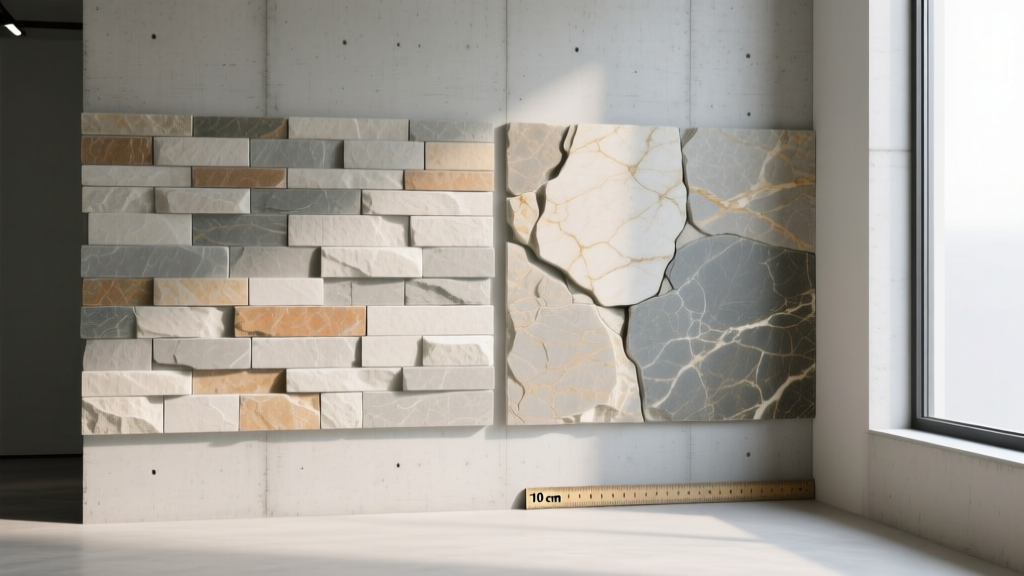
The Core Material Decision: Natural vs. Manufactured
Specifying stone veneer on wall surfaces requires navigating a critical fork in the road: natural quarried stone versus adhered manufactured stone masonry veneer (AMSMV). While natural stone offers unparalleled geological authenticity, manufactured stone has closed the visual gap significantly while solving the structural weight limitations that plague traditional masonry.
Manufactured stone is engineered using a blend of Portland cement, lightweight aggregates (like pumice or expanded shale), and iron oxide pigments poured into polyurethane molds cast from real stone. This process yields a product that complies with ASTM C1670 standards set by the Masonry Veneer Manufacturers Association (MVMA). The resulting veneer typically weighs between 8 to 12 pounds per square foot, compared to the 15 to 30+ pounds per square foot of natural fieldstone or granite.
Material Comparison Matrix
| Feature | Manufactured Stone Veneer | Natural Stone Veneer |
|---|---|---|
| Average Weight | 8 - 12 lbs / sq ft | 15 - 35+ lbs / sq ft |
| Thickness Profile | 1.5 to 2.5 inches | 2 to 4 inches (varies by cut) |
| Color Consistency | High (batch controlled) | Low (natural geological variation) |
| Core Material | Cementitious aggregate | Quarried granite, limestone, slate |
| Structural Footing | Rarely required (adhered) | Often required for thick profiles |
Form Factor: Individual Stones vs. Interlocking Panel Systems
The installation methodology drastically alters both the labor budget and the final aesthetic. Buyers must choose between traditional individual stones and modern mortarless panel systems.
Traditional Individual Veneer (Mortar-Set)
Individual stones are applied using a Type N or Type S mortar mix over a metal lath and scratch coat. This method requires a skilled mason to blend stone sizes, manage joint widths (typically 0.5 to 1 inch for grouted profiles, or tight-fitted for dry-stack), and cut stones around electrical outlets and corners. The primary advantage is absolute design flexibility; masons can create custom patterns, arches, and varied reveals that panels cannot replicate. However, labor costs are high, often doubling the material expense.
Mortarless Interlocking Panels (The DIY & Fast-Track Favorite)
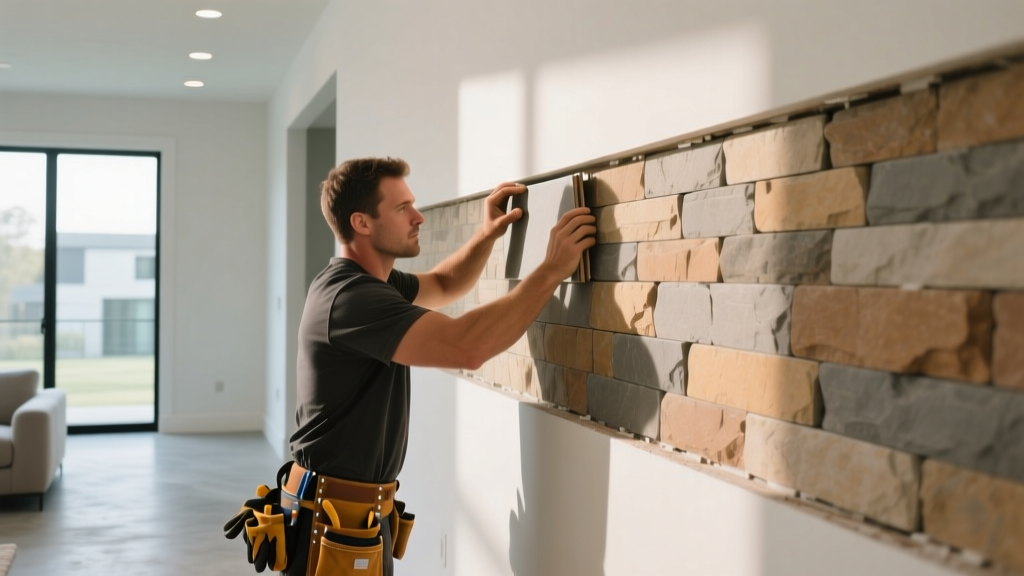
Panel systems, such as those utilizing a Z-flange interlocking edge, are screwed directly into wall studs or cement board using corrosion-resistant fasteners. These panels cover 2 to 4 square feet each and eliminate the need for metal lath, scratch coats, and wet mortar. While early generations of panel systems suffered from visible, repetitive seam lines, premium 2026 lines utilize randomized edge geometries and varying depth profiles to mask the modular nature of the panels. Panel systems reduce installation time by up to 60% compared to mortar-set applications.
Substrate Preparation & Moisture Management (Where Installations Fail)
The most common cause of stone veneer failure is not the stone itself, but improper substrate preparation and moisture mismanagement. Adhering stone directly to an unprepared surface guarantees delamination.
Interior Wall Substrates
- Standard Drywall: Can support manufactured stone veneer only if the fasteners (screws for panels) penetrate the underlying wood or metal studs spaced 16 inches on center. Drywall paper alone cannot hold the shear weight of mortar-set stone.
- Cement Backer Board: (e.g., Durock, HardieBacker) is the mandatory substrate for interior mortar-set applications, particularly in wet areas like shower surrounds or behind kitchen sinks. It provides a stable, non-porous base for the mortar bond.
Exterior Wall Assemblies
Exterior applications demand a drained and back-ventilated approach or a highly robust adhered assembly. According to building science principles outlined by Building Science Corporation, the wall must feature a Weather-Resistive Barrier (WRB) such as Grade D building paper or a housewrap, followed by a self-furring metal lath (minimum 2.5 lbs/sq yd) and a 0.5-inch Portland cement scratch coat. The weep screed must be integrated below the WRB to ensure any water penetrating the stone veneer is directed outward and away from the structural sheathing.
2026 Cost Breakdown: Material vs. Total Installed Price
Budgeting for stone veneer on wall projects requires looking beyond the per-square-foot material tag. The hidden costs lie in substrate prep, corner pieces, and specialized labor.
| Cost Category | Manufactured (Individual) | Manufactured (Panels) | Natural Stone |
|---|---|---|---|
| Material (Field Stone) | $7.50 - $13.00 / sq ft | $11.00 - $18.00 / sq ft | $16.00 - $35.00 / sq ft |
| Corner Pieces (Linear Ft) | $9.00 - $16.00 / lin ft | $14.00 - $24.00 / lin ft | $20.00 - $45.00 / lin ft |
| Substrate Prep & Lath | $3.50 - $6.00 / sq ft | $1.00 - $2.50 / sq ft | $4.00 - $7.00 / sq ft |
| Professional Labor | $14.00 - $22.00 / sq ft | $6.00 - $12.00 / sq ft | $25.00 - $40.00 / sq ft |
| Total Installed Estimate | $25.00 - $41.00 / sq ft | $18.00 - $32.50 / sq ft | $45.00 - $82.00 / sq ft |
Note: Corner pieces are priced by the linear foot and are notoriously expensive. A project with multiple outside corners or window returns can see material costs increase by 15-20% due to corner requirements.
Top Manufacturer Lines to Specify
When selecting manufactured stone, specifying premium lines from established manufacturers ensures UV-stable pigments and strict adherence to ASTM freeze-thaw durability standards.
Westlake Royal Building Products (Cultured Stone)
As the originator of manufactured stone, Cultured Stone remains the industry benchmark. Their Cobblefield profile offers a highly realistic, rounded river-rock aesthetic with deep, varied reveals. For a more contemporary look, their Dressed Fieldstone provides a cleaner, more uniform cut-stone appearance ideal for modern interior accent walls.
Eldorado Stone
Eldorado Stone excels in dry-stack and tight-fit profiles. Their Rustic Ledge line is a top seller for exterior wainscoting and interior fireplace surrounds, offering a rugged, linear profile that mimics natural stratified limestone. Their color blending technology uses multiple pigment washes during the casting process to avoid the 'painted' look common in budget-tier veneers.
Stone Panels Inc.
For buyers prioritizing speed and mortarless installation, Stone Panels Inc. offers lightweight, interlocking panels that weigh as little as 5 lbs per square foot. Their panels are backed by a high-density polyurethane foam core in some lines, providing marginal acoustic and thermal dampening benefits over standard cementitious panels.
Final Buyer's Selection Checklist
Before finalizing your material order, verify these critical project parameters:
- Calculate True Square Footage: Measure the wall area and subtract 50% of the square footage for large openings (windows, fireboxes), but add 10% for waste and cutting errors.
- Count the Linear Corners: Measure all outside corners and window returns in linear feet. Order corners first, as they are frequently backordered and dictate the project timeline.
- Verify Stud Spacing: If using a panel system on interior drywall, use a stud finder to confirm 16-inch or 24-inch on-center framing. Panel flanges must align with studs for secure fastening.
- Specify the Mortar Type: For individual mortar-set applications, ensure your contractor uses a polymer-modified Type N mortar or a specific veneer-setting mortar. Standard bricklaying mortar is too rigid and can cause micro-cracking in lightweight veneer.
- Request a Mock-Up: For large exterior facades, require the mason to build a 4x4 foot mock-up board. This allows you to approve the stone blend, joint width, and mortar color before the entire wall is committed.
Selecting the right stone veneer on wall assemblies requires balancing the raw authenticity of natural stone with the engineered efficiency of manufactured panels. By prioritizing substrate integrity, specifying ASTM-compliant materials, and accurately budgeting for corner details and labor, you ensure an installation that is both structurally enduring and visually flawless.
Written by
Priya KapoorPriya Kapoor is a real estate market analyst and construction economics researcher with expertise in housing affordability, development feasibility, and infrastructure investment. She holds a Master of Regional Planning from Cornell University and previously worked as a senior analyst at CBRE's Investment Properties group, where she modeled returns for $4B in mixed-use development pipelines. Priya now runs an independent research practice advising developers, municipalities, and REITs on construction cost forecasting and market timing. She publishes the quarterly "BuildMat Market Pulse" report tracking material price indices across 12 commodity categories. Based in Austin, TX, Priya serves on the board of Habitat for Humanity Austin and is a marathon runner.
More from Priya Kapoor
View all
Construction Cost
Cost to Build a 1600 Sq Ft Home in 2026: Full Breakdown
Accurate 2026 cost to build a 1600 sq ft home—material, labor, and regional pricing breakdowns included. Plan your budget with real-time estimates.
Aug 11, 2026

Wood & Lumber
Name the Types of Wood for Pressure Treatment and Preservation
Learn how to name the types of wood best suited for pressure treatment. Compare species treatability, chemical retention levels, and 2026 preservation costs.
Aug 4, 2026

Stone & Masonry
Stone Veneer Suppliers Lindenhurst: 2026 Cost Analysis
Analyze 2026 stone veneer costs in Lindenhurst, NY. Compare local supplier pricing, delivery fees, and Suffolk County installation labor rates.
Aug 4, 2026