Stone Veneer PA: Natural vs Manufactured Cost & Climate Guide
Compare natural Pennsylvania fieldstone and manufactured stone veneer. Explore 2026 costs, freeze-thaw durability, and installation requirements for PA homes.
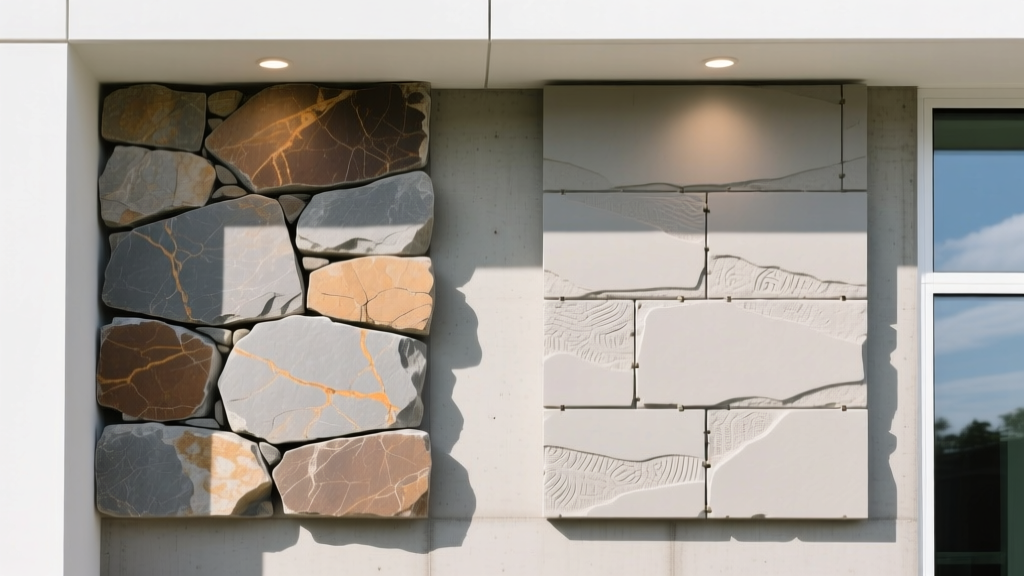
The Pennsylvania Climate Challenge: Freeze-Thaw and Moisture
Pennsylvania’s diverse topography creates a demanding environment for exterior cladding. From the humid, hot summers of the southeastern piedmont to the severe, lake-effect snow belts of the northwest, exterior materials must endure extreme thermal cycling. The primary enemy of masonry in PA is the freeze-thaw cycle. When moisture penetrates porous stone and freezes, it expands by approximately 9%, generating internal tensile stresses that cause spalling, cracking, and eventual face delamination.
For manufactured products, resistance to this cycling is measured under ASTM C666 (Standard Test Method for Resistance of Concrete to Rapid Freezing and Thawing). High-quality manufactured stone veneer (MSV) must pass a minimum of 50 freeze-thaw cycles with less than 1% weight loss. Natural stone, however, relies on its geological density and absorption rates. Selecting the right stone veneer in PA requires balancing local aesthetic traditions with strict moisture-management engineering.
Head-to-Head Comparison Matrix
| Feature | Natural PA Stone (Fieldstone/Bluestone) | Manufactured Stone Veneer (MSV) |
|---|---|---|
| Weight Load | 10 – 15 lbs per sq. ft. | 6 – 9 lbs per sq. ft. |
| Absorption Rate | Low to Moderate (depends on quarry) | Moderate (acts as a reservoir cladding) |
| Structural Support | Requires continuous concrete footing or steel angles | Can be supported by standard wood framing (with blocking) |
| Mortar Requirement | Type N or Type O (softer, allows movement) | Type S or Type N (high bond strength required) |
| Lead Time (2026) | 4 – 12 weeks (quarry dependent) | 1 – 3 weeks (regional distributors) |
Natural Stone Veneer in PA: Local Quarry Options
Pennsylvania is geologically rich, providing access to some of the most sought-after natural building stones in North America. Utilizing local stone reduces freight costs and ensures the architecture harmonizes with the regional landscape.
Bucks County Fieldstone
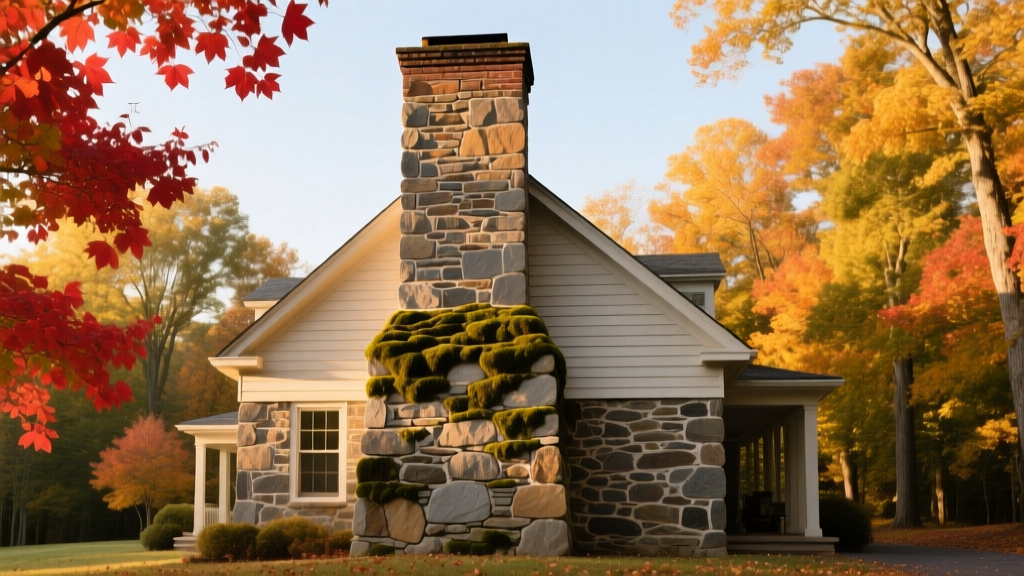
Harvested from the soil of southeastern PA, this stone is a mix of rounded sandstone and limestone. It is traditionally used for colonial and farmhouse aesthetics. Because it is naturally weathered, its outer crust is highly resistant to water penetration. However, the irregular, rounded shapes require a highly skilled mason to lock the stones together without excessive mortar joints, which can become weak points for water intrusion.
Pennsylvania Bluestone
A dense, sedimentary sandstone quarried primarily in the northeastern part of the state. Bluestone is exceptionally durable and features a natural cleft texture. When used as a veneer (typically in a stacked or ashlar pattern), it offers a sharper, more modern or craftsman-style profile. Its low absorption rate makes it highly resistant to PA’s winter freeze-thaw cycles.
Natural stone veneer weighs up to 15 lbs per square foot. A 10-foot-high wall exerts 150 lbs of dead load per linear foot. Standard wood floor joists cannot support this cantilevered weight. Natural stone must bear on a continuous concrete foundation ledge or be supported by structural steel relief angles anchored directly to the building’s primary framing.
Manufactured Stone Veneer (MSV): The Lightweight Alternative
Manufactured stone veneer is a portland cement-based product cast in molds taken from real stone. It is significantly lighter than natural stone and offers consistent coloring and sizing. Leading brands distributed in PA, such as Cultured Stone and Eldorado Stone, provide profiles that closely mimic local fieldstone and dry-stack ledgestone.
The Reservoir Cladding Problem
The most critical concept for MSV installation in Pennsylvania is understanding that it functions as a reservoir cladding. The cementitious material absorbs and holds moisture during heavy PA rainstorms or snowmelt. If this moisture is trapped against the structural sheathing, it will cause rot and mold. According to the Manufactured Veneer Architectural Association (MVAA), proper installation mandates a weather-resistive barrier (WRB), a corrosion-resistant weep screed at the base, and metal lath to allow the mortar to grip and create a micro-drainage plane.
Pro Tip for PA Builders: Avoid standard housewraps (like Tyvek) behind MSV. The hundreds of fasteners used to secure the metal lath will puncture the wrap, creating direct pathways for trapped moisture to reach the OSB sheathing. Instead, use a fluid-applied membrane (such as Prosoco R-Guard or Sto Gold Coat) which seals around the fasteners and provides a continuous, impermeable drainage plane.
2026 Installed Cost Analysis Across Pennsylvania
Pricing for stone veneer fluctuates based on regional labor rates, proximity to quarries, and local scaffolding requirements. The following table outlines the average installed cost per square foot (including materials, prep, lath, mortar, and labor) for a standard two-story residential exterior in 2026.
| PA Region | Natural PA Stone (Installed) | Manufactured Stone Veneer (Installed) |
|---|---|---|
| Southeastern PA (Philly Suburbs) | $42.00 – $55.00 / sq. ft. | $26.00 – $34.00 / sq. ft. |
| Central PA (Harrisburg / State College) | $36.00 – $46.00 / sq. ft. | $22.00 – $29.00 / sq. ft. |
| Western PA (Pittsburgh / Erie) | $38.00 – $48.00 / sq. ft. | $24.00 – $31.00 / sq. ft. |
Common Installation Failures in PA Climates
Even premium materials will fail if the chemistry and physics of the assembly are ignored. The two most common failure modes observed in PA stone veneer projects are:
- Mortar Mismatch (Spalling): Masons often default to Type S mortar (1,800 PSI compressive strength) because it is highly adhesive and water-resistant. However, when applied to softer natural stones like local limestone or sandstone, the rigid mortar traps thermal stress. During a freeze-thaw cycle, the mortar holds firm while the softer stone fractures and pops off the wall. Always use Type N (750 PSI) or Type O (350 PSI) mortar for softer natural stones to allow the joint to absorb the movement.
- Missing Weep Screeds (Efflorescence): Efflorescence is the white, powdery salt deposit left on stone when water evaporates. While often considered purely cosmetic, heavy efflorescence indicates that water is trapped inside the wall cavity. If a weep screed is omitted at the base of the veneer, or if the landscaping is graded above the screed, the wall cannot drain. Over 3 to 5 PA winters, this trapped moisture will rust the metal lath from the inside out, causing the entire veneer system to detach.
Decision Framework: Which Veneer Should You Choose?
Use this practical framework to determine the best material for your specific project parameters:
Choose Natural PA Stone If:
- You are building a custom, high-end home where authentic regional character is paramount.
- Your structural engineer has designed continuous concrete footings or steel relief angles to handle 150+ lbs per linear foot.
- You are renovating a historic PA farmhouse and require Bucks County fieldstone to meet local zoning or historical society guidelines.
- You want a zero-maintenance cladding that will naturally weather and last over 100 years without fading.
Choose Manufactured Stone Veneer If:
- You are retrofitting an existing home where the current foundation lacks a brick ledge and adding structural steel is cost-prohibitive.
- You are working on a tight construction schedule and cannot wait 8+ weeks for custom quarry cuts.
- You are cladding complex architectural features like arches, chimneys, or interior fireplaces where cutting and fitting heavy natural stone is labor-intensive.
- Your budget is constrained to the $25–$32 per square foot installed range.
Written by
David NakamuraDavid Nakamura is a licensed architect (AIA) and construction technology writer focused on sustainable building methods, mass timber engineering, and high-performance building envelopes. He holds a Master of Architecture from the University of Washington and is a certified Passive House Consultant (CPHC). David spent eight years at the Seattle firm Mithun, where he led the design of three LEED Platinum projects, before founding his own practice specializing in net-zero residential design. He serves on the editorial advisory board of GreenBuilder Magazine and has authored peer-reviewed papers on cross-laminated timber (CLT) connections for the Journal of Structural Engineering. In his spare time, David teaches woodworking at Pratt Fine Arts Center and kayaks the Puget Sound.
More from David Nakamura
View all
Construction Cost
Labor Cost to Build a Deck Per Sq Ft: 2026 Installation Guide
Discover the exact labor cost to build a deck per sq ft in 2026. This installation guide breaks down contractor rates, complexity factors, and hidden fees.
Aug 4, 2026

Construction Cost
How Much Does It Cost to Build a 3 Bedroom House? Financing Guide
Learn exactly how much it costs to build a 3 bedroom house and explore 2026 financing options, construction loan types, and budget frameworks for your build.
Aug 4, 2026

Construction Cost
Cost to Build a Tennis Court: 2026 Guide
How much does it cost to build a tennis court in 2026? Breakdowns for asphalt, concrete, and synthetic surfaces plus fencing and lighting.
Jul 30, 2026