Type S Mortar for Stone Veneer: The Designer's Joint Guide
Discover why designers specify Type S mortar for stone veneer. Explore joint profiles, mix ratios, and aesthetic techniques for 2026.
The Intersection of Structural Integrity and Visual Design
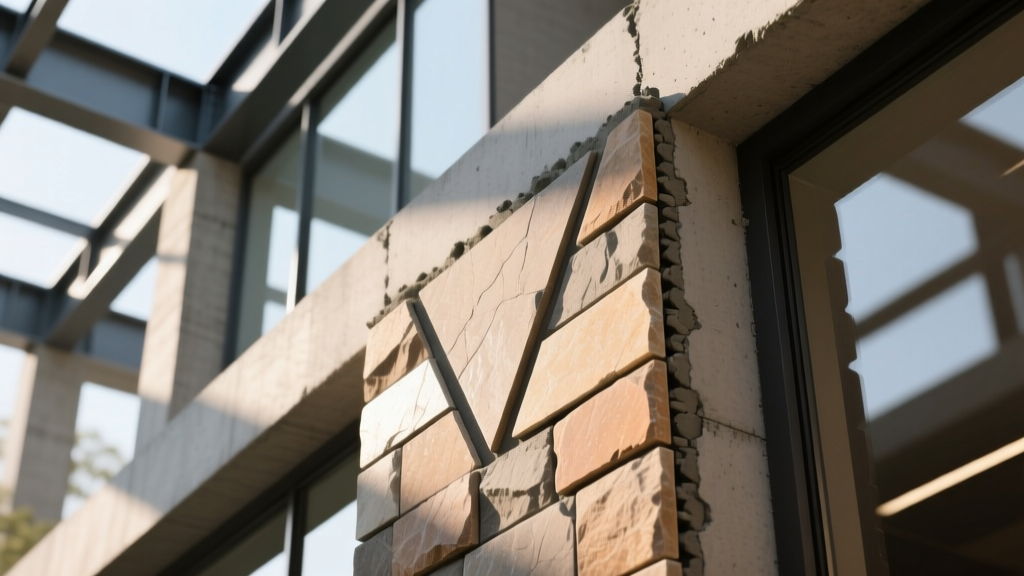
Mortar occupies up to 20% of a masonry wall's visible surface area. For architectural stone veneer, the mortar joint is not merely a structural adhesive; it is a primary design element that dictates shadow lines, texture, and color harmony. While Type N mortar is frequently used in general masonry, high-end design specifications increasingly mandate Type S mortar for stone veneer applications. This guide explores the intersection of structural performance and aesthetic execution when specifying Type S mortar for architectural veneer projects.
The Aesthetic Advantage of Type S Mortar in Veneer Design
Designers favor Type S mortar because its specific chemical composition directly enhances the mason's ability to execute precise joint profiles. Type S mortar is defined by ASTM C270 as having a minimum compressive strength of 1,800 psi, achieved through a higher ratio of Portland cement and lime compared to Type N. This elevated lime content significantly improves workability and water retention.
From a design perspective, high water retention prevents the mortar from slumping or sagging in vertical veneer applications before it cures. This stability allows masons to tool the joint to a glass-smooth finish that catches light uniformly, a critical requirement for contemporary and transitional architectural styles where crisp, shadow-free lines are paramount. Furthermore, the dense matrix of Type S mortar resists the micro-cracking that can ruin the visual continuity of a monolithic stone facade.
Technical Specifications: Mortar Performance Matrix
Understanding the mechanical differences between mortar types is essential when balancing aesthetic goals with structural requirements. The following matrix compares standard masonry mortars used in veneer applications based on Portland Cement Association guidelines.
| Mortar Type | Min. Compressive Strength | Bond Strength | Workability & Tooling | Best Design Application |
|---|---|---|---|---|
| Type S | 1,800 psi | High | Excellent (High Lime) | Exterior veneer, tight crisp joints, high-wind zones |
| Type N | 750 psi | Medium | Good (Moderate Lime) | Interior veneer, rustic profiles, low-load applications |
| Polymer-Modified | 2,500+ psi | Very High | Stiff (Hard to tool) | Thin-set applications, large-format stone panels |
Formulating the Perfect Type S Mix for Visual Consistency
Achieving visual consistency across a large veneer installation requires strict adherence to mix proportions and material selection. The standard volumetric ratio for Type S mortar is 1 part Portland cement, 0.5 parts hydrated lime, and 4.5 parts aggregate sand.
The Role of Sand Gradation (ASTM C144)
The sand used in the mix dictates the visual texture of the finished joint. According to International Masonry Institute standards, masonry sand must meet ASTM C144 specifications. However, the specific sieve profile within that standard alters the design outcome:
- Fine-Graded Sand: Produces a smooth, almost concrete-like joint surface. Ideal for modern, minimalist designs paired with precision-cut ashlar stone.
- Coarse-Graded Sand: Leaves a pitted, speckled texture that mimics historic lime putties. Best suited for rustic, tumbled, or fieldstone veneer applications.
Pigment Integration and Cement Selection
When specifying integral colors (using synthetic iron oxide pigments from brands like Davis Colors or Solomon Colors), the base cement dramatically affects the final hue. Gray Portland cement will muddy bright reds, yellows, and whites. For vibrant or pastel mortar joints, designers must specify white Portland cement in the Type S mix to ensure the pigment's true color is reflected. Always maintain a strict water-to-cement ratio; excess water dilutes the pigment and causes color mottling across the facade.
Design Showcase: Joint Profiles and Architectural Impact
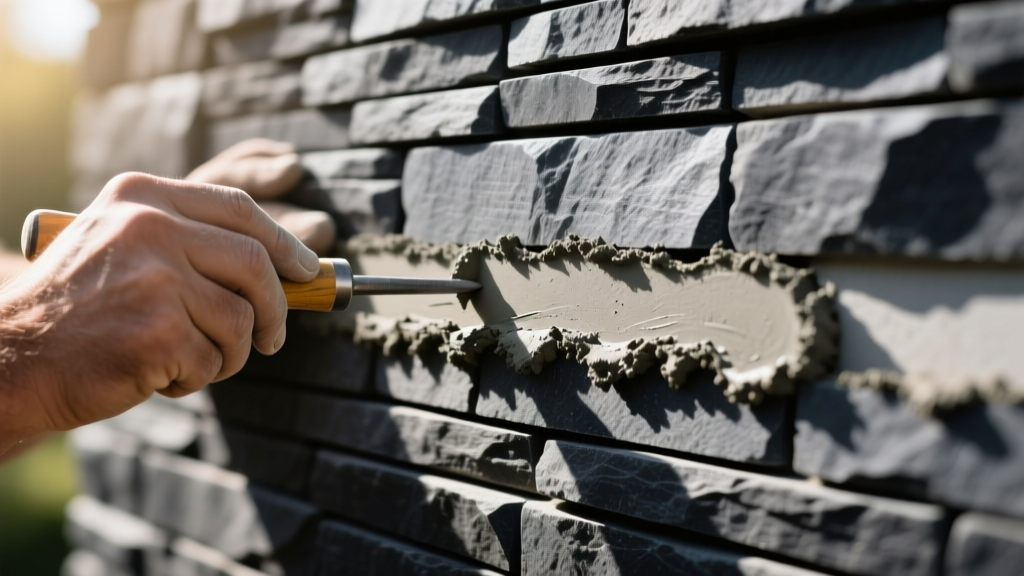
The physical shaping of the mortar joint—known as striking or tooling—fundamentally changes how light interacts with the stone veneer. Type S mortar's plasticity allows for sharp execution of the following profiles:
- Standard Concave: The most common exterior profile. The mortar is compressed with a curved jointer, creating a slight recess that sheds water while casting a soft, uniform shadow. It pairs perfectly with traditional limestone and granite veneers.
- Raked (Over-jointed): Mortar is scraped back 1/4 to 1/2 inch from the stone face. This creates deep, dramatic shadow lines that emphasize the individual thickness of each stone. Warning: Raked joints trap water and are generally discouraged in high-rainfall exterior zones unless a penetrating silane/siloxane sealer is applied.
- Flush (Overfilled and Cut): Mortar is applied slightly proud of the stone and then sliced off with a trowel, leaving a perfectly flat, continuous surface. This creates a monolithic, brutalist aesthetic, often used with dark slate or basalt veneers in contemporary commercial designs.
Common Aesthetic Failures and Prevention Strategies
Even with the correct Type S specification, improper execution can ruin the visual design. Anticipate and mitigate these common failure modes:
- Efflorescence: The white, powdery salt deposit that ruins dark mortar colors. Prevent this by using low-alkali Portland cement, ensuring the sand is washed and free of soluble salts, and keeping the veneer covered from rain during the initial 48-hour cure.
- Shrinkage Cracking: Hairline cracks in the joint disrupt the visual flow. Type S mortar has a higher cement content, which increases shrinkage potential. Mitigate this by fog-curing the veneer lightly for 24 hours and avoiding hot, windy installation days that flash-dry the surface.
- Color Mottling: Inconsistent joint colors occur when masons add arbitrary amounts of water to the mix as it sets. Enforce a strict batching protocol: use pre-measured water containers and discard any mortar that has begun to stiffen (initial set) rather than re-tempering it.
Sourcing and Product Recommendations
For commercial and high-end residential projects, pre-blended mortars guarantee the exact Type S ratio without relying on field-mixing accuracy. Top-tier products for 2026 include:
- SPEC MIX Stone Veneer Mortar: Formulated specifically for manufactured and natural stone veneer. It contains optimized polymers for bond strength while maintaining the workability of a traditional Type S mix. Available in 30 standard colors. Estimated Cost: $16 - $22 per 80lb bag.
- Quikrete Veneer Stone Mortar: A widely available, pre-blended Type S equivalent designed for vertical applications. It features excellent non-sag properties, making it ideal for DIY or fast-track residential installations. Estimated Cost: $13 - $17 per 80lb bag.
- Sakrete Stone Veneer Mortar: Offers a high-lime formulation that provides exceptional tooling characteristics for intricate joint profiling. Estimated Cost: $14 - $18 per 80lb bag.
By treating the mortar joint as a deliberate design element rather than an afterthought, architects and masons can elevate a standard stone veneer installation into a cohesive, high-performance architectural feature. Specifying Type S mortar ensures that the structural demands of the facade are met without compromising the precision required for premium aesthetic execution.
Written by
Marcus ChenMarcus Chen is a licensed structural engineer (PE) and building materials analyst with over 12 years of experience across residential, commercial, and industrial construction. He holds a Master of Science in Civil Engineering from UC Berkeley and spent six years at Thornton Tomasetti before transitioning to independent consulting and technical writing. Marcus specializes in material selection for seismic-prone regions, concrete reinforcement strategies, and lifecycle cost analysis. His work has been cited by the American Concrete Institute (ACI) and the Structural Engineers Association of California (SEAOC). When he is not on a job site or at his desk, you will find him hiking the Sierra Nevada or restoring a 1920s craftsman bungalow in Oakland, CA.
More from Marcus Chen
View all
Construction Cost
How Much Did the Eiffel Tower Cost to Build?
How much did the Eiffel Tower cost to build in 1889? We adjust for inflation and compare its budget to modern skyscraper construction.
Aug 4, 2026

Fire Resistance
What Is a Fire Resistant Material? Testing & Certification Guide
Discover what is a fire resistant material through ASTM and UL testing. Learn how fire ratings, certifications, and assemblies work in construction.
Aug 4, 2026

Construction Cost
How Much Did the Burj Khalifa Cost to Build?
How much did the Burj Khalifa cost to build? We break down the $1.5B project and extract 5 money-saving strategies for your next build.
Jul 30, 2026