Where to Buy Stacked Stone Veneer: Technical Sourcing Guide
Discover where to buy stacked stone veneer by comparing technical specs, ASTM standards, weight loads, and sourcing channels for 2026 construction projects.
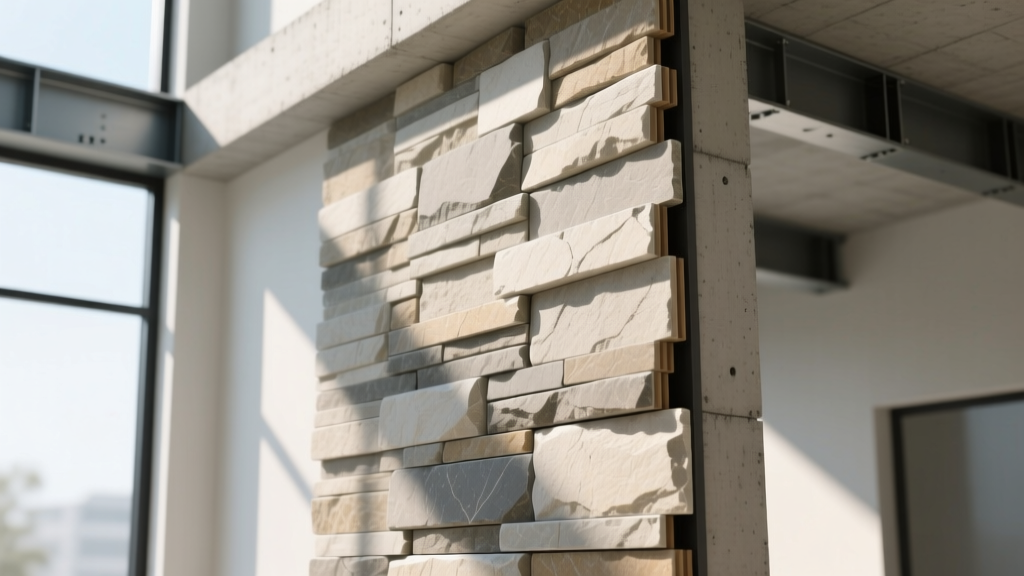
Deciding where to buy stacked stone veneer requires looking beyond aesthetic samples and evaluating the technical specifications tied to each sourcing channel. The vendor you choose dictates your access to verifiable ASTM testing data, structural load documentation, and critical ancillary materials like corrosion-resistant flashing and self-furring lath. In 2026, with stricter building envelope codes regarding moisture management and seismic weight limits, sourcing from a channel that cannot provide certified mill reports or batch-testing data introduces severe liability and failure risks.
Sourcing Channels & Technical Trade-Offs
The availability of technical documentation and specialized ancillary products varies drastically between retail, wholesale, and direct manufacturing channels. Below is a comparative analysis of where to purchase based on project specification requirements.
| Vendor Type | Product Range & Spec Depth | Ancillary Material Availability | Lead Time & Minimums | Best Application |
|---|---|---|---|---|
| Big Box Retailers | Limited to 3-5 manufactured lines; basic weight data only. | Poor. Rarely stock proper masonry flashing or weep vents. | Immediate in-store; special orders 2-3 weeks. | Interior accent walls, non-structural cosmetic flips. |
| Specialty Masonry Supply | Extensive natural and manufactured; full ASTM C1670/C616 documentation. | Excellent. Stocks Type N/S mortar, 2.5lb lath, copper flashing. | 1-2 weeks; pallet minimums usually apply. | Exterior cladding, commercial builds, high-moisture zones. |
| Direct Manufacturers | Custom color matching; full batch-specific lab test reports. | Variable. Often require you to source mortar/lath locally. | 4-8 weeks; high square footage minimums (e.g., 500+ sq ft). | Large-scale commercial, custom architectural specifications. |
Mandatory ASTM Standards to Verify Before Purchasing
When evaluating where to buy stacked stone veneer, your primary filter must be the vendor's ability to provide proof of compliance with specific ASTM International standards. If a supplier cannot produce a recent Certificate of Compliance for the following, do not purchase their product for exterior applications.
Manufactured Stone (ASTM C1670/C1670M)
Manufactured stacked stone is a composite of Portland cement, lightweight aggregates, and iron oxide pigments. Under ASTM C1670, the material must meet strict thresholds:
- Compressive Strength: Minimum 1,800 psi when tested per ASTM C140.
- Flexural Strength: Minimum 450 psi.
- Water Absorption: Must not exceed 22% by weight. High absorption leads to spalling and efflorescence.
- Freeze-Thaw Durability: Must survive 50 cycles with less than 1% weight loss and no visual degradation.
Natural Stone (ASTM C568 & C616)
If sourcing natural limestone or quartz-based stacked stone, verify the supplier grades the stone correctly. Exterior natural veneer must be classified as "Select" or "Standard" grade, not "Commercial," which permits higher densities of natural fissures and clay pockets that will delaminate under thermal cycling.
Weight Load, Thickness, and Substrate Specifications
The physical dimensions of stacked stone veneer directly impact your structural engineering requirements and substrate preparation. The National Concrete Masonry Association (NCMA) and the Masonry Veneer Manufacturers Association (MVMA) provide strict guidelines on weight distribution that your supplier must help you calculate.
Wood-framed walls supporting stacked stone veneer must not exceed an L/360 deflection limit under lateral wind loads. Natural stacked stone averages 18 to 25 lbs per square foot, while manufactured versions range from 10 to 14 lbs per square foot. Always require your masonry supplier to provide the exact dead load per square foot for the specific profile you are purchasing to ensure your wall ties and framing spacing (typically 16" on center) are engineered correctly.
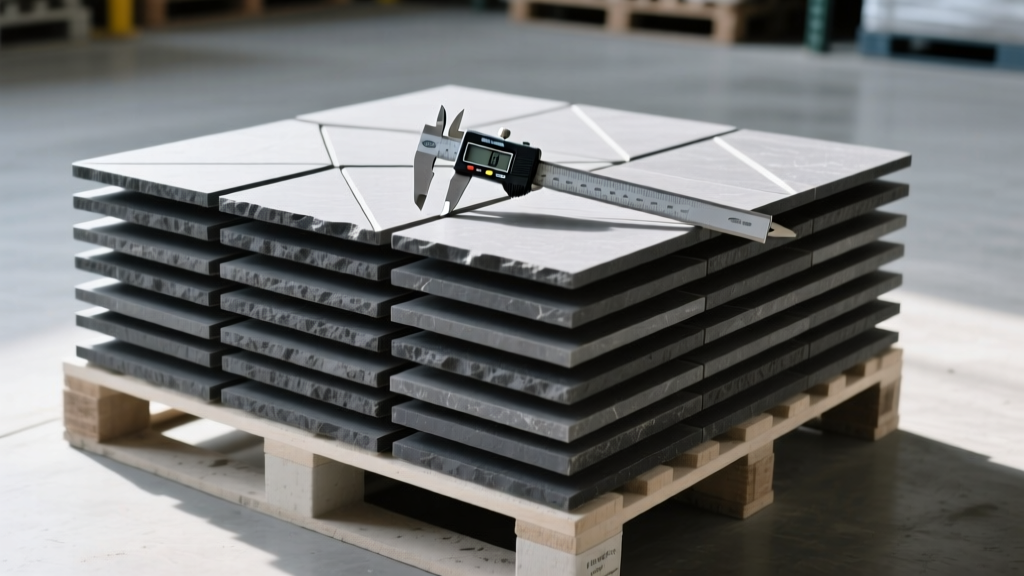
Thickness Tolerances: Manufactured stacked stone typically ranges from 0.5 inches at the thinnest edge to 3.5 inches at the thickest. Natural stone can protrude up to 6 inches. When buying from a masonry supplier, request the "projection depth" specification to ensure your window and door jambs have been ordered with the correct extension depths to accommodate the veneer and mortar scratch coat.
Climate Sourcing: Freeze-Thaw and Water Absorption
Geography dictates where you should buy stacked stone veneer. Regional climate zones require specific material formulations that national big-box chains often fail to segment properly.
Cold Climate Thresholds (Zones 5-8)
In regions experiencing severe freeze-thaw cycles, water absorption is the primary failure vector. When water penetrates the capillary network of the stone and freezes, it expands by 9%. If you are building in these zones, you must source from specialty masonry suppliers who carry products treated with integral water repellents or those that boast a water absorption rate below 15% (well under the 22% ASTM maximum). Furthermore, you must purchase corrosion-resistant weep vents and flashing from the same supplier to manage hydrostatic pressure behind the veneer.
Coastal and High-Salinity Environments
For projects within 5 miles of a saltwater coast, avoid natural sandstones and highly porous limestones sourced from generic retailers. Salt crystallization within the stone matrix causes rapid contour scaling. Source high-density manufactured stone or quartzite from specialized coastal masonry distributors who utilize sulfate-resistant Portland cement (ASTM C150 Type V) in their casting mixtures.
Ancillary Material Sourcing: The Hidden Technical Requirements
Knowing where to buy the stone is only half the equation; sourcing the correct installation materials is where most residential projects fail technical inspections. Specialty masonry suppliers are the only reliable source for code-compliant ancillary materials.
- Wire Lath: Must be self-furring, galvanized, and weigh a minimum of 2.5 lbs per square yard (ASTM C847). Big box stores frequently stock 1.0 lb non-galvanized lath, which will rust and expand, cracking the scratch coat.
- Mortar: Must comply with ASTM C270. Use Type N (750 psi compressive strength) for standard veneer applications. Type S (1,800 psi) is required for high-seismic zones or areas subject to extreme lateral wind loads. Do not use standard brick mortar or tile thinset.
- Flashing: Must be corrosion-resistant. Acceptable materials include 16 oz copper (ASTM B370) or minimum G90 galvanized steel (ASTM A653). Avoid PVC or peel-and-stick bitumen flashings directly behind masonry, as the alkalinity of the mortar scratch coat will degrade the adhesives and bitumen over time.
Cost vs. Technical Yield Analysis
When comparing pricing across vendors, you must calculate the "technical yield"—the actual installed cost factoring in waste, corner piece premiums, and the cost of required ancillary materials that discount retailers fail to stock.
| Cost Metric (2026) | Big Box Retailer | Specialty Masonry Supply | Direct Manufacturer |
|---|---|---|---|
| Base Material (Manufactured) | $9.50 - $13.00 / sq ft | $8.00 - $12.50 / sq ft | $7.50 - $11.00 / sq ft |
| Base Material (Natural) | $18.00 - $28.00 / sq ft | $15.00 - $35.00 / sq ft | $14.00 - $30.00 / sq ft |
| Corner Pieces (Linear Ft) | $14.00 - $22.00 / LFT | $11.00 - $18.00 / LFT | $10.00 - $16.00 / LFT |
| Expected Waste Factor | 10% - 15% (inconsistent dye lots) | 5% - 8% (batch-matched) | 3% - 5% (custom run) |
| Ancillary Material Markup | High (special order fees) | Low (bulk pallet pricing) | N/A (sourced separately) |
While big box retailers may appear convenient for small interior projects, the lack of batch-matching and the inability to source proper masonry flashing and Type N mortar makes them a technically inferior choice for exterior cladding. For any project subject to municipal building inspections, moisture management codes, or structural load reviews, specialty masonry suppliers provide the necessary technical documentation, code-compliant ancillary materials, and verified ASTM testing data required to ensure a lasting, failure-free installation.
Written by
Marcus ChenMarcus Chen is a licensed structural engineer (PE) and building materials analyst with over 12 years of experience across residential, commercial, and industrial construction. He holds a Master of Science in Civil Engineering from UC Berkeley and spent six years at Thornton Tomasetti before transitioning to independent consulting and technical writing. Marcus specializes in material selection for seismic-prone regions, concrete reinforcement strategies, and lifecycle cost analysis. His work has been cited by the American Concrete Institute (ACI) and the Structural Engineers Association of California (SEAOC). When he is not on a job site or at his desk, you will find him hiking the Sierra Nevada or restoring a 1920s craftsman bungalow in Oakland, CA.
More from Marcus Chen
View all
Construction Cost
How Much Did the Eiffel Tower Cost to Build?
How much did the Eiffel Tower cost to build in 1889? We adjust for inflation and compare its budget to modern skyscraper construction.
Aug 4, 2026

Fire Resistance
What Is a Fire Resistant Material? Testing & Certification Guide
Discover what is a fire resistant material through ASTM and UL testing. Learn how fire ratings, certifications, and assemblies work in construction.
Aug 4, 2026

Construction Cost
How Much Did the Burj Khalifa Cost to Build?
How much did the Burj Khalifa cost to build? We break down the $1.5B project and extract 5 money-saving strategies for your next build.
Jul 30, 2026