White Stone Veneer Exterior: Natural vs. Manufactured Comparison
Compare natural and manufactured white stone veneer exterior options. Analyze costs, UV stability, installation, and failure modes for your build.
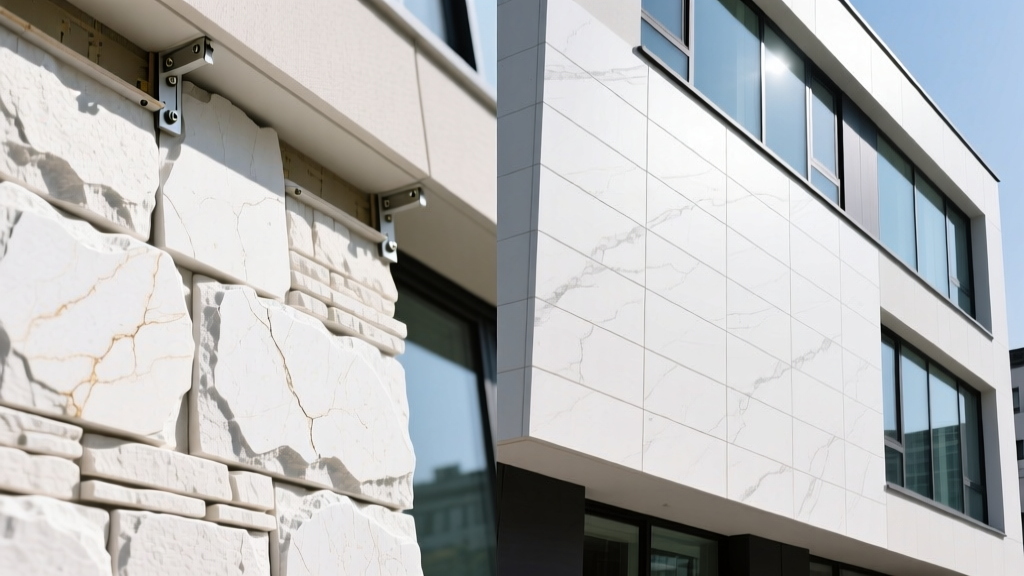
The Core Dilemma: Natural vs. Manufactured White Stone
White stone veneer has become a dominant force in exterior architectural design, driven by the enduring popularity of modern farmhouse, coastal, and contemporary transitional styles. However, specifying a white stone veneer exterior requires navigating a critical material decision: natural thin stone veneer (NTV) versus manufactured stone veneer (MSV). While both deliver the desired aesthetic, their structural properties, installation requirements, and long-term weathering behaviors diverge significantly. This comparison dissects the technical specifications, cost structures, and failure modes of white exterior stone to guide your material selection.
Material Breakdown: What Are You Actually Buying?
Natural White Thin Stone Veneer (NTV)
Natural white veneer is quarried and sliced into 0.75-inch to 1.5-inch thick profiles. Common white varieties include Oklahoma White Ledge, Alpine White Quartzite, and White Marble. Because it is a natural product, color consistency varies by batch, and the stone possesses inherent geological fault lines.
- Pro: Unmatched authenticity; zero UV fading; unique geological texturing.
- Pro: High compressive strength (often exceeding 10,000 psi).
- Con: Heavy (10-15 lbs per sq. ft.), requiring structural verification for multi-story applications.
- Con: Natural porosity requires high-quality penetrating sealers in freeze-thaw climates.
Manufactured Stone Veneer (MSV)
MSV is cast in molds taken from natural stone using a mixture of Portland cement, lightweight aggregates, and iron oxide pigments. Premium white MSV lines, such as Cultured Stone's Alpine White or Eldorado Stone's Whitecap, utilize specialized white cement bases to prevent the gray undertones common in cheaper alternatives.
- Pro: Lighter weight (8-12 lbs per sq. ft.) and uniform thickness for faster installation.
- Pro: Color consistency across large commercial or residential elevations.
- Con: Susceptible to chipping; the interior aggregate color may contrast with the white surface pigment.
- Con: Lower-end MSV uses synthetic dyes that yellow under prolonged UV exposure.
Head-to-Head Comparison Matrix
| Feature | Natural White Thin Veneer | Cementitious MSV | Polyurethane Faux Stone |
|---|---|---|---|
| Material Cost (per sq. ft.) | $12.00 - $18.00 | $7.50 - $11.00 | $11.00 - $14.00 |
| Weight | 10 - 15 lbs / sq. ft. | 8 - 12 lbs / sq. ft. | 1 - 2 lbs / sq. ft. |
| UV Stability | Excellent (Inherent) | Good (Requires Iron Oxide) | Fair (Requires UV Inhibitors) |
| Installation Method | Mortar / Lath / Scratch Coat | Mortar / Lath / Scratch Coat | Mechanical Fasteners / Adhesive |
| Freeze-Thaw Durability | High (Depends on stone density) | Moderate to High (ASTM C1670) | High (Non-porous) |
The Hidden Costs: Substrate Preparation and Moisture Management
The material cost of white stone veneer is only a fraction of the total installed price. Both NTV and cementitious MSV require identical, rigorous substrate preparation to prevent catastrophic water intrusion. According to the Masonry Veneer Manufacturers Association (MVMA), adhered veneer systems must incorporate a weather-resistive barrier (WRB), corrosion-resistant metal lath, and a scratch coat.
For a standard 1,000 sq. ft. exterior elevation, expect the following hidden costs:
- WRB and Flashing: $1.50 - $2.50 per sq. ft. (Using a dimpled drain mat like Keene Driwall is highly recommended for white stone to prevent efflorescence).
- Metal Lath and Scratch Coat: $2.00 - $3.50 per sq. ft.
- Weep Screed Installation: International Building Code (IBC) mandates a weep screed placed a minimum of 4 inches above grade or 2 inches above paved surfaces. Omitting this on a white veneer exterior guarantees ground-splash staining and moisture wicking.
Polyurethane faux stone bypasses the lath and mortar requirement, screwing directly into wall sheathing or furring strips. While the material is more expensive than basic MSV, the labor savings often make it cost-competitive for DIY or rapid commercial facades.
Critical Failure Modes in White Exterior Stone
White stone veneer exposes specific vulnerabilities that darker stones can hide. Addressing these during the design phase is non-negotiable.
1. Efflorescence and Mineral Staining
Efflorescence occurs when water-soluble salts migrate through the mortar and stone, crystallizing on the surface. While white efflorescence is invisible on white stone, the crystalline pressure causes micro-spalling (surface flaking). More dangerously, if the substrate contains unsealed red clay brick or iron-rich soils, water runoff will deposit rust and tannin stains on the white veneer. Solution: Use a low-alkali Portland cement mortar and apply a breathable, siloxane-based penetrating sealer post-installation.
2. UV Yellowing in Manufactured Stone
Cheap MSV utilizes organic dyes to achieve bright white tones. Under direct UV exposure, these dyes degrade, resulting in a patchy, yellowed appearance within 3 to 5 years. Solution: Verify that the manufacturer uses inorganic iron oxide pigments and white Portland cement as the base binder. Refer to ASTM C1670 standards for manufactured stone weathering requirements.
3. Differential Thermal Expansion
Polyurethane stone panels expand and contract at a significantly higher rate than cementitious MSV or natural stone. If installed tightly without the manufacturer-specified 1/8-inch expansion gaps at joints and corners, the panels will buckle and pop fasteners during summer heatwaves.
Decision Framework: Which White Veneer Fits Your Project?
Use this practical framework to finalize your specification:
Choose Natural White Thin Veneer If:
- You are building a high-end custom residence where geological authenticity is paramount.
- The design incorporates heavy, deep-profile ledge stones that manufactured molds cannot accurately replicate.
- You have the structural budget to support 15 lbs per sq. ft. and the timeline for a multi-step masonry installation.
Choose Cementitious MSV If:
- You need strict color consistency across a large commercial facade or multi-home development.
- You require a thinner profile (under 1 inch) to align flush with adjacent brick or stucco materials without building out the substrate.
- Budget constraints limit natural stone procurement, but you still require a mineral-based, fire-rated exterior assembly.
Choose Polyurethane Faux Stone If:
- You are retrofitting an existing structure where adding 10+ lbs per sq. ft. requires expensive structural reinforcement.
- The project is in an extreme freeze-thaw climate where the non-porous nature of polyurethane eliminates water-absorption spalling risks.
- Labor shortages or tight deadlines preclude the 3-day lath, scratch, and mortar curing process.
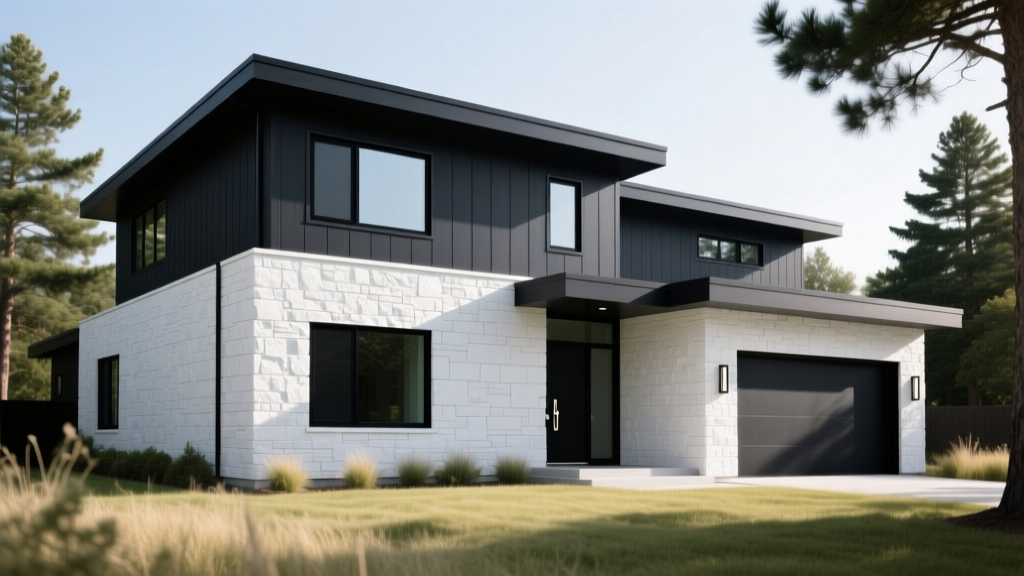
Final Specification Notes for Architects and Builders
When detailing a white stone veneer exterior, moisture management is your primary defense against callback repairs. The Building Science Corporation strongly advocates for a ventilated drainage space behind all adhered masonry veneers. By incorporating a 3/16-inch dimpled drain mat between the WRB and the metal lath, you provide a capillary break that allows incidental moisture to drain freely to the weep screed. This single detailing upgrade, costing roughly $1.50 per square foot, effectively eliminates the hydrostatic pressure that causes efflorescence and freeze-thaw spalling, ensuring your white stone veneer remains pristine for decades.
Written by
David NakamuraDavid Nakamura is a licensed architect (AIA) and construction technology writer focused on sustainable building methods, mass timber engineering, and high-performance building envelopes. He holds a Master of Architecture from the University of Washington and is a certified Passive House Consultant (CPHC). David spent eight years at the Seattle firm Mithun, where he led the design of three LEED Platinum projects, before founding his own practice specializing in net-zero residential design. He serves on the editorial advisory board of GreenBuilder Magazine and has authored peer-reviewed papers on cross-laminated timber (CLT) connections for the Journal of Structural Engineering. In his spare time, David teaches woodworking at Pratt Fine Arts Center and kayaks the Puget Sound.
More from David Nakamura
View all
Construction Cost
Labor Cost to Build a Deck Per Sq Ft: 2026 Installation Guide
Discover the exact labor cost to build a deck per sq ft in 2026. This installation guide breaks down contractor rates, complexity factors, and hidden fees.
Aug 4, 2026

Construction Cost
How Much Does It Cost to Build a 3 Bedroom House? Financing Guide
Learn exactly how much it costs to build a 3 bedroom house and explore 2026 financing options, construction loan types, and budget frameworks for your build.
Aug 4, 2026

Construction Cost
Cost to Build a Tennis Court: 2026 Guide
How much does it cost to build a tennis court in 2026? Breakdowns for asphalt, concrete, and synthetic surfaces plus fencing and lighting.
Jul 30, 2026