When a Sustainable Building Material Justifies the Cost
Analyze the true ROI of sustainable building materials. Compare upfront green premiums against lifecycle savings, tax incentives, and labor reductions.
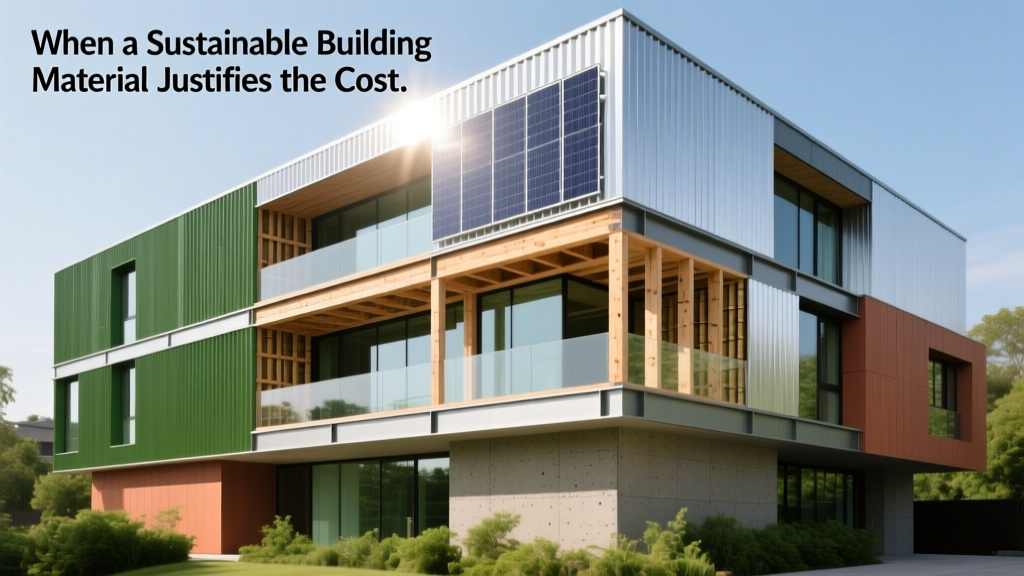
The 'Green Premium' Reality: Separating Myth from Math
The construction industry has long operated under the assumption that specifying a sustainable building material automatically triggers a 10% to 15% upfront cost penalty. This 'green premium' myth frequently derails eco-friendly specifications during the value engineering phase. However, granular cost data from 2025 and 2026 project bids reveals a different reality: while certain high-performance envelopes carry a premium, many structural and interior sustainable materials now achieve cost parity—or even deliver immediate net savings—when labor, schedule, and lifecycle operational costs are factored in.
According to the U.S. Environmental Protection Agency (EPA), the true cost of building materials must be evaluated through Life Cycle Cost Analysis (LCCA), which accounts for initial capital, maintenance, energy consumption, and end-of-life disposal. When builders isolate only the initial purchase price, they leave significant capital on the table.
Upfront Cost vs. Lifecycle ROI: A Material Breakdown
To understand where the money actually goes, we must compare the per-square-foot or per-unit material costs of sustainable alternatives against their conventional counterparts. The table below reflects average commercial pricing for mid-rise construction in North America.
| Material Category | Sustainable Option | Conventional Equivalent | Upfront Premium | Estimated Payback Period |
|---|---|---|---|---|
| Structural Framing | Cross-Laminated Timber (CLT) | Steel / Poured Concrete | +8% to +12% | Immediate (via labor savings) |
| Insulation | Dense-Pack Cellulose | Closed-Cell Spray Foam | -15% to -20% | Immediate |
| Glazing | Triple-Pane Fiberglass | Dual-Pane Aluminum | +35% to +50% | 4 to 7 Years |
| Interior Partitions | Recycled Steel Studs | Virgin Wood Studs | 0% (Parity) | Immediate |
| Roofing | TPO with Solar Reflective | EPDM (Black) | +5% to +8% | 2 to 4 Years |
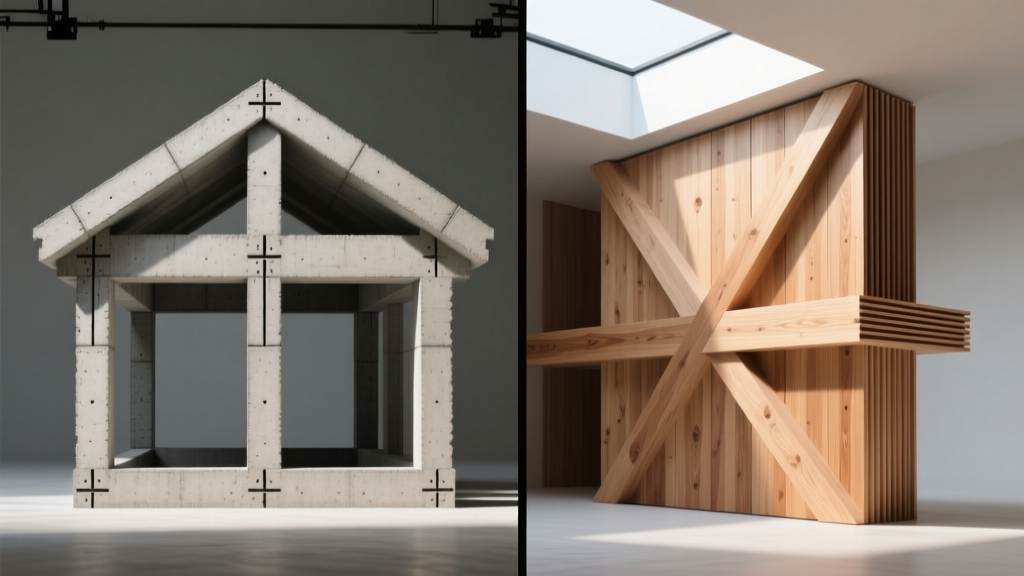
High-ROI Sustainable Materials: Where the Premium Pays Off
Not all green specifications are created equal. The following materials consistently demonstrate a positive return on investment by offsetting their initial costs through secondary construction savings.
1. Mass Timber (CLT and Glulam)
Cross-Laminated Timber (CLT) panels from manufacturers like Structurlam or DR Johnson typically cost $12 to $16 per square foot for the raw panels, compared to $10 to $14 for equivalent steel decking and concrete topping. However, the upfront material premium is rapidly neutralized on the job site. CLT panels arrive pre-cut with CNC precision, reducing framing labor hours by up to 25%. Furthermore, because mass timber is roughly 20% lighter than concrete, structural engineers can reduce the size and depth of the building's foundation, saving $3 to $5 per square foot on substructure costs. The material also accelerates the dry-in schedule by 20%, reducing general conditions and financing costs.
2. High-Performance Glazing (Triple-Pane Fiberglass)
Specifying triple-glazed fiberglass windows (such as those from Alpen High Performance Products) can push the fenestration budget up by 40% compared to standard dual-pane aluminum units. The financial justification lies in HVAC downsizing. By dropping the window U-factor from 0.35 to 0.15, the building's peak heating and cooling loads decrease significantly. In commercial projects, this often allows engineers to eliminate perimeter baseboard heating and downsize the central chiller plant by 15% to 20%, recouping the window premium entirely through mechanical equipment savings before the building even opens.
Always run an energy model (using tools like EnergyPlus or IESVE) before finalizing window specifications. If the triple-pane upgrade costs $40,000 but allows you to eliminate a $45,000 rooftop RTU and 500 linear feet of ductwork, the sustainable building material has effectively paid for itself on day one.
The LCCA Framework: Calculating True Material Value
To defend a sustainable material specification to a client or financial backer, rely on the Department of Energy's standardized Life Cycle Cost Analysis framework. The DOE LCCA methodology calculates the total cost of ownership using the following core components:
- Initial Investment (I): Purchase price, delivery, and installation labor.
- Replacement Costs (Repl): Expected material lifespan and replacement frequency over a 30- or 50-year study period.
- Energy & Water (E, W): Operational utility savings driven by the material's thermal or hydrological properties.
- O&M Costs (OM&O): Routine maintenance, such as repainting, resealing, or cleaning.
For example, a fiber-cement siding product (like James Hardie) with high recycled content may carry a 15% higher initial investment than vinyl siding. However, vinyl requires replacement every 20-25 years and is prone to impact cracking, whereas fiber-cement carries a 50-year warranty with minimal maintenance. When discounted to present value, the fiber-cement option yields a lower LCC.
Hidden Financial Catalysts: Tax Incentives and Insurance
The financial equation for sustainable materials extends beyond the construction site. Federal tax codes and commercial insurance underwriters increasingly reward verifiable green building practices.
Section 179D Commercial Buildings Energy-Efficiency Tax Deduction
Under current IRS guidelines, commercial buildings that achieve a 25% to 50% reduction in energy and power costs can qualify for the 179D tax deduction. For 2026, the maximum deduction scales up to $5.00 per square foot for a 50% energy reduction (adjusted for inflation). Specifying high-R-value continuous insulation, cool roofing, and advanced daylighting glazing directly contributes to hitting these thresholds, effectively subsidizing the material premium through tax liability reduction.
Green Building Insurance Discounts
Major commercial property insurers, including Chubb and Zurich, now offer premium discounts of 2% to 5% for buildings certified under LEED or similar green rating systems. The underwriting logic is data-driven: sustainable buildings often utilize more durable, moisture-resistant materials and advanced building automation systems that detect leaks or electrical faults early, resulting in fewer and less severe insurance claims over the asset's life.
Do not specify sustainable materials solely to chase LEED points without verifying the supply chain. If a specified low-VOC adhesive or FSC-certified lumber is backordered for 14 weeks, the resulting schedule delay and liquidated damages will instantly wipe out any lifecycle savings or tax benefits. Always require the general contractor to provide a secondary, pre-approved sustainable alternate in the procurement log.
Decision Matrix: When to Approve the Premium
Use this framework during the value engineering phase to determine whether a specific sustainable building material should be retained or cut from the budget.
- Does it reduce downstream trade labor? If a prefabricated sustainable panel system reduces framing and sheathing labor by more than 15%, retain it regardless of material cost.
- Does it shrink the mechanical footprint? If the material's thermal performance allows for a reduction in HVAC tonnage, the material cost should be evaluated as a net-zero line item.
- Is the maintenance interval doubled? If the material extends the replacement cycle from 15 years to 30+ years, the LCCA will almost always favor the sustainable option in commercial real estate hold periods.
- Is it purely aesthetic or ideological? If the material offers no operational, structural, or labor advantage and simply carries an eco-label (e.g., imported bamboo flooring vs. local polished concrete), cut it if the budget is constrained.
Ultimately, the financial viability of a sustainable building material is rarely about the invoice from the supplier. It is about how that material alters the labor schedule, shrinks the mechanical systems, reduces the tax burden, and lowers the operational overhead. By shifting the evaluation from initial cost to lifecycle value, builders can confidently specify high-performance materials that protect both the environment and the project's profit margin.
Written by
Sarah WhitfieldSarah Whitfield is a chartered quantity surveyor (MRICS) and construction cost analyst with 15 years of experience in material pricing, procurement strategy, and project budgeting. She earned her degree in Construction Management from the University of Reading (UK) and has worked on projects ranging from $2M custom homes to $180M mixed-use developments across North America and Europe. Sarah currently leads cost estimating for BuildMat Insight, maintaining a proprietary database of 4,000+ material price points updated quarterly. She is a frequent contributor to RSMeans cost data panels and has presented at the International Cost Engineering Council (ICEC) congress. Based in Denver, CO, Sarah is an avid trail runner and volunteer mentor for Women in Construction.
More from Sarah Whitfield
View all
Wood & Lumber
What Are the Different Types of Wood? A Builder's Guide
Compare structural softwoods, finish hardwoods, and engineered lumber. Analyze Janka ratings, MOE values, and 2026 pricing for construction.
Aug 4, 2026

Walls & Panels
Steel Framing vs Wood Framing: Corrosion and Moisture Defense
Compare steel framing vs wood framing for moisture resistance. Learn about galvanized coatings, condensation risks, and corrosion protection strategies.
Jul 21, 2026

Stone & Masonry
How to Cut Stone Veneer: Wet Saw vs Grinder Comparison
Compare the best tools for cutting stone veneer. We review wet saws, angle grinders, and chop saws to help you achieve clean, chip-free cuts.
Jul 21, 2026