Asbestos Siding Scenarios: When to Remove, Encapsulate, or Overclad
Navigate asbestos siding decisions with our scenario-matching guide. Compare costs and methods for removal, encapsulation, and overcladding.
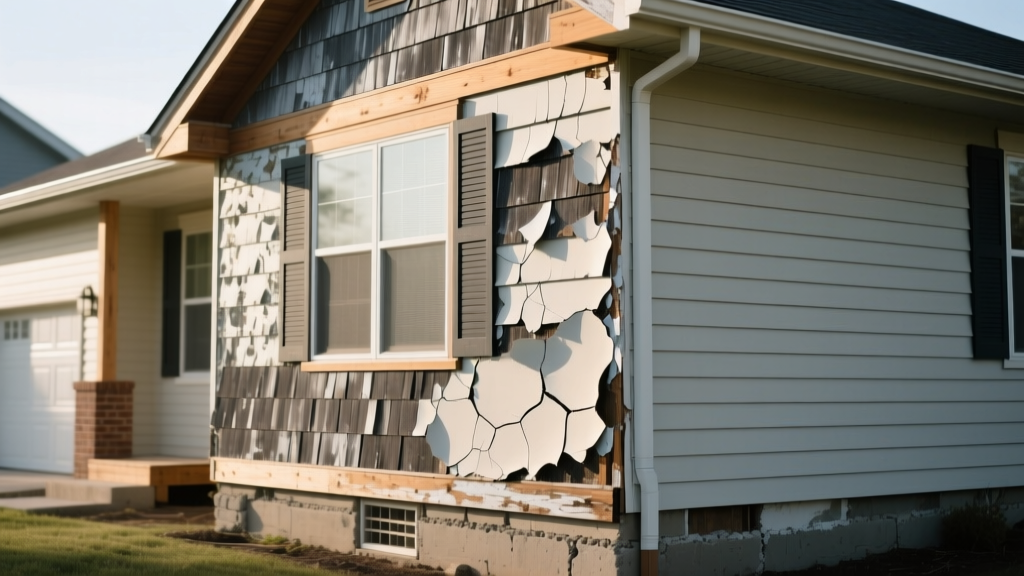
The Reality of Asbestos Cement Siding in Modern Renovations
Asbestos cement siding, historically marketed under the brand name Transite, was installed on millions of homes between the 1930s and 1970s. Composed of Portland cement reinforced with 10% to 15% chrysotile asbestos fibers, this material is exceptionally durable, fireproof, and rot-resistant. However, its legacy status creates complex decision-making for modern homeowners and contractors.
Unlike friable asbestos (such as pipe insulation or acoustic ceiling texture), asbestos cement siding is considered non-friable when intact. The cement matrix tightly binds the fibers, meaning they will not become airborne under normal conditions. The danger arises only when the material is sanded, dry-scraped, power-washed at high pressures, or smashed during demolition. Therefore, the decision to remove, encapsulate, or overclad must be driven by the physical condition of the siding, your renovation goals, and your budget.
Scenario Matching Matrix: Decision Framework
Use this matrix to determine the optimal application-fit for your specific property scenario.
| Property Scenario | Siding Condition | Recommended Action | Primary Advantage |
|---|---|---|---|
| Long-term occupancy, tight budget | Intact, no crumbling, original paint failing | Encapsulation (Masonry Coating) | Lowest upfront cost, seals fibers |
| Modernizing facade, improving R-value | Intact but aesthetically dated | Overcladding (Furring + New Siding) | Avoids abatement costs, adds insulation |
| Gut-renovation or structural repairs | Cracked, crumbling, or drilling required | Professional Abatement & Removal | Eliminates liability, allows structural work |
| Preparing home for immediate sale | Intact but peeling paint | Encapsulation or Seller Credit | Satisfies FHA/VA appraisal paint requirements |
Scenario 1: Intact Siding and Long-Term Occupancy (Encapsulation)
If the asbestos siding is structurally sound and you plan to remain in the home, encapsulation is the most cost-effective and legally safe route. Encapsulation involves applying a heavy-duty, elastomeric masonry coating that locks the surface fibers in place and provides a fresh, modern finish.
Technical Application Steps
- Low-Pressure Cleaning: Wash the surface using a garden hose or a pressure washer set to a maximum of 1,500 PSI. Hold the wand at least 18 inches from the surface.
- Biocide Treatment: Apply a sodium hypochlorite or copper-based fungicide to kill mildew, which commonly grows on the porous cement surface. Rinse thoroughly.
- Priming: Apply a high-alkali-resistant masonry primer. Asbestos cement is highly alkaline (pH 11-13), which will saponify and destroy standard acrylic latex paints.
- Elastomeric Topcoat: Apply two coats of a 100% acrylic elastomeric masonry coating (e.g., Sherwin-Williams Loxon or Sherwin-Williams ConFlex). These coatings build a thick dry film (15-20 mils) that bridges hairline cracks and flexes with thermal expansion.
Scenario 2: Modernizing the Facade (Overcladding)
When the existing siding is intact but you desire the aesthetic of modern fiber cement (like James Hardie) or insulated vinyl, overcladding is the optimal scenario match. Leaving the asbestos siding in place acts as a rigid, fireproof backer board while you build a new exterior wall assembly over it.
The Overcladding Assembly
- Furring Strips: Attach 1x3 or 1x4 pressure-treated wood furring strips vertically over the existing siding, screwing directly into the wall studs using 3.5-inch structural screws.
- Rigid Insulation: Fit 1-inch to 2-inch polyisocyanurate (polyiso) rigid foam boards between the furring strips. This dramatically improves the wall's R-value and mitigates thermal bridging.
- Weather-Resistive Barrier (WRB): Staple a modern house wrap (e.g., Tyvek) or a fluid-applied WRB over the furring strips to manage bulk water and air infiltration.
- New Cladding: Install your chosen siding material horizontally or vertically onto the furring strips.
Scenario 3: Damage, Demolition, or Gut-Renovation (Abatement)
If the siding is actively crumbling, if you need to replace underlying wall sheathing, or if you are adding new windows that require cutting through the transite panels, full abatement is mandatory. Once asbestos cement is broken, drilled, or snapped, it becomes friable and releases microscopic fibers.
Abatement must follow the Environmental Protection Agency (EPA) NESHAP guidelines and state-specific environmental regulations. The process requires wetting the siding with amended water (water mixed with a surfactant to penetrate the cement), carefully prying the shingles off without breaking them, and sealing them in 6-mil polyethylene bags.
Disposal is heavily regulated. Asbestos waste cannot go to standard municipal landfills; it must be transported to a licensed hazardous waste facility. Landfill tipping fees for asbestos typically range from $150 to $350 per ton, significantly impacting the overall project budget.
2026 Cost Breakdown: Encapsulation vs. Overcladding vs. Abatement
The following table illustrates estimated costs for a standard 2,000-square-foot exterior wall area in the 2026 market.
| Method | Cost Per Sq. Ft. | Total Est. (2,000 sq ft) | Timeline |
|---|---|---|---|
| Encapsulation (Pro Application) | $2.50 - $4.50 | $5,000 - $9,000 | 3 - 5 Days |
| Overcladding (Vinyl over Furring) | $9.00 - $14.00 | $18,000 - $28,000 | 2 - 3 Weeks |
| Overcladding (Fiber Cement) | $14.00 - $22.00 | $28,000 - $44,000 | 3 - 4 Weeks |
| Full Abatement & Disposal Only | $8.00 - $15.00 | $16,000 - $30,000 | 1 - 2 Weeks |
Note: Abatement costs do not include the price of installing replacement siding. If you abate, you must budget for abatement PLUS new siding installation.
Real Estate Implications: Selling a Home With Asbestos Siding
When matching the scenario of a pending home sale, the presence of asbestos siding triggers specific financial and legal hurdles. While federal law does not require you to remove asbestos siding before selling, most states mandate strict disclosure of known asbestos-containing materials (ACMs) to prospective buyers.
The most common friction point occurs during government-backed financing. FHA and VA appraisers will flag peeling, chipping, or flaking paint on any exterior surface. If the paint on your asbestos siding is failing, the appraiser will require it to be scraped and repainted to pass the property condition requirements. Because scraping asbestos is illegal and hazardous, the only compliant solution is to hire a certified encapsulation contractor to apply a new masonry coating over the failing paint, or to offer a seller credit for the buyer to manage the remediation.
Frequently Asked Questions
Can I nail or drill into asbestos siding to mount fixtures?
No. Drilling or nailing fractures the cement matrix and releases fibers. If you must mount exterior lighting, house numbers, or shutters, use a specialized diamond-tipped hole saw while continuously spraying the cut zone with water to suppress dust, or better yet, mount fixtures to the trim and fascia rather than the siding itself.
Does asbestos siding lower my home's resale value?
Intact, well-maintained, and properly painted asbestos siding rarely lowers a home's appraised value. However, damaged, crumbling, or heavily weathered asbestos siding will deter conventional buyers and lower the final sale price, as buyers will factor the $15,000+ abatement cost into their offers.
How can I definitively identify asbestos siding?
Visual identification is unreliable, though transite shingles often feature a distinct wood-grain or wavy pattern and measure 12x24 inches. The Consumer Product Safety Commission (CPSC) advises that the only definitive method is to hire a certified asbestos inspector to take a small core sample for Polarized Light Microscopy (PLM) laboratory analysis, which typically costs between $150 and $300.