How to Get Rid of Stucco Ceilings: Exterior Soffit Removal Cost Guide
Learn how to get rid of stucco ceilings on exterior soffits. Includes 2026 removal costs, quantity calculators, and modern cladding material replacements.
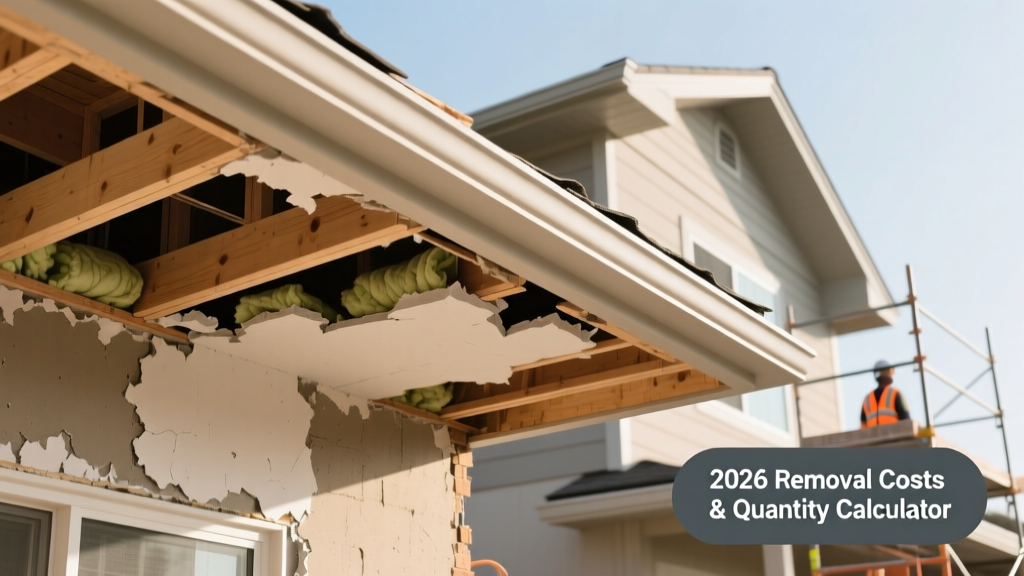
Bridging the Gap: Interior Texture vs. Exterior Cladding Soffits
When homeowners research how to get rid of stucco ceilings, they are typically referring to interior popcorn textures. However, in the context of the building envelope and exterior cladding, 'stucco ceilings' refer to the cementitious or synthetic finishes applied to exterior soffits, eaves, covered patios, and carport overhangs. Unlike interior drywall compound, exterior stucco soffits are typically applied over metal lath or exterior-grade gypsum board using Portland cement or Exterior Insulation and Finish Systems (EIFS). Removing this heavy, weather-exposed cladding requires specialized demolition techniques, structural assessments, and precise cost calculations.
⚠️ Critical Asbestos Warning for Pre-1980s Homes
Exterior stucco applied before 1980 frequently contains asbestos fibers mixed into the cement or synthetic binders for added tensile strength. According to the Environmental Protection Agency (EPA), disturbing asbestos-containing materials (ACM) without proper abatement releases hazardous fibrils. Budget $75 to $150 per sample for certified laboratory testing before initiating any mechanical scraping or demolition on older soffits.
Exterior Stucco Ceiling Removal Methods & Cost Matrix
The cost to remove exterior stucco ceilings depends entirely on the substrate beneath the finish and the chosen removal methodology. Below is the 2026 national average cost breakdown for professional removal, including labor, basic disposal, and site preparation.
| Removal Method | Best Application | Cost per Sq. Ft. | Labor Intensity |
|---|---|---|---|
| Wet Scraping | Synthetic EIFS or thin-coat veneer over intact drywall | $2.50 - $4.00 | Moderate |
| Full Lath & Board Tear-Off | Traditional 3-coat Portland cement over metal lath | $6.00 - $9.50 | High |
| Encapsulation (Skim Coat) | Sound stucco that requires a smooth modern finish | $3.50 - $5.50 | Low-Moderate |
Why Full Tear-Off is Often Mandatory for Exterior Soffits
Traditional 3-coat stucco (scratch, brown, and finish coats) applied to exterior ceilings is incredibly heavy, weighing up to 10 pounds per square foot. Over decades, water intrusion from clogged gutters or compromised roof flashing causes the metal lath to rust and the underlying wood furring strips to rot. Attempting to scrape the finish coat while leaving the compromised base coats in place is a critical failure point. A full tear-off down to the roof rafters or trusses ensures you can inspect the structural envelope, replace rotted fascia boards, and install proper ventilation channels.
The Soffit & Overhang Quantity Calculator
Accurate material estimation prevents project delays and budget overruns. Use this framework to calculate the exact square footage required for your exterior ceiling demolition and subsequent cladding replacement.
- Measure the Planar Area: Measure the length and width of the soffit or patio cover. (e.g., 40 linear feet of eaves × 2 feet of soffit depth = 80 sq. ft.).
- Account for Rakes and Returns: Add the surface area of any angled rakes (gable ends) or vertical returns. These complex geometries generate significant off-cuts.
- Apply the Waste Factor: For standard rectangular soffits, add a 12% waste factor. For complex overhangs with multiple penetrations (recessed can lights, HVAC vents, speaker mounts), increase the waste factor to 18%.
Estimator's Rule of Thumb: When ordering replacement vinyl or aluminum soffit panels, always round up to the nearest full box (typically 2 squares, or 200 sq. ft., per carton). Dye-lot variations between manufacturing runs can cause visible color banding if you run short and have to buy supplementary materials later.
Replacement Cladding: Modern Soffit Material Costs
Once the legacy stucco ceiling is removed, you must select a modern cladding material that provides weather resistance, aesthetic continuity with your siding, and crucial attic ventilation. The following matrix compares the leading soffit replacement materials for 2026.
| Material | Installed Cost / Sq. Ft. | Ventilation Capability | Durability & Maintenance |
|---|---|---|---|
| Vinyl Soffit (e.g., CertainTeed, Alside) |
$4.50 - $7.00 | Excellent (available in fully perforated or hidden vent profiles) | High impact resistance; zero painting required; may sag on wide spans exceeding 16-inch joist spacing. |
| Aluminum Soffit (e.g., Rollex, Prefinished Coil) |
$6.50 - $10.00 | Superior (rigid enough to support continuous micro-perforations without sagging) | Will not rot or rust; highly resistant to wind uplift; requires careful handling to prevent surface scratching. |
| Fiber Cement Soffit (e.g., James Hardie, Allura) |
$9.00 - $14.00 | Poor (solid panels require separate strip vents or spaced installation for airflow) | Unmatched rigidity and fire rating (ASTM E84 Class A); extremely heavy; requires specialized carbide-tipped cutting tools. |
Hidden Cost Variables to Budget For
Contractor estimates for removing stucco ceilings often omit secondary costs associated with the building envelope. Ensure your budget accounts for the following edge cases:
- Scaffolding and Pump Jacks: Exterior soffits on two-story homes or vaulted patio covers require specialized access. Expect to pay $250 to $500 per day for scaffolding erection and rental, adhering to OSHA scaffolding safety standards.
- Fascia and Sub-Fascia Repair: Once the stucco and lath are removed, you will likely find water damage on the 1x6 or 1x8 sub-fascia boards. Budget $8 to $12 per linear foot for pressure-treated lumber replacement and flashing integration.
- Hazardous Waste Disposal: If your pre-1980 stucco tests positive for asbestos, standard landfill disposal is illegal. Certified hazardous material bagging, transport, and landfill fees will add $1,200 to $3,500 to the total project cost, depending on the tonnage.
- Electrical and Lighting Relocation: Exterior stucco ceilings often house recessed can lights or ceiling fans embedded directly into the cement. Extracting these fixtures without damaging the wiring, and upgrading them to modern IC-rated, airtight LED wafer lights compatible with new soffit panels, adds $150 to $300 per fixture.
Step-by-Step Exterior Soffit Tear-Off Procedure
For contractors and advanced DIYers tackling traditional cementitious stucco soffits, following a systematic demolition sequence protects the adjacent siding and rooflines.
🛠️ Professional Demolition Sequence
- Isolate the Work Zone: Drape 6-mil polyethylene sheeting over the ground and adjacent siding. Tape the seams to prevent cement dust and rusted lath fragments from damaging landscaping or scratching exterior paint.
- Sever the Perimeter: Use a 4.5-inch angle grinder equipped with a diamond masonry blade to score a deep cut along the exact intersection where the soffit stucco meets the wall siding or fascia board. This prevents the stucco from tearing away the adjacent weather-resistive barrier (WRB) when pried loose.
- Pry the Lath: Insert a flat demolition bar (wonder bar) behind the metal lath at the furring strip locations. Apply leverage against the wood framing, not the drywall or sheathing, to pop the nails or staples.
- Extract Fasteners: Once the heavy stucco sheets are lowered, use a reciprocating saw with a metal-cutting bi-metal blade to slice through any remaining rusted nails embedded in the rafters, ensuring a flush surface for the new J-channel and soffit panels.
Frequently Asked Questions
Does removing exterior stucco soffits improve attic ventilation?
Yes. Traditional stucco soffits are typically solid, relying on separate, often clogged, aluminum strip vents nailed to the surface. By removing the stucco and installing continuous perforated vinyl or aluminum soffit panels, you can increase the net free ventilating area (NFVA) by up to 400%. This dramatically improves the intake side of your passive attic ventilation system, reducing summer cooling loads and preventing winter ice damming.
Can I install new cladding directly over the existing stucco ceiling?
While technically possible to fur out the existing stucco with 1x3 strapping and install vinyl soffit over it, this is highly discouraged. Encapsulating old stucco traps moisture against the building envelope, accelerating rot in the roof trusses. Furthermore, the added dead load of the new cladding, strapping, and existing heavy stucco may exceed the structural capacity of the overhang framing. Complete removal is the only code-compliant and structurally sound methodology.