How to Organize Siding Staging and Storage to Maximize Material Lifespan
Learn how to organize siding staging, storage, and maintenance to prevent pre-installation damage and maximize the durability and lifespan of your cladding.
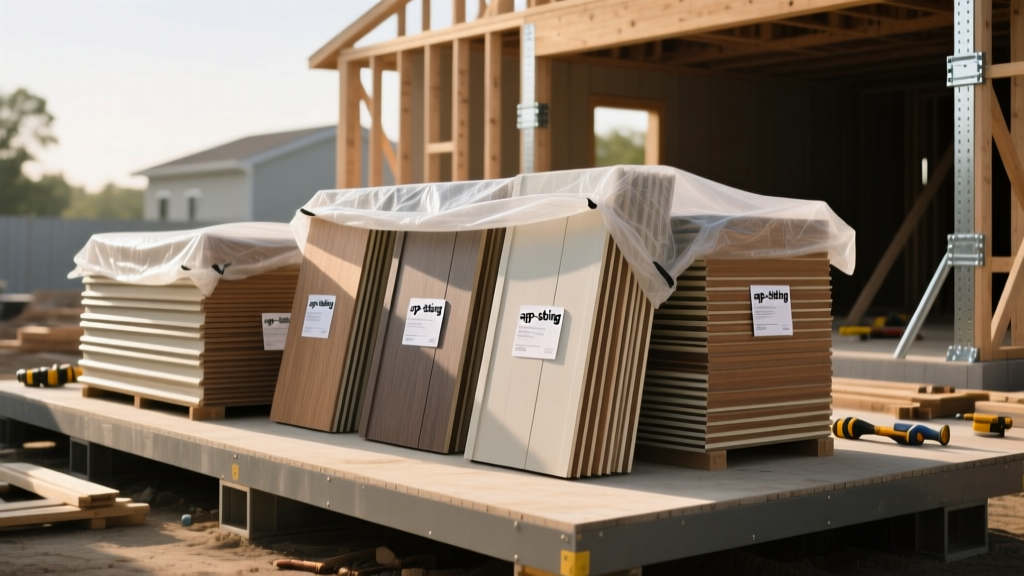
The Hidden Lifespan Killer: Pre-Installation Degradation
When evaluating the durability of exterior cladding, contractors and homeowners typically focus on the material's inherent properties, such as impact resistance or fire ratings. However, industry forensic analyses reveal that a significant percentage of premature siding failures—ranging from warped panels to delaminated joints—originate before the first fastener is even driven. Learning how to organize siding staging, storage, and lifecycle maintenance is a critical, often overlooked component of ensuring a 50-year lifespan.
Disorganized jobsites lead to material mishandling. When siding is stacked directly on soil, exposed to unmitigated UV radiation, or moved multiple times due to poor layout planning, the physical integrity of the cladding is compromised. According to building enclosure experts at the Building Science Corporation, moisture management and material handling are foundational to cladding performance. A panel of fiber cement that absorbs ground moisture before installation will shrink as it dries on the wall, pulling away from fasteners and opening joints to water intrusion.
How to Organize Siding Staging by Material Type
Different cladding materials react uniquely to environmental stressors while sitting on a pallet. Organizing your staging area requires segregating materials based on their specific vulnerabilities. The following matrix outlines the strict staging parameters required to preserve manufacturer warranties and long-term durability.
| Material Type | Max Stack Height | Ground Clearance | UV / Sun Exposure Limit | Moisture Tolerance & Covering |
|---|---|---|---|---|
| Fiber Cement | 4 Pallets | 4 inches minimum | Unlimited (if wrapped) | Zero tolerance for saturation; keep wrapped until use. |
| Vinyl / Polymer | 3 Pallets | 2 inches minimum | Max 48 hours direct sun | High tolerance, but must be shielded from UV heat distortion. |
| Engineered Wood | 3 Pallets | 4 inches minimum | Max 72 hours direct sun | Keep factory wrap intact; seal all field-cut edges immediately. |
| Natural Wood (Cedar) | 2 Pallets | 6 inches minimum | Avoid direct sun (dries out) | Must breathe; use breathable tarps, never solid polyethylene. |
| Metal (Steel/Aluminum) | 5 Pallets | 4 inches minimum | Unlimited | Prevent galvanic corrosion; keep away from wet concrete or soil. |
Fiber Cement: The Moisture and Shrinkage Trap
Fiber cement siding, such as James Hardie or Allura products, is highly durable once installed, but exceptionally vulnerable during staging. The James Hardie installation guidelines explicitly mandate keeping the product dry. If fiber cement absorbs moisture from a damp jobsite or rain exposure, it will expand. Once nailed to the wall and exposed to the sun, the material dries and shrinks. This shrinkage causes butt joints to open up to 1/4-inch—far exceeding the recommended 1/8-inch gap—and can cause fastener heads to pop through the face of the board. Always organize fiber cement staging on flat, elevated dunnage and leave the factory poly-wrap intact until the exact moment of installation.
Vinyl and Polymer: Thermal Distortion Risks
Vinyl siding has a high coefficient of linear thermal expansion. While it is designed to expand and contract on the wall, storing it improperly can cause permanent deformation. Dark-colored vinyl panels (such as charcoal, navy, or deep bronze) can reach surface temperatures exceeding 160°F when left in direct sunlight on a pallet. This intense, localized heat causes the panels to warp and bow permanently before they are even unpacked. Organize vinyl staging in shaded areas or under reflective, breathable tarps. The Vinyl Siding Institute emphasizes that panels must be stored flat and fully supported to prevent gravity-induced sagging over the edges of pallets.
Jobsite Layout: Organizing Workflow to Prevent Impact Damage
Organizing siding isn't just about how it sits on a pallet; it is about how it flows through the jobsite. Every time a bundle of siding is moved by a forklift or carried by hand, the risk of edge damage, corner crushing, and surface scratching increases exponentially.
- Point-of-Use Staging: Calculate the square footage required for each elevation and stage smaller, manageable bundles near the specific work zone rather than dropping a massive 5,000 sq. ft. load in the driveway.
- Protected Pathways: Ensure the path from the staging area to the scaffolding is clear of debris, rebar, and mud. Dropping a bundle of engineered wood on a rocky surface will compromise the bottom boards, leading to localized delamination years later.
- Vertical Storage Prohibition: Never lean siding bundles vertically against a wall or scaffold. This places uneven stress on the boards, causing micro-fractures in fiber cement and permanent bowing in wood and metal panels.
Post-Installation: Organizing the 50-Year Maintenance Lifecycle
Durability analysis extends far beyond the installation phase. A cladding system will only reach its maximum projected lifespan if the homeowner or facility manager organizes a structured maintenance and inspection schedule. Neglecting this phase reduces a 50-year product to a 20-year liability.
The Bi-Annual Cladding Audit
Organize a bi-annual inspection routine (spring and fall) focusing on the following critical failure points:
- Capillary Breaks and Clearances: Verify that siding maintains a minimum 6-inch clearance from the ground and a 2-inch clearance from rooflines. Vegetation must be trimmed back at least 24 inches from the wall surface to prevent moisture trapping and organic acid degradation.
- Sealant and Joint Integrity: Inspect all terminal joints, window perimeters, and penetrations. Polyurethane sealants typically have a lifespan of 10 to 15 years. Organize a resealing schedule before the sealant loses adhesion and allows bulk water behind the weather-resistive barrier (WRB).
- Fastener Corrosion: On metal and fiber cement siding, check for rust streaking around nail heads. This indicates the use of incorrect fasteners (e.g., electro-galvanized instead of hot-dipped galvanized or stainless steel) during installation, requiring immediate localized replacement to prevent structural blow-offs during high-wind events.
Lifecycle Cost Analysis: Organized vs. Disorganized Management
Failing to organize siding staging and maintenance carries a steep financial penalty. Disorganized staging leads to a 5% to 8% material waste factor due to job-site damage, compared to a 2% waste factor on well-managed sites. Furthermore, installing moisture-saturated fiber cement or thermally warped vinyl inevitably results in callback repairs within the first three years. By implementing strict material handling protocols and organizing a long-term maintenance calendar, property owners protect the structural sheathing behind the cladding, avoiding catastrophic rot remediation costs that can exceed $15,000 on a standard single-family home.
Frequently Asked Questions
Can I store siding inside an unconditioned garage before installation?
Yes, an unconditioned garage is generally an excellent staging area, provided the siding is kept flat and off the concrete floor. Concrete wicks moisture from the soil; always place pallets on a vapor barrier or elevated dunnage, even indoors. Ensure the garage is well-ventilated to prevent condensation buildup on metal or polymer panels.
How do I organize leftover siding for future repairs?
Store leftover panels in a climate-controlled, dark environment like a basement or insulated shed. UV exposure and extreme temperature fluctuations will cause the color to fade and the material to become brittle over time. Label the bundles with the exact manufacturer, product line, color code, and production batch number to ensure seamless patching years later.
Does the type of pallet matter for siding storage?
Absolutely. Siding must be stored on flat, structurally sound pallets. Broken or bowed pallets will transfer their deflection to the siding bundles. For long boards (12 to 16 feet), ensure the pallet provides continuous support or use intermediate dunnage every 24 inches to prevent gravity-induced sagging and permanent deformation.