Plaster Gypsum Board Selection Guide: Veneer Base vs Drywall
Expert selection guide for plaster gypsum board. Compare veneer base vs drywall, explore top products, and avoid critical installation failures.
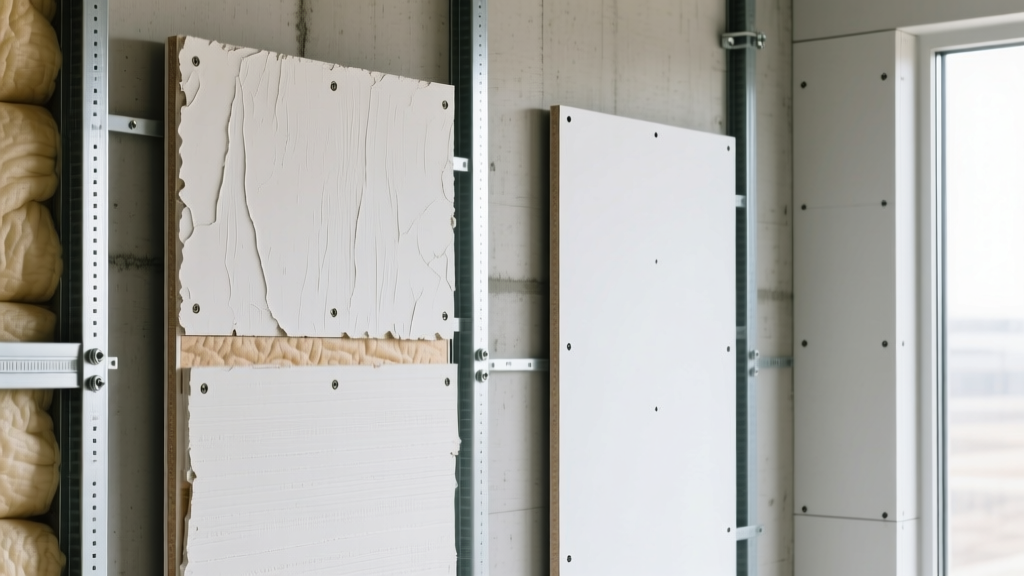
The Terminology Trap: Defining Plaster Gypsum Board
In the construction industry, the term 'plaster gypsum board' is frequently misused. In international markets, it is often a generic synonym for standard drywall. However, in North American commercial and high-end residential construction, plaster gypsum board specifically refers to veneer plaster base (also known as gypsum lath or plaster board). This is a highly specialized substrate engineered exclusively to receive thin-coat veneer plaster systems. Confusing standard drywall with true plaster gypsum board is one of the most costly material selection errors in interior finishing, leading to catastrophic plaster delamination and systemic cracking.
This selection guide dissects the material science, product specifications, and installation protocols required to correctly specify and install plaster gypsum board for veneer applications in 2026.
Material Science: Why Veneer Base is Engineered Differently
True plaster gypsum board is governed by ASTM C1396 standards, but its manufacturing process diverges significantly from standard wallboard. The core differences lie in the face paper chemistry and core density.
The Absorptive Face Paper
Plaster gypsum board features a multi-ply, highly absorptive manila or blue face paper. When the calcium sulfate hemihydrate (veneer plaster) is applied, the board's paper rapidly draws water out of the plaster matrix. This controlled suction is not just for drying; it is the catalyst that forces the plaster to recrystallize into calcium sulfate dihydrate, creating a monolithic, rock-hard surface. The Gypsum Association strictly mandates that the base board's absorption rate must be perfectly calibrated to the specific veneer plaster being applied.
High-Density, Water-Resistant Core
Because the board will be subjected to significant moisture during the plastering process, the gypsum core is manufactured at a higher density and often includes water-resistant additives. This prevents the board from sagging, softening, or losing its structural integrity while the plaster cures.
Comparison Matrix: Plaster Base vs. Standard Drywall
| Feature | Standard Drywall (Paint Base) | Plaster Gypsum Board (Veneer Base) |
|---|---|---|
| Face Paper | Sealed, low absorption (white/ivory) | Multi-ply, high absorption (manila/blue) |
| Core Density | Standard weight | High-density, moisture-resistant |
| Joint Treatment | Paper tape + joint compound | Fiberglass mesh + Plaster-Weld/Bonding agent |
| Impact Resistance | Low (prone to denting) | Extremely High (monolithic plaster shell) |
| Primary Application | Level 4/5 painted finishes | Veneer plaster, acoustic, high-abuse zones |
Top Product Lines for Veneer Plaster Systems
When specifying plaster gypsum board, you must match the base board to the exact plaster finish system. The major manufacturers offer distinct product tiers based on impact resistance and fire-rating requirements.
1. USG Imperial Veneer Base
Imperial is the industry standard for high-traffic and commercial applications. It features a heavy-duty, highly absorptive manila face paper designed specifically for USG Imperial veneer plaster. It is available in 1/2-inch and 5/8-inch thicknesses, with the 5/8-inch Type X variant providing a 1-hour fire rating in tested assemblies. Imperial base is the mandatory choice for hospitals, schools, and corridors requiring severe abuse resistance.
2. USG Kal-Kote Veneer Base
Kal-Kote is engineered for lighter-duty residential and commercial applications where the extreme impact resistance of Imperial is unnecessary. It features a blue face paper and is designed to be paired with USG Diamond or Uni-Kal veneer plasters. It is more cost-effective than Imperial but still provides the necessary suction for proper chemical curing.
3. National Gypsum Gold Bond X-Kalibur
Gold Bond's X-Kalibur is a direct competitor to Imperial, featuring a specialized face paper that offers excellent suction control. It is highly regarded for its dimensional stability and is frequently specified in high-end residential projects where a flawless, troweled lime-putty or gypsum finish is desired.
Installation Edge Cases and Failure Modes
Even if you select the correct plaster gypsum board, improper installation will compromise the entire veneer system. The most common failure modes occur at the joints and during environmental exposure.
'Plaster does not hide bad seams; it amplifies them. If you treat a plaster base board joint like a drywall joint, the plaster will telegraph every single seam within six months of curing.' — Senior Plastering Foreman, Commercial Interiors.
The Joint Treatment Protocol
Standard paper drywall tape and all-purpose joint compound are strictly prohibited on plaster gypsum board. The moisture from the veneer plaster will re-wet the drywall mud, destroying its bond. Instead, joints must be treated using:
- Fiberglass Mesh Tape: Alkali-resistant mesh embedded into the joints.
- Plaster Bonding Agent: A chemical bonding compound (like USG Plaster-Weld) or a specialized setting-type plaster (like USG Kal-Kote Basecoat) used to fill the joints and feather them flush.
- Scoring the Edges: For butt joints, the face paper is often lightly scored and peeled back to create a recess for the bonding plaster, preventing a raised ridge.
Moisture Exposure Before Plastering
Plaster gypsum board must be kept completely dry prior to the application of the veneer plaster. If the boards are exposed to rain, high humidity, or condensation during the framing stage, the sizing in the absorptive face paper breaks down. This results in 'dead suction'—the board will either absorb water too rapidly, causing the plaster to flash-set and crack, or it will fail to absorb water at all, causing the plaster to slide off the wall.
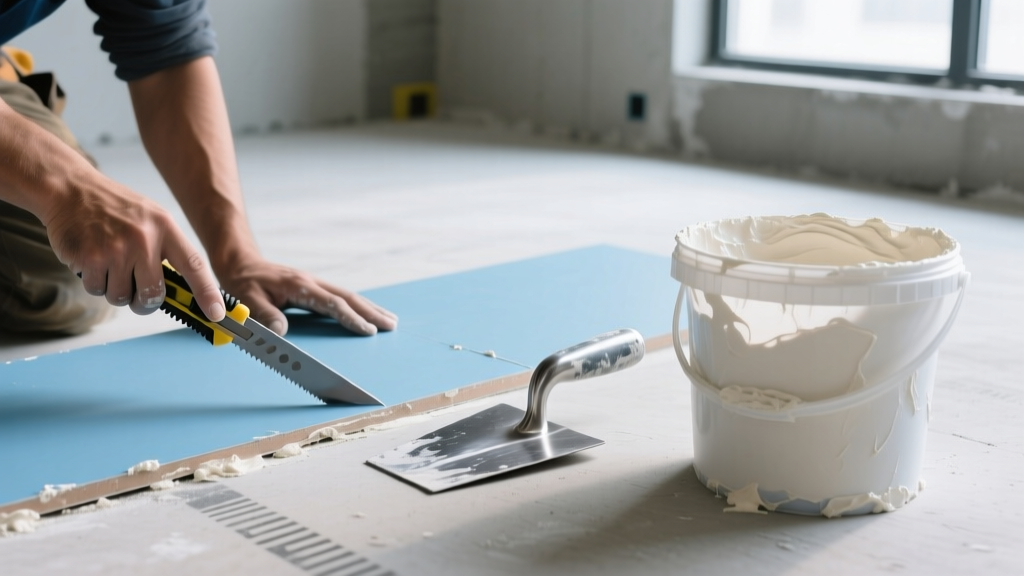
Cost Breakdown: Material and Labor Realities
Specifying a plaster gypsum board system is a premium investment. While the material cost difference between the board itself and standard drywall is marginal, the labor and finish material costs are significantly higher.
• Plaster Gypsum Board (Material Only): $0.65 - $0.90 / sq. ft.
• Standard 5/8-inch Drywall (Material Only): $0.45 - $0.60 / sq. ft.
• Veneer Plaster Finish (Labor + Material): $8.50 - $14.00 / sq. ft.
• Level 5 Drywall Finish (Labor + Material): $3.50 - $5.50 / sq. ft.
The ROI on plaster gypsum board systems is realized in lifecycle durability. A two-coat veneer plaster system applied over Imperial base will withstand decades of impact, requires zero maintenance, and eliminates the need for the recurring repainting and patching associated with Level 5 drywall finishes in high-traffic commercial environments.
Final Decision Framework
Use this framework to determine if plaster gypsum board is the correct specification for your project:
Specify Plaster Gypsum Board (Veneer Base) When:
- The project requires severe abuse resistance (corridors, hospitals, schools).
- Superior acoustic damping is required (plaster adds significant mass and eliminates the hollow drum effect of drywall).
- The architectural design calls for curved walls, complex arches, or monolithic seamless surfaces where drywall joints would be visible.
- The client demands a premium, hard-troweled, lime-putty, or polished gypsum aesthetic.
Specify Standard Drywall When:
- The budget is constrained, and lifecycle maintenance costs are not a primary concern.
- The space is low-traffic residential or standard commercial office space.
- The project timeline is aggressive; drywall finishing and painting is significantly faster than the multi-day curing process required for veneer plaster systems.
Written by
David NakamuraDavid Nakamura is a licensed architect (AIA) and construction technology writer focused on sustainable building methods, mass timber engineering, and high-performance building envelopes. He holds a Master of Architecture from the University of Washington and is a certified Passive House Consultant (CPHC). David spent eight years at the Seattle firm Mithun, where he led the design of three LEED Platinum projects, before founding his own practice specializing in net-zero residential design. He serves on the editorial advisory board of GreenBuilder Magazine and has authored peer-reviewed papers on cross-laminated timber (CLT) connections for the Journal of Structural Engineering. In his spare time, David teaches woodworking at Pratt Fine Arts Center and kayaks the Puget Sound.
More from David Nakamura
View all
Construction Cost
Labor Cost to Build a Deck Per Sq Ft: 2026 Installation Guide
Discover the exact labor cost to build a deck per sq ft in 2026. This installation guide breaks down contractor rates, complexity factors, and hidden fees.
Aug 4, 2026

Construction Cost
How Much Does It Cost to Build a 3 Bedroom House? Financing Guide
Learn exactly how much it costs to build a 3 bedroom house and explore 2026 financing options, construction loan types, and budget frameworks for your build.
Aug 4, 2026

Construction Cost
Cost to Build a Tennis Court: 2026 Guide
How much does it cost to build a tennis court in 2026? Breakdowns for asphalt, concrete, and synthetic surfaces plus fencing and lighting.
Jul 30, 2026