Metal Studs Performance Ratings: Gauge, Yield, and Deflection Specs
Decode metal studs performance ratings. Compare gauge thickness, yield strengths, deflection limits, and ASTM specs for load-bearing and interior framing.
Decoding Thickness: Gauge vs. Mil Designations
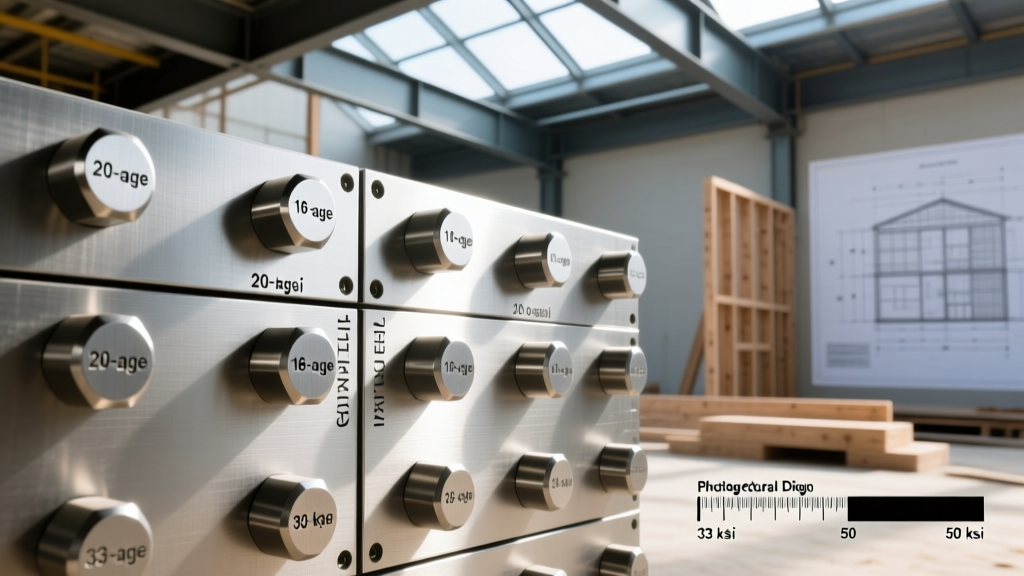
Specifying metal studs for commercial and multi-family construction requires navigating a matrix of thickness designations, yield strengths, and deflection criteria. A common point of failure in framing submittals is the conflation of traditional gauge numbers with actual decimal thickness. The industry has largely transitioned to minimum thickness in mils (thousandths of an inch) to eliminate the ambiguity of the gauge system, as defined by Steel Framing Industry Alliance (SFIA) guidelines.
When reviewing shop drawings or material submittals, always verify the minimum uncoated steel thickness. A '20-gauge' stud from one manufacturer might measure 30 mils, while a 'lightweight' 20-gauge alternative might only measure 27 mils, drastically altering the allowable axial load capacity.
| Designation | Minimum Thickness (Mils) | Decimal Inch | Primary Application |
|---|---|---|---|
| 25 ga (EQ) | 18 mil | 0.0179' | Non-load-bearing, low-height soffits and shaft walls |
| 20 ga (Standard) | 30 mil | 0.0299' | Standard commercial interior partitions (non-load) |
| 18 ga (Heavy) | 33 mil | 0.0329' | High-traffic commercial, exterior non-load curtain walls |
| 16 ga (Structural) | 43 mil | 0.0428' | Load-bearing walls, structural shear panels |
| 14 ga (Heavy Struct.) | 54 mil | 0.0538' | Multi-story load-bearing, high wind/seismic zones |
| 12 ga (Max Struct.) | 68 mil | 0.0677' | Heavy structural columns, deep track assemblies |
Yield Strength and Structural Capacity
Thickness alone does not determine the load-bearing capacity of a metal stud. The yield strength of the galvanized steel coil, measured in kilopounds per square inch (ksi), is the critical multiplier. Under ASTM A653 standards, structural framing steel typically falls into two categories:
Grade 33 (33 ksi Yield Strength)
Standard for non-load-bearing interior partitions and basic curtain wall framing. It offers high ductility, making it easier to cut, dimple, and fasten on-site without work-hardening the steel. Products like ClarkDietrich’s ProSTUD in lighter thicknesses utilize this grade for cost-effective interior layouts.
Grade 50 (50 ksi Yield Strength)
The mandatory baseline for load-bearing structural metal studs (16 gauge and thicker). The higher carbon content and cold-rolling process increase the yield point by over 50% compared to Grade 33. When engineering multi-story cold-formed steel (CFS) structures, utilizing 50 ksi steel allows for wider stud spacing (e.g., 24 inches on-center instead of 16 inches) or thinner profiles, reducing overall material weight and foundation loads.
'The transition from 33 ksi to 50 ksi yield strength in load-bearing cold-formed steel framing is not merely a material upgrade; it is a fundamental shift in the structural design methodology governed by AISI S211.' — Cold-Formed Steel Engineers Institute (CFSEI)
Deflection Limits and Lateral Bracing
Performance ratings for metal studs are heavily governed by deflection criteria—the maximum allowable bowing of the stud under lateral wind loads or seismic drift. The American Iron and Steel Institute (AISI) outlines these limits based on the wall finish material.
- L/240 Deflection Limit: The standard for most commercial interior partitions finished with standard gypsum board and paint. For a 10-foot (120-inch) tall wall, the maximum allowable deflection is 120 / 240 = 0.5 inches.
- L/360 Deflection Limit: Required for walls finished with brittle materials such as ceramic tile, stone veneer, or plaster. For the same 10-foot wall, deflection is restricted to 0.33 inches. This requires thicker studs (e.g., stepping up from 30 mil to 43 mil) or reduced stud spacing.
- L/600 Deflection Limit: Specified for high-precision environments, such as elevator shafts, MRI rooms, or walls supporting heavy glass partitions.
Fire and Acoustic Performance Ratings
Metal studs are non-combustible, but the assembly's overall fire rating depends entirely on the integration of the stud with specific gypsum board types and insulation, as tested by Underwriters Laboratories (UL) and documented by the Gypsum Association.
Fire Resistance Ratings (ASTM E119)
A standard 3-5/8 inch, 20-gauge (30 mil) metal stud framed wall with a single layer of 5/8-inch Type X gypsum board on each side typically achieves a 1-hour fire rating. Upgrading to a 2-hour rating requires either two layers of Type X board per side or the use of specialized shaftliner panels. Crucially, the stud depth dictates the cavity size; a 2-1/2 inch stud cavity may not accommodate the required mineral wool insulation density for certain 2-hour UL designs, forcing an upgrade to 3-5/8 inch or 4-inch studs.
Acoustic Ratings (STC and IIC)
Sound Transmission Class (STC) ratings for metal stud assemblies range from STC 35 (basic privacy) to STC 60+ (luxury multi-family or recording studios). To achieve high STC ratings without increasing wall thickness, specifiers utilize:
- Staggered Stud Framing: Alternating studs on a wider track to decouple the drywall layers.
- Resilient Channels: Hat channels attached via neoprene or spring isolators to break the mechanical vibration path.
- Slotted Web Studs: Specialized studs (like MarinoWARE's ViperStud) featuring elongated web cutouts that reduce the steel cross-section, dampening sound transmission through the framing itself.
Corrosion Protection: G60 vs G90 Coatings
All structural and non-structural metal studs are coated with a zinc or zinc-aluminum alloy to prevent oxidation. The performance rating for corrosion is measured in ounces of zinc per square foot of surface area (both sides combined), per ASTM A653.
| Coating Designation | Zinc Weight (oz/sq ft) | Approved Environment |
|---|---|---|
| G60 | 0.60 oz | Interior, climate-controlled commercial and residential spaces. |
| G90 | 0.90 oz | Exterior curtain walls, high-humidity interiors (pools, locker rooms), and unconditioned spaces. |
While G60 is the default for 90% of interior drywall partitions, specifying G60 for exterior sheathing back-up walls is a frequent cause of premature rust weeping through exterior cladding. Always mandate G90 minimum for any stud located within 12 inches of a concrete slab-on-grade or exposed to weather before the building envelope is sealed.
Key ASTM and AISI Standards Reference
Ensure your project specifications explicitly reference the current versions of these governing standards to maintain strict quality control during material procurement:
- ASTM C645: Standard Specification for Non-Load Bearing Steel Framing Members.
- ASTM C955: Standard Specification for Load-Bearing (Transverse and Axial) Steel Studs, Runners, and Braces.
- ASTM A653: Standard Specification for Steel Sheet, Zinc-Coated (Galvanized) or Zinc-Iron Alloy-Coated (Galvannealed) by the Hot-Dip Process.
- AISI S200: North American Standard for Cold-Formed Steel Structural Framing (General Provisions).
- AISI S211: North American Standard for Cold-Formed Steel Structural Framing - Wall Stud Design.
By strictly enforcing mil thickness, yield strength, deflection limits, and coating weights, project teams can eliminate framing deflections, acoustic leaks, and premature corrosion, ensuring the metal stud assembly performs exactly as engineered over the lifecycle of the structure.