Steel Framing Studs for Sale: 2026 Buyer's Guide & Pricing
Compare 2026 pricing, gauges, and distributors for steel framing studs for sale. Learn ASTM standards, coating grades, and commercial sourcing strategies.
The Commercial and Residential Sourcing Landscape
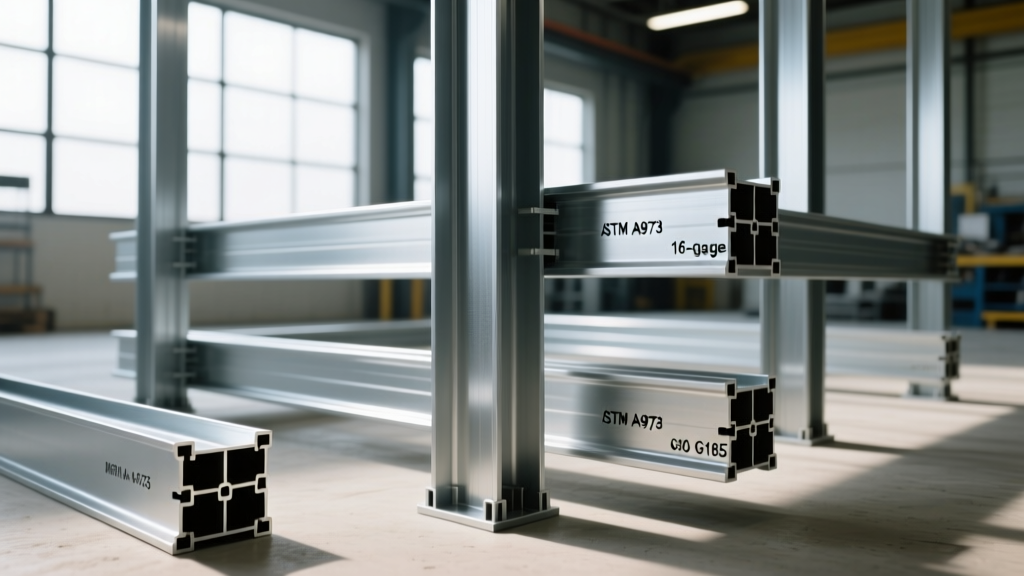
Procuring the right steel framing studs for sale requires navigating a fragmented market split between big-box retail and specialized commercial distributors. While residential contractors often rely on local home improvement centers for light-gauge partition studs, commercial framers and multifamily developers must source from specialized manufacturing hubs to secure structural grades, custom lengths, and bulk pricing. In 2026, supply chain stabilization has normalized lead times, but pricing fluctuations tied to raw steel coil indexes and regional galvanizing capacity remain critical factors in project estimating.
When evaluating inventory, buyers must look beyond the basic dimensions and scrutinize the metallurgical properties, protective coating weights, and fabrication tolerances. A misalignment between the purchased stud specifications and the project's engineering requirements can lead to failed inspections, structural deflection, or severe corrosion in high-moisture environments.
Decoding the Specs: Mil Thickness vs. Nominal Gauge
One of the most common procurement errors occurs when buyers order by "gauge" rather than "mils" (minimum thickness in thousandths of an inch). The construction industry has largely migrated to mil designations to eliminate the ambiguity of historical gauge charts. According to the Steel Framing Industry Association (SFIA), modern building codes require minimum base steel thicknesses that do not always align with traditional gauge names.
Standard Thickness Translations
- 25 mil (Nominal 20 ga): Used strictly for non-load-bearing interior partitions and furring. Minimum base steel thickness of 0.0179 inches.
- 33 mil (Nominal 18 ga): The workhorse for standard interior walls, ceiling grids, and light exterior non-structural framing. Minimum base steel thickness of 0.0269 inches.
- 43 mil (Nominal 16 ga): Required for load-bearing exterior walls, structural partitions, and shear walls.
- 54 mil (Nominal 14 ga): Utilized in multi-story load-bearing construction, heavy shaft walls, and high-wind load regions.
- 68 mil (Nominal 12 ga): Reserved for heavy structural headers, moment frames, and specialized industrial applications.
2026 Pricing Matrix: What to Expect at the Pro Desk
Pricing for steel framing studs for sale varies significantly based on volume, coating weight, and regional freight costs. The table below reflects Q1 2026 national average pricing for standard G60 galvanized studs purchased in commercial quantities (minimum 1,000 linear feet).
| Mil Thickness | Web Width | Flange Width | Avg. Price / Linear Foot | Primary Application |
|---|---|---|---|---|
| 25 mil | 1-5/8" | 1-1/4" | $0.75 - $0.95 | Furring, drywall backing |
| 25 mil | 3-5/8" | 1-1/4" | $1.10 - $1.40 | Standard interior partitions |
| 33 mil | 3-5/8" | 1-1/4" | $1.45 - $1.85 | Commercial partitions, ceilings |
| 33 mil | 6-0" | 1-1/4" | $2.40 - $2.90 | Plumbing walls, MEP chases |
| 43 mil | 6-0" | 1-5/8" | $3.60 - $4.20 | Load-bearing exterior walls |
| 54 mil | 8-0" | 1-5/8" | $5.80 - $6.75 | Multi-story structural framing |
Note: Prices do not include delivery fees, which typically add 8% to 15% for flatbed transport to the job site. Custom lengths over 20 feet often incur a 10% upcharge due to handling constraints.
MEP Integration: Punchouts and Web Depths
When reviewing steel framing studs for sale, the web depth and pre-punched knockouts dictate how efficiently your mechanical, electrical, and plumbing (MEP) subcontractors can rough-in their systems. Standard partition studs feature 1.5" x 3" electrical punchouts spaced 24" or 48" on center. However, for plumbing walls, standard studs are insufficient.
For bathrooms and commercial restrooms, you must order H-Studs or studs with 4" x 4" (or larger) plumbing punchouts. Attempting to cut 43 mil or 54 mil structural studs on-site with reciprocating saws to accommodate PVC or cast-iron drain lines compromises the structural integrity of the web and voids the manufacturer's engineering span tables. Major manufacturers like those listed in the ClarkDietrich framing catalog offer specialized plumbing studs with reinforced, offset webs specifically designed to maintain load-bearing capacity while allowing large-diameter pipe penetration.
ASTM Standards and Galvanization Coatings
Not all steel studs are manufactured to the same code requirements. You must verify the ASTM stamp printed on the web of every stud bundle before accepting delivery.
Structural vs. Non-Structural Certifications
- ASTM C645: The ASTM C645 standard specification governs non-structural steel framing members. These studs are limited to a maximum yield strength of 33 ksi and are strictly for partition walls, furring, and ceiling grids. They cannot be used to support axial loads from roofs or floors.
- ASTM A1003: This standard covers structural steel framing. Studs manufactured to A1003 are available in 33 ksi and 50 ksi yield strengths and feature tighter tolerances for camber and twist, which is critical for multi-story load-bearing walls.
Coating Weights: G60 vs. G90
Galvanization prevents red rust and extends the lifespan of the framing assembly. The coating weight is measured in ounces per square foot (oz/sq ft) of total surface area.
- G60 (0.60 oz/sq ft): The industry standard for interior, climate-controlled environments. Sufficient for standard drywall partitions in offices, retail spaces, and residential interiors.
- G90 (0.90 oz/sq ft): Mandatory for exterior framing, parapets, unconditioned spaces, and high-moisture areas (e.g., commercial kitchens, indoor pools, and agricultural facilities). Using G60 studs in an exterior cavity will lead to premature corrosion where condensation forms against the back of the exterior sheathing.
Sourcing Channels: Big Box vs. Commercial Distributors
Where you buy is just as important as what you buy. The market for steel framing studs for sale is divided into two distinct tiers.
Tier 1: Big Box Home Centers (Home Depot, Lowe's)
Best suited for residential remodelers, small commercial tenant improvements, and punch-list repairs. Inventory is generally limited to 25 mil and 33 mil thicknesses in 1-5/8", 2-1/2", and 3-5/8" widths. Lengths rarely exceed 14 feet. Pricing is premium (often 30% to 50% higher per linear foot than commercial yards), and the material is often handled poorly in-store, resulting in bent flanges and twisted webs.
Tier 2: Commercial Framing Distributors and Direct Mills
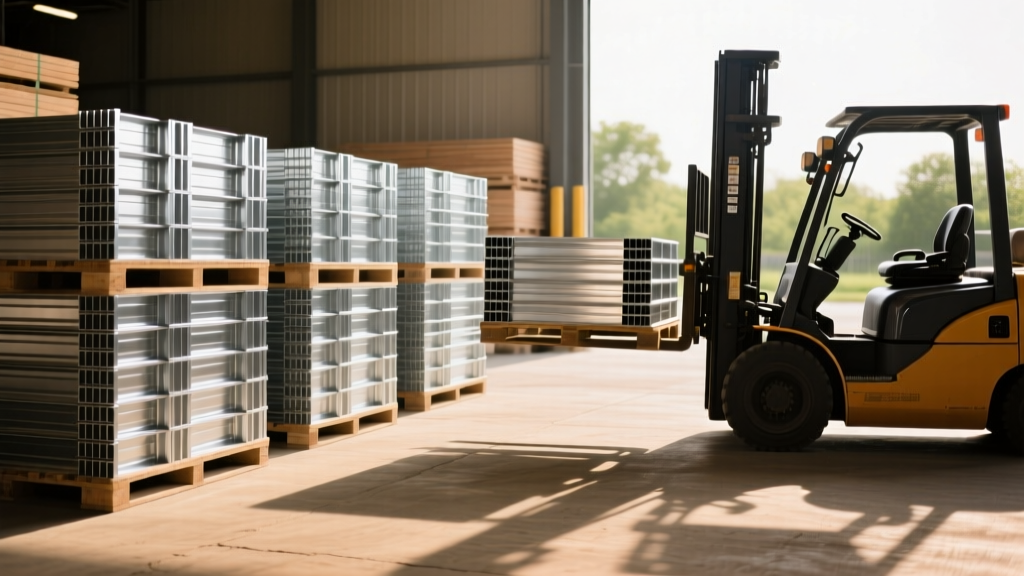
Essential for projects exceeding 5,000 square feet. Distributors stock the full range of mil thicknesses up to 68 mil, widths up to 10 inches, and lengths up to 30 feet. They offer "nesting"—a shipping method where smaller studs (like 1-5/8" furring channel) are packed inside the webs of larger 6" studs to maximize flatbed truck space and reduce freight costs. Commercial yards also provide certified mill test reports (CMTRs) upon request, which are frequently required by structural engineers for sign-off on load-bearing assemblies.
Delivery Logistics and Site Inspection Protocols
When a flatbed arrives with your steel framing studs, the receiving foreman must conduct a rigorous inspection before signing the bill of lading. Steel is highly susceptible to transit damage and manufacturing defects that can derail a framing schedule.
The 3-Point Inspection Checklist
- Camber and Bow Limits: According to industry tolerances, the maximum allowable camber (bowing along the weak axis) is 1/8 inch per 10 feet of length. Studs exceeding this limit will cause severe drywall bowing and make it impossible to achieve a Level 4 or Level 5 finish without extensive shimming or furring.
- Twist and Flare: Check the ends of the bundles. The flanges must be perfectly parallel to each other. If the flanges flare outward or inward, the drywall will not seat properly, leading to popped screws and cracked joints.
- Bundle Integrity and Moisture: Steel studs are typically bundled with heavy-gauge steel bands and wrapped in paper or plastic. If the wrapping is torn and the studs show signs of "white rust" (zinc oxide), the material is still structurally sound but requires wire brushing before being enclosed in drywall. However, if red rust is present, reject the bundle immediately.
By understanding the precise technical requirements, ASTM standards, and market pricing structures, procurement managers and general contractors can secure the exact steel framing studs for sale that meet both the engineering demands and the budget constraints of modern construction projects.
Written by
David NakamuraDavid Nakamura is a licensed architect (AIA) and construction technology writer focused on sustainable building methods, mass timber engineering, and high-performance building envelopes. He holds a Master of Architecture from the University of Washington and is a certified Passive House Consultant (CPHC). David spent eight years at the Seattle firm Mithun, where he led the design of three LEED Platinum projects, before founding his own practice specializing in net-zero residential design. He serves on the editorial advisory board of GreenBuilder Magazine and has authored peer-reviewed papers on cross-laminated timber (CLT) connections for the Journal of Structural Engineering. In his spare time, David teaches woodworking at Pratt Fine Arts Center and kayaks the Puget Sound.
More from David Nakamura
View all
Construction Cost
Labor Cost to Build a Deck Per Sq Ft: 2026 Installation Guide
Discover the exact labor cost to build a deck per sq ft in 2026. This installation guide breaks down contractor rates, complexity factors, and hidden fees.
Aug 4, 2026

Construction Cost
How Much Does It Cost to Build a 3 Bedroom House? Financing Guide
Learn exactly how much it costs to build a 3 bedroom house and explore 2026 financing options, construction loan types, and budget frameworks for your build.
Aug 4, 2026

Construction Cost
Cost to Build a Tennis Court: 2026 Guide
How much does it cost to build a tennis court in 2026? Breakdowns for asphalt, concrete, and synthetic surfaces plus fencing and lighting.
Jul 30, 2026