When to Use 2x2 Lumber: Scenario Matching & Structural Limits
Discover the exact structural limits and best-use scenarios for 2x2 lumber. Learn when to choose 1.5x1.5 inch wood over 2x3 or 2x4 framing.
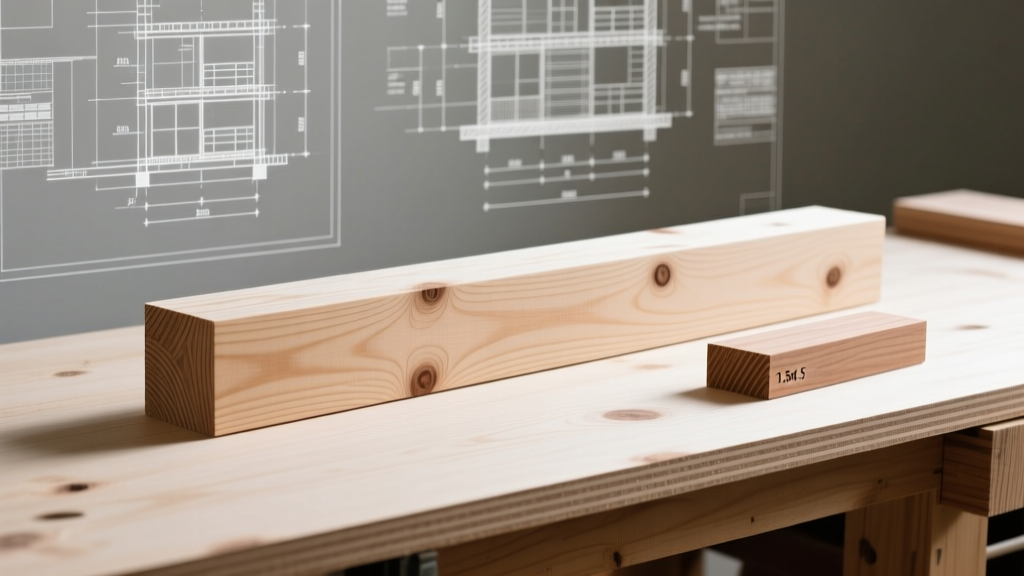
The Dimensional Reality and Sourcing Strategy
In the North American lumber market, nominal sizing rarely matches actual dimensions, and 2x2 lumber is no exception. A standard 2x2 actually measures 1.5 inches by 1.5 inches (38mm x 38mm). This narrow cross-section creates unique mechanical properties, limiting its structural utility while making it highly specialized for specific light-duty applications. Understanding the exact application-fit for this stock prevents catastrophic structural failures and material waste.
Sourcing high-quality 2x2 lumber presents a distinct challenge. Pre-milled 2x2s sold in bundled packs at big-box home improvement centers are frequently milled from the lowest-grade cull lumber, resulting in severe bowing, twisting, and waning. For professional contractors and serious DIYers, the most reliable sourcing strategy is purchasing straight, high-grade 2x4 studs (Select Structural or #1 grade) and ripping them down the center on a table saw. This yields two 2x2 pieces with vertical grain orientation, vastly improving dimensional stability and resistance to warping compared to pre-milled alternatives.
Code Restrictions: Where 2x2 Lumber is Prohibited
Before applying 2x2 lumber to any building project, it is critical to understand its legal and structural boundaries. According to the International Residential Code (IRC), 2x2 lumber is strictly prohibited for use as load-bearing wall studs, floor joists, or roof rafters.
Even in non-structural scenarios, the narrow 1.5-inch face provides insufficient surface area for standard drywall or sheathing fastening patterns. Drywall screws driven into the center of a 1.5-inch stud have only 0.75 inches of margin on either side, drastically increasing the risk of blowout and edge-cracking during installation.
Application-Fit Matrix: 2x2 vs. Alternatives
To determine if 2x2 lumber is the correct material for your scenario, compare it against standard alternatives based on cost, dimensional stability, and use-case.
| Material | Actual Dimensions | Avg. Cost (per LF) | Best Application Fit |
|---|---|---|---|
| Pre-milled 2x2 (SPF) | 1.5" x 1.5" | $1.10 - $1.40 | Light crafts, temporary bracing, small garden trellises |
| Ripped 2x4 (SPF #2) | 1.5" x 1.5" | $0.80 - $1.05 | Furring strips, concrete form stakes, custom jigs |
| 1x3 Furring Strip | 0.75" x 2.5" | $0.65 - $0.90 | Masonry wall furring, strapping, ceiling battens |
| 2x3 Stud | 1.5" x 2.5" | $1.80 - $2.20 | Non-load-bearing partitions, shallow utility chases |
Optimal Scenarios for 1.5x1.5 Stock
When applied correctly, the 1.5x1.5 profile offers distinct advantages in space-saving and weight reduction. The following scenarios represent the ideal application-fit for this lumber profile.
1. Concrete Formwork Stakes and Bracing
For small-scale concrete pours such as footings, sidewalks, or patio slabs, 2x2 lumber makes excellent form stakes. Because the cross-section is square, it can be driven into the ground with a mallet without the risk of splitting that plagues thinner materials. When used as horizontal kickers to brace 2x8 or 2x10 form boards, the 1.5-inch thickness provides adequate stiffness for spans under 36 inches, provided the concrete pour rate is controlled to prevent hydrostatic blowout.
2. Furring Out Irregular Masonry
When framing out a basement or masonry wall where space is at a premium, 2x2 lumber can be used as furring strips. However, unlike 1x3 furring, a 2x2 provides a full 1.5-inch depth for running low-voltage wiring or PEX water lines behind drywall. Fasten the 2x2 to masonry using #10 x 2.5-inch Tapcon masonry screws, pre-drilling with a 5/32-inch carbide bit to prevent the narrow wood profile from splitting during driving.
3. Garden Trellises and Lightweight Outdoor Structures
For outdoor applications, sourcing 2x2 lumber in Western Red Cedar or Redwood is highly recommended. The 1.5x1.5 profile is visually lightweight, making it ideal for vine trellises, cucumber nets, and decorative garden screens. According to data from the USDA Forest Products Laboratory Wood Handbook, cedar's natural decay resistance allows 1.5-inch stock to withstand ground contact and high moisture without the rapid degradation seen in untreated Spruce-Pine-Fir (SPF).
Fastening and Joinery Specifications
The most common point of failure when working with 2x2 lumber is fastener blowout. The 1.5-inch width leaves zero margin for error when driving standard screws or nails.
- Pocket Hole Joinery: When using a pocket hole jig (such as the Kreg K5 or K7), set the jig and drill bit collar to the 1.5-inch material thickness. You must use exactly 2.5-inch pocket hole screws. Using 2-inch screws will result in weak joints, while 2.75-inch screws will pierce the opposite face.
- Standard Wood Screws: Never drive a standard #8 or #9 wood screw directly into the end grain or edge of a 2x2 without a pilot hole. Use a 1/8-inch pilot bit for the shank and a 3/32-inch bit for the threads to prevent hydraulic splitting of the narrow fibers.
- Dowel Joinery: If using dowels to align edge joints, the maximum dowel diameter for 1.5-inch stock is 3/8-inch. This leaves 9/16-inch of wood meat on either side of the hole. Using a 1/2-inch dowel leaves only 1/2-inch of material per side, which frequently snaps under clamp pressure.
Span Limits and Load-Bearing Realities
While not suitable for primary structural framing, 2x2 lumber is occasionally used in light-duty shelving or decorative overhead grids. Builders must adhere to strict span limits. According to the American Wood Council (AWC) span tables, a 2x2 SPF member used as a joist or rafter (assuming a 40 PSF live load and 10 PSF dead load) has a maximum clear span of roughly 3 feet 6 inches when spaced at 12 inches on center.
If the span exceeds 42 inches, the 1.5x1.5 member will experience excessive deflection, leading to sagging and eventual fastener withdrawal. For any overhead grid or shelving application requiring spans longer than 4 feet, builders must step up to 2x3 or 2x4 lumber, or reinforce the 2x2 with a steel flat-bar sandwiched between laminated layers.
Summary Decision Framework
Use this quick framework to finalize your material selection:
- Is the application load-bearing? If YES, abandon 2x2 lumber. Use 2x4 or larger.
- Does the application require a span greater than 42 inches? If YES, step up to 2x3 or engineered wood.
- Is the environment high-moisture or ground-contact? If YES, use pressure-treated 2x2 or naturally rot-resistant cedar; avoid standard SPF.
- Is maximum interior cavity depth required for utilities? If YES, consider a 2x3 to gain an extra inch of depth for electrical boxes and insulation.