Common Types of Wood for Construction: A Complete Species Guide
Explore the most common types of wood used in construction. Compare structural timber, framing lumber, and finish woods with Janka ratings and grades.
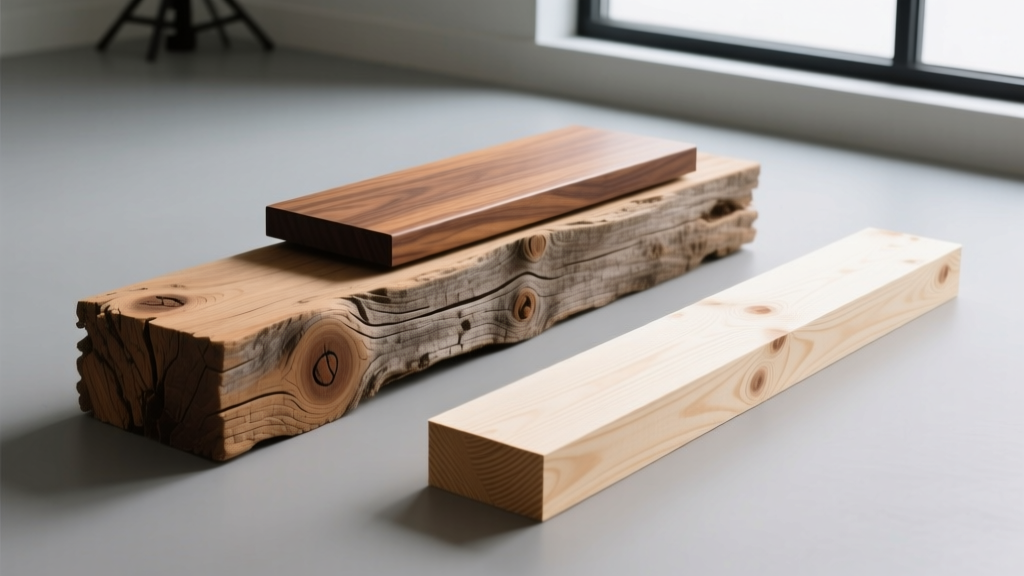
Understanding Wood Classifications: Botanical vs. Structural
When selecting the most common types of wood for building projects, it is critical to separate botanical classifications from structural utility. Botanically, wood is divided into softwoods (gymnosperms, typically needle-leaved evergreens) and hardwoods (angiosperms, typically broad-leaved deciduous trees). However, in construction, these terms do not strictly dictate physical hardness. For instance, balsa is botanically a hardwood but is physically softer than most construction softwoods, while yew is a softwood that is harder than many hardwoods.
Structural Framing Lumber: The Backbone of Construction
Dimensional lumber forms the skeleton of modern residential and light commercial buildings. The three most prevalent species groups used in North American framing are Douglas Fir, Southern Yellow Pine, and the Spruce-Pine-Fir grouping. According to the USDA Forest Products Laboratory, the mechanical properties of these species dictate their specific structural applications.
Douglas Fir (Pseudotsuga menziesii)
Douglas Fir is the gold standard for structural framing, particularly for beams, headers, and heavy load-bearing applications. With a specific gravity of approximately 0.50, it offers an exceptional strength-to-weight ratio. Its tight, straight grain provides superior fastener-holding capacity, making it ideal for structural connectors and hurricane ties. Douglas Fir is naturally more resistant to decay than many other softwoods, though it still requires pressure treatment for ground contact.
Southern Yellow Pine (SYP)
SYP is not a single species but a grouping of four primary pines (Loblolly, Shortleaf, Longleaf, and Slash). It is the densest of the common framing softwoods, boasting a specific gravity of 0.55. This high density translates to superior bending strength and stiffness. More importantly, SYP's open cellular structure makes it the premier choice for pressure-treated lumber. The wood readily absorbs preservative chemicals like Copper Azole (CA-C) and Alkaline Copper Quaternary (ACQ), making it the default choice for sill plates, deck framing, and exterior structural components.
Spruce-Pine-Fir (SPF)
SPF is a marketing and grading grouping that includes White Spruce, Engelmann Spruce, Lodgepole Pine, and Alpine Fir. With a lower specific gravity (around 0.42), SPF is lighter and slightly less stiff than Douglas Fir or SYP. It is predominantly used for interior wall framing, roof rafters, and floor joists where extreme load-bearing capacity is not the primary concern. SPF is highly workable, holds paint well, and is generally the most cost-effective framing option on the market.
| Species Group | Specific Gravity | Modulus of Elasticity (E) | Bending Stress (Fb) | Primary Application |
|---|---|---|---|---|
| Douglas Fir-Larch | 0.50 | 1,900,000 psi | 1,500 psi | Headers, Beams, Joists |
| Southern Yellow Pine | 0.55 | 1,800,000 psi | 1,600 psi | Treated Sill Plates, Decking |
| Spruce-Pine-Fir (SPF) | 0.42 | 1,400,000 psi | 1,100 psi | Interior Wall Studs, Rafters |
Note: Design values listed are baseline reference points for Select Structural grade. Always consult the American Wood Council (AWC) span tables for exact engineering requirements based on grade, size, and load duration.
Finish and Millwork Woods: Interior Applications
Once the structural shell is complete, hardwoods take over for interior finish work. The selection here is driven by Janka hardness (resistance to denting), grain pattern, and machining characteristics.
Red Oak (Quercus rubra)
With a Janka hardness rating of 1,290 lbf, Red Oak is the benchmark for solid hardwood flooring. It features a prominent, open-grain pattern that provides excellent slip resistance and hides minor scratches. However, this open pore structure means Red Oak requires a specialized grain filler if a glass-smooth, high-gloss polyurethane finish is desired. It machines beautifully and accepts stain evenly due to its large earlywood vessels.
Hard Maple (Acer saccharum)
Hard Maple (Janka 1,450 lbf) is incredibly dense and features a tight, closed grain. It is the standard for bowling alleys, basketball courts, and high-traffic commercial cabinetry. Because of its density, driving nails into Hard Maple without pre-drilling will almost certainly cause the wood to split or the nail to bend. Furthermore, its tight grain resists liquid penetration, which can cause traditional liquid stains to blotch. For color adjustments on Maple, builders should specify gel stains or rely on clear catalyzed lacquers.
Poplar (Liriodendron tulipifera)
Poplar (Janka 540 lbf) is a soft hardwood that serves as the ultimate paint-grade millwork material. It is highly stable, machines crisply without tear-out, and is significantly cheaper than Oak or Maple. The heartwood often features stark green, brown, or purple mineral streaks, making it entirely unsuitable for clear-coat finishes. However, when primed with a high-build PVA or shellac-based primer, Poplar provides a flawless, MDF-like surface for painted baseboards, crown molding, and custom cabinetry.
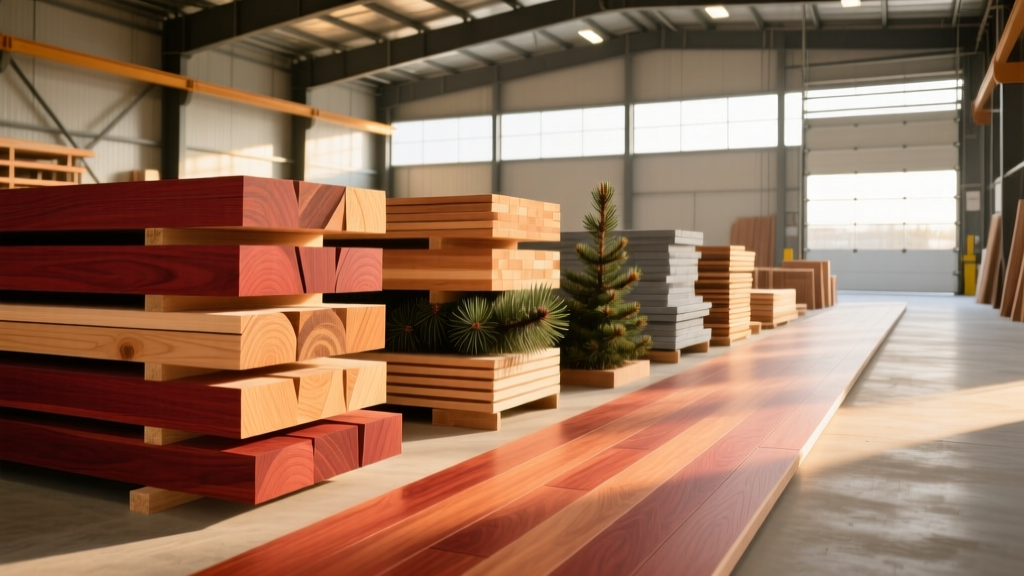
Decoding Lumber Grades and Moisture Content
Understanding the species is only half the equation; interpreting the ink stamp on the lumber is equally vital for structural integrity and finish quality. The National Hardwood Lumber Association (NHLA) and softwood grading agencies enforce strict visual and mechanical grading rules.
- Select Structural: The highest grade for dimensional lumber. Features very small, tight knots and minimal slope of grain. Used for engineered trusses and high-load headers.
- No. 1 Grade: Excellent for general framing where high strength is needed. Allows slightly larger knots than Select Structural but maintains high bending strength.
- No. 2 Grade: The most common grade for standard residential wall framing. Balances structural integrity with cost-effectiveness. Allows larger knots and minor wane.
- Stud Grade: Specifically graded for vertical, load-bearing wall studs. It allows edge knots that would be unacceptable in horizontal joists, as the load is applied parallel to the grain.
Moisture Content (MC) Warning: Standard framing lumber is stamped S-DRY (Surface Dry), meaning it has a maximum MC of 19%. Installing S-DRY lumber in a climate-controlled interior without allowing it to acclimate will result in severe shrinking, drywall nail pops, and truss uplift. For interior finish carpentry and flooring, always specify MC15 (Maximum 15% MC) or KD (Kiln Dried) lumber, and allow it to acclimate in the installation environment for a minimum of 72 hours before fastening.
Mass Timber and Engineered Alternatives
While solid sawn lumber remains dominant in light-frame construction, the common types of wood listed above are increasingly being engineered into Mass Timber products for mid-rise and commercial buildings. Cross-Laminated Timber (CLT) utilizes alternating layers of SPF or Douglas Fir boards glued at right angles, creating massive panels that rival concrete in compressive strength and dimensional stability. Glued Laminated Timber (Glulam) uses parallel layers of high-grade Douglas Fir or SYP to create long-spanning beams that expose the natural beauty of the wood while achieving fire resistance through predictable, code-calculated charring rates.
Frequently Asked Questions
What is the strongest common type of framing wood?
Southern Yellow Pine (SYP) generally offers the highest bending stress (Fb) and compression values among common dimensional framing lumber, making it the strongest choice for heavily loaded joists and beams. However, Douglas Fir-Larch is often preferred for its superior stiffness (Modulus of Elasticity) and lighter weight, which reduces the dead load on the overall structure.
How do I prevent warping and twisting in SPF lumber?
SPF is more prone to twisting than Douglas Fir due to its lower density and reaction wood characteristics. To mitigate this, purchase KD (Kiln Dried) lumber rather than green or S-DRY stock. Upon delivery, keep the lumber bundled, off the ground, and covered with a tarp to prevent uneven moisture absorption from rain and sun. Once installed, ensure the structure is dried in (roof and windows installed) and climate control is running as soon as possible to stabilize the wood's moisture content.
Written by
Sarah WhitfieldSarah Whitfield is a chartered quantity surveyor (MRICS) and construction cost analyst with 15 years of experience in material pricing, procurement strategy, and project budgeting. She earned her degree in Construction Management from the University of Reading (UK) and has worked on projects ranging from $2M custom homes to $180M mixed-use developments across North America and Europe. Sarah currently leads cost estimating for BuildMat Insight, maintaining a proprietary database of 4,000+ material price points updated quarterly. She is a frequent contributor to RSMeans cost data panels and has presented at the International Cost Engineering Council (ICEC) congress. Based in Denver, CO, Sarah is an avid trail runner and volunteer mentor for Women in Construction.
More from Sarah Whitfield
View all
Wood & Lumber
What Are the Different Types of Wood? A Builder's Guide
Compare structural softwoods, finish hardwoods, and engineered lumber. Analyze Janka ratings, MOE values, and 2026 pricing for construction.
Aug 4, 2026

Walls & Panels
Steel Framing vs Wood Framing: Corrosion and Moisture Defense
Compare steel framing vs wood framing for moisture resistance. Learn about galvanized coatings, condensation risks, and corrosion protection strategies.
Jul 21, 2026

Stone & Masonry
How to Cut Stone Veneer: Wet Saw vs Grinder Comparison
Compare the best tools for cutting stone veneer. We review wet saws, angle grinders, and chop saws to help you achieve clean, chip-free cuts.
Jul 21, 2026