Comparing Walnut Types of Wood: Black, Claro, and European
Compare walnut types of wood including Black, European, and Claro. Explore Janka hardness, pricing per board foot, and best applications for 2026.
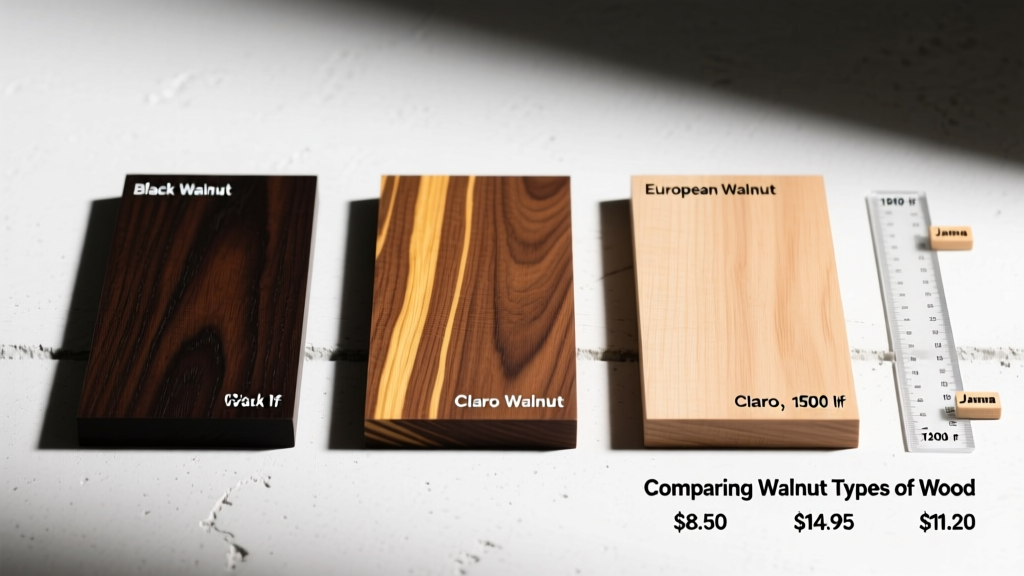
The Walnut Spectrum: Beyond the Basics
When architects, millworkers, and fine furniture makers specify walnut, they are usually referring to North American Black Walnut. However, the Juglans genus encompasses several distinct species, each with unique mechanical properties, color profiles, and market pricing. Understanding the nuances among different walnut types of wood is critical for budgeting, structural planning, and aesthetic execution. This comparison review evaluates the four primary commercial walnut species available in the 2026 lumber market: Black Walnut, European Walnut, Claro Walnut, and Butternut.
Black Walnut (Juglans nigra): The North American Standard
Black Walnut remains the benchmark for premium domestic hardwood. Native to the eastern United States, it is prized for its rich, dark chocolate heartwood and excellent stability. According to the American Hardwood Information Center, Black Walnut accounts for a significant portion of the high-end cabinetry and flooring market due to its predictable machining characteristics.
Color, Steaming, and Grading
The heartwood of Black Walnut ranges from a pale brown to a deep, purplish-black. The sapwood, however, is a stark pale yellow. To maximize yield, commercial mills almost universally use a kiln-steaming process. Steaming oxidizes the wood's tannins, darkening the sapwood to blend with the heartwood. While this reduces waste, steamed sapwood can sometimes look slightly 'muddy' compared to natural heartwood. For high-end architectural millwork, explicitly request unsteamed Black Walnut from specialty dealers, though you will pay a 20% to 30% premium and must design around the high color contrast.
Market Specs & Pricing
- Janka Hardness: 1,010 lbf (4,490 N)
- Specific Gravity: 0.51 (oven-dry)
- Average Price (FAS 4/4): $9.50 - $14.00 per board foot
- Shrinkage (Radial/Tangential): 5.5% / 7.8% (T/R Ratio: 1.4)
European Walnut (Juglans regia): The Old World Classic
Often referred to as English Walnut (the same species that produces edible walnuts), European Walnut is native to Europe and parts of Asia. It is historically significant, heavily utilized in antique furniture, gunstocks, and luxury automotive interiors. European Walnut tends to have a slightly finer texture and a more complex, sometimes greyish or golden-brown color palette compared to the purplish tones of its American cousin.
Figure and Veneer Applications
European Walnut is highly sought after for its spectacular figure, particularly burrs (burls) and crotch mahogany-like patterns. Because solid European Walnut is expensive and often heavily figured, it is frequently sliced into architectural veneers for high-end paneling and elevator cabs. The Wood Database notes that European Walnut is slightly harder and denser than Black Walnut, making it exceptionally durable for flooring in high-traffic residential spaces.
Market Specs & Pricing
- Janka Hardness: 1,220 lbf (5,410 N)
- Specific Gravity: 0.56
- Average Price (FAS 4/4): $14.00 - $22.00 per board foot (Imported)
- Shrinkage (Radial/Tangential): 5.0% / 7.5%
Claro Walnut (Juglans hindsii): The Figure & Burl King
Native to California and Oregon, Claro Walnut is the undisputed champion of decorative figure. In commercial agriculture, Claro Walnut is frequently used as a disease-resistant rootstock onto which English Walnut scions are grafted. The graft line creates a spectacular, chaotic explosion of grain patterns—swirls, burls, and fiddleback figures—that are unmatched in the woodworking world.
Working with Claro
Due to its intense interlocked grain, Claro Walnut is prone to severe tearout during planing and routing. CNC machining and extremely sharp, high-angle hand planes are required for surfacing. It is rarely used for large architectural runs; instead, it is reserved for bespoke conference tables, luxury turning blanks, and statement furniture pieces where the wood itself is the primary design element.
Market Specs & Pricing
- Janka Hardness: 1,130 lbf (5,030 N)
- Specific Gravity: 0.53
- Average Price (FAS 4/4): $16.00 - $32.00+ per board foot (Highly dependent on figure)
Butternut (Juglans cinerea): The Soft Alternative
Also known as White Walnut, Butternut is a lighter, much softer cousin to the black walnut. Its heartwood is a light to medium tan, sometimes with a reddish hue. Because it is incredibly soft and lightweight, it is a favorite among woodcarvers and sculptors. However, Butternut populations have been decimated by Butternut Canker disease, making high-quality, clear lumber increasingly rare and heavily regulated in certain US states.
Market Specs & Pricing
- Janka Hardness: 490 lbf (2,180 N)
- Specific Gravity: 0.36
- Average Price (FAS 4/4): $7.00 - $11.00 per board foot
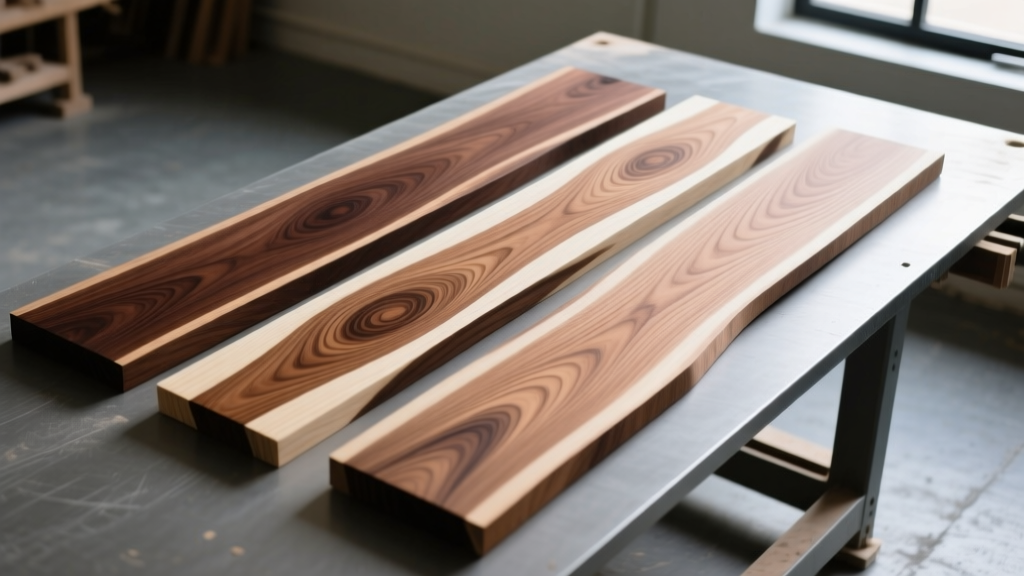
Head-to-Head Comparison Matrix
| Feature | Black Walnut | European Walnut | Claro Walnut | Butternut |
|---|---|---|---|---|
| Best Use Case | Cabinetry, Flooring, Furniture | Veneers, Gunstocks, Fine Furniture | Statement Tables, Turning, Veneer | Carving, Interior Paneling |
| Janka Hardness | 1,010 lbf | 1,220 lbf | 1,130 lbf | 490 lbf |
| Machinability | Excellent | Very Good | Fair (Tearout risk) | Excellent (Very soft) |
| UV Stability | Poor (Photo-bleaches) | Poor (Photo-bleaches) | Poor (Photo-bleaches) | Moderate (Lightens slightly) |
| 2026 Cost (4/4 FAS) | $9.50 - $14.00/bf | $14.00 - $22.00/bf | $16.00 - $32.00+/bf | $7.00 - $11.00/bf |
Critical Finishing Insight: The UV Degradation Factor
A common and costly mistake in architectural woodworking is placing walnut in direct, south-facing sunlight without proper chemical protection. Unlike cherry or Jatoba, which oxidize and darken over time, walnut heartwood photo-bleaches. Prolonged UV exposure will shift the rich chocolate brown into a pale, yellowish-grey.
Practical Decision Framework: Which Walnut Should You Buy?
For Hardwood Flooring
Choose Black Walnut or European Walnut. Black Walnut offers the best balance of cost, availability, and hardness (1,010 lbf) for residential flooring. It dents moderately but hides scratches well due to its dark grain. For commercial or high-traffic residential projects, European Walnut's higher Janka rating (1,220 lbf) provides better dent resistance, though the material cost will be roughly 40% higher. Avoid Butternut entirely for flooring; its 490 lbf rating means it will dent from high heels or dropped utensils immediately.
For Cabinetry and Architectural Millwork
Choose Steamed Black Walnut (#1 Common or FAS). For large runs of kitchen cabinetry or wall paneling, consistency is key. Steamed Black Walnut provides a uniform, dark brown palette that minimizes the jarring contrast of pale sapwood. Buying #1 Common grade instead of FAS can reduce your lumber costs by 25% to 35% while yielding perfectly clear cuttings for cabinet doors and drawer fronts, as long as you are willing to cut around minor defects.
For Statement Furniture and CNC Routing
Choose Claro Walnut. If you are designing a live-edge dining table or a bespoke reception desk, Claro Walnut's graft-line burls and swirling grain patterns provide unparalleled visual impact. When machining Claro on a CNC router, reduce your feed rate by 20% and use compression bits to prevent tearout along the highly interlocked grain boundaries. Always seal Claro Walnut with an epoxy grain filler or a high-build conversion varnish to lock down the wild, porous grain structures.
Sourcing and Moisture Content Best Practices
When ordering any walnut types of wood for interior millwork, specify a moisture content (MC) of 6% to 8%. Walnut is highly hygroscopic and moves significantly if introduced to a climate-controlled environment before acclimating. If you are receiving kiln-dried lumber in the winter, allow the wood to acclimate in the installation space for a minimum of 7 to 10 days with the HVAC system running at its normal occupancy settings before milling or installation. Failure to acclimate will result in open joints in cabinetry and cupping in wide-plank flooring.
Written by
David NakamuraDavid Nakamura is a licensed architect (AIA) and construction technology writer focused on sustainable building methods, mass timber engineering, and high-performance building envelopes. He holds a Master of Architecture from the University of Washington and is a certified Passive House Consultant (CPHC). David spent eight years at the Seattle firm Mithun, where he led the design of three LEED Platinum projects, before founding his own practice specializing in net-zero residential design. He serves on the editorial advisory board of GreenBuilder Magazine and has authored peer-reviewed papers on cross-laminated timber (CLT) connections for the Journal of Structural Engineering. In his spare time, David teaches woodworking at Pratt Fine Arts Center and kayaks the Puget Sound.
More from David Nakamura
View all
Construction Cost
Labor Cost to Build a Deck Per Sq Ft: 2026 Installation Guide
Discover the exact labor cost to build a deck per sq ft in 2026. This installation guide breaks down contractor rates, complexity factors, and hidden fees.
Aug 4, 2026

Construction Cost
How Much Does It Cost to Build a 3 Bedroom House? Financing Guide
Learn exactly how much it costs to build a 3 bedroom house and explore 2026 financing options, construction loan types, and budget frameworks for your build.
Aug 4, 2026

Construction Cost
Cost to Build a Tennis Court: 2026 Guide
How much does it cost to build a tennis court in 2026? Breakdowns for asphalt, concrete, and synthetic surfaces plus fencing and lighting.
Jul 30, 2026