Cost to Build a House Philippines: 2026 Wood Lumber Guide
Master the cost to build a house philippines with our 2026 wood selection framework. Compare Yakal, Tanguile, and engineered lumber pricing and specs.
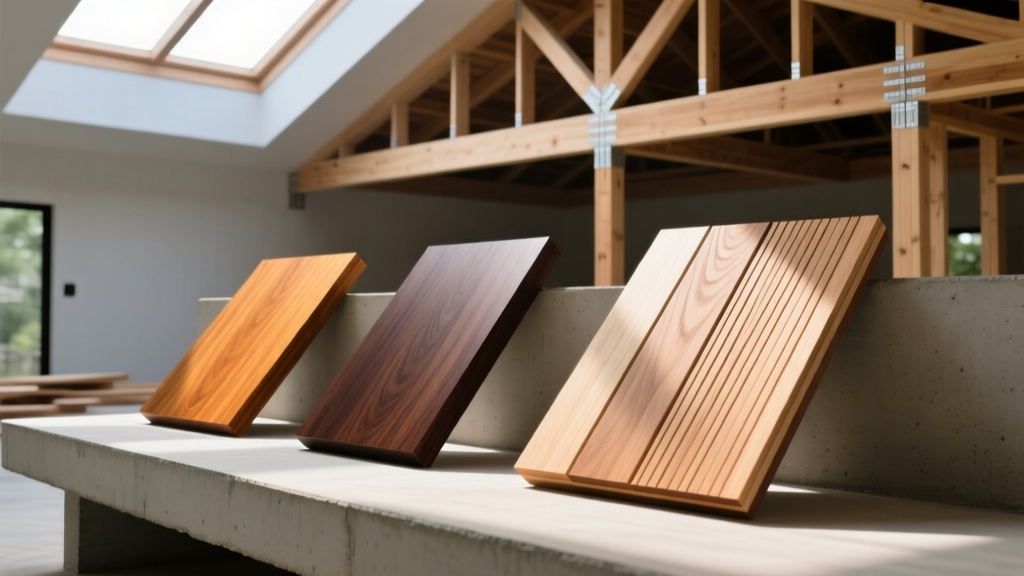
Navigating the Cost to Build a House Philippines: The Wood & Lumber Framework
When calculating the total cost to build a house Philippines, structural steel and concrete block (CHB) often dominate the conversation. However, wood and lumber remain indispensable in Philippine residential construction, particularly for roof truss systems, architectural finishes, ceiling joists, and bespoke interior elements. In a tropical archipelago subjected to Category 5 typhoons and aggressive subterranean termite colonies, selecting the wrong timber species is not just a design flaw—it is a catastrophic financial liability.
This selection framework provides a data-driven approach to procuring lumber in the Philippine market for 2026. By moving beyond generic hardware store purchases and understanding species grading, moisture content thresholds, and chemical treatment protocols, builders and homeowners can optimize their lumber budget without compromising structural resilience.
The 2026 Baseline: Allocating the Lumber Budget
In a standard 150-square-meter, two-story Philippine residential build, wood and wood-based products typically account for 8% to 14% of the total structural and finishing material costs. The primary cost drivers are the roof framing system (trusses, purlins, and fascia) and interior finish carpentry (doors, jambs, and flooring).
To manage the cost to build a house philippines effectively, project managers must bifurcate their lumber procurement into two distinct categories: Structural/Load-Bearing and Architectural/Finish. Substituting premium structural timber with cheaper alternatives in load-bearing applications leads to roof sagging and typhoon-induced failures, while over-specifying premium hardwoods for hidden framing wastes capital.
Philippine lumberyards price solid timber by the board foot (bd ft). The standard formula used by the Forest Management Bureau and local yards is: (Thickness in inches × Width in inches × Length in inches) ÷ 144. Always calculate your required board footage before requesting quotes to avoid inflated yard estimates.
Philippine Timber Species Matrix: Structural vs. Finish Applications
The Philippine hardwood classification system groups timber into distinct classes based on density, durability, and natural resistance to decay and termites. Below is the 2026 market matrix for the most commonly specified species in residential construction.
| Species | PH Wood Class | 2026 Avg Cost (PHP/bd ft) | Termite Resistance | Primary Application |
|---|---|---|---|---|
| Yakal | Class 1 (Premium) | ₱180 - ₱260 | Very High | Heavy structural posts, marine pilings, premium exterior finishes |
| Tanguile | Class 2 (Standard) | ₱75 - ₱115 | Moderate | Roof trusses, purlins, door jambs, window frames |
| Philippine Mahogany | Class 3 (Utility) | ₱45 - ₱70 | Low | Interior paneling, furniture, ceiling joists, non-structural trim |
| Coco Lumber | Non-Classified | ₱35 - ₱60 (per piece) | Very Low | Temporary scaffolding, non-load bearing partitions, landscaping |
Strategic Substitution Rules
To control the cost to build a house philippines, apply these substitution rules during the design phase:
- Never substitute Tanguile for roof purlins in typhoon corridors. The sheer weight and screw-holding capacity of Tanguile (specifically Select Structural grade) are required to prevent roof uplift during Category 4+ storms.
- Substitute Mahogany for Tanguile in interior finishes. For baseboards, crown molding, and interior door panels, Philippine Mahogany takes stain beautifully and costs roughly 40% less than Tanguile, provided it is kept away from ground moisture.
- Restrict Coco Lumber to temporary works. Despite its low cost, Coco Lumber has highly variable density and poor nail-holding retention. It should never be used for permanent structural framing.
Engineered Wood and Hybrid Framing Systems
As old-growth Philippine hardwoods become scarcer and more expensive, the 2026 construction landscape has seen a shift toward engineered wood products (EWP) and hybrid systems. According to data tracked by the Philippine Statistics Authority, the importation of Laminated Veneer Lumber (LVL) and Glued Laminated Timber (Glulam) has risen to meet the demand for long-span residential structures.
Solid Tanguile Trusses
Pros: Locally sourced, supports traditional joinery, high thermal mass.
Cons: Prone to warping if not properly seasoned, limited by tree diameter (max span ~4 meters without splicing).
Best For: Standard pitched roofs, traditional Filipino architectural styles.
LVL / Glulam Beams
Pros: Dimensionally stable, capable of spans exceeding 10 meters, predictable engineering values.
Cons: Higher upfront material cost, requires specialized steel connectors and adhesives.
Best For: Open-concept living areas, cantilevered balconies, modern minimalist designs.
For homeowners attempting to balance modern open-plan aesthetics with a strict budget, a hybrid approach is optimal: use steel C-purlins for the secondary roof framing to reduce weight and cost, but utilize LVL or heavy Tanguile for the primary exposed beams where visual warmth is required.
The 4-Step Procurement Strategy to Eliminate Budget Overruns
Purchasing lumber in the Philippines involves navigating a fragmented supply chain. Follow this framework to avoid hidden costs, substandard grading, and legal transport issues.
Step 1: Specify Moisture Content (MC) Limits
Wood sold in local yards is often 'green' or air-dried to inconsistent levels. For interior finish carpentry, mandate an MC of 12% to 15%. For structural framing, an MC of 19% or lower is acceptable. Installing wood with an MC above 20% guarantees shrinkage, joint failure, and mold proliferation once enclosed in walls. Require your contractor to use a digital moisture meter upon delivery.
Step 2: Verify the DENR Certificate of Timber Origin (CTO)
All legally harvested and transported timber in the Philippines must be accompanied by a Certificate of Timber Origin (CTO) issued by the Department of Environment and Natural Resources (DENR). Purchasing undocumented lumber not only funds illegal logging but exposes the homeowner to confiscation of materials and severe fines during transit or site inspections. Always demand the CTO receipt from your supplier.
Step 3: Budget for Chemical Treatment Protocols
Untreated Tanguile and Mahogany will succumb to Philippine subterranean termites within 3 to 5 years if in contact with masonry or soil. Allocate ₱45 to ₱80 per board foot in your budget for professional pressure treatment or rigorous brush-application of Copper Naphthenate or Borate-based preservatives. For structural posts embedded in concrete, specify a minimum 48-hour soak in a preservative bath before installation.
Step 4: Calculate the Waste and Defect Factor
Philippine lumber grading allows for natural defects (knots, wane, and minor splits) in 'Standard' grade timber. When ordering Tanguile for roof trusses, add a 12% waste factor to your total board footage calculation. For high-end finish work where clear, defect-free wood is required, specify 'Select' or 'FAS' (First and Second) grades and increase your waste factor to 18%, as carpenters will need to cut around natural imperfections.
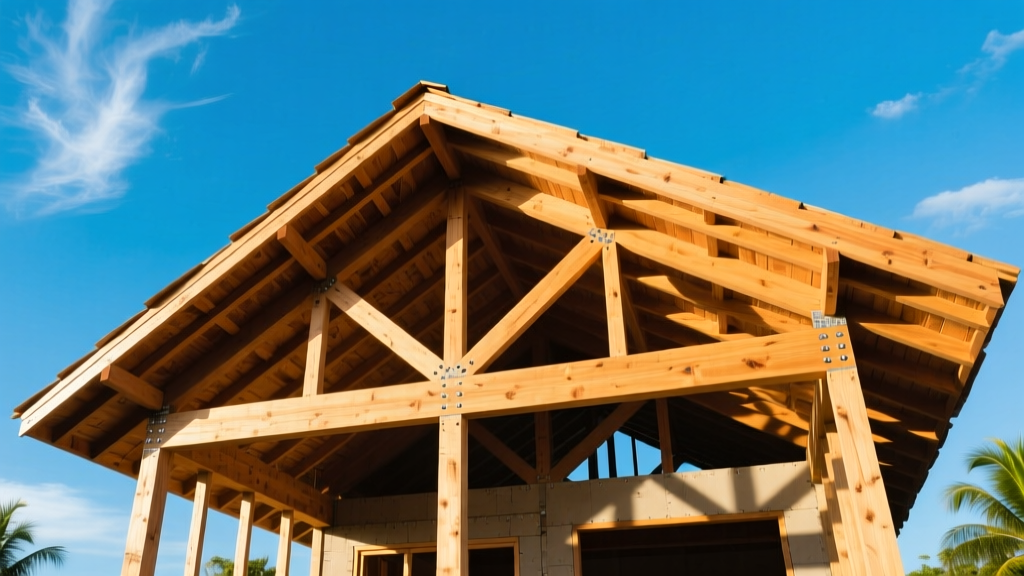
Summary Decision Flowchart for Lumber Selection
Use this rapid decision tree when reviewing your architect's bill of quantities (BOQ) to ensure material specifications align with your budget and structural needs:
- Is the element load-bearing or exposed to weather?
- Yes: Specify Class 1 (Yakal) for ground contact, or Class 2 (Tanguile) for elevated framing. Mandate chemical treatment.
- No: Proceed to Step 2.
- Is the element visible and intended for staining/painting?
- Yes (Stain): Specify Philippine Mahogany or Tanguile (Select grade).
- Yes (Paint): Specify standard Mahogany or high-quality MDF/Marine Plywood to save costs.
- No (Hidden framing): Specify standard grade Tanguile or engineered LVL.
- Does the span exceed 5 meters?
- Yes: Abandon solid timber; specify Glulam, LVL, or structural steel to prevent long-term deflection.
By applying this rigorous selection framework, builders can accurately forecast the cost to build a house philippines, ensuring that every peso spent on lumber contributes directly to the longevity, safety, and aesthetic excellence of the final structure. Consult with licensed structural engineers and reference the latest DPWH building material standards to ensure full compliance with the National Building Code of the Philippines.
Written by
Priya KapoorPriya Kapoor is a real estate market analyst and construction economics researcher with expertise in housing affordability, development feasibility, and infrastructure investment. She holds a Master of Regional Planning from Cornell University and previously worked as a senior analyst at CBRE's Investment Properties group, where she modeled returns for $4B in mixed-use development pipelines. Priya now runs an independent research practice advising developers, municipalities, and REITs on construction cost forecasting and market timing. She publishes the quarterly "BuildMat Market Pulse" report tracking material price indices across 12 commodity categories. Based in Austin, TX, Priya serves on the board of Habitat for Humanity Austin and is a marathon runner.
More from Priya Kapoor
View all
Construction Cost
Cost to Build a 1600 Sq Ft Home in 2026: Full Breakdown
Accurate 2026 cost to build a 1600 sq ft home—material, labor, and regional pricing breakdowns included. Plan your budget with real-time estimates.
Aug 11, 2026

Wood & Lumber
Name the Types of Wood for Pressure Treatment and Preservation
Learn how to name the types of wood best suited for pressure treatment. Compare species treatability, chemical retention levels, and 2026 preservation costs.
Aug 4, 2026

Stone & Masonry
Stone Veneer Suppliers Lindenhurst: 2026 Cost Analysis
Analyze 2026 stone veneer costs in Lindenhurst, NY. Compare local supplier pricing, delivery fees, and Suffolk County installation labor rates.
Aug 4, 2026