Best Hardwood Types of Wood: 2026 Cost & Value Guide
Compare the top hardwood types of wood for flooring and construction. Analyze 2026 material costs, Janka durability ratings, and long-term ROI.
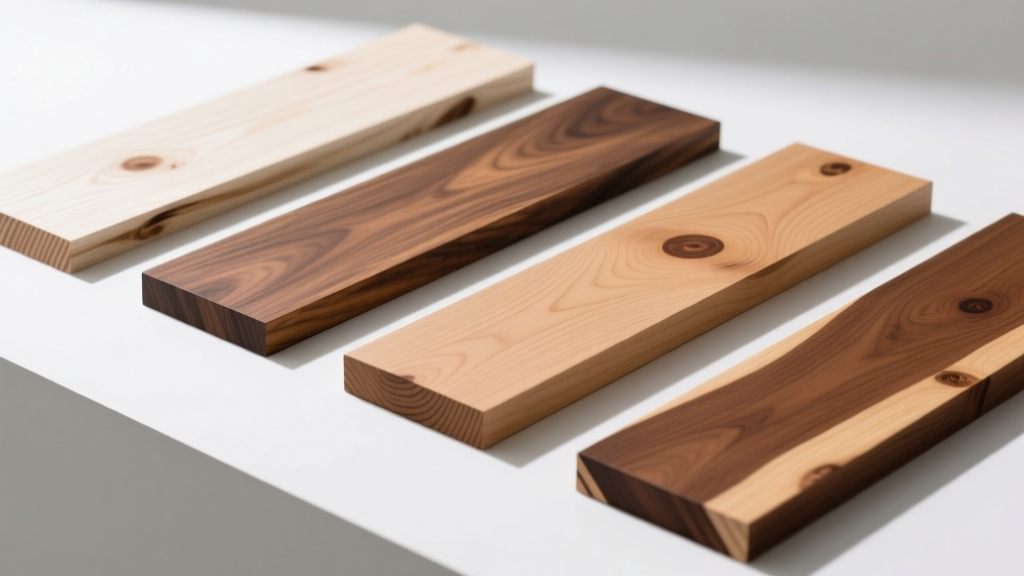
The 2026 Hardwood Market: Pricing Tiers & Value Drivers
When evaluating different hardwood types of wood for residential or commercial flooring, the 2026 market reflects a stabilization in domestic supply chains but a continued premium on slow-growth and exotic species. Material costs for solid hardwood currently range from $4.50 to over $16.00 per square foot, driven by species rarity, milling complexity, and FSC (Forest Stewardship Council) certification requirements. Understanding the intersection of Janka hardness, dimensional stability, and aesthetic longevity is critical for maximizing return on investment. According to the USDA Forest Products Laboratory, the cellular structure of the wood dictates not only its dent resistance but also its reaction to seasonal humidity fluctuations, which directly impacts long-term maintenance costs.
Comprehensive Cost & Durability Matrix
The following matrix breaks down the most specified domestic and exotic species. Prices reflect Q1 2026 averages for unfinished, #1 Common grade solid hardwood (3/4-inch thick, 2.25 to 5-inch widths). Installed costs include standard nail-down installation, subfloor prep, and site-finished polyurethane sealing.
| Wood Species | Janka Hardness (lbf) | Material Cost ($/sq ft) | Installed Cost ($/sq ft) | Tangential Shrinkage (%) | Best Application |
|---|---|---|---|---|---|
| Red Oak | 1,290 | $4.50 - $6.50 | $9.00 - $13.50 | 8.6% | Standard residential, budget-conscious builds |
| White Oak | 1,360 | $6.50 - $9.00 | $11.50 - $16.00 | 7.2% | High-end residential, kitchens, water-prone areas |
| Hard Maple | 1,450 | $5.50 - $8.00 | $10.50 - $15.00 | 9.9% | Contemporary designs, basketball courts, high traffic |
| Hickory | 1,820 | $5.50 - $8.50 | $11.00 - $16.50 | 7.8% | Rustic aesthetics, heavy commercial, pet-friendly homes |
| Black Walnut | 1,010 | $11.00 - $16.00 | $17.00 - $24.00 | 5.5% | Luxury estates, formal dining, low-traffic zones |
| Brazilian Cherry | 2,350 | $9.00 - $13.00 | $15.00 - $21.00 | 8.3% | Exotic aesthetics, high-wear commercial lobbies |
Deep Dive: Value Analysis by Species
White Oak vs. Red Oak: The Modern Standard
White oak has overtaken red oak as the most requested domestic species in 2026, primarily due to its cellular anatomy. White oak contains tyloses—membranous growths that plug the xylem vessels, making the wood highly resistant to water penetration. This structural advantage allows white oak to be installed in kitchens and half-baths where red oak would be prone to blackening and rot. While red oak remains roughly 25% cheaper at the lumberyard, white oak offers superior dimensional stability (7.2% tangential shrinkage vs. 8.6% for red oak), reducing the risk of seasonal gapping. For wide-plank installations (7 inches or wider), white oak is the mandatory choice to prevent severe cupping.
Hickory & Hard Maple: High-Traffic Workhorses
When impact resistance is the primary metric, hickory dominates the domestic market with a Janka rating of 1,820 lbf. However, hickory's extreme density accelerates wear on milling machinery, which adds a 10-15% premium to custom milling profiles. Hard maple (1,450 lbf) offers a tighter, less porous grain that resists dirt infiltration, making it the standard for commercial gymnasiums and modern minimalist homes. The National Wood Flooring Association (NWFA) notes that maple's light color and lack of prominent grain can make scratches more visible under direct sunlight, requiring more frequent screening and recoating compared to heavily grained hickory.
Black Walnut & Cherry: Premium Aesthetics vs. Softness
Black walnut commands a massive price premium ($11.00+ per sq ft) strictly for its deep, rich heartwood coloration. With a Janka hardness of just 1,010 lbf, it is highly susceptible to denting from dropped objects or high-heeled shoes. Similarly, American cherry (950 lbf) is prized for its photoreactive properties—it darkens significantly when exposed to UV light. Specifying these woods requires a client willing to accept a 'patina' of dents and color shifts over time. From a pure durability-to-cost ratio, these species offer poor value, but their aesthetic ROI in luxury real estate markets remains exceptionally high.
Do not assume engineered hardwood is always cheaper. In 2026, premium engineered white oak with a 4mm to 6mm sawn wear layer often costs 15-20% more than solid 3/4-inch stock. The value proposition of engineered wood lies in its installation method (floating or glue-down over concrete slabs) and superior resistance to radiant heat systems, not necessarily a lower upfront material cost.
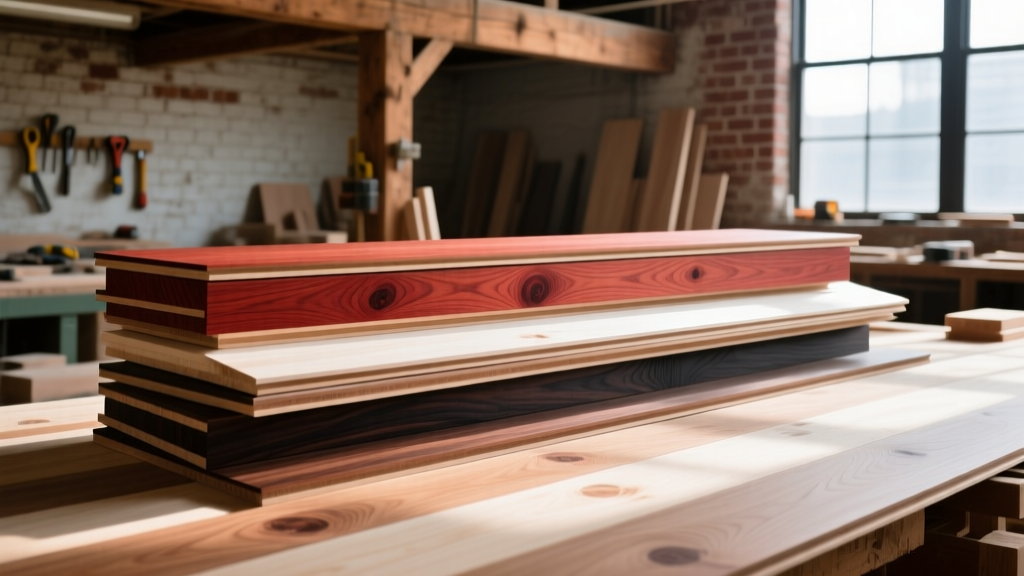
The Impact of Lumber Grades on Final Cost
The species is only half the equation; the NHLA (National Hardwood Lumber Association) grade dictates the visual character and waste factor. Understanding these grades prevents severe budget overruns:
- FAS (First and Second) / Select: Yields long, clear cuttings with minimal knots. Expect to pay a 40-60% premium over #1 Common. Best for formal, traditional interiors.
- #1 Common: The industry workhorse. Features moderate color variation, small knots, and shorter board lengths. Offers the best balance of structural integrity and cost.
- #2 Common / Character Grade: Heavy in knots, sapwood, and mineral streaks. While the material cost is 20-30% lower, the installation waste factor jumps from 10% to 15-20% as installers must cut around structural defects.
Hidden Costs & Failure Modes in Installation
Budgeting for hardwood types of wood requires accounting for site-specific variables that rarely appear on initial material quotes:
- Acclimation Time: Solid hardwood must acclimate to the home's interior humidity (ideally 30-50%) for 7 to 14 days. Rushing this process leads to catastrophic cupping or gapping within the first seasonal cycle.
- Subfloor Remediation: Hardwood requires a subfloor flatness tolerance of 3/16-inch over a 10-foot radius. Leveling a plywood subfloor with self-leveling compound or shimming joists can add $1.50 to $3.00 per square foot to the labor cost.
- Site Finishing vs. Pre-Finished: Site-finished floors (sanded and sealed in place) offer a seamless, custom look but require 3-5 days of curing time and generate significant dust. Pre-finished UV-cured aluminum oxide boards are more durable and install faster, but the micro-bevels between boards collect dirt and compromise the monolithic aesthetic.
ROI and Resale Value: Which Hardwood Types of Wood Pay Off?
Not all hardwood yields an equal return at resale. Real estate appraisers and buyers heavily favor neutral, durable, and widely recognized species. White oak and natural hard maple consistently yield the highest ROI, often recouping 75-85% of the installation cost upon home sale. Conversely, highly stylized choices like wide-plank hickory with extreme color variation, or niche exotics like Brazilian cherry, can actually deter buyers who factor in the cost of sanding and staining the floors to a more neutral tone. For investment properties or homes targeted for sale within 5 to 7 years, stick to 3.25-inch or 5-inch white oak with a clear, matte water-based polyurethane finish.
Decision Framework Summary
- Best Overall Value & Resale: White Oak (#1 Common, 5-inch plank).
- Best for High Traffic & Pets: Hickory (Character grade, wire-brushed texture hides scratches).
- Best for Budget Builds: Red Oak (2.25-inch strip, site-finished).
- Best for Radiant Heat / Concrete Slabs: Engineered White Oak (6mm wear layer, glue-down installation).
Written by
Elena RodriguezElena Rodriguez is a civil engineer and technical writer specializing in concrete technology, masonry systems, and ASTM/ACI compliance. She earned her B.S. in Civil Engineering from Texas A&M University and spent a decade at a materials testing laboratory, performing over 2,000 concrete compressive strength tests and masonry prism evaluations. Elena is an ACI-certified Field Testing Technician (Grade I) and a member of ASTM Committee C12 on Natural Building Stone. She currently consults on forensic engineering cases involving concrete failures and moisture intrusion. Based in San Antonio, TX, Elena is a proud member of the Society of Women Engineers (SWE) and coaches her daughter's FIRST Robotics team.
More from Elena Rodriguez
View all
Walls & Panels
Cost Analysis: Light Gauge Steel Framing Advantages and Disadvantages
Evaluate light gauge steel framing advantages and disadvantages through a strict cost analysis lens, comparing material, labor, and lifecycle expenses.
Aug 4, 2026

Walls & Panels
Gypsum Board Types: Exact Specifications, Thickness & Dimensions
Compare standard, Type X, and moisture-resistant gypsum board types. Get exact specifications, thicknesses, dimensions, and ASTM standards for your project.
Aug 4, 2026

Fire Resistance
Best Fire-Resistant Outdoor Decking Materials: 2026 Buyer Guide
Discover the best fire-resistant outdoor decking materials for 2026. Compare Class A PVC, aluminum, and hardwood options for WUI compliance and safety.
Aug 4, 2026