Preserving Different Types of Sheet Wood: Treatment Guide
Learn how to properly treat, seal, and preserve different types of sheet wood. Expert guide on moisture barriers, edge sealing, and chemical treatments.
Understanding Moisture Dynamics in Types of Sheet Wood
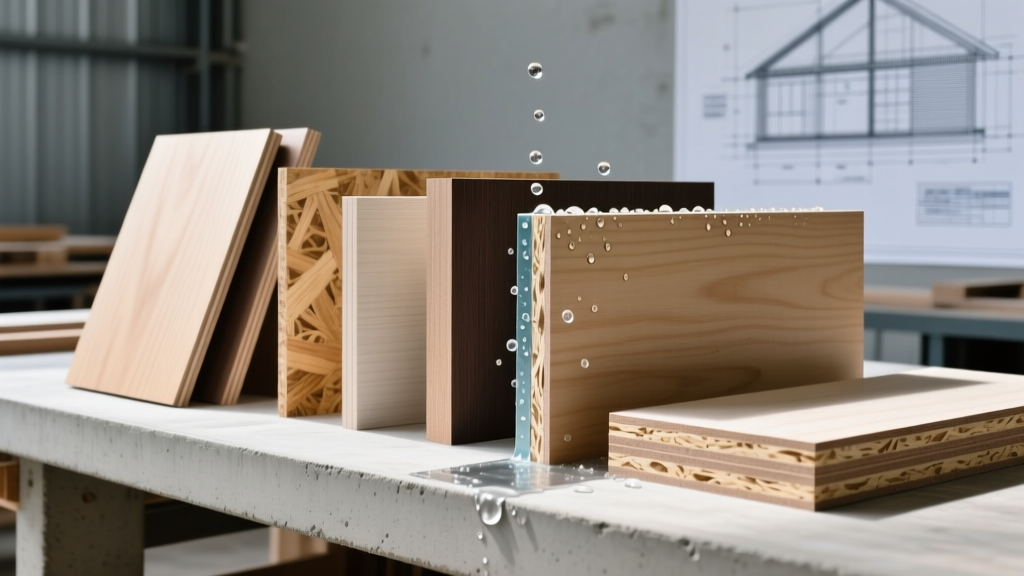
Engineered sheet woods are foundational to modern construction and cabinetry, but their structural integrity is entirely dependent on proper moisture management and biological preservation. Unlike solid dimensional lumber, the manufacturing process of sheet goods introduces specific vulnerabilities—primarily at the exposed edges and end-grains where capillary action draws moisture deep into the core. When evaluating the various types of sheet wood, a one-size-fits-all approach to sealing and preservation will inevitably lead to delamination, edge swell, or fungal decay. This guide details the exact chemical treatments, edge-sealing protocols, and environmental thresholds required to preserve plywood, OSB, MDF, and particleboard in demanding applications.
The Vulnerability Matrix: Sheet Wood Moisture Profiles
Before selecting a preservative, you must understand the baseline moisture absorption rates and failure modes of each material. The American Wood Protection Association (AWPA) sets the standards for wood preservatives, but application relies on the specific anatomy of the panel.
| Sheet Wood Type | Core Composition | Edge Swell Risk (24hr Soak) | Primary Failure Mode | Recommended Primary Sealer |
|---|---|---|---|---|
| Exterior Plywood | Cross-laminated veneers | Moderate (8-12%) | Veneer delamination, face checking | Penetrating Epoxy / Film-forming Urethane |
| OSB (Oriented Strand Board) | Compressed wood flakes with resin | High (15-25%) | Edge swelling, flake separation | Acrylic Latex Caulk / Polyurethane Edge Paint |
| MDF (Medium Density Fiberboard) | Refined wood fibers with urea-formaldehyde | Extreme (25-40%) | Irreversible thickness swell, fiber fuzzing | Shellac-based Primer / PVA Sizing |
| Particleboard | Coarse wood particles with synthetic resin | High (20-30%) | Edge crumbling, fastener pull-out | Polyurethane Varnish / Epoxy Edge Banding |
Plywood Preservation: Stopping Delamination and Checking
Plywood is uniquely susceptible to "face checking" (micro-cracks in the outer veneer) and core delamination when subjected to repeated wet-dry cycles. The end-grain of plywood edges absorbs liquid water up to 15 times faster than the face grain. According to the USDA Forest Products Laboratory Wood Handbook, moisture entering through untreated edges will bypass face sealants and trap water inside the plies, leading to internal rot.
The CPES Edge-Sealing Protocol
For exterior or marine applications, standard oil-based primers are insufficient for plywood edges. You must use a Clear Penetrating Epoxy Sealer (CPES), such as those manufactured by Smith & Co. or TotalBoat. CPES utilizes a low-viscosity solvent carrier that wicks deep into the end-grain, polymerizing inside the wood cells to create a moisture-impermeable barrier.
- Preparation: Sand edges to 120-grit. Do not sand finer, or you will burnish the wood and block epoxy penetration.
- Application: Flood the edge with CPES using a foam brush until the wood stops absorbing (usually 2-3 coats applied wet-on-wet within a 2-hour window).
- Topcoating: CPES is not UV-stable. Once cured (24 hours), it must be top-coated with a marine-grade spar urethane or a two-part linear polyurethane (LPU) to block UV degradation.
OSB Edge Preservation: Preventing Flakeboard Swell
Oriented Strand Board (OSB) is manufactured with a wax and resin emulsion that provides excellent bulk moisture resistance. However, when OSB is cut on-site, the factory-sealed edges are exposed. The exposed strands act like a bundle of straws, rapidly wicking water and causing the edges to swell permanently—a phenomenon known as "edge swell" or "thickness swell."
Restoring the Factory Edge Seal
Standard paint will not bridge the gaps between the compressed flakes. To properly preserve cut OSB edges, you must use a high-build, elastomeric sealant that can accommodate minor wood movement without cracking.
- Clean the Edge: Remove all sawdust using compressed air or a stiff brush. Sawdust mixed with sealant creates a weak, porous barrier.
- Apply an Acrylic/Polyurethane Edge Sealer: Use a specialized product like Tremco Polyset or a high-quality acrylic latex caulk (e.g., OSI QUAD). Force the sealant into the edge voids using a putty knife, rather than just brushing it on the surface.
- Wipe and Smooth: Smooth the sealant flush with the face of the panel. Allow 24 hours to cure before applying any exterior acrylic paints.
MDF and Particleboard: Interior Moisture Defense
While MDF and particleboard are strictly interior materials, they are frequently used in high-humidity zones like bathroom vanities, kitchen cabinets, and laundry rooms. The refined cellulose fibers in MDF are highly hygroscopic. If exposed to liquid water or sustained relative humidity above 80%, MDF will swell irreversibly and lose its internal bond strength.
The Shellac Sizing Technique
The most common mistake in preserving MDF edges is applying a water-based PVA (polyvinyl acetate) primer directly to the raw edge. The water in the primer acts as a catalyst for immediate fiber swelling, resulting in a fuzzy, raised edge that requires extensive sanding and still compromises the board's density.
1. Apply a heavy coat of shellac-based primer (specifically Zinsser B-I-N). The alcohol solvent in shellac evaporates instantly and does not swell the wood fibers.
2. Once dry (45 minutes), lightly sand the edge with 220-grit sandpaper to knock down any minor raised fibers.
3. Apply a second coat of B-I-N to build a hard, moisture-impermeable resin barrier.
4. Top-coat with your desired water-based or oil-based architectural paint.
For particleboard used in cabinetry, edge banding with hot-melt EVA (ethylene-vinyl acetate) or PUR (polyurethane reactive) adhesive is the most effective preservation method. PUR edge banding creates a moisture-proof chemical bond that prevents water vapor from infiltrating the particle core in sink base cabinets.

Treatment Decision Framework by Environment
Selecting the correct preservation strategy requires matching the sheet wood type to the specific environmental stressors of the installation site.
| Installation Environment | Recommended Sheet Wood | Mandatory Preservation Treatment | Expected Lifespan (Maintained) |
|---|---|---|---|
| Exterior Siding / Soffits (Protected) | Exterior Plywood (MDO/HDO) | Acrylic latex primer + 100% acrylic topcoat | 15-25 Years |
| Marine / Freshwater Docks | Marine Plywood (Solid core, no voids) | CPES edge seal + 2-part LPU + Fiberglass encapsulation | 20+ Years |
| Subflooring (High Humidity) | Advantech or Premium OSB | Factory wax edge + Acrylic caulk on field cuts | Lifetime of Structure |
| Bathroom Cabinetry | Moisture-Resistant (MR) MDF | Zinsser B-I-N shellac primer + PUR edge banding | 10-15 Years |
Common Treatment Failures and Edge Cases
Even with the correct materials, preservation treatments fail when application parameters are ignored. Be aware of these specific failure modes:
- Trapped Moisture in Plywood: Sealing the face of plywood with a heavy film-forming finish (like epoxy) while leaving the edges unsealed allows ambient moisture to enter the edges. When the sun heats the panel, the trapped moisture turns to vapor, creating immense pressure that blisters the face finish and delaminates the veneers. Always seal edges first, and ensure the finish system allows for adequate vapor permeability if interior moisture is present.
- UV Degradation of Clear Sealers: Using clear polyurethane or clear epoxy on exterior sheet wood without UV inhibitors will result in rapid failure. The UV rays break down the lignin in the wood directly beneath the clear film, causing the finish to peel off in large sheets within 12 to 18 months. Always use pigmented stains or top-coats containing UV absorbers for exterior applications.
- OSB Fastener Blowout: When preserving OSB edges near panel perimeters, driving nails or screws too close to the sealed edge can fracture the compressed flakes, breaking the moisture seal. Maintain a minimum 3/8-inch fastener edge distance, as specified by the Engineered Wood Association, to preserve the structural and moisture integrity of the panel edge.
Proper preservation of engineered sheet materials is not merely about applying a surface coating; it requires an understanding of the material's internal anatomy and how it interacts with liquid water and water vapor. By utilizing penetrating epoxies for plywood end-grains, elastomeric sealants for OSB flakes, and solvent-based shellacs for MDF fibers, builders can drastically extend the service life of these critical building components.
Written by
Sarah WhitfieldSarah Whitfield is a chartered quantity surveyor (MRICS) and construction cost analyst with 15 years of experience in material pricing, procurement strategy, and project budgeting. She earned her degree in Construction Management from the University of Reading (UK) and has worked on projects ranging from $2M custom homes to $180M mixed-use developments across North America and Europe. Sarah currently leads cost estimating for BuildMat Insight, maintaining a proprietary database of 4,000+ material price points updated quarterly. She is a frequent contributor to RSMeans cost data panels and has presented at the International Cost Engineering Council (ICEC) congress. Based in Denver, CO, Sarah is an avid trail runner and volunteer mentor for Women in Construction.
More from Sarah Whitfield
View all
Wood & Lumber
What Are the Different Types of Wood? A Builder's Guide
Compare structural softwoods, finish hardwoods, and engineered lumber. Analyze Janka ratings, MOE values, and 2026 pricing for construction.
Aug 4, 2026

Walls & Panels
Steel Framing vs Wood Framing: Corrosion and Moisture Defense
Compare steel framing vs wood framing for moisture resistance. Learn about galvanized coatings, condensation risks, and corrosion protection strategies.
Jul 21, 2026

Stone & Masonry
How to Cut Stone Veneer: Wet Saw vs Grinder Comparison
Compare the best tools for cutting stone veneer. We review wet saws, angle grinders, and chop saws to help you achieve clean, chip-free cuts.
Jul 21, 2026